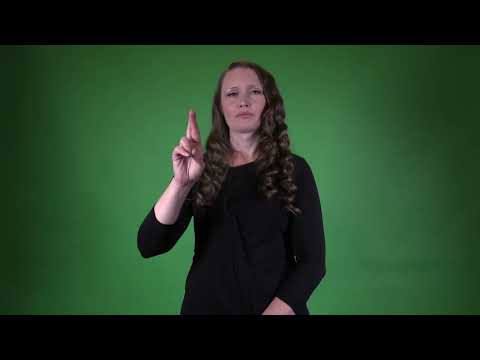
Sign for FS_ROOF in ASL | ASL Dictionary

Definition: The structure forming the upper covering of a building.

Sign for FS_ROOF in ASL

YouTube player

Practice Activities:

To build fluency with the sign for FS_ROOF in ASL, begin by practicing the fingerspelling component. Slowly spell R-O-O-F, making sure each letter is clear and transitions smoothly. Repeat it several times in front of a mirror to monitor your handshape and pacing.

Next, practice using the sign for FS_ROOF in ASL within short phrases. Try examples such as “my house has a new roof,” “the roof is leaking,” or “they repaired the roof after the storm.” Sign each sentence while emphasizing clarity in the fingerspelling and maintaining proper facial expressions to match the meaning.

Create a list of related vocabulary like HOUSE, BUILDING, FIX, and WORK. Use these in short skits or dialogues with a partner. For instance, one person can describe a home improvement project while the other asks questions. Include the sign for FS_ROOF in ASL at least twice in each conversation to reinforce usage.

Engage in storytelling prompts that feature the sign naturally. Tell a short story about a windy night when the roof flew off a barn or a construction scene where workers install a new roof. Focus on sequencing your signs clearly and using space effectively to create a visual narrative.

Play a vocabulary challenge game where a partner signs various sentences and you identify whether the sign for FS_ROOF in ASL was included. Switch roles to keep both people actively engaged and developing receptive skills.

Record yourself signing a weather report or home maintenance tip and incorporate the sign for FS_ROOF in ASL into your presentation. Watch your video to evaluate clarity, expression, and accuracy. With routine practice in diverse contexts, you’ll gain confidence and fluency using this sign naturally during conversations.

Cultural Context:

In American Sign Language (ASL), fingerspelling plays a unique role in communication, especially for words that may not have an established sign. This is particularly true for specialized or less frequently used words, such as when using the sign for FS_ROOF in ASL. The use of fingerspelling allows signers to adapt and communicate effectively, even with more specific or regional vocabulary.

The sign for FS_ROOF in ASL is an example of how signers bridge gaps in vocabulary by spelling out the word letter by letter using the manual alphabet. This variant of vocabulary comes into play when discussing objects like architectural elements. The use of FS_ROOF can depend on the regional signing community, topic of conversation, or educational background of the signer.

In Deaf culture, visual precision is key, and the use of fingerspelling is a respected way to convey concepts that aren’t commonly represented by standard signs. It also reflects a person’s fluency and comfort with ASL. When someone uses the sign for FS_ROOF in ASL, they are relying on the community’s shared understanding of the fingerspelled term, highlighting a deep cultural emphasis on clarity and visual literacy .

Fingerspelled signs like FS_ROOF often appear in educational or technical discussions, such as construction, housing, or design. In these settings, the audience’s familiarity with FS terms is higher, and the use of fingerspelling ensures accuracy. The sign for FS_ROOF in ASL can also be useful in stories or conversations where a more specific vocabulary word is needed, yet no standardized sign exists.

Using FS_ROOF shows respect for the evolving nature of ASL. As language and society change, new terms are introduced, and fingerspelling becomes a temporary or even permanent method of incorporating them into casual and professional dialogue. The sign for FS_ROOF in ASL reflects how fluid and adaptable ASL is within diverse contexts.

ASL signers may switch between fingerspelling and initialized signs, depending on context and audience. Some signers may even pair FS_ROOF with a descriptive classifier or gesture to clarify meaning further. This practice speaks to a culture that values layered communication—using facial expressions, handshape, and space—to convey meaning with depth and precision.

The appearance of FS_ROOF in signed discourse also demonstrates a mix of respect for English vocabulary while maintaining the grammar and structure of ASL. This blend is part of what makes ASL uniquely expressive and rooted deeply in Deaf cultural identity

Extended Definition:

The sign for FS_ROOF in ASL uses fingerspelling to represent the word “roof.” In American Sign Language, FS indicates that a word should be spelled out using the manual alphabet, making FS_ROOF a fingerspelled sign rather than a conceptual or iconic one.

When signing FS_ROOF in ASL, each letter—R-O-O-F—is represented individually using the ASL alphabet. This form is often used when there is no widely accepted iconic sign for that specific word, or when clarity is necessary in technical or detailed conversations. Fingerspelling is also used to introduce new or specialized vocabulary.

FS_ROOF might appear in contexts involving construction, architecture, or home maintenance. You may see the sign for FS_ROOF in ASL used during discussions about home improvements, roofing jobs, or disaster assessments after storms and natural disasters. Since the word “roof” is not commonly represented by a standardized sign, using the fingerspelled version ensures the concept is clearly understood.

When using the sign for FS_ROOF in ASL, maintain a calm, fluent motion while spelling out each letter. Avoid jerky or overly fast fingerspelling, which may cause misunderstandings. A signer might also support the fingerspelling with contextual clues or facial expressions to reinforce the meaning.

The sign for FS_ROOF in ASL may vary slightly depending on the signer’s region or community. Some people might combine fingerspelling with a gestural sign that mimics the shape of a roof, like forming a triangle with both hands above the head. However, the fingerspelled version is always acceptable and accurate.

In ASL, fingerspelling is a powerful communication tool. It helps convey words that don’t yet have established signs, including technical terms and proper nouns. The extended use of FS_ROOF in conversations implies that you’re either introducing the term or using it in a more precise or professional way.

Understanding how and when to use fingerspelled signs like FS_ROOF in ASL is essential for fluency. Signers often use fingerspelling to build vocabulary and deepen language comprehension. It’s also a good way to ensure accuracy while communicating detailed information.

Digital tools and visual dictionaries also prefer listing FS_ROOF as fingerspelled to maintain consistency across learning platforms. If you’re using video resources or online sign banks, the sign for FS_ROOF in ASL will usually be presented with clear, slow fingerspelling followed by real-world sentence examples. That helps reinforce its practical use in

Synonyms: top, ceiling, upper surface, covering, overhead structure

Educational resources: Find related learning materials in our course bank!

Want more? Check out some of our popular learning activities on the homepage!

Need to look up a sign? Use our highly rated dictionary: https://aslinteractive.com/best-asl-dictionary/

Follow us on tiktok: https://www.tiktok.com/@aslinteractive. More social media links at the bottom of this page!

Long-tail Keywords: What is the sign for roof in ASL?, How do you sign roof in ASL?, ASL sign for roof

Categories:

tags: fs_roof meaning in ASL, fingerspelled roof in ASL, learn fs_roof in ASL, what does fs_roof mean in sign language, ASL dictionary fs_roof

Parameters

*Handshape*:

The Sign for FS_ROOF in ASL is produced using fingerspelling, so the handshape involves forming the distinct handshapes of the manual alphabet for each letter: R, O, O, and F. Start with the dominant hand in an “R” handshape, transitioning smoothly through the “O” handshape twice, and finishing with the “F” handshape.

Each letter requires a clear and steady handshape positioned near shoulder or chest level. The Sign for FS_ROOF in ASL relies on proper finger placement, fluid motion between letters, and consistent palm orientation.

*Palm Orientation*:

The palm orientation for the Sign for FS_ROOF in ASL involves fingerspelling each letter of the word “roof” using the dominant hand. Each handshape transitions smoothly from one letter to the next, typically held upright with the palm facing forward for R and O, and slightly inward for F.

This consistent orientation ensures the Sign for FS_ROOF in ASL is clear and legible to the viewer. Proper palm positioning is essential for conveying fingerspelled words accurately .

*Location*:

The sign for FS_ROOF in ASL is produced in the neutral space directly in front of the body, around chest to shoulder height. Since it is fingerspelled, the hand remains within a comfortable range of the torso, allowing each letter to be clearly seen by the receiver.

The location stays stationary and does not shift across the signing space. Proper consistency in letter placement is key for accurately conveying the sign for FS_ROOF in ASL .

*Movement*:

To produce the sign for FS_ROOF in ASL, fingerspell each letter of the word “ROOF” using smooth, deliberate hand movements. Keep your dominant hand at chest level and transition through the R-O-O-F handshapes clearly and fluidly from left to right with a slight wrist pivot.

The sign for FS_ROOF in ASL should maintain consistent spacing between letters for legibility. Ensure each letter is formed precisely, paying attention to the double “O” to avoid confusion.

*Non-Manual Signals*:

When performing the sign for FS_ROOF in ASL, maintain a neutral facial expression unless contextually emphasizing the type or condition of the roof. Slight eyebrow raise can be used to cue attention or when identifying FS_ROOF as a topic. Mouth movements should stay minimal when fingerspelling, with lips slightly parted for clarity. It’s important to keep steady eye contact with the viewer during the sign for FS_ROOF in ASL to support clear communication.

*Prosody, Dominant/Non-Dominant Hand*:

The sign for FS_ROOF in ASL is produced by fingerspelling the letters R-O-O-F using the dominant hand. The dominant hand forms each letter clearly in the signing space in front of the body, while the non-dominant hand remains neutral at rest. Maintain a neutral facial expression unless context requires emphasis.

For the sign for FS_ROOF in ASL, make sure each letter is articulated precisely. Slight pauses between each letter help with clarity and recognition .

Tips for Beginners:

The sign for FS_ROOF in ASL is a fingerspelled word, meaning you will spell out each letter of the word “R-O-O-F” using the ASL alphabet. For beginners, it’s important to keep your hand steady and your fingers clear and distinct when spelling. One of the best ways to practice is by standing in front of a mirror to monitor your handshape and speed. Slow down if needed—clarity is more important than speed when you’re just starting.

When practicing the sign for FS_ROOF in ASL, focus on keeping your palm facing outward and your fingers relaxed. Rushing through the letters can lead to sloppy formations, especially between the double “O,” which is often a sticking point for learners. Make sure you clearly make the “O” twice with a small movement in between—this will help differentiate it from a single “O” and increase legibility.

A common mistake is tensing the hand or overpronouncing the letters, especially the “R” and “F.” Keep movements fluid but controlled. The “R” requires your index and middle fingers to cross—make sure they’re tight together but not cramped. For the “F,” form a perfect circle with your thumb and index finger while keeping the rest extended naturally.

Remember, facial expressions aren’t necessary when fingerspelling, but keeping eye contact with your conversation partner maintains engagement. Practice fingerspelling the sign for FS_ROOF in ASL as part of a sentence, like “We replaced the R-O-O-F,” to get comfortable using it in real-life conversations.

To gain proficiency, try spelling out different everyday items at home. The more you incorporate fingerspelling into your practice, the more confident you’ll be using signs like the sign for FS_ROOF in ASL in daily communication. Consistent repetition and patient self-correction go a long way in building strong ASL basics.

Connections to Other topics:

The sign for FS_ROOF in ASL is fingerspelled, highlighting how specific, technical, or less commonly used words are often represented in American Sign Language. Fingerspelling connects strongly with ASL vocabulary expansion, particularly for architectural terms or terminology that doesn’t have an established sign. Since “roof” is specific and may not have a standard sign in all regions, FS_ROOF helps maintain clarity and accuracy in communication.

This fingerspelled word often appears in compound concepts like ROOF-HOUSE, ROOF-LEAK, or ROOF-REPAIR, where classifiers and spatial referencing are used to simulate elements of the roof structure. By combining FS_ROOF with directional verbs like FIX or contextual signs like WATER-DRIP, signers convey actions and descriptions concisely. These combinations illustrate how the sign for FS_ROOF in ASL serves as a building block in more descriptive, narrative expressions.

FS_ROOF can be connected to signs related to parts of a house such as FS_CHIMNEY, WALL, or FS_ATTIC, especially in conversations relating to construction, household issues, or weather events. For instance, during a storm story, a signer might describe wind hitting the FS_ROOF, followed by CL:3 (classifier for vehicles or damage) to show a tree falling onto it. This type of usage demonstrates how classifiers bring vivid details when paired with fingerspelled vocabulary.

The sign for FS_ROOF in ASL also relates to educational or work-related discussions, especially in professions such as roofing or construction. In vocational contexts, FS_ROOF may be linked with tools like FS_LADDER or FS_HAMMER, creating a thematic set of construction-related lexicon. This helps learners build semantic networks, which supports fluency and comprehension when engaging in topic-specific conversations.

FS_ROOF as a fingerspelled term emphasizes the adaptability of ASL. It opens the door to rich discourse about housing, safety, repair, and design, and supports ASL learners in mastering fingerspelling fluency—a core component of advanced ASL proficiency.

Summary:

The sign for FS_ROOF in ASL involves fingerspelling each letter: R-O-O-F. Since it is fingerspelled, the meaning relies entirely on the clarity and speed of hand movements. Each letter in the word is rendered with the hand in a static position unique to the ASL alphabet.

Fingerspelling in ASL is commonly used for words that don’t have a standardized sign or that are proper nouns. The sign for FS_ROOF in ASL fits this category and is typically used when discussing specific architectural features or when emphasizing a literal or metaphorical roof.

When fingerspelling FS_ROOF, the signer needs to maintain consistent spacing and rhythm. Smooth transitions between the letters help the observer grasp the meaning quickly. It’s also important for the hand to stay in the same relative space to ensure coherence.

Contextual use of the sign for FS_ROOF in ASL often depends on the surrounding topic. For example, if one is discussing housing, construction, or even weather damage, FS_ROOF would naturally appear in the conversation. It might be followed by signs like HOUSE, BUILDING, or FIX to give more specifics.

Culturally, a roof has symbolic meanings in both spoken English and Deaf culture. It can represent shelter, home, or even safety. Signing FS_ROOF in ASL can therefore carry layers of meaning depending on the discussion of family, housing rights, or natural disasters.

In narratives and storytelling within the Deaf community, the word roof can appear in metaphorical frameworks. The sign for FS_ROOF in ASL may be fingerspelled slowly for dramatic emphasis or rehearsal of a specific emotional context. This versatility is crucial in visual storytelling.

Related signs often used with FS_ROOF include HOUSE, BUILD, SHELTER, and WEATHER. These connections help to ground the fingerspelled term in a broader visual context. Users may shift between FS_ROOF and iconic signs to enhance clarity or offer emphasis.

Linguistically, fingerspelling operates as a bridge between spoken language and ASL. The sign for FS_ROOF in ASL showcases how alphabetic literacy within a visual-spatial language can adapt to represent English terms not directly codified in the ASL lexicon. This makes fingerspelling a crucial adaptation mechanism.

The pace of the sign for FS_ROOF in ASL may vary based on the skill level of users and the familiarity of the term in context. More fluent or experienced signers may spell it rapidly, while learners may take more time to form each letter. Both variations retain accuracy if the letters are clearly distinguished.

In everyday conversations, FS_ROOF might not be used frequently unless the topic specifically involves architectural discussions or descriptions of buildings. In these settings, though, it becomes essential to know how to fingerspell it accurately. Precision in spelling leads to reduced confusion.

The fingerspelling of FS_ROOF in ASL also highlights the visual nature of the language. Instead of creating an arbitrary sign for a seldom-used word, ASL opts to use an existing manual alphabet system to express new or less common terms. This makes ASL flexible and adaptable.

When signing FS_ROOF, body posture can enhance communication. For instance, slightly tilting the head or pointing upward after spelling the word can emphasize the spatial location of a roof and help provide non-manual cues. These subtle features boost clarity in visual modality.

FS_ROOF may appear in educational settings, especially in topics relating to home structure, real estate, or natural science. Teachers and interpreters use the sign for FS_ROOF in ASL to adapt spoken concepts into signed environments without losing linguistic integrity. It’s a valuable instructional bridge.

Applied linguistics offers insights into how fingerspelling like FS_ROOF builds vocabulary. Students who learn English and ASL simultaneously often use fingerspelled words like FS_ROOF to reinforce orthographic and phonological patterns. This cross-modal learning is supported by visual-motor memory.

In literature and poetry within Deaf culture, fingerspelled words can represent foreignness or formality. The fingerspelling of FS_ROOF in ASL might be used to denote a technical or distant element in a narrative. This makes the choice of using fingerspelling versus iconic signs a meaningful one.

ASL interpreters often have to decide whether to fingerspell or substitute with conceptual signs in translation. FS_ROOF may be fingerspelled when the term needs accuracy or specificity, for example when translating from English texts or describing building components. Audience familiarity determines this choice.

The sign for FS_ROOF in ASL often appears in captions or glosses used in interpreting services. It’s included to preserve the structure of original conversations or speeches. This helps maintain fidelity between source and target languages.

Fingerspelling accuracy matters especially in regional and social dialects. The clarity of FS_ROOF in ASL may shift slightly due to speed, handshape articulation, and finger orientation. Educators often emphasize uniformity in fingerspelling

Want more? Check out some of our popular learning activities!

ASL Interactive Resources

ASLInteractive YouTube Channel

Follow us on tiktok: @aslinteractive.com

Follow us on Instagram: aslinteractive

Facebook page: aslinteractive

Facebook group: aslinteractive

LInkedIn: ASL Interactive LLC

Twitter: @ASL_interactive

*Some information on this page is AI-generated. AI can make mistakes. Please check the information.


Responses