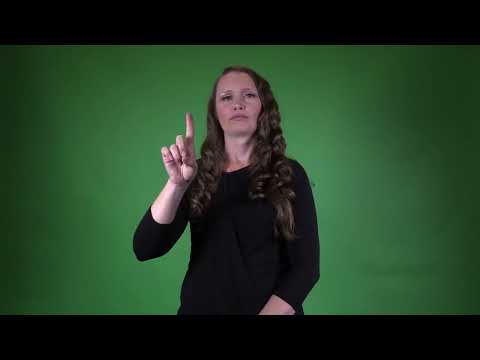
Sign for FS_SUEDE in ASL | ASL Dictionary

Definition: Leather with a soft, fuzzy surface.

Sign for FS_SUEDE in ASL

YouTube player

Practice Activities:

To build fluency with the sign for FS_SUEDE in ASL, begin by fingerspelling the word slowly and clearly several times in front of a mirror. Focus on each individual letter, making sure all handshapes are properly formed and transitions between letters are smooth. Practice this fingerspelling both with and without watching yourself, to build confidence and muscle memory.

Next, try incorporating the sign for FS_SUEDE in ASL into single-word identification practice. Flashcards can be helpful here—look at a picture of a suede object like boots or a jacket and fingerspell the word aloud or silently. This helps reinforce your visual association with the item and the fingerspelling needed to sign it correctly.

For contextual practice, use the sign for FS_SUEDE in ASL in short descriptive sentences. For example, “I bought FS_SUEDE shoes,” or “Jacket—FS_SUEDE—soft.” These simple expressions will help you link fingerspelling to everyday descriptions and improve recall. Make sure to repeat each sentence several times, gradually increasing your signing speed.

Use storytelling prompts involving textures or materials. Describe shopping for clothes and include FS_SUEDE items, such as, “I went to the store, saw a red FS_SUEDE bag, and bought it.” This gives you an opportunity to practice fingerspelling within longer discussions and narratives.

Partner practice can include asking and answering questions. One partner fingerspells FS_SUEDE and the other identifies it. Then try question exchanges like, “Do you like FS_SUEDE jackets?” This keeps the sign for FS_SUEDE in ASL connected to natural communication.

Finally, record yourself fingerspelling and watch for clarity of motion and speed. Self-feedback allows you to fine-tune your skills and correct minor errors. Encourage repetition across different days to reinforce mastery of the sign for FS_SUEDE in ASL.

Cultural Context:

The sign for FS_SUEDE in ASL carries more than just a surface-level meaning—it reflects the way Deaf culture incorporates fingerspelling to represent concepts that don’t have standardized signs. FS (fingerspelled) words are often used when a specific word like suede doesn’t yet have a widely accepted sign or is borrowed directly from spoken language. Fingerspelling suede preserves the unique texture and identity of the word while staying true to ASL’s fluid visual vocabulary ️.

Using the sign for FS_SUEDE in ASL is common in contexts involving fashion, fabrics, materials, or design. In Deaf discussions about clothing or textiles, you’ll often see suede fingerspelled to ensure clarity. This usage highlights how ASL adapts to modern concepts by integrating English terms while staying rooted in its visual lexicon.

In Deaf culture, fingerspelling reflects language flexibility and cultural identity. The sign for FS_SUEDE in ASL supports that identity by enabling precision without sacrificing the expressive potential of ASL. When discussing specific items like suede jackets or shoes, fingerspelling makes the interaction more authentic and context-specific .

Many members of the Deaf community appreciate signs like FS_SUEDE in ASL for their linguistic richness. While some signs become standardized over time, specialty items like suede might remain fingerspelled because of their niche usage. The continued use of the sign for FS_SUEDE in ASL keeps the language adaptable and inclusive of evolving vocabulary trends.

Media, advertising, and social platforms often influence language, and ASL is no exception. The sign for FS_SUEDE in ASL has been seen in lifestyle vlogs, clothing reviews, and style-focused ASL content, especially among creators who are Deaf. This visibility encourages wider familiarity with the term and strengthens its place in everyday ASL use .

It’s important to recognize the balance ASL holds between innovation and tradition. The sign for FS_SUEDE in ASL, through fingerspelling, respects the need for accuracy in communication while reinforcing that ASL is a living language. The ongoing use of FS terms like suede supports community understanding and fosters deeper cultural connections.

In educational settings, learners are often introduced to the sign for FS_SUEDE in ASL when learning about materials and textures. Teaching fingerspelled vocabulary builds foundational skills in recognizing word shapes and promotes better fluency for interpreting and expressing unfamiliar terms. FS_SUEDE in ASL serves as

Extended Definition:

The sign for FS_suede in ASL uses a fingerspelled approach, meaning the word is spelled out using the American Sign Language alphabet. This method is commonly used for material names, brand names, or uncommon words that don’t have a widely accepted or established sign in the ASL community. Using fingerspelling ensures the word is accurately communicated, especially when referring to textures like suede.

When using the sign for FS_suede in ASL, it’s important to maintain fluid finger movement and clear hand positioning. Fingerspelling should be done at a comfortable pace to ensure that each letter—S-U-E-D-E—is recognized by the viewer. Showing clarity, especially between the similar-looking letters S and E, helps the communication flow without confusion.

Fingerspelling FS_suede may also be accompanied by a descriptive classifier if the context calls for more detail. For example, you might sign suede and then mimic the feel or appearance of the material with your hands. A soft brushing motion across the back of the hand or a gentle stroke of the air might serve as a visual cue representing suede’s signature smooth and velvety finish.

In daily ASL use, the sign for FS_suede is often paired with visual and contextual clues, especially when discussing clothing, furniture, or accessories. Many ASL signers pair the fingerspelled word with gestures that mimic the item being described, especially if suede is not the key focus but rather a characteristic of a larger object. For instance, fingerspelling FS_suede and pointing to a jacket can help make the connection more tangible.

ASL learners should practice fingerspelling common material names, including suede, to build fluency. Becoming comfortable with fingerspelling helps not only with signing FS_suede in ASL but also with many similar material or fashion-related terms without established signs. Repeated practice with visibility, pacing, and transitions between letters is key to improving this skill.

Because suede has a distinctive texture, ASL users sometimes include tactile cues when expressing its qualities. If you’re describing how suede feels compared to leather, for example, you might use your non-dominant hand to show a flat surface and brush over it gently with your dominant hand to emphasize the softness. While this isn’t part of the sign for FS_suede in ASL directly, it supports understanding through visual context.

Knowing how to fingerspell and how to incorporate material characteristics visually is especially helpful for interpreters, designers,

Synonyms: leather-like, nubuck, soft leather, brushed leather, faux suede

Educational resources: Find related learning materials in our course bank!

Want more? Check out some of our popular learning activities on the homepage!

Need to look up a sign? Use our highly rated dictionary: https://aslinteractive.com/best-asl-dictionary/

Follow us on tiktok: https://www.tiktok.com/@aslinteractive. More social media links at the bottom of this page!

Long-tail Keywords: what is the sign for fs_suede in ASL, how do you sign fs_suede in ASL, ASL sign for fs_suede

Categories:

tags: fs_suede in ASL, suede fingerspelled in ASL, how to sign suede in ASL, American Sign Language suede, ASL dictionary suede

Parameters

*Handshape*:

The handshape for the Sign for FS_SUEDE in ASL uses the standard fingerspelling form. Each letter—S, U, E, D, and E—is signed clearly using the corresponding manual alphabet handshapes. Maintain a neutral space in front of the dominant shoulder for clarity and visibility.

When producing the Sign for FS_SUEDE in ASL, ensure slight pauses between letters if needed, especially with the repeating E, to enhance understanding. Keep fingers steady and movements crisp to avoid confusion with similar finger configurations.

*Palm Orientation*:

The palm orientation for the Sign for FS_SUEDE in ASL begins with the dominant hand held in a neutral, upright position, fingers extended and slightly apart, with the palm facing outward. As the word is fingerspelled, each letter in FS_SUEDE is shaped sequentially, keeping the palm primarily facing forward for visibility and clarity.

Throughout the Sign for FS_SUEDE in ASL, the hand may slightly adjust orientation depending on comfort and letter transition but remains mostly forward-facing. This ensures that the viewer can easily read the fingerspelled word from the signer.

*Location*:

The sign for FS_suede in ASL is fingerspelled, so its location follows the standard fingerspelling position. It is typically performed in the neutral space in front of the dominant side of the chest, slightly below the chin level.

This area allows clear visibility of the handshape and movement when conveying the sign for FS_suede in ASL. The hand remains within the sightline of the listener or viewer for clarity and ease of understanding.

*Movement*:

To create the Sign for FS_suede in ASL, begin by fingerspelling each letter of the word “S-U-E-D-E” with your dominant hand. Hold your hand in a relaxed position at about chest level and make each letter smoothly and clearly, transitioning between each one without pausing too much.

Make sure the motion is steady and the speed is moderate to ensure clarity. Since the Sign for FS_suede in ASL is completely fingerspelled, no additional movement like tapping or brushing is added beyond the sequence of letter formations. ✋

*Non-Manual Signals*:

When producing the sign for FS_suede in ASL, maintain a neutral yet slightly inquisitive facial expression . Since the sign is fingerspelled, it’s important that the signer gives clear eye contact and mouth movement may subtly follow the fingerspelling without vocalization.

The non-manual signals for the sign for FS_suede in ASL focus on clarity and emphasis. Slight head nods or tilts can be used to highlight the importance or uniqueness of the term, especially in discussions involving materials or fashion.

*Prosody, Dominant/Non-Dominant Hand*:

The sign for FS_suede in ASL uses both hands to fingerspell the letters S-U-E-D-E. The dominant hand performs the fingerspelling smoothly and clearly, while the non-dominant hand typically remains at rest. Proper prosody ensures that the letters are signed at a natural pace, with clear transitions between each one.

Since the sign for FS_suede in ASL is a fingerspelled word, maintaining consistent hand positioning and clarity in the dominant hand is essential for visual accuracy . Timing and facial expression can add emphasis if the texture or material is being highlighted.

Tips for Beginners:

When learning the sign for FS_SUEDE in ASL, it’s important to remember that FS_ indicates the word is fingerspelled. That means you will spell out S-U-E-D-E using the ASL alphabet. Clear, deliberate handshapes and smooth transitions between letters are key to making your fingerspelling understandable, especially for lesser-known or more niche words like “suede.”

Practice the sign for FS_SUEDE in ASL slowly at first, making sure your formation of each letter is crisp. Be especially mindful with the transitions from U to E and E to D, since these can blend together if not done clearly. Record yourself or practice in front of a mirror to self-correct any unclear handshapes.

A common pitfall when fingerspelling technical or specific words like FS_SUEDE is rushing through them, making the letters hard to distinguish. Remember that speed isn’t the goal; clarity is far more important. It’s also helpful to pause slightly after the last letter to let your conversation partner process the word.

Repetition is your friend. Incorporate the sign for FS_SUEDE in ASL into mock dialogues or short sentences to give it context. For example, say “This jacket is FS_SUEDE” while fingerspelling the material. This creates memory hooks that help reinforce comprehension.

Additionally, pay attention to eye contact while fingerspelling. Signers often make the mistake of watching their own hands instead of maintaining engagement with their listener. In ASL culture, maintaining eye contact shows attentiveness and respect.

Lastly, become familiar with variations in speed and style from different signers. Watching native signers use the sign for FS_SUEDE in ASL on video platforms or during silent events can expose you to natural, fluent fingerspelling, which will boost your receptive and expressive skills over time.

Connections to Other topics:

The sign for FS_SUEDE in ASL is fingerspelled, which connects deeply with the broader topic of how material and fabric terms are commonly represented in ASL. Many specialized or less commonly used materials, such as suede, felt, or denim, do not have distinct signs and are instead fingerspelled. This highlights a common linguistic strategy in ASL where spelling out technical, fashion, or niche vocabulary preserves accuracy and clarity.

Fingerspelling FS_SUEDE in ASL also intersects with topics like clothing, fashion, and texture. In ASL discourse, FS_SUEDE can be used descriptively alongside signs for jacket, shoes, or gloves to clarify the texture or material. For instance, one might sign “JACKET FS_SUEDE” to indicate a suede jacket. This approach is helpful when distinguishing between similar items made of different materials, such as leather versus suede.

Comparative use is another area linked to the sign for FS_SUEDE in ASL. Learners often encounter pairings or contrasts between FS_SUEDE and FS_LEATHER, where the tactile or luxurious feel needs to be emphasized in conversation. Since both are fingerspelled, facial expressions and classifiers are essential tools in conveying differences. For example, using a surface or texture classifier can help show the softness or nap of suede compared to the smoother texture of leather.

In fashion-related ASL discussions, fingerspelling specific materials like FS_SUEDE supports clarity and detail, functioning similarly to naming brands or designer pieces. It also ties to educational or commercial settings where describing fabrics accurately may be necessary. As vocabularies continue to expand in fashion, art, or retail interpreting, signs like FS_SUEDE play a crucial role in bridging gaps between mainstream English terminology and expressive ASL discourse.

Summary:

The sign for FS_SUEDE in ASL is produced through fingerspelling, as there is no commonly established lexical sign for “suede” across regional or national ASL dialects. As a result, the term is rendered by spelling out each letter—S-U-E-D-E—clearly, in one smooth flow using the dominant hand. The motion should be relatively small and at shoulder or chest height, held within the signing space that allows for easy visibility and comprehension.

Since the sign for FS_SUEDE in ASL is reliant on fingerspelling, clarity and letter-formation are critical. The transition between each letter should be crisp, especially given the presence of similar finger shapes such as E and D, which can be challenging for some users to distinguish quickly. Proper pacing is key to ensuring the meaning is correctly understood by fluent or new signers.

Fingerspelling is a foundational mechanism in ASL, serving to incorporate non-native or technical vocabulary, names, or materials that lack standardized signs. The sign for FS_SUEDE in ASL falls within that category due to the term’s niche usage, mainly in fashion, upholstery, and material identification. Suede refers to a specific type of leather with a soft, napped finish, not something part of everyday vocabulary for the general population, which likely contributes to its absence as a lexicalized sign.

Context is crucial when using the sign for FS_SUEDE in ASL. It’s typically utilized in conversations about clothing, shoes, fabric texture, or manufacturing. When communicating about jackets, for instance, one might fingerspell FS_SUEDE and follow with a classifier to describe the jacket’s length or form. This technique matches ASL’s broader language structure of combining fingerspelling, classifiers, and conceptual signs.

Fingerspelled signs like FS_SUEDE tend to surface in contexts where precision matters. Often incorporated alongside a classifier or tactile description, the sign encourages communication that is not only accurate but meticulously detailed. For example, the signer might fingerspell FS_SUEDE and then rake their nondominant hand lightly across the dominant wrist or forearm to convey the tactile softness of the material.

From a linguistic perspective, fingerspelling FS_SUEDE reflects the smoother integration of English lexicon into ASL discourse. The incorporation of specialized vocabulary like FS_SUEDE helps bridge communication between Deaf and hearing communities, particularly in occupational or retail settings. It highlights the flexible nature of ASL to adopt and adapt to new and evolving terminology as it arises from English influence.

One reason FS_SUEDE does not yet have a widely accepted lexical sign is likely due to the limited demand for such a term in everyday Deaf interactions. Conversely, general fabric types like cotton or wool might have more established signs due to their broader applicability. Still, FS_SUEDE as a fingerspelled sign demonstrates how ASL accommodates specific vocabulary without needing to formalize every possible term as a distinct sign.

Visual-gestural languages like ASL rely heavily on iconicity and efficiency, and fingerspelling offers a direct solution when faced with uncommon terminology that lacks clear visual concepts. The sign for FS_SUEDE in ASL functions primarily in more technical or aesthetic conversations rather than immediate, everyday dialogue. However, the visual-nature of suede could lend itself to a classifier description that supports the fingerspelled term.

When discussing FS_SUEDE in ASL, it’s not uncommon for users to supplement the sign with a broader conversation about texture, fashion, or cultural connotations surrounding suede material. Particularly in fashion or vintage trends, suede has a luxurious or retro reputation. That cultural weight may translate into discussions on Deaf identity and expression through fashion, invoking a broader theme about clothing as visual representation.

The material aspect of FS_SUEDE also invites discussion regarding sensory communication. For DeafBlind signers, suede’s unique texture could be described through hand-over-hand tactile signing or touch-based classifiers. This shows the interconnectedness of texture, sensory experience, and communication within accessibility frameworks in the Deaf community.

Grammatically, fingerspelled words like FS_SUEDE often function as nouns in ASL, especially when referring to substance or matter. Signers may often pair FS_SUEDE with classifiers to show action, like “putting on a suede coat” or “buying suede boots”—abstract concepts that are physically demonstrated. This pairing illustrates ASL’s grammatical richness beyond simple manual alphabets.

Linguists studying fingerspelling often point to signs like FS_SUEDE as evidence of borrowing strategies. Such borrowing retains English spelling while rooting the term within ASL grammar and regional rhythms of use. In performance or storytelling, FS_SUEDE might take on stylistic delivery, pronounced with flair or accompanied by expressive nonmanual signals to invoke the material visually and emotionally.

The regional variation in finger movement or flow for FS_SUEDE in ASL also presents itself over time. Some communities prefer tighter fingersp

Want more? Check out some of our popular learning activities!

ASL Interactive Resources

ASLInteractive YouTube Channel

Follow us on tiktok: @aslinteractive.com

Follow us on Instagram: aslinteractive

Facebook page: aslinteractive

Facebook group: aslinteractive

LInkedIn: ASL Interactive LLC

Twitter: @ASL_interactive

*Some information on this page is AI-generated. AI can make mistakes. Please check the information.


Responses