Sign for GAME in ASL | ASL Dictionary

Definition: A form of play or sport.

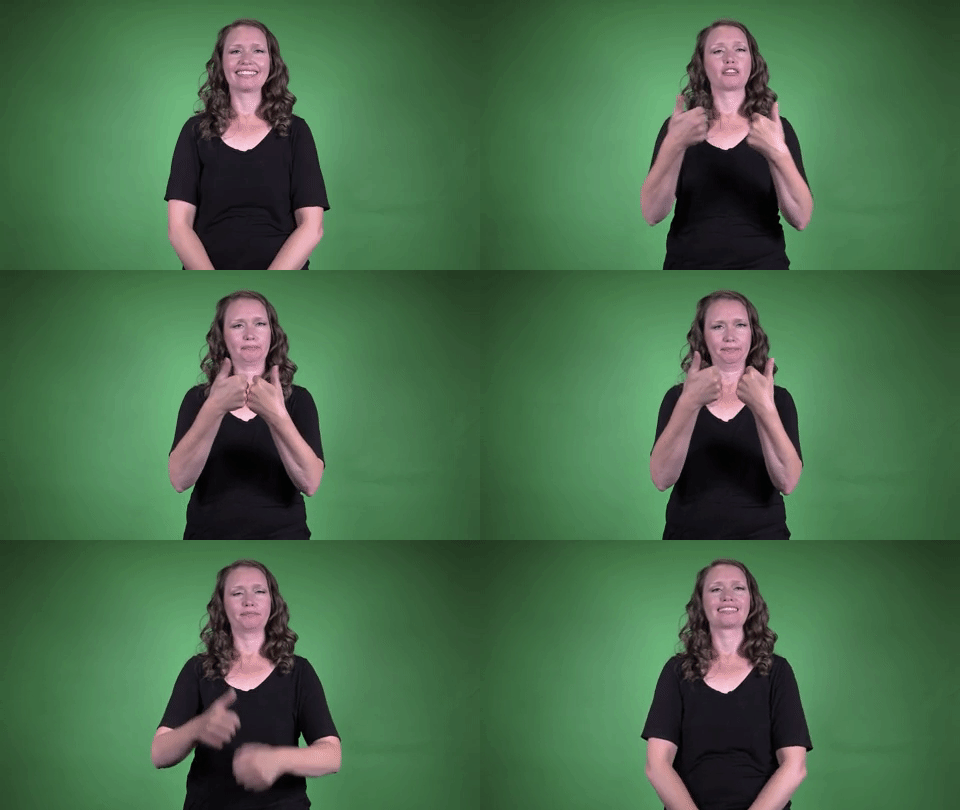
Sign for GAME in ASL

YouTube player

Practice Activities:

Practice activities for the sign for GAME in ASL can include both individual and interactive exercises to build fluency and confidence. Start with mirror work to isolate and perfect the handshape. Take time to review the thumb-up handshape on both hands and the repeated movement of the knuckles knocking together. Repeat it slowly, then faster, ensuring the correct motion is maintained.

Next, practice the sign in front of a camera to evaluate consistency and fluidity. Say the word out loud or write it down before signing to link the English word with the correct sign. Use flashcards with different vocabulary, including the sign for GAME in ASL, and quickly produce the sign when you see the word.

Incorporate the sign into basic phrases like “I like game,” “Do you want to play a game?” or “This game is fun.” Sign these short sentences daily to develop comfort using the term in conversational context. Create short phrases on sticky notes and match them with their signs as a practice drill.

For storytelling, describe a favorite game you enjoy and include the sign for GAME in ASL each time you refer to the activity. For example, tell a short story about playing a board game with your family and use the sign naturally each time the word comes up. This builds context and retention.

With a partner, play miming games like charades or “sign and guess” with different types of games as categories—such as sports, video games, or board games. Each time someone signs GAME as part of their guess or answer, they get a point. This reinforces the sign in a fun, interactive setting.

Watching kids’ ASL content or game-themed stories in ASL can support exposure and comprehension. Pause when you see the sign for GAME in ASL and copy it to reinforce recognition and accuracy.

Cultural Context:

In Deaf culture, the concept of games plays an important social role, and understanding the sign for GAME in ASL reflects more than just vocabulary. Whether it’s board games, card games, or interactive group activities, games bring people together within the Deaf community for bonding and fun.

The sign for GAME in ASL uses both hands in the A-handshape, bumping the knuckles of both fists together twice. This movement signifies interaction and competition, fitting the cultural context where games provide both entertainment and connection. The sign is commonly used in conversations about sports, video games, or casual play.

Learning the sign for GAME in ASL helps bridge communication between Deaf and hearing individuals during shared experiences. Whether in schools, community centers, or homes, playing games is a universal activity, and being able to sign it fluently enhances inclusion.

In many Deaf social gatherings and events, games are a mainstay. The sign for GAME in ASL often appears in discussions about upcoming contests, team activities, and friendly competitions. This makes it a frequent and essential sign to know, especially in group interactions.

Understanding how to use the sign for GAME in ASL correctly also helps improve comprehension of related signs. Words like PLAY, COMPETE, and TEAM often appear alongside it, forming more complex thoughts and enriching communication. Since games involve rules and interaction, conversations about them are a great way to build expressive and receptive ASL skills.

The sign for GAME in ASL can also be used metaphorically in storytelling or expressive signing. Just like in English, phrases like “playing games” or calling life a “game” carry deeper meaning. Knowing how this concept is signed in ASL supports engaging in these larger, more abstract ideas in Deaf culture.

For children learning ASL, games are a key teaching tool. Teachers use the sign for GAME in ASL to introduce language through interactive learning. This reinforces communication skills in a playful, stress-free way, making signing feel natural and fun .

In Deaf sports, such as Deaf basketball leagues or volleyball tournaments, the sign for GAME in ASL is frequently used. Announcements, invitations, and cheering often involve this sign, underlining its emotional and competitive aspects. It strengthens community spirit and pride, fostering a sense of belonging.

Games also serve educational and therapeutic purposes in Deaf spaces. Using the sign for GAME in ASL during group therapy or special education supports emotional expression and social development. It helps create safe environments where communication thrives .

From childhood through

Extended Definition:

The sign for GAME in ASL is a commonly used and easily recognizable sign among beginners and fluent signers alike. It is frequently taught early in ASL lessons because of its relevance in everyday conversations. Whether you’re talking about board games, sports, or video games, knowing the correct sign for GAME in ASL makes communication smoother and more inclusive.

To produce the sign for GAME in ASL, both hands form the shape of a closed fist with thumbs extended. The fists tap together twice at the knuckles in front of your chest. This sign mimics the concept of two parties connecting or engaging, making it a great visual metaphor for competition or participation in a shared activity ️ .

This sign is versatile and commonly used in various contexts. For instance, you can use it when referring to playing a game with friends, watching a sports event, or discussing your favorite mobile game. The sign for GAME in ASL can be paired with other signs like PLAY, TEAM, or WIN to enhance specific meanings within a conversation.

When describing a board game night or planning activities for kids, using the sign for GAME in ASL helps you be clearly understood and accessible to Deaf or hard-of-hearing people. It reinforces how ASL can be both expressive and functional in different social or educational settings. Teachers often use this sign in classrooms to indicate transitions to playtime or learning through games.

In digital and online spaces, the sign for GAME in ASL is increasingly relevant. With the rise of gaming platforms and esports, ASL users are incorporating the sign into content around these topics, whether streaming or participating in gaming communities. Incorporating ASL signs like this into digital media fosters more inclusive online engagement across diverse audiences .

Understanding the sign for GAME in ASL also helps in conversations around sports. Whether you’re talking about a soccer match or an upcoming championship, this simple yet effective sign adds context and clarity. It bridges communication gaps and helps bring people together over shared interests.

Culturally, games play an important role in bringing families and communities together, and the sign for GAME in ASL reflects that significance. Deaf culture values visual communication, and signs like this help preserve that tradition through interactive and communal activities.

ASL learners often remember this sign easily because of its physical motion and the logic behind its formation. This makes it an ideal word for reinforcing motor memory when beginning to learn American Sign Language. The sign for GAME in ASL can also serve as a foundation for learning

Synonyms: match, competition, contest, challenge, event

Educational resources: Find related learning materials in our course bank!

Want more? Check out some of our popular learning activities on the homepage!

Need to look up a sign? Use our highly rated dictionary: https://aslinteractive.com/best-asl-dictionary/

Follow us on tiktok: https://www.tiktok.com/@aslinteractive. More social media links at the bottom of this page!

Long-tail Keywords: what is the sign for game in ASL, how do you sign game in ASL, learn how to sign game in American Sign Language

Categories:

tags: ASL sign for game, how to sign game in ASL, game in American Sign Language, learning ASL vocabulary for games, ASL dictionary game

Parameters

*Handshape*:

The handshape for the sign for GAME in ASL uses both hands in the “A” handshape , where the fingers are curled into a fist with the thumbs extended and pointing upward. Each hand forms this shape separately.

During the sign for GAME in ASL, the knuckles of both “A” hands are brought together and tapped twice. This symmetrical motion and identical handshapes make the sign clear and easy to recognize in context.

*Palm Orientation*:

For the sign for GAME in ASL, the palms face each other in a sideways orientation. Both hands form into A-handshapes (fists with thumbs extended) and the thumbs touch together in front of the body.

The palms stay perpendicular to the chest during the motion. This palm orientation is essential for conveying the correct meaning of the sign for GAME in ASL, as it mimics a competitive interaction or challenge between two sides.

*Location*:

The sign for GAME in ASL is produced in the neutral space in front of the torso, slightly below chest level. Both hands form the A-handshape (thumbs extended, fingers curled into fists), and the knuckles of the thumbs come together with a double tapping motion.

The location in front of the body allows for clear visibility and interaction between the hands, which emphasizes the idea of competition or engagement. This placement is consistent across variations of the sign for GAME in ASL and remains within comfortable signing space.

*Movement*:

To make the sign for GAME in ASL, start by forming two A-hands (fists with thumbs extended). Position the hands in front of the chest, palms facing each other. Bring the knuckles of both thumbs together in a tapping motion, touching twice.

The movement in the sign for GAME in ASL is sharp and deliberate, symbolizing two sides coming together in a contest or play. Maintain a steady rhythm and avoid excessive motion to keep the sign clear and effective.

*Non-Manual Signals*:

When using the sign for GAME in ASL, a neutral to slightly engaged facial expression is appropriate. Eyebrows may be lightly raised to show interest or anticipation, particularly in a context like asking someone to play a game or discussing gameplay. ️

The non-manual signals should reflect a light, enthusiastic tone, matching the playful context associated with the sign for GAME in ASL. Avoid overly serious expressions, as they can confuse the intent behind the sign.

*Prosody, Dominant/Non-Dominant Hand*:

The sign for GAME in ASL uses both hands in an “A” handshape, with thumbs extended and fingers curled in. The dominant and non-dominant hands face each other, knuckles touching at mid-chest level. They meet twice in a firm tapping motion, symbolizing competition or interaction. This symmetrical movement gives clarity to the sign for GAME in ASL when expressing play or matches. ✋

Tips for Beginners:

When learning the sign for GAME in ASL, it’s essential to master proper hand positioning and movement. The basic motion involves forming both hands into the A-handshape (fists with thumbs extended) and then bumping your knuckles together twice. Make sure your thumbs are pointing upward and that both hands are aligned evenly. This ensures your sign looks clean and is easy to understand.

A common mistake when signing GAME is forgetting to repeat the tapping motion, or doing it too softly. The double tap is what distinguishes it from similar signs and brings clarity to your expression. Practicing in front of a mirror can help reinforce the correct movement and allow you to self-correct posture or alignment issues.

Hand strength and balance are also important. Some beginners unintentionally let their wrists flop or hold one fist higher than the other. These details may seem small, but they affect how clearly the sign for GAME in ASL is received. Try to keep your wrists firm and your hands at chest level for optimal visibility and accuracy.

Facial expression plays a subtle, but useful role. While not required for this particular sign, adding slight enthusiasm can reflect the context in which you’re using it. Whether it’s a fun board game or a competitive sport, your expressiveness adds depth to communication.

One useful tip is to learn the sign within real-life conversations. Ask someone how a game was or tell a friend you want to play. Those natural moments help reinforce your muscle memory and make the sign for GAME in ASL more automatic.

Lastly, don’t rush the learning process. Consistency and repetition go a long way. Try watching videos by fluent signers to compare your technique and make small adjustments as needed. Confidence will grow with regular use and active feedback from the Deaf community.

Connections to Other topics:

The sign for GAME in ASL connects closely with concepts of competition, recreation, and social interaction. It uses both hands in an “A” handshape, tapping knuckles together twice, symbolizing a back-and-forth exchange like a contest. This visual metaphor ties directly to meanings like sports, matches, and challenges, all of which are extensions of games in broader social contexts.

This sign is foundational when forming compound signs related to activities or leisure. For example, combining the sign for GAME with VIDEO creates the compound for VIDEO GAME. This illustrates how users can apply the base concept of GAME to clarify different types of games by adding relevant descriptors, expanding vocabulary for conversations around hobbies and technology .

GAME also relates to educational and therapeutic contexts. When discussing learning through play, such as in sign language classes for children, GAME can be combined with LEARN or SCHOOL to emphasize game-based learning methods. In this way, the sign becomes a bridge to broader pedagogical discussions, linking play with development and knowledge acquisition.

The sign for GAME also overlaps with sports and physical activity. Combining it with WORK or TEAM produces context-specific signs such as TEAM GAME or WORK GAME, often used when referring to team-building exercises or company-sponsored recreational events. These compound signs are frequently seen in workplace and school settings, promoting communication through shared experiences .

GAME shares conceptual space with signs like COMPETITION, MATCH, and CONTEST, all of which can use similar handshapes or placements. The difference lies in context and non-manual markers such as facial expressions, which modify meaning from lighthearted fun to more serious or formal contests. Understanding these subtle distinctions enhances fluency and appropriateness in usage. For learners, mastering the sign for GAME in ASL opens the door to rich interactions in social, educational, and recreational contexts.

Summary:

The sign for GAME in ASL uses both hands in the shape of the letter “A” with the thumbs extended. The hands come together with the knuckles touching lightly, almost like a fist bump, then pull apart slightly and come together again. This push motion is done once or twice, depending on context and emphasis.

This sign visually represents competition or interaction between two opposing entities. By mimicking a pushing motion, it captures the idea of two sides coming together in a challenging or fun context. It evokes the idea of play, strategy, and sometimes, teamwork.

The sign for GAME in ASL is commonly used in both social and educational settings. It’s highly functional in Deaf schools and gatherings, where board games, sports, or other types of games are a regular part of socialization. Its usage crosses into cultural experiences where games represent more than just fun but also community bonding.

Deaf culture places a high value on visual and interactive learning. As such, games play an important role in building relationships and communication. The sign for GAME in ASL symbolizes not only the event itself but the collaborative and competitive spirit that comes with it.

Structurally, this sign is composed of symmetrical handshapes and a repeated movement. This reflects ASL’s linguistic emphasis on mirror image mapping and symmetry, both of which facilitate visual clarity. It shows how ASL adapts gesture into grammatical structure.

Grammatically, the sign for GAME in ASL can function as a noun in the majority of cases. When used in a sentence, it often comes with non-manual markers such as raised eyebrows or head tilt depending on the question or emphasis. For instance, “What game?” would include an inquisitive facial expression to frame the question.

When expressing types of games, this core sign often combines with classifiers or modifiers. For example, to sign “video game,” you would use the sign for GAME and then accompany it with signs like COMPUTER or CONTROLLER. This demonstrates compounding and context building in ASL.

The sign can also adapt depending on fingerspelling or specifics in the discourse. For newer types of games or unique proper names of games, fingerspelling may be used before or after signing GAME. This identifies ASL’s fluid nature in dealing with proper nouns and cultural borrowings.

There are variations in signing depending on region or signer preference. Some may emphasize the contact between fists more, while others may have a sharper movement. Despite these minor differences, the core visual concept remains intact and easily understood.

The sign for GAME in ASL aligns with themes of interaction, play, and shared experience. It’s not merely a reference to sports or electronics; it includes board games, card games, and even intellectual competitions. Anything with rules and engagement can fall under its scope.

When teaching children in Deaf spaces, using the sign for GAME in ASL encourages not only play but storytelling and mimicry. Games are often a tool for teaching rules, social interaction, and language development. Signing GAME becomes an access point to broader educational strategies.

In storytelling or theatrical contexts within the Deaf community, signs like GAME are often animated and used with dramatic flair. For example, when recounting a story about winning or losing, the sign can be emphasized or exaggerated for effect. This ties sign language closely to performance art.

ASL incorporates signs such as WIN, LOSE, TEAM, or SCORE along with the sign for GAME, making it possible to narrate complex game strategies and situations. This expands the narrative capabilities of sign language in both casual and narrative uses.

The root concept behind the sign—interaction—is also important in metaphoric or idiomatic expressions. While English sometimes uses “game” metaphorically, such as “playing games emotionally,” ASL typically requires a different strategy. But in specific scenarios, the sign for GAME in ASL can be used playfully to indicate strategic interaction or silliness.

ASL learners often relate quickly to the sign for GAME because of its physical and memorable movement. Students in beginner courses typically enjoy vocabulary related to leisure activities. The sign’s shape and motion help reinforce language retention due to its visual intensity.

The sign highlights how ASL integrates everyday experiences into a visual-kinetic format. It expresses abstract concepts through physical motion, contributing to the understanding of language embodiment. This aligns with broader themes in cognitive linguistics.

Phonologically, the handshape used in the sign for GAME involves an “A” handshape on both hands. Symmetry and movement outward-inward give it a rhythm, a trait often analyzed in sign phonology. The location along the midline of the body creates a balance that eases legibility.

From a sociolinguistic point of view, the sign emerges often at community venues like Deaf clubs or sports events. Whether at a bowling meet or during visual games like charades, the sign is a staple. It links people through common cultural practices.

Researchers in visual linguistics observe how such signs bridge attention and concept clarity.

Want more? Check out some of our popular learning activities!

ASL Interactive Resources

ASLInteractive YouTube Channel

Follow us on tiktok: @aslinteractive.com

Follow us on Instagram: aslinteractive

Facebook page: aslinteractive

Facebook group: aslinteractive

LInkedIn: ASL Interactive LLC

Twitter: @ASL_interactive

*Some information on this page is AI-generated. AI can make mistakes. Please check the information.


Responses