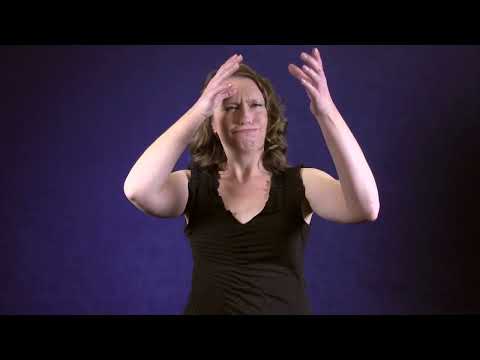
Definition: An exceptionally intelligent person.
Sign for GENIUS in ASL
Practice Activities:
To practice the sign for GENIUS in ASL, begin by isolating the sign in front of a mirror. Repeatedly sign it while focusing on the handshape and motion. This first step builds familiarity with the physical execution of the sign and helps develop muscle memory.
Use flashcards or apps with images and situations that depict highly intelligent individuals or moments involving intellect. After viewing each image, sign for GENIUS in ASL and briefly describe why the person is a genius. This adds context and helps reinforce vocabulary retention.
Practice signing simple sentences like “She is a genius,” “That idea is genius,” or “You are a genius!” Focus on facial expressions and body language to match the intensity of the adjective. ASL relies on visual emphasis, so practicing with exaggerated facial expressions helps convey the full meaning.
Grab a friend or language partner for a mini conversation. One person can describe someone they admire and why, while the other includes the sign for GENIUS in ASL during their response or retelling. This allows for listening comprehension and accurate sign production in a conversational setting.
Create a short story about a character who solves a huge problem using intelligence. Include moments to highlight that the character is considered a genius. Practice signing this story multiple times, refining your fluency and pacing each round.
Watch videos of famous inventors, scientists, or artists, and after each clip, describe that person using the sign for GENIUS in ASL. Say why you think the sign applies—whether it’s for their creativity, solutions, or knowledge.
Turn the practice into a game. Role-play as teachers or parents praising students or kids. Insert the sign naturally while gesturing toward drawings or activities that “deserve” the title of genius. Making it playful boosts retention and fun.
Cultural Context:
The sign for GENIUS in ASL reveals fascinating insights into how American Sign Language expresses abstract ideas like intelligence, creativity, and brilliance. In Deaf culture, the sign for GENIUS in ASL can represent not just intellectual ability but also problem-solving skills, original thinking, and talent in various domains. It is often used with a tone of admiration or playful exaggeration depending on the context and facial expressions.
In the Deaf community, being labeled a genius is both an honor and a sign of respect. When someone uses the sign for GENIUS in ASL, they are often acknowledging another person’s unique contributions, intellectual achievements, or unexpected wisdom. This sign celebrates more than just academic intelligence—it encompasses artistic talents, clever solutions, and emotional insight.
The sign for GENIUS in ASL can also be used humorously or sarcastically among peers. Just as in spoken English, ASL users might exaggerate or playfully sign GENIUS to comment on a clever remark or a silly mistake corrected in an imaginative way. The cultural tie between humor and intellect in the Deaf community adds another layer of significance to the way this sign is used in everyday interactions.
Historically, ASL has developed signs that reflect not only the meaning of English words but also the cultural perceptions surrounding them. The sign for GENIUS in ASL carries these cultural values. It reflects how Deaf individuals experience and appreciate intellect—visually, socially, and expressively.
In educational environments within the Deaf community, the sign for GENIUS in ASL is often used to encourage students or recognize achievement. Whether in math, science, language, or art, this sign sends a strong message of recognition and approval. Signing GENIUS can reinforce positive self-esteem and affirm that intelligence is recognized in many different forms.
Interacting with Deaf professionals or artists, you may see the sign for GENIUS in ASL used as a form of praise. Whether someone unveils a stunning piece of visual art, solves a programming issue, or presents a fresh idea in a team meeting, ASL users readily celebrate those moments with this expressive sign. Among friends, the sign takes on a more playful yet still genuinely proud tone.
Facial expression plays a major role when using the sign for GENIUS in ASL. A raised eyebrow, wide eyes, or a nod can all add layers of meaning and emotion. That’s part of what makes ASL so powerful—it’s a full-body language that invites creativity
Extended Definition:
The sign for genius in ASL reflects the concept of extraordinary intelligence or brilliance. When using this sign, you’re typically referring to someone who demonstrates remarkable intellectual ability or creativity. It can also be applied to someone with exceptional talent in a particular field, such as music, math, or invention.
To produce the sign for genius in ASL, start by forming a handshape that resembles the letter bent-L. Bring the dominant hand up to the forehead, just above the temple area, then move it outward in a slightly upward direction, emphasizing an idea coming from the mind. This movement conveys the idea of intelligence bursting forth from the brain, which aligns well with the concept of genius.
Like many signs in American Sign Language, the sign for genius isn’t only about form—facial expression and context matter too. A raised brow or a slight smile might be added when talking about someone you admire for their intellect. Using this sign in the right context ensures the intended meaning is clear and understood.
Cultural context can influence how and when the sign is used. In Deaf culture, recognizing intelligence isn’t always about academic achievement—it also includes innovation, creative thinking, and problem solving. So, when using the sign for genius in ASL, it’s important to recognize that the meaning can be broad and inclusive across different fields.
This sign is commonly used in both conversational and academic settings within the Deaf community. For example, you might use it when discussing a historical figure known for their inventions or when praising a friend for a clever idea. Its usage extends to ASL storytelling and classroom instruction where acknowledgment of brilliance is appropriate.
When learning the sign for genius in ASL, it helps to associate the gesture with the abstract idea of thoughts and ideas emerging from the brain. This visualization can make remembering the sign easier for students and new learners of ASL. Like many ASL signs related to cognitive abilities, it connects the motion to the head, the recognized source of intelligence.
You might also see variations of the sign for genius in ASL depending on regional dialects or personal signing styles. While the core movement remains similar, some signers may modify the speed or hand shape slightly. These variations are a natural part of how American Sign Language evolves and adapts across communities.
In addition to being a standalone sign, genius may also be used in combination with other signs to form phrases or sentences. This makes it a versatile and expressive sign within ASL grammar. Combining signs like creative, intelligent, or advanced in a sentence with
Synonyms: prodigy, mastermind, intellect, whiz, virtuoso
Educational resources: Find related learning materials in our course bank!
Want more? Check out some of our popular learning activities on the homepage!
Need to look up a sign? Use our highly rated dictionary: https://aslinteractive.com/best-asl-dictionary/
Follow us on tiktok: https://www.tiktok.com/@aslinteractive. More social media links at the bottom of this page!
Long-tail Keywords: what is the sign for genius in ASL, how do you sign genius in ASL, ASL sign for genius
Categories:
tags: genius in american sign language, how to sign genius in ASL, ASL sign for genius, learn genius in ASL, genius meaning in ASL
Parameters
*Handshape*:
The handshape for the sign for GENIUS in ASL uses the dominant hand in a flat “B” shape. The flat “B” hand is typically positioned near the forehead or temple, depending on the variation of the sign.
In the sign for GENIUS in ASL, this handshape represents the idea of intellect or mental sharpness. The movement and contact made during the sign help emphasize this mental agility or brilliance.
*Palm Orientation*:
In the sign for GENIUS in ASL, the dominant hand starts in a flat handshape with the palm facing inward toward the head. The fingertips touch the forehead lightly and then arc outward and slightly upward, suggesting an idea or intellect being expressed.
Throughout this motion, the palm remains generally inward-facing. This palm orientation helps emphasize the mental or cerebral aspect central to the concept conveyed by the sign for GENIUS in ASL.
*Location*:
The sign for genius in ASL is produced in the head area, emphasizing the concept’s connection to intelligence and mental capacity. Specifically, the location is at the temple or slightly above the forehead, highlighting the brain as the source of brilliance.
This placement reinforces the meaning behind the sign for genius in ASL by drawing attention to the mind. The use of the temple area helps convey the idea of exceptional intellect and creativity.
*Movement*:
The dominant hand, formed in the bent open “5” shape, starts near the forehead with fingers pointing upward. Move the hand slightly away from the forehead in a quick, outward motion about six inches, as if an idea is bursting from the mind.
This motion in the sign for genius in ASL emphasizes intelligence or brilliance. The gesture mimics the concept of a bright thought coming out of the head .
*Non-Manual Signals*:
When performing the sign for GENIUS in ASL, the facial expression should show awe or admiration, often with slightly raised eyebrows and eyes focused upward or forward as if acknowledging someone’s brilliance . A subtle head tilt or nod can emphasize respect or intellectual recognition.
The non-manual signals play a key role in conveying the depth of meaning behind the sign for GENIUS in ASL, helping to distinguish it from other similar concepts like intelligent or smart. Keep your expression positive and engaged during the sign.
*Prosody, Dominant/Non-Dominant Hand*:
The sign for GENIUS in ASL is one-handed and uses the dominant hand only. The dominant hand forms the bent “5” handshape and starts near the temple. From there, it moves outward slightly, symbolizing intellect or an idea coming from the mind .
The non-dominant hand plays no active role in the sign for GENIUS in ASL. It’s typically relaxed at your side or resting neutrally in your lap if seated. This sign highlights intelligence by mimicking a thought emerging from the head.
Tips for Beginners:
Learning the sign for GENIUS in ASL can be a fun way to expand your vocabulary and express admiration for someone’s intelligence or creativity. To sign GENIUS, start with your dominant hand in a loose “5” handshape. Touch the tip of your middle finger to your forehead, then quickly move it outward and slightly up, as though an idea just sparked from your brain. The movement should be fluid and confident.
One of the best ways to practice the sign for GENIUS in ASL is to do it slowly at first while watching your hand position in a mirror. Make sure your middle finger touches the correct part of your forehead—just above your eyebrow line in the middle. Being off by even a couple of inches could change the accuracy of the sign, so body placement matters a lot. Also, be clear and decisive with the outward motion to reflect the meaning clearly.
A common mistake beginners make is using the wrong finger or getting confused with similar signs like SMART or IDEA. Be mindful of the handshape and placement to avoid blending these signs together. Watch native signers perform the sign for GENIUS in ASL and try to replicate their rhythm and flow. ✋
Consistency in your facial expression also helps. When using this sign, a slightly impressed or animated look matches well with the concept. Try not to use a flat or neutral face, as it reduces the clarity of your intent.
Practice the sign in everyday conversation by describing people or ideas you admire. Integrating the sign for GENIUS in ASL into real-world contexts will train you to remember both the motion and meaning more effectively. Repeated, conscious use is the key to mastery.
Connections to Other topics:
The sign for GENIUS in ASL is deeply connected to conceptual signs that represent high intelligence, mental ability, and creative thinking. It shares similarities with signs like SMART, INTELLIGENT, and BRAIN, all of which involve movements near or involving the head to represent cognitive functions. These signs support the visual metaphor that thoughts originate in the brain, allowing learners to associate physical placement of the sign with its meaning .
The sign for GENIUS in ASL can pair with other signs to form compound concepts such as COMPUTER GENIUS or ARTISTIC GENIUS. In these phrases, GENIUS adds a level of skill or creativity to the preceding noun, expanding its meaning dramatically. In this way, GENIUS in ASL not only represents high intelligence but attributes a degree of excellence or mastery to a person .
This sign often appears in academic or professional discussions, so it’s beneficial to connect it to context-rich signs like SCIENCE, ENGINEER, or INVENT. When used together, these signs create a clearer picture of someone’s expertise and intellect. The sign for GENIUS in ASL helps lend sophistication to conversations about education, innovation, and talent.
Learners will benefit from linking this sign with emotional or judgment-related signs like PROUD, IMPRESSED, or JEALOUS, especially in storytelling or anecdotal exchanges. These emotional qualifiers help express how people feel about individuals described as geniuses. Contextual use reinforces comprehension and expressive fluency.
Understanding how to modify facial expressions and body language when signing GENIUS in ASL also connects to non-manual markers often used in ASL grammar. For instance, an exaggerated facial expression might imply sarcasm or admiration, affecting the intent of the sign. Being aware of these subtleties enhances both receptive and expressive skills .
Summary:
The sign for GENIUS in ASL begins with the dominant hand in the 1-handshape. This hand is moved from the region of the forehead, near the temple or above one eye, and then it moves slightly forward and away from the head. This motion suggests that an idea or remarkable thought is emerging from the mind, reinforcing the metaphorical connection between intelligence and the brain.
Facial expression plays an important role in conveying the sign’s meaning. A look of admiration, amazement, or insightful confidence can amplify the intensity and nuance of the sign. Like many ASL terms, the sign for GENIUS in ASL is not just about hand movement—it connects deeply with the emotion and context in which it is delivered.
The sign is often used to describe someone with outstanding mental capacity, innovative thinking, or extraordinary intelligence. It can refer to intellectual achievement in areas like science, math, technology, or even the arts. The sign for GENIUS in ASL might be used more loosely in casual contexts to describe someone who has done something surprisingly smart.
Context matters a lot when using this sign. In formal scenarios such as education or professional discussions, it can emphasize academic brilliance. Conversely, in informal settings, it might be used humorously or playfully to compliment a clever action or witty remark.
The etymology of the sign for GENIUS in ASL is linked to ASL’s use of iconicity. The head represents the location of thought, and the hand movement away from it shows something special being released—suggesting brilliance. The movement is not too sharp or fast, keeping in line with the theme of mental elegance rather than physical action.
The concept of genius has cultural and linguistic connotations in both Deaf and hearing communities. In the Deaf community, the sign can highlight both creative and intellectual contributions by Deaf individuals. It can also tie into stories about Deaf inventors, scholars, and artists whose work has had substantial impact.
Linguistically, this sign showcases ASL’s spatial grammar and non-manual markers effectively. ASL often blends symbolic motion with facial expression for words involving internal states. With the sign for GENIUS in ASL, the viewer understands that the gesture is symbolic rather than literal, relying on shared cultural understanding.
The classifier structure of ASL allows for expansions on this sign. For example, a signer could use GENIUS followed by a directional sign indicating what someone excels in. This can help to specify whether the person is a math genius, a language genius, or a musical prodigy.
There are related signs that can support, clarify, or contrast with GENIUS. Signs like SMART, INTELLIGENT, or BRILLIANT may appear similar but often carry different connotations or levels of intensity. GENIUS typically indicates a higher level of admiration and invokes a sense of awe.
In many social interactions, the frequency of this sign reflects the diversity of context it can adapt to. Genius can be spoken of in earnest admiration or mock enthusiasm, and the tone is made clear by sign dynamics. Humor, sarcasm, and respect can all be portrayed depending on delivery.
Translation strategies vary when interpreting the sign for GENIUS in ASL into written or spoken English. Depending on tone and context, it may correspond to genius, mastermind, whiz, or even prodigy. Translators must evaluate non-manual features and signing context to pick the most accurate equivalent.
Applied linguistics can offer insight into how the sign for GENIUS in ASL is acquired and used by learners. For those learning ASL as a second language, understanding signs for abstract traits like intelligence requires both cultural immersion and linguistic input. Teachers often scaffold meanings by comparison with more basic signs like THINK and SMART.
Grammatically, GENIUS can function as a predicate adjective or a noun within ASL sentence structures. Because of ASL’s subject-verb-object order variations, it can be placed flexibly within statements. Accompanying facial grammar signals whether the statement is declarative, interrogative, or exclamatory.
The sign’s presence in academic, familial, or peer-group interactions demonstrates its social versatility. Students praise each other’s work by signing GENIUS, parents express pride when describing children, and friends reflect admiration in academic or creative contexts. It is a word of praise layered with emotional and intellectual depth.
Using the sign for GENIUS in ASL also reflects how language can elevate and empower others. Especially in educational or collaborative contexts, praising someone’s mental skill can build confidence and affirm identity. It is more than a word—it’s a sign of recognition and value.
The sign is also connected to the broader language ideology in the Deaf world around intelligence. Historically, Deaf people have often been underestimated regarding mental capacity. Using the sign for GENIUS to acknowledge Deaf intelligence reinforces counter-narratives and showcases Deaf pride.
The evolution of this sign demonstrates semiotic layering: the location near the head for
Want more? Check out some of our popular learning activities!
ASL Interactive Resources
ASLInteractive YouTube Channel
Follow us on tiktok: @aslinteractive.com
Follow us on Instagram: aslinteractive
Facebook page: aslinteractive
Facebook group: aslinteractive
LInkedIn: ASL Interactive LLC
Twitter: @ASL_interactive
*Some information on this page is AI-generated. AI can make mistakes. Please check the information.


Responses