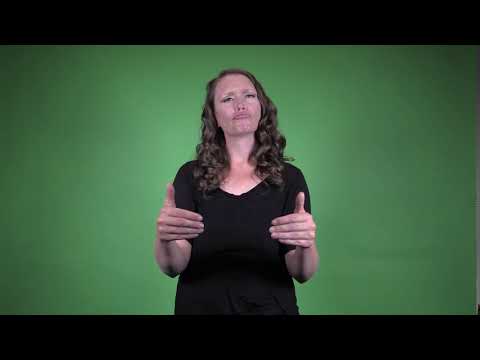
Definition: To have a harmonious or friendly relationship.
Sign for GET ALONG in ASL
Practice Activities:
Practice the sign for get along in ASL by first signing in front of a mirror. Watch your handshape and make sure both hands are moving forward smoothly and together. Repeat the sign five to ten times to feel the natural motion and rhythm.
Next, incorporate the sign into short sentences using familiar vocabulary. Sign phrases like “We get along,” “They don’t get along,” or “My sister and I get along well.” This exercise helps reinforce the meaning and usage of the sign for get along in ASL while also developing fluency in signing complete thoughts.
Use storytelling prompts to create more opportunities to practice. Try telling a simple story about two friends who used to fight but now get along. Include feeling words like happy, angry, or proud to enhance the story and give context to the sign. This helps learners use the sign within emotional and social contexts.
Partner activities can be very effective. Take turns practicing dialogue scenes. One partner asks, “Do you get along with your brother?” and the other responds in ASL, then expands on the answer creatively. This helps apply the sign for get along in ASL in realistic conversations.
Create a comparison game using opposites. Sign phrases such as “They get along” followed by “They argue a lot.” This guides learners to distinguish between peaceful and conflict-based interactions and helps build vocabulary connections.
Watching short ASL videos or skits that include the sign in use can reinforce recognition. Pause the video and copy the sign when you see it appear. Try summarizing the message afterward using the sign for get along in ASL.
Using emojis in text with signed captions can be another fun way to learn. ❤️ Show an emoji pair and then sign what type of relationship they have, using the word “get along” when appropriate.
Cultural Context:
In American Sign Language, the sign for GET ALONG in ASL carries more than just a literal meaning—it reflects values embedded in Deaf culture. The idea of getting along well with others resonates strongly within the tight-knit Deaf community, where social harmony and cooperation are highly valued. Understanding the cultural context behind the sign for GET ALONG in ASL helps learners appreciate the deeper interpersonal connections within the language.
People in the Deaf community often depend on each other for support, information, and connection since traditional communication channels aren’t always accessible. As a result, the concept shown by the sign for GET ALONG in ASL is not only about peaceful coexistence but also mutual respect and unity. In group settings like Deaf schools, clubs, or events, maintaining positive relationships is important and often emphasized through everyday conversations and storytelling.
The sign for GET ALONG in ASL can describe emotional relationships, friendships, family bonds, and even working partnerships. It’s a flexible sign that reflects the importance of relational balance in both social and professional circles. Using this sign with the correct facial expressions can express levels of closeness, ease, and compatibility, all of which carry rich cultural meaning.
Deaf culture celebrates visual and non-verbal communication, which includes body language and facial expressions. When signing GET ALONG, users may include a smile or a relaxed expression to show the ease of the relationship. These subtle cues add depth to the sign and communicate more than just words, capturing a full emotional range understood in context.
When two people are getting along well, it’s not only about avoiding conflict. In the Deaf community, it also means they understand each other, support each other, and share values or goals. The sign for GET ALONG in ASL reflects this positive blend of mutual understanding and respect, making it a commonly used sign in everyday conversation.
New learners often encounter this sign in stories shared during Deaf events, plays, or in ASL classes, where social dynamics are a common theme. In these settings, knowing the cultural background of the sign for GET ALONG in ASL leads to deeper comprehension and better communication. Students are encouraged not just to memorize signs but to understand how and why they’re used in different social situations.
The sign for GET ALONG in ASL may also appear in discussions about community or collaboration. Whether it’s through volunteer work, professional environments, or school group projects, the sign symbolizes a willingness to connect and contribute peacefully. This reflects the communal values often seen as core parts of Deaf
Extended Definition:
The sign for get along in ASL is a useful expression for conversations about relationships and interactions. In American Sign Language, this sign is often used to describe how well people cooperate or coexist with each other. It can refer to friendships, family dynamics, or even casual acquaintances.
To form the sign for get along in ASL, both hands are open and move forward together in a smooth motion, as if showing harmony or coordination. This motion represents two people moving forward together without conflict. It visually reflects the idea of mutual understanding and peaceful interaction.
The sign can be adjusted slightly depending on the context, such as adding facial expressions to convey how well or poorly people are getting along. In ASL, facial expression adds important emotional meaning to the sign for get along. If signing about people who get along great, a smile or positive expression helps reinforce the message.
When using the sign in a sentence, ASL grammar structures like topic-comment can apply. For example, you might sign “siblings – they get along” using facial expressions to show whether that’s a good or bad thing. Because ASL is a visual language, the sign for get along in ASL can be very expressive and flexible.
This sign is not just limited to personal relationships. It can also be used when referring to broader groups, like coworkers, classmates, or teams. If people are collaborating well, the sign for get along in ASL communicates that concept clearly and efficiently.
It’s important to understand that the sign for get along in ASL communicates more than just surface behavior. It also can capture emotional tone, like closeness, harmony, or tolerance. For example, two people may not be close friends but they still get along—this sign helps express that nuance.
Children learning ASL can use this sign when talking about playmates or classmates. Adults can use it in professional settings to describe office dynamics or teamwork. In both cases, the sign for get along in ASL helps communicate a peaceful or cooperative relationship.
The phrase also appears frequently in storytelling and conversations about past experiences. For example, reminiscing about a time when a group didn’t get along is common and easily signed with changes in expression. The versatility of the sign makes it an essential part of everyday ASL vocabulary.
The sign is often taught early in ASL education because of how commonly the concept appears in daily life. Whether someone is deaf, hard of hearing, or a hearing ally learning ASL, this sign is useful for a wide variety
Synonyms: get along, get by, cooperate, be compatible, manage
Educational resources: Find related learning materials in our course bank!
Want more? Check out some of our popular learning activities on the homepage!
Need to look up a sign? Use our highly rated dictionary: https://aslinteractive.com/best-asl-dictionary/
Follow us on tiktok: https://www.tiktok.com/@aslinteractive. More social media links at the bottom of this page!
Long-tail Keywords: what is the sign for get along in ASL, how do you sign get along in ASL, learn how to sign get along in American Sign Language
Categories:
tags: get along in ASL, ASL phrase get along, how to sign get along in ASL, American Sign Language get along, learn get along in ASL
Parameters
*Handshape*:
The handshape for the sign for GET ALONG in ASL uses open flat hands, often referred to as “B” handshapes . Both hands are placed side by side, palms facing inward or slightly angled up, and fingertips facing forward.
The hands move forward together in unison, symbolizing harmony or progress. This smooth, parallel motion helps visually represent the concept behind the sign for GET ALONG in ASL.
*Palm Orientation*:
For the sign for GET ALONG in ASL, both hands are typically in a flat “5” handshape with the palms facing slightly inward and angled diagonally forward. The hands start near the chest or midsection and move forward together in a parallel motion.
This palm orientation helps convey the concept of progressing together in harmony. When learning the sign for GET ALONG in ASL, maintaining consistent angle and distance between hands is essential for clarity.
*Location*:
The sign for GET ALONG in ASL is made in the neutral space in front of the torso, slightly below chest height. Both hands move outward together, starting from the center of the body and gliding away from the body in a smooth, coordinated motion.
This placement emphasizes mutual movement and cooperation, key concepts conveyed in the sign for GET ALONG in ASL. The neutral zone allows the sign to be clearly visible and easily understood in conversation.
*Movement*:
Bring both flat hands in front of your chest, palms facing inward and fingers pointing slightly forward. Move the hands forward at the same time in a smooth, parallel motion, as if two people are walking together side by side.
Maintain an even speed and distance between both hands to show cooperation and harmony. The sign for get along in ASL uses movement to symbolize progressing together comfortably.
*Non-Manual Signals*:
When using the sign for GET ALONG in ASL, the facial expression should be neutral to slightly positive, reflecting cooperation or a good relationship. Maintain relaxed eyebrows with a calm and pleasant demeanor throughout the motion.
Mouth movements can include a slight smile or the silent mouthing of “get along” to reinforce the meaning. Leaning slightly forward may also enhance the intent behind the sign for GET ALONG in ASL .
*Prosody, Dominant/Non-Dominant Hand*:
The sign for get along in ASL uses both hands, open and facing inward, with fingers extended and touching. The dominant and non-dominant hands start near the torso and move forward together in a smooth, parallel motion, indicating mutual progress or harmony.
For the sign for get along in ASL, the hands remain side-by-side through the movement, representing cooperation or compatibility. A gentle smile and forward motion emphasize positive interaction.
Tips for Beginners:
When you’re learning the sign for GET ALONG in ASL, be sure to focus on the movement and hand positioning. This sign uses two flat “5” hands with palms facing in, starting from the chest and moving forward together side by side. Think of two people walking alongside each other harmoniously.
To master the sign for GET ALONG in ASL, maintain even spacing between your hands throughout the motion. Avoid letting your hands drift inward or away from each other, as that can confuse the meaning. Keep the movement smooth and relaxed to show positive connection rather than tension.
A common beginner mistake is either keeping the hands too stiff or rushing through the movement. Try practicing in front of a mirror to watch how naturally your hands move together. Smooth, controlled motion makes your signing clearer and easier to understand.
For realism and emotional accuracy, consider facial expression as well. A slightly positive or neutral facial expression pairs well with the sign for GET ALONG in ASL. Frowning or overexpressing might conflict with the intended meaning unless contextually appropriate.
Context matters when using this sign. It’s usually used to describe people who get along well socially or coexist peacefully. Don’t confuse it with signs like AGREE or FRIEND—each has distinct motions and meanings in ASL.
Watching fluent signers in videos or interacting in Deaf community spaces can help reinforce your use of the sign for GET ALONG in ASL. Repetition improves muscle memory, and observation sharpens your understanding of expressive nuances.
Lastly, don’t get discouraged if it takes time to feel confident. Signing is a physical language—just like dancing or playing an instrument, your skills will strengthen with patience and daily practice. Keep your hands relaxed, stay curious, and enjoy the learning process .
Connections to Other topics:
The sign for GET ALONG in ASL is closely related to interpersonal relationships and social harmony, which ties it to other ASL signs about emotions, interactions, and cooperation. Learners can connect it with signs such as FRIEND, TOGETHER, and AGREE, since all share the theme of mutual understanding or companionship. These connections are especially useful when conveying narratives about people interacting positively.
Contextually, the sign for GET ALONG in ASL can also appear in discussions about group dynamics or family relationships. It’s often used in scenarios like “We get along well” or “They don’t get along,” helping learners incorporate nuanced emotional dynamics into their signing. Pairing this sign with time indicators like BEFORE or NOW can express changes in relationships over time.
Additionally, this sign is highly useful in more complex sentences. It works well with derived or compound phrases such as GET ALONG WITH FAMILY or GET ALONG AT WORK, where modifiers or contextual classifiers expand the meaning. It also integrates smoothly with non-manual markers (like facial expressions) that show whether the outlook is positive or negative, which is core to conveying affect in ASL.
From a grammar and syntax perspective, the sign for GET ALONG in ASL reinforces the learner’s understanding of directional movement and space usage. It’s an example of how movement between the hands in a forward trajectory can indicate shared experience or progression in a relationship. This makes it stylistically similar to signs like WORK-TOGETHER or COOPERATE.
Learners exploring the sign for GET ALONG in ASL can deepen their understanding by practicing it alongside idiomatic expressions or storytelling where social compatibility is a theme. It also opens the door for exploring cultural values in the Deaf community, where cooperation and community relationships play an essential role .
Summary:
The sign for GET ALONG in ASL is a dynamic expression of interpersonal harmony. It reflects not only physical proximity but emotional compatibility and social fluidity. The sign captures mutual understanding without the need for detailed verbal explanation.
To produce the sign for GET ALONG in ASL, both hands open and slightly curved are brought from the torso outward in a parallel forward, outward movement. The hands create the sensation of two forces moving in coordination, much like people cooperating or harmonizing. This forward movement can be gentle or firm depending on emotional intensity.
Facial expressions play a crucial role when signing GET ALONG. A neutral or pleasant face suggests general harmony, while a more forced or exaggerated expression may imply polite tolerance, not deep friendship. The nuance available through ASL facial grammar adds sincerity or sarcasm, depending on context.
Culturally, the sign for GET ALONG in ASL is closely tied to values of community and cooperation. Deaf culture often prioritizes togetherness and shared experience. Thus, how someone signs GET ALONG may reveal subtle social judgments about relationships or group dynamics.
In terms of grammar, GET ALONG can function as a verb phrase, describing interactions between people. It can also appear as part of narrative structures that explain conflict resolution or interpersonal dynamics. ASL syntax allows for GET ALONG to be signed before or after subject and object depending on topic emphasis.
The sign’s movement direction in space can change based on who is getting along with whom. For example, if you’re referring to a third party—like “they get along”—you might shift the sign’s direction toward the established spatial referencing for those individuals. This spatial grammar builds clarity in narratives.
A related sign includes COOPERATE, where interlocking fingers or side-by-side forward hands indicate mutual action. While COOPERATE has a more collaborative, formal tone, GET ALONG suggests a social or emotional compatibility. Another related expression is FRIENDSHIP, though it carries less emphasis on harmony and more on relational depth over time.
Applied linguistics helps analyze how the sign for GET ALONG in ASL functions in discourse. It’s often used as a summarizing idea: a story may build tension and conclude with someone signing GET ALONG to indicate peace was reached. This shows how signs carry communicative force beyond lexical meaning.
In interpreting work, the sign for GET ALONG in ASL is often paired with mouthing or gestures to match tone. For instance, an interpreter might adapt intensity based on speaker emotion. This reflects the intersection of modality and semantics in signed languages.
The use of classifiers could support the sign for GET ALONG in narrative storytelling. For instance, signer might show two human figures moving forward together, then use the actual sign to clarify intent. This blending of classifiers and conventional signs deepens visual storytelling.
Linguistically, GET ALONG in ASL is a symmetrical two-handed sign with motion on the horizontal plane. Its non-dominant and dominant hands maintain the same shape and synchronized movement. It meets the criteria of symmetry condition in ASL phonology.
In sociolinguistic analysis, the sign for GET ALONG in ASL can differ subtly across communities. Some regions might add more body shift or use more exaggerated movements, influenced by local variations. This highlights ASL’s dialectal diversity and evolving usage patterns.
The sign for GET ALONG in ASL often appears in discussions on conflict mediation or community workshops. It’s common in settings like Deaf education or outreach where relationships are being navigated or reconciled. As such, the sign becomes a tool not just for language, but for building trust.
Translation from English to ASL presents decisions. An English sentence like “They don’t really get along” requires more than negating the sign. The signer adds facial expressions, head shakes, and contrastive space to accurately convey strained relationships.
Educational contexts often teach the sign for GET ALONG in ASL early, as it fits social-emotional vocabulary. It’s useful in classroom management, promoting empathy among students. Deaf teachers may use it when facilitating group work or talking about friendship values.
With Deaf children who are new signers, teaching the sign for GET ALONG in ASL supports conflict resolution. Young signers are encouraged to recognize social cues and name their emotions during peer interactions. Signing GET ALONG becomes both a linguistic and behavioral tool.
In the digital age, GIFs and online videos displaying the sign for GET ALONG in ASL are shared to promote inclusivity. ASL content creators often integrate the sign into skits or vlogs to discuss social balance. This also increases ASL visibility across online platforms .
For hearing learners, the sign for GET ALONG in ASL is often easy to remember because of its metaphorical motion. It visually implies flowing or smooth social interaction. This helps second language learners conceptualize the abstract meaning quickly.
Using the sign for GET ALONG in ASL in prayer or community signing highlights its role in expressing moral
Want more? Check out some of our popular learning activities!
ASL Interactive Resources
ASLInteractive YouTube Channel
Follow us on tiktok: @aslinteractive.com
Follow us on Instagram: aslinteractive
Facebook page: aslinteractive
Facebook group: aslinteractive
LInkedIn: ASL Interactive LLC
Twitter: @ASL_interactive
*Some information on this page is AI-generated. AI can make mistakes. Please check the information.


Responses