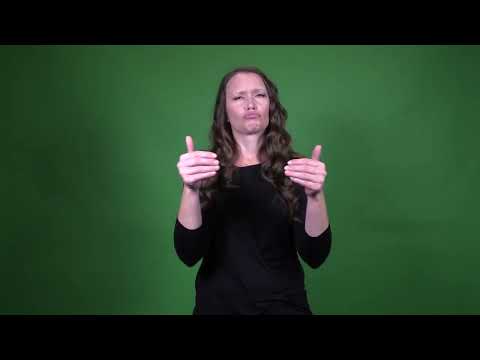
Definition: To proceed.
Sign for GO AHEAD2 in ASL
Practice Activities:
Start by practicing the sign for GO AHEAD2 in ASL in front of a mirror. Focus on using both hands correctly, noting that the dominant hand typically moves forward slightly from the chest area in a pushing motion. Repeat the motion slowly and then at a conversational pace to develop fluidity and ease.
Use flashcards or an ASL app to create simple command-response patterns. For example, point to a picture of someone waiting in line, then use the sign for GO AHEAD2 in ASL to indicate it’s their turn. Practicing short commands or cues can reinforce understanding and better embed the sign in memory.
Create example sentences like “GO AHEAD2, I’ll wait here” or “It’s your turn, GO AHEAD2.” Sign these in front of a video camera, then review to observe your accuracy with handshape and movement. Try combining it with related ASL vocabulary such as WAIT, TURN, NOW, and STOP to help anchor the sign contextually.
With a partner or group, role-play situations where the sign for GO AHEAD2 in ASL would be naturally used. You can act out scenarios like entering a doorway, offering someone the next turn in a game, or signaling a person to start talking in a conversation. Alternate roles to practice both receptive and expressive skills.
Challenge yourself with a storytelling prompt that includes a context where waiting and permission are important. For example, tell a story about friends at a busy restaurant allowing each other to go first. Incorporate the sign for GO AHEAD2 in ASL multiple times to increase familiarity.
Recreate real-world interactions by watching videos of deaf signers using this phrase and mimicking their example. Pause and copy as closely as possible to refine accuracy and timing. Practice until the sign becomes second nature in both isolated drill and contextual use.
Cultural Context:
In American Sign Language, understanding the cultural context behind a sign is just as important as knowing how to form it. The sign for GO AHEAD2 in ASL reflects a natural part of communication within the Deaf community that ties deeply with conversational flow and social etiquette.
When using the sign for GO AHEAD2 in ASL, it typically implies giving permission, encouragement, or allowing someone to continue with their action or speech. The tone is often friendly, casual, and supportive, depending on the situation. It’s a gesture commonly used in conversations to promote turn-taking or show agreement.
This phrase plays an important role in group discussions and storytelling in ASL. Since storytelling is central to Deaf culture, the use of cues like the sign for GO AHEAD2 in ASL helps maintain narrative flow and respects other signers’ space and time. It’s not just about literal movement, but also about affirming participation and respectful engagement in signed dialogues.
In informal settings among Deaf friends and family, this sign may often be used to give the floor to someone else without interrupting their momentum. Social norms in Deaf culture emphasize visual attention and smooth game-like exchanges in conversation. Using the sign for GO AHEAD2 in ASL at the right time shows cultural awareness and fluid social interaction.
It’s also worth noting that the sign for GO AHEAD2 in ASL is not the same as simply telling someone to proceed in English. ASL communicates deep layers of meaning through body language, facial expressions, and spatial direction, which adds nuance to signs like these. How you sign it—your posture, hand orientation, and facial expression—can convey encouragement, impatience, or neutrality.
Within educational and professional spaces, using the sign for GO AHEAD2 in ASL can also show deference and readiness to collaborate. In classroom environments or meetings, this sign helps Deaf participants navigate formal dialogues and shows a respectful transfer of communicative power. It keeps interactions inclusive and clear.
The Deaf community often values clarity and visual cues more than spoken intonation, so the presence and use of the sign for GO AHEAD2 in ASL help guide the rhythm of conversation. It acts like a social green light, allowing interaction to progress smoothly. This is especially vital in environments where multiple visual elements are competing for attention.
Even in interpreted conversations between hearing and Deaf individuals, interpreters know the importance of preserving facial and spatial cues when signing phrases like GO AHEAD2. This ensures the message is fully aligned with Deaf
Extended Definition:
The sign for go ahead2 in ASL is a useful expression that conveys permission or encouragement to proceed. It can be used in conversations when someone is telling another person to move forward with an action, to step ahead, or to continue with confidence. This phrase can also indicate an invitation or allowance to do something without hesitation.
In American Sign Language, the facial expression and context play a big role when using the sign for go ahead2 in ASL. Depending on the tone or the situation, it might suggest a friendly encouragement or a formal permission. Signing it with a smile, raised eyebrows, or a nod can all change the feeling behind the message.
To express go ahead2, you typically use a directional movement from your torso outward, symbolizing letting someone pass or proceed. The sign is performed with open hands moving forward slightly, giving a visual cue that someone is encouraged to move or act. As always, it’s important to observe the context since ASL is a 3D, visually rich language.
The sign for go ahead2 in ASL is common in both informal and formal settings. Parents may use it with children to grant permission, while professionals might sign it in a workplace scenario to give a colleague clearance to proceed. It can also be used as a form of politeness when letting someone speak or go first.
In fast-paced conversations, the sign for go ahead2 in ASL is often paired with other gestures or signs to add clarity. Many signers will use a slight shift in body position or eye gaze to support their message. These non-manual signals are just as important as the hand movement itself.
Understanding the cultural context behind the sign for go ahead2 in ASL can deepen your communication skills. It’s not just a basic vocabulary word—it is an expression of respect and cooperation. This makes it especially useful in group discussions, social interactions, and daily situations where turn-taking or offering support is needed.
Learning how to use the sign for go ahead2 in ASL expands your range of conversational expressions. It helps in casual chats, educational environments, and even during interpretations or presentations. It’s one of those flexible signs that fits smoothly into both casual and formal conversations.
When mastering the sign for go ahead2 in ASL, try using it in real-life scenarios. Practice giving permission politely or encouraging someone to continue a story or task. Repetition in daily use helps solidify the meaning and natural feel of the sign.
Videos and visual aids showing the sign for go ahead
Synonyms: proceed, continue, move forward, carry on, advance
Educational resources: Find related learning materials in our course bank!
Want more? Check out some of our popular learning activities on the homepage!
Need to look up a sign? Use our highly rated dictionary: https://aslinteractive.com/best-asl-dictionary/
Follow us on tiktok: https://www.tiktok.com/@aslinteractive. More social media links at the bottom of this page!
Long-tail Keywords: what is the sign for go ahead in ASL, how do you sign go ahead in ASL, ASL sign for go ahead
Categories:
tags: go ahead in ASL, how to sign go ahead in ASL, ASL phrase go ahead, American Sign Language go ahead, go ahead ASL meaning
Parameters
*Handshape*:
The handshape for the sign for GO AHEAD2 in ASL uses both hands in the flat “B” handshape. The palms face to the side, typically angled slightly forward, with fingers extended and together.
During the motion, the dominant hand moves slightly forward past the non-dominant hand in a smooth, assertive motion. This movement visually reinforces the meaning behind the sign for GO AHEAD2 in ASL, suggesting progression or permission to proceed.
*Palm Orientation*:
The palm orientation for the sign for GO AHEAD2 in ASL features both hands beginning in a neutral position with palms facing slightly to the side or down, depending on the signer’s comfort. As the gesture moves forward, palms typically stay flat and perpendicular to the body, projecting outward in a gentle motion.
In the sign for GO AHEAD2 in ASL, the forward movement of the hands helps convey the concept of progression or permission. Keeping the palms relaxed and stable enhances the clarity and meaning of the sign.
*Location*:
The sign for GO AHEAD2 in ASL is produced in the neutral space in front of the torso, slightly off to one side. The movement typically begins close to the body and moves outward, showing progression or permission. This sign uses space in front of the chest to symbolize moving forward, matching the meaning behind the sign for GO AHEAD2 in ASL ♂️➡️.
*Movement*:
The sign for GO AHEAD2 in ASL involves both open hands, palms facing in toward the body and fingers pointing forward, resting near the chest. The hands move smoothly forward in a parallel motion ♂️, away from the body, indicating progression or permission to proceed.
This movement conveys the idea of giving someone the go-ahead or green light. The consistency and direction of the hands help reinforce the intended meaning in the sign for GO AHEAD2 in ASL.
*Non-Manual Signals*:
The non-manual signals for the sign for GO AHEAD2 in ASL typically include a slight head nod forward and a relaxed, encouraging facial expression . Eyebrows remain neutral or slightly raised to convey openness and approval. These signals help emphasize the meaning of allowing or inviting someone to proceed without resistance.
When using the sign for GO AHEAD2 in ASL, maintaining attentive eye contact and showing slight affirmation with the facial expression helps convey permission or encouragement more clearly. The tone remains positive and receptive throughout.
*Prosody, Dominant/Non-Dominant Hand*:
The sign for GO AHEAD2 in ASL uses a dominant hand in a flat-B shape, palm facing down. The dominant hand starts slightly behind the non-dominant flat-B hand and then moves forward in a parallel motion, indicating direction or progression.
The non-dominant hand stays stationary in the same handshape, serving as a reference point. This clear, forward movement in the sign for GO AHEAD2 in ASL communicates permission or the idea of proceeding confidently.
Tips for Beginners:
When learning the sign for GO AHEAD2 in ASL, it’s important to practice fluid motion and appropriate facial expressions. This sign typically involves a gesture where the dominant hand moves forward from the chest area, often in a subtle pushing motion with the flat hand. Make sure your hand orientation and direction are consistent, as these small details carry meaning in ASL.
A common mistake beginners make with the sign for GO AHEAD2 in ASL is moving too quickly or without intention. In ASL, speed and timing can change the meaning or clarity of the sign. Be deliberate in your movement—think of gently guiding someone forward emotionally or literally. Keep your hand relaxed and your palm facing diagonally downward.
Facial expressions are crucial when using this sign. Depending on the context, it may convey encouragement, permission, or a directive. Use a nod or a slight head tilt to reinforce the tone of the message. Remember, ASL is visual and contextual—the way you express something adds depth to the meaning.
Another important tip is to watch how native signers use this expression. Videos, online ASL dictionaries, or live interactions can help you see variations of the sign for GO AHEAD2 in ASL in actual conversations. Exposure to natural signing helps you understand its rhythm and flexibility.
Lastly, remember that practice builds confidence. Try repeating this sign while role-playing different scenarios—giving someone permission, urging them to continue, or stepping aside for them. Repetition not only improves muscle memory, but it also builds sensitivity to context. Practice with friends or in front of a mirror to improve your spatial awareness and hand placement.
sign for go ahead2 in asl, asl sign for go ahead2, go ahead2 american sign language, how to sign go ahead2 in asl
Connections to Other topics:
The sign for GO AHEAD2 in ASL connects strongly to concepts like permission, transition, and sequencing. It is often used in interactions to show that someone may proceed or that it’s their turn. This makes it useful in classroom settings, group conversations, and organized activities where turn-taking or instruction-following is essential.
In terms of related signs, GO AHEAD2 may be used alongside signs such as CONTINUE, MOVE FORWARD, or KEEP GOING. These all convey progression or forward motion, both metaphorically and physically. The sign can lead into compound ideas like GO AHEAD THEN WAIT or GO AHEAD I FOLLOW, depending on context and use of non-manual signals.
The sign for GO AHEAD2 in ASL also overlaps semantically with signs like PERMIT, LET, and ALLOW. While the exact sign for GO AHEAD2 uses directional movement to show progression or clearance, PERMIT uses a different structure that emphasizes consent. Still, all of these signs come into play when negotiating roles, authority, or flow in ASL discourse.
Because the sign for GO AHEAD2 in ASL implies starting or transitioning, it can appear in time-based sequences. It might introduce a new topic during storytelling or prompt someone to begin their part in a shared activity. Thus, it relates directly to discourse markers and linking signs that help maintain narrative cohesion.
Learners may also recognize the subtle difference between GO AHEAD2 and gestures signaling physical motion, like GO or LEAVE. Although they share directional qualities, GO AHEAD2 includes a layer of social cueing, which is emphasized through facial expressions and pacing. Understanding these nuances enriches comprehension and interaction in real-life ASL communication.
Summary:
The sign for GO AHEAD2 in ASL captures the concept of granting permission or indicating that someone may proceed. This version of the sign uses directional movement and facial expression to convey openness or encouragement. It’s a functional and context-sensitive sign used frequently during interpersonal interactions.
To perform the sign for GO AHEAD2 in ASL, the dominant hand typically uses a flat B-handshape, held near the upper chest or shoulder, then moves slightly forward and down, away from the body. The hand tilts forward with a slight bounce, suggesting forward momentum. Facial expression reinforces tone—encouraging or neutral, depending on the message.
This version differs from other variations by its subtler, more casual movement. It may be used between friends or during conversational signing where the interaction is relaxed. The movement is usually executed with a cooperative attitude, sometimes paired with a head nod.
In terms of syntax, the sign for GO AHEAD2 in ASL can function independently or be embedded within a sentence. It’s often accompanied by topic-comment structures typical in ASL grammar. Its flexible placement in discourse makes it ideal for real-time clarification or fluid permission giving.
This sign also carries sociolinguistic weight. Within Deaf culture, giving someone the opportunity to go ahead is not just practical—it reflects community values such as mutual respect, autonomy, and reciprocity. It affirms active participation in dialogue or shared activities.
As with most directional signs in ASL, context can enhance or slightly alter its meaning. If used in an imperative tone, it might serve as encouragement, or a subtle push. If softened with a smile, it can become more about courtesy than command.
The sign for GO AHEAD2 in ASL is intertwined with concepts related to movement, access, and progression. It aligns semantically with ideas such as permission, freedom, or progression forward. In classroom settings, for example, it might be used to call on students or keep turn-taking orderly.
Teachers, interpreters, and family members of Deaf individuals use this sign commonly. Its gesture invites action or participation, often without interruption. In storytelling, it can bridge transitions or prompt the continuation of narrative events.
Compared to related signs like PERMISSION or CONTINUE, this version has a slightly more informal, conversational air. Where PERMISSION might require more formal expression, GO AHEAD2 allows for nuanced signaling, supported by nonmanual cues. It is situational and adaptable.
The sign also relates to broader discourse management in signed conversations. It enables the smooth flow of interaction, especially during debates or group discussions. When teamwork is involved, this sign becomes a tool for managing equitable turn-taking or collaborative sequencing.
Its roots are linked to more abstract notions, such as the validation of one’s time or actions. This reflects deeper cultural frameworks within the Deaf community that prioritize visual feedback and consensual dynamics. The granting of space—whether physical or communicative—is inherently tied to visual language norms.
ASL as a visual-gestural language depends on shared understanding and context to create meaning. The sign for GO AHEAD2 in ASL thrives in this space, offering a straightforward mechanism to prompt or signal intent. Its simplicity masks its utility across a range of settings.
Where spoken English might rely on tone of voice to imply encouragement, ASL uses facial grammar to inflect meaning. Subtle eye shifts, eyebrow raises, and posture changes add layers to this sign. The person signing not only delivers meaning—they embody it.
Applied linguistics research into sign language pragmatics shows that signs like GO AHEAD2 serve key discourse functions similar to backchanneling in spoken language. They sustain interaction, affirm consent to continue, and create rhythm in joint attention environments.
In group settings, GO AHEAD2 may carry leadership undertones. It works as a behavioral cue, allowing a team to organize or a speaker to proceed. In this context, it supports hierarchical nuances masked by polite permission.
From a linguistic morphology perspective, the handshape and motion suggest a metaphorical projection forward. Cognitive linguistics notes how forward motion often metaphorically implies future action or permission. This is echoed in the physicality of this sign.
Its movement path aligns with many other ASL signs designed to indicate progress or temporal movement. Such directional choices are consistent with the visual-spatial modality of ASL. The body foregrounds abstract concepts through physical mappings.
Historically, the sign likely evolved through community usage and informal standardization. Like many conversational signs, its exact genesis is unclear but shaped by functional needs within the Deaf community. Visual intuition plays a role in how many such context-sensitive signs develop.
The sign for GO AHEAD2 in ASL exemplifies how language economy works in non-spoken languages. Its effectiveness lies in minimal but meaningful movements. This aspect embodies the efficiency of ASL as a natural human language.
Learning to accurately convey this sign requires more than handshape knowledge. Accurate timing, fluid movement, and affective components are crucial. These elements are part of deep
Want more? Check out some of our popular learning activities!
ASL Interactive Resources
ASLInteractive YouTube Channel
Follow us on tiktok: @aslinteractive.com
Follow us on Instagram: aslinteractive
Facebook page: aslinteractive
Facebook group: aslinteractive
LInkedIn: ASL Interactive LLC
Twitter: @ASL_interactive
*Some information on this page is AI-generated. AI can make mistakes. Please check the information.


Responses