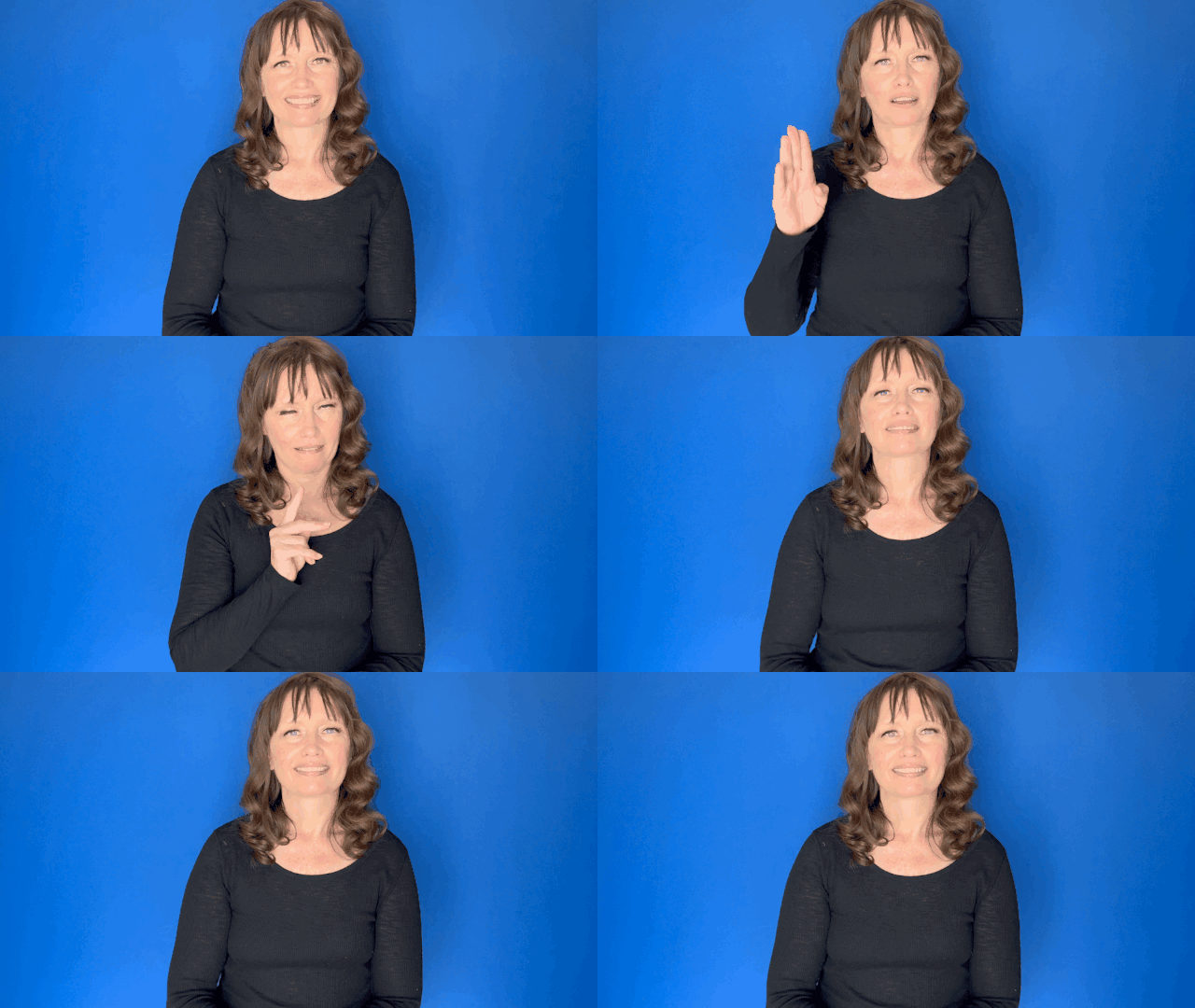
Sign for GO BACK in ASL | ⏪ ASL Dictionary

Definition: To retrace, to revisit an earlier time

Sign for GO BACK in ASL

YouTube player

Practice Activities:

Practice activities for learning the sign for GO BACK in ASL should focus on directional awareness and context usage since the phrase often relates to time, movement, or returning to a location. Start by practicing the sign in isolation while facing a mirror. Use repetition to lock in the handshape and motion. Do short drills, signing it ten times while saying the phrase aloud in your mind to reinforce the connection.

Once you’re comfortable with the movement, begin creating simple sentences that incorporate the sign for GO BACK in ASL. Try phrases like “I go back home,” “We go back to school,” and “Go back to the store.” Sign each full sentence slowly, paying attention to your facial expressions and directional signs to clarify meaning. Use video recordings to evaluate your timing and fluency.

Engage in storytelling activities where the character travels, returns home, or revisits a place. For example, narrate a short journey to the park and sign how you go back when it gets dark. These visual stories allow you to embed the sign naturally and help differentiate the use of past and present contexts.

In a group or partner setting, role-play scenarios using the sign for GO BACK in ASL. One partner gives directions or information, such as “You forgot your keys—go back!” while the other reacts or asks clarifying questions. This gives you practice in real conversational flow.

Set up a signing game where everyone draws scenarios that involve returning somewhere—family reunions, a trip to a childhood home, or going back to work after vacation. Each participant uses the sign in a unique context, helping reinforce flexibility and comprehension.

These practice methods will help build fluency and comfort with the sign for GO BACK in ASL through repetition, context, and interaction.

Cultural Context:

In American Sign Language, cultural context plays a major role in how signs are used and understood. The sign for GO BACK in ASL isn’t just about physical movement; it’s often used in daily conversations to talk about returning to a place, resuming a past activity, or revisiting a memory or situation. Understanding these nuanced meanings helps you communicate more naturally within the Deaf community.

ASL is a rich, visual language where facial expressions and body movement add layers of meaning. The sign for GO BACK in ASL may seem simple, but its meaning can shift depending on the context. For example, when you’re talking about returning to school after a break or going back home for the holidays, this sign fits perfectly.

When interacting with native signers, using the sign for GO BACK in ASL can show your awareness of Deaf norms. In Deaf culture, maintaining clarity in conversations is key. So, mastering how and when to use this sign helps you communicate respectfully and accurately. It also shows that you value the ways Deaf individuals express time and space visually.

This sign is frequently used in storytelling, a cherished part of Deaf culture. When telling personal stories or retelling events in ASL, the sign for GO BACK in ASL becomes essential. It cues the audience that you’re returning to a previous time or scene, helping structure narratives effectively.

Situational use also matters. In conversations about travel, life transitions, or revisiting ideas during discussions, this sign is common. You might see someone use it during a group chat to redirect attention to a previous comment or moment. This makes the sign for GO BACK in ASL a vital tool in organizing conversations and maintaining flow.

In social settings, knowing the sign for GO BACK in ASL helps bridge communication gaps. Whether you’re in a Deaf event, a classroom, or a mixed hearing-and-Deaf gathering, this sign allows you to participate more fully. It’s one of those signs that naturally fits into many topics, from education and work to personal histories.

Understanding the deeper meaning behind the sign for GO BACK in ASL enhances your overall fluency. It isn’t only about gesture accuracy—it’s about grasping cultural cues, emotional tone, and discourse management in ASL. This makes your signing more relatable and effective.

The sign also plays a role in expressing emotions. For instance, if someone expresses a wish to go back to better times, the sign can carry a nostalgic or emotional tone. ASL users often pair this sign with specific facial expressions to

Extended Definition:

The sign for go back in ASL is a common directional sign used in conversations to indicate returning to a previous location, idea, or point in time. This phrase can function both literally and figuratively, depending on how it’s used in context.

To produce the sign for go back in ASL, you typically start with your dominant hand in a point position and move it backward in space, as if pointing behind you. The motion visually represents the idea of returning or reversing direction. The facial expression may also change depending on urgency or emotional tone, which is a key part of ASL grammar.

When signing with others, the sign for go back in ASL can be used to refer to returning home, going back to a place, or revisiting a topic. In storytelling or conversation, it helps to maintain a clear sequence of events by indicating a shift to a previous setting, event, or thought.

In daily interactions, the phrase can also suggest someone should redo something or reconsider a previous decision. For example, if someone made a choice and wants to change it, another person might suggest they go back, using the proper sign with a concerned or instructive expression.

The meaning of the sign for go back in ASL may vary slightly depending on regional use or personal signing style. However, the core motion remains fairly consistent across most Deaf communities in the U.S. and Canada. Context and facial expressions provide crucial clues when the gesture might otherwise be ambiguous.

This sign often appears in casual conversations, classroom discussions, workplace dialogues, and storytelling. Because it’s such a versatile phrase, learning how and when to use the sign for go back in ASL is important for both new and experienced signers.

When used metaphorically, it can express an emotional or mental return, such as reflecting on the past or thinking about a prior experience. In this case, the physical motion of the sign remains the same, but your facial expression and body language help clarify the abstract nature of the message.

It can also be incorporated into more complex sentences or ideas. For example, someone might sign go back later or I need to go back tomorrow, combining it with time indicators to create a fuller message. This ability to modify and expand on simple signs is a key part of ASL’s linguistic richness.

If you’re learning ASL, practicing the sign for go back in a variety of contexts can help solidify your understanding. Repeating the sign along with appropriate facial grammar ensures that your communication is both accurate and expressive.

Synonyms: return, revert, retreat, regress, recede

Educational resources: Find related learning materials in our course bank!

Want more? Check out some of our popular learning activities on the homepage!

Need to look up a sign? Use our highly rated dictionary: https://aslinteractive.com/best-asl-dictionary/

Follow us on tiktok: https://www.tiktok.com/@aslinteractive. More social media links at the bottom of this page!

Long-tail Keywords: what is the sign for go back in ASL, how do you sign go back in American Sign Language, ASL sign for go back

Categories:

tags: go back in ASL meaning, how to sign go back in ASL, go back ASL translation, ASL phrase go back, learn go back in ASL

Parameters

*Handshape*:

The sign for GO BACK in ASL uses a modified index finger handshape. Start with the dominant hand in an “index finger” handshape, where only the pointer finger is extended and all other fingers are curled in. The palm faces to the side while the hand moves in a short arc backward toward the shoulder. The handshape is key to clearly conveying the motion and meaning of the sign for GO BACK in ASL. ↩️

*Palm Orientation*:

The palm orientation for the sign for GO BACK in ASL typically involves one hand in a loose “1” handshape. The palm starts facing forward or slightly to the side and then rotates back as the finger moves in a backward arc toward the body. This motion reflects the concept of returning or going in reverse.

In some regional variations, the palm remains sideways throughout the movement. The key to accurately expressing the sign for GO BACK in ASL lies in the direction of motion and subtle wrist rotation that aligns with the concept of movement toward a previous point.

*Location*:

The sign for GO BACK in ASL is typically made in the neutral space in front of the body. It begins slightly extended outward from the torso and then moves backward toward the chest or shoulder area.

This placement helps express the idea of returning or going back to a previous location or time. When using the sign for GO BACK in ASL, hand movement toward your own body reinforces the concept of returning.

*Movement*:

To perform the sign for GO BACK in ASL, start with your dominant hand forming the index finger in an upright position, palm facing sideways. Move the hand in a small arc starting forward and curving backward toward your body, as if drawing a reverse path in the air.

The motion suggests returning to a previous point, enhancing the meaning of the sign for GO BACK in ASL. This movement is fluid and done at a moderate pace to clearly indicate the backward direction ⏪.

*Non-Manual Signals*:

When using the sign for GO BACK in ASL, the facial expression should show mild urgency or nostalgia, depending on context—raised eyebrows and a slight head tilt can indicate a yes/no question. Direct eye contact and a focused gaze toward the direction being referenced help clarify the meaning.

Slight shoulder movement backward enhances the concept of return. The non-manual signals bring emphasis to the directional nature of the sign for GO BACK in ASL, enhancing clarity and emotional tone.

*Prosody, Dominant/Non-Dominant Hand*:

The dominant hand is in a 1-handshape (index finger extended), palm facing down or slightly inward. It moves in a small arc backward over the shoulder, indicating return to a previous point. The non-dominant hand is typically not used but can stay in a relaxed position.

In the sign for go back in ASL, the direction of movement is key. It visually represents someone or something returning to where it originated. This sign is commonly used in everyday ASL conversations to express returning or revisiting a place or idea.

Tips for Beginners:

When learning the sign for GO BACK in ASL, one of the most important things to remember is the directionality of the movement. This sign typically involves taking the dominant hand in a modified “D” or pointer-handshape and moving it backward toward your shoulder or chest area. This backward movement is meant to symbolize returning to a previous place or time, so make sure the motion is clear and deliberate.

Pay close attention to facial expressions. Proper non-manual markers like a slight nod or a facial expression of recollection can really help emphasize the idea of going back. In ASL, non-manual features are just as important as hand movements, especially for conveying time and direction. Practice in a mirror to align hand motion with a natural backward lean or shift in your upper body.

Beginners often make the mistake of moving the hand forward instead of backward. This completely changes the meaning and creates confusion. Make sure you’re comfortable with the spatial reference in ASL, as it involves mapping abstract ideas onto physical space. To help remember the correct movement path, you might think, “go back equals go behind me.”

Another common error is signing too fast or too slowly. When doing the sign for GO BACK in ASL, keep your pace smooth and fluid. Overexaggerating the movement can make it look unnatural, while moving too quickly can reduce clarity for your conversation partner.

Try using the sign in context, such as “I want to go back home” or “Go back to work.” Practicing actual sentences helps retain the correct sign and its usage. Be sure to watch native signers or use ASL video dictionaries to reinforce your learning and improve precision when you perform the sign for GO BACK in ASL.

go back in asl, american sign language go back, sign language for going back, how to sign go back in asl

Connections to Other topics:

The sign for GO BACK in ASL connects closely with directional and temporal concepts in the language. The movement of the hand commonly moves backward, representing the physical or metaphorical idea of returning. This sign often ties into ASL grammar, where directionality and space are essential tools for conveying time and subject-object structure.

It also relates to signs like RETURN, COME BACK, or REWIND, which may modify the basic concept of going back by adding temporal or contextual nuance. For example, pairing the sign for GO BACK in ASL with signs for “yesterday” or “last year” provides a clear timeframe. This enhances storytelling or narrative skills commonly used in ASL discussions.

Directional verbs play a central role in this sign. Since ASL often uses movement and spatial referencing, the sign for GO BACK in ASL provides insight into how signs can double as both verbs and spatial indicators. It may be used with points in space for showing who or what is going back to which location or person.

The concept also aligns with signs related to memory, past events, or returning to a thought. For instance, signs like THINK-BACK or FLASHBACK can creatively incorporate the motion and intent seen in GO BACK. These links show how multifunctional ASL signs can be and how small shifts in motion or expression change the meaning.

In casual or conversational signing, the sign for GO BACK in ASL can be part of compound phrases such as GO BACK HOME or GO BACK WORK. These combinations help learners see how compound signs are formed through logical connections between simpler concepts. Understanding this sign helps establish a foundation in both directional signing and temporal referencing.

Summary:

The sign for GO BACK in ASL utilizes a single directional movement that depicts the idea of returning to a previous location, situation, or point in time. It’s commonly produced by forming a dominant hand into the index finger pointing shape (also known as the “1-hand”) and moving it in a backward arc over the shoulder or backward in space, depending on the signer’s spatial referencing.

This gesture mimics the physical act of returning somewhere, and the motion often matches the directionality implied in the specific context. The backward motion can help conceptualize not just physical return, but also a sense of revisiting a prior place in conversation, thought, or memory.

The sign for GO BACK in ASL is grammatically dynamic. It adjusts easily to reflect who is going back and where. Because ASL is a spatial language, this sign often involves body shift or non-manual signals to clarify who or what is returning and to where.

Depending on context, the sign may include facial expressions that indicate urgency, hesitation, or nostalgia. For example, a slight frown or raised eyebrows can insert emotion into the expression, deepening the meaning behind “go back”.

When used in storytelling or conversation, the sign for GO BACK in ASL is often paired with topicalizing movements, like eyebrow raises or brief pauses. This guides the viewer’s attention backward through narrative time or spatial arrangement.

The sign is frequently used in conversational ASL to express narrative temporal shifts. A signer might begin a story, then use GO BACK to return to a previous plot detail, making it a crucial storytelling device in Deaf discourse.

Related signs include signs for RETURN, COME BACK, or BACKUP. Each of these has slightly different uses and motions, but together, they create a rich semantic network around the core concept of returning or reversing direction.

In English, “go back” can also be metaphorical, referring to past eras or previous emotional states. The sign for GO BACK in ASL can reflect that metaphor through contextual usage, making body position and facial expressions key in distinguishing physical from abstract meanings.

The cultural resonance of the sign is particularly strong in the Deaf community, where returning to roots, home cities, or even prior experiences like Deaf school events carry deeply emotional connections. GO BACK in this context is more than a directional sign—it can symbolize reconnection with identity or community.

In ASL linguistics, the sign demonstrates the power of directionality and spatial grammar. The backward motion is not arbitrary but functionally symbolic, giving insight into how ASL structures time and action within its visual modality.

The sign for GO BACK in ASL links to applied linguistics through its multiple metaphorical extensions. In classroom instruction, teachers use GO BACK to help students refer to earlier concepts, portions of a text, or previous lessons.

Because of its spatial and temporal implications, the sign is also commonly used in interpreting. Skilled ASL interpreters may use a modified GO BACK to reference earlier parts of a speech or dialogue, helping maintain cohesion in translation.

In Deaf education, GO BACK is often one of the early directional verbs taught, because it introduces young signers to the concept of movement tied with intention. It opens the door to learning other directional verbs like GIVE, SEND, or BRING.

Phonologically, the basic shape is a one-handed index finger. It is important to maintain consistent palm orientation (normally facing outward) and to execute the arc backward confidently to avoid confusion with other pointing-based signs.

Some regional and generational variation exists for the sign for GO BACK in ASL. In some areas, signers may make a simple backward motion with a flat hand or use a quick two-part motion, reflecting dialectical differences in the Deaf community.

GO BACK can also be modified by mouthing or by adding spoken or lip-cued English if the signer is bilingual. This reflects the multilingual competence many Deaf individuals hold and how ASL melds with English in fluid code-switching environments.

In digital contexts like video chats or vlogs, Deaf influencers often use GO BACK to cue viewers to rewind a story or consider a previous idea. This highlights the visual and temporal tracking that ASL allows in narrative storytelling.

ASL poets creatively incorporate the sign when moving through timelines in visual performance. GO BACK can visually drop the viewer backward in time, mimicking cinematic flashbacks without needing words.

In formal register or academic discussions, signers may use the sign for GO BACK to refer to earlier theories or frameworks. This blends ASL grammar with academic discourse norms, showcasing the adaptability of the language across contexts.

The sign aligns with broader themes about movement across time and space. In ASL, concepts like past, history, or memory are often expressed with posture and directional signs like GO BACK, which rely on visual metaphors rather than fixed vocabulary.

Parents teaching ASL often use signs like GO BACK during small routines like “come back to the table” or “go back to your toys”, embedding directionality through real-life

Want more? Check out some of our popular learning activities!

ASL Interactive Resources

ASLInteractive YouTube Channel

Follow us on tiktok: @aslinteractive.com

Follow us on Instagram: aslinteractive

Facebook page: aslinteractive

Facebook group: aslinteractive

LInkedIn: ASL Interactive LLC

Twitter: @ASL_interactive

*Some information on this page is AI-generated. AI can make mistakes. Please check the information.

Sign for GO BACK in ASL

Responses