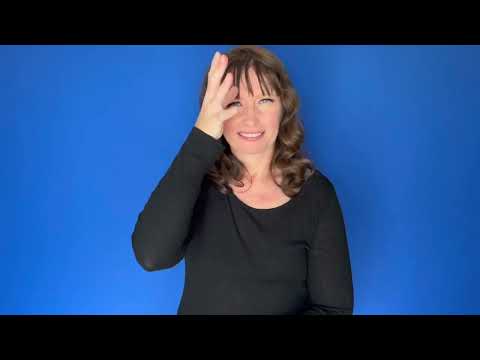
Definition: Individuals chosen to sponsor a child’s baptism.
Sign for GODPARENTS in ASL
Practice Activities:
Begin by practicing the sign for GODPARENTS in ASL on its own. Repetition is key, so spend time in front of a mirror signing it slowly at first and then at a natural pace. Focus on your handshape, facial expression, and smooth transitions between parts of the sign.
Use flashcards with different family-related roles like godmother, godfather, aunt, uncle, and so on. Identify the correct family role in each flashcard, and produce the corresponding sign in ASL, including the sign for GODPARENTS in ASL when appropriate. This will help with quick recall and reinforce vocabulary connections.
Practice fingerspelling the components of GODPARENTS, especially if you’re clarifying the role in conversation. Alternate between showing the complete compound sign for GODPARENTS in ASL and fingerspelling “G-O-D-P-A-R-E-N-T-S” to reinforce both recognition and clarity.
Use example sentences like: “My godparents live in Chicago,” or “Her godparents love to take her to the zoo.” Translate these into ASL, and be sure to include role shifting and eye gaze. Come up with five original sentences of your own using the concept of godparents and sign them as smoothly as possible.
Storytelling is another strong tool. Create a short narrative about a special moment with your godparents or imagine what qualities a good godparent should have. Use the sign for GODPARENTS in ASL repeatedly throughout your story to reinforce fluency in context.
With a partner, practice a roleplay where one person explains who their godparents are, using descriptive classifiers and relationship terms. Take turns interpreting and asking follow-up questions. Make sure to sign the phrase naturally and consistently throughout the conversation.
Watch videos or ASL vlogs that mention family events or structures. Pause the video every time family roles are discussed and copy the sign clearly. If you hear the term godparents in a story, pause and practice signing it in ASL.
Cultural Context:
In American Sign Language, the sign for godparents in ASL connects deeply to cultural and familial traditions. Understanding the sign for godparents in ASL involves more than just learning handshapes — it includes recognizing the role godparents play within families and communities.
In many cultures, godparents serve as spiritual guides and trusted adult figures in a child’s life. In Deaf communities, these roles carry similar weight, often extending beyond religious contexts. The sign for godparents in ASL reflects this significance, showing how language and culture intertwine in meaningful ways.
Parents may choose godparents for their children during important ceremonies like baptisms, dedications, or naming rituals. The sign for godparents in ASL is commonly used in conversations about these events, whether in person or through storytelling in sign language. By using the sign for godparents in ASL, signers can clearly identify these special individuals and their roles.
Many Deaf families and signers incorporate the concept of godparents into their daily lives. Whether discussing family structures, sharing life experiences, or narrating events, the sign for godparents in ASL often appears in signed dialogues. This sign keeps communication rich and relevant to the lived experiences of Deaf individuals.
Just like in spoken language, ASL evolves as cultural norms shift. The sign for godparents in ASL may vary slightly across regions or communities. Still, most variations hold consistent meaning and are easily recognized by Deaf signers familiar with the cultural role of godparents.
In the broader social context, godparents can also represent guardianship and emotional bonds beyond the immediate family. The sign for godparents in ASL allows Deaf signers to express these connections clearly. It helps create inclusive exchanges about spiritual, emotional, and relational topics.
Classroom discussions in ASL, especially in Deaf education settings, often include vocabulary like the sign for godparents in ASL. Learning this term supports literacy, cultural awareness, and respect for family diversity. Teachers and students engage with these signs as they explore family vocabulary in ASL classes.
Deaf churches, community gatherings, and family events provide opportunities to see the sign for godparents in ASL in real-life use. These social experiences bring meaning to the sign and help reinforce its relevance in Deaf culture. Signers of all ages become familiar with it through repetition and visual exposure.
Understanding the sign for godparents in ASL also means appreciating how closely tied family roles are to identity in the Deaf community. Whether used in conversation, storytelling, religious settings
Extended Definition:
The sign for godparents in ASL combines the signs for god and the sign for parents. This reflects the cultural and spiritual role godparents play in a child’s life. Knowing how to express godparents accurately in American Sign Language is important for personal conversations, religious contexts, and family discussions.
To sign god, begin with an open hand moving upward from the forehead, symbolizing a connection to a higher power. This is the standard ASL sign for god. Then, combine this with the sign for parents, which involves tapping the thumb of a flat hand to the forehead and then to the chin, representing both mother and father.
When signing godparents in ASL, you perform the sign for god followed by the sign for parents. In some regions, signers may modify the sign slightly to express godmother or godfather more specifically. However, the general sign for godparents remains consistent and widely understood among fluent ASL users.
Context plays a big role in determining how the sign for godparents in ASL will be used. For example, if you are signing during a church ceremony or family gathering, you may be referring to someone’s spiritual guardians or religious sponsors. Understanding the role of godparents within various communities helps in picking the right signs and interpreting them respectfully.
Facial expression is also key when using American Sign Language. When signing about godparents, your face can show the emotional weight or love that often accompanies this special role. A gentle smile or respectful look can add depth to your sign, helping the message come across clearly.
Regional variations do exist for the sign for godparents in ASL. Depending on the area or the signing community, some people may choose to fingerspell “godparents” instead, especially if the concept needs clarification or if the signer wants to emphasize the word. Fingerspelling is also common in educational settings or when introducing new vocabulary.
For younger learners or beginning signers, learning compound signs like godparents helps expand vocabulary and deepen cultural understanding. the sign for godparents in ASL also provides a good example of how ASL expresses complex relationships through a combination of simpler signs. This method of building meaning is a foundational part of ASL grammar and structure.
Knowing the sign for godparents in ASL is useful in storytelling, interpreting, and day-to-day conversations. It allows deaf and hard-of-hearing individuals to express familial ties with clarity and cultural sensitivity. Children being raised in bilingual homes with both spoken English and ASL also benefit from knowing how
Synonyms: sponsors, guardians, Christian sponsors, baptismal sponsors, spiritual mentors
Educational resources: Find related learning materials in our course bank!
Want more? Check out some of our popular learning activities on the homepage!
Need to look up a sign? Use our highly rated dictionary: https://aslinteractive.com/best-asl-dictionary/
Follow us on tiktok: https://www.tiktok.com/@aslinteractive. More social media links at the bottom of this page!
Long-tail Keywords: what is the sign for godparents in ASL, how do you sign godparents in American Sign Language, learn the ASL sign for godparents
Categories:
tags: Godparents in American Sign Language, ASL sign for godparents, how to sign godparents in ASL, learning godparents in ASL, godparents ASL dictionary
Parameters
*Handshape*:
The handshape for the sign for GODPARENTS in ASL typically uses the “G” and “P” handshapes to represent the separate parts of the compound concept. For “god,” form a “G” handshape and move it upward from the forehead, similar to the sign for GOD. Then, for “parents,” use the open “5” handshape to tap the forehead and chin, representing “mother” and “father.”
The sign for GODPARENTS in ASL combines these parts fluidly, maintaining the distinct handshapes throughout the motion. Both handshapes should be clear and well-formed to properly convey the meaning, as this sign merges two concepts into one clear expression. This accuracy is essential in the sign for GODPARENTS in ASL .
*Palm Orientation*:
In the sign for GODPARENTS in ASL, the palm orientation begins with the dominant hand in the sign for GOD, which typically has the palm facing slightly backward or to the side as it moves from the forehead upward. Then, when transitioning into the sign for PARENTS, both hands are used with open handshapes—palms facing inward toward the body.
Throughout the sign for GODPARENTS in ASL, the palm orientation stays consistent with common parent-sign positioning. This ensures clarity and distinction when combining both concepts. The inward-facing palms help reinforce familial association in the sign.
*Location*:
The sign for GODPARENTS in ASL typically takes place in the area close to the temple and upper chest. The dominant hand generally moves near the forehead or side of the head to sign “god,” and transitions down to the upper chest area to indicate “parents.”
This location allows for each element in the sign for GODPARENTS in ASL to be clearly expressed. The sign stays within the signer’s personal space, using neutral space and head-level alignment for clarity.
*Movement*:
The sign for GODPARENTS in ASL typically starts with signing GOD by pointing upward with the dominant hand in a flat-B shape and then bringing it down slightly in front of the face. Follow this with the sign for PARENTS, combining MOTHER and FATHER by placing the open five hand at the chin and then the forehead.
To clearly express the sign for GODPARENTS in ASL, present the two concepts sequentially—first GOD, then PARENTS—forming a compound sign. The body stays neutral while each hand movement is precise and fluid.
*Non-Manual Signals*:
When demonstrating the sign for GODPARENTS in ASL, maintain a neutral yet warm facial expression to convey respect and familial connection. Slight eyebrow raise may be appropriate to indicate emphasis or importance, especially if specifying between godmother or godfather as part of the context for the sign for GODPARENTS in ASL.
Keep eye contact with your conversation partner to ensure clarity. Avoid overly expressive facial movements, as the sign for GODPARENTS in ASL typically reflects roles rather than emotions.
*Prosody, Dominant/Non-Dominant Hand*:
The sign for GODPARENTS in ASL typically uses both hands. The dominant hand fingerspells G-O-D while the non-dominant hand remains in a neutral position. After the fingerspelling, transition into the sign for PARENTS by using the dominant hand in the 5-handshape, touching the forehead (representing FATHER), then the chin (representing MOTHER).
In the sign for GODPARENTS in ASL, the movement and transition between GOD and PARENTS is fluid and clear. Make sure the dominant hand leads while expressing each component to ensure clarity and appropriate prosody.
Tips for Beginners:
When learning the sign for GODPARENTS in ASL, it’s important to remember that the word is a compound concept. It combines the signs for GOD and PARENTS. First, sign GOD, which is typically made by raising your dominant hand straight up and then bringing it down in front of your face in a respectful, downward arc toward your chest, palm facing inward. Then, immediately follow with the sign for PARENTS, combining the signs for MOTHER and FATHER by alternating taps of your thumb on the chin and forehead, respectively.
A helpful tip when practicing the sign for GODPARENTS in ASL is to maintain a smooth, unbroken movement between the two individual signs. Beginners often pause too long between signs or use overly exaggerated motions—try to keep your movements fluid and natural. Consistent facial expression is crucial; a respectful or warm expression enhances the tone of your message and matches the seriousness of the concept.
Another common pitfall is forgetting which hand to use or swapping hands mid-sign. Always use your dominant hand for the active parts of the sign, like GOD. Make sure your non-dominant hand stays neutral, especially in two-handed signs. Practicing in a mirror or recording yourself can help you fix awkward body orientation and hand placement, which are key to clear ASL communication.
Be sure to practice fingerspelling GODPARENTS for contexts where the specific sign isn’t commonly recognized. Sometimes, regional or personal preferences vary, and fingerspelling (especially of proper nouns or less-used terms) remains a default. Repetition, clarity, and rhythm with the ASL alphabet will get you more comfortable over time.
The sign for GODPARENTS in ASL may seem complex at first, but with repeated exposure and patience, you’ll deliver it smoothly. Don’t rush—quality matters more than speed Practice with a mentor or peer whenever possible. Feedback helps you grow!
Connections to Other topics:
The sign for GODPARENTS in ASL often builds from the compound structure of the individual signs for GOD and PARENTS. This construction reflects a wider pattern in ASL where compound signs are built from foundational relationship and identity terms. Signs like GODMOTHER or GODFATHER may be created using the sign for GOD followed by MOTHER or FATHER, and many signers adapt this naturally depending on context.
This compound construction is related to other familial terms, such as STEPPARENT or GRANDPARENT, which also follow a pattern of using modifier + parent. Recognizing this pattern supports better understanding of how signers refer to extended family members or non-biological relatives. Since godparents often have a ceremonial or honorary role in a child’s life, parallels can be drawn with signs for SPONSOR or MENTOR, which may also be used metaphorically in similar contexts.
In real-life social situations or religious contexts, the sign for GODPARENTS in ASL may come up during conversations about baptism, church roles, or legal guardianship. Learners might also encounter this term when discussing kinship roles or creating visual stories about family history in ASL narratives. It connects well with other signs like CELEBRATE, BAPTIZE (often fingerspelled), and FAMILY, which are often used in storytelling or describing family traditions.
Understanding the sign for GODPARENTS in ASL helps learners see how ASL integrates cultural traditions with signed language structure. It contributes to broader fluency by reinforcing the use of known signs to form new, meaningful concepts. Additionally, it offers insights into how values like care, responsibility, and mentorship are represented in deaf culture through familial signs. Parents, extended families, and spiritual roles all become part of a rich vocabulary that supports storytelling and personal connection in ASL.
Summary:
The sign for GODPARENTS in ASL does not have a universally agreed-upon standard form, so it is commonly conveyed by combining the sign for GOD with the sign for PARENTS. This two-part compound sign allows for clarity while maintaining cultural and linguistic integrity in ASL communication.
To sign GOD in ASL, one hand is raised, typically dominant, and moves from the forehead upward toward the sky with an open palm, symbolizing a divine presence. This sign draws from Christian iconography likely due to the religious significance of the concept.
The sign for PARENTS combines the signs for MOTHER and FATHER. The sign for MOTHER involves an open hand with the thumb tapping the chin, whereas FATHER is signed similarly, but with the thumb tapping the forehead instead.
Therefore, the complete sign for GODPARENTS in ASL begins by signing GOD and then immediately signing PARENTS in succession. This sequence creates clarity and preserves the semantic elements of divine and familial roles within the sign.
Since godparents are not strictly biological parents, some signers may choose to include a modifying sign like HELP or SUPPORT after the base GOD + PARENTS combination. This optional addition can help clarify the non-parental yet guiding role of godparents.
Alternatively, another expressive method involves signing GOD, then signing MOTHER and FATHER separately, followed by a sign like CHOOSE or SPECIAL, offering a more descriptive portrayal of the godparent role. This method adds semantic richness and cultural nuance to the sign.
In ASL, compounding is a significant morphological process, and the compound sign for GODPARENTS illustrates how multiple base signs can combine into a single semantic unit. The fluent execution often reflects the signer’s comfort with ASL grammar and syntax.
Culturally, the role of godparents varies between communities, especially among Catholic, Eastern Orthodox, and Latinx cultures in the U.S. This diversity influences the ways the sign for GODPARENTS in ASL might be represented or fingerspelled during introductions and religious events.
When interpreting in religious or ceremonial contexts like baptisms or dedications, accuracy in the sign for GODPARENTS in ASL is essential. Interpreters often consult with clients to determine preferred ways of expressing the term to ensure cultural respect and comprehension.
The fingerspelled form G-O-D-P-A-R-E-N-T-S is also used, especially when introducing or clarifying the term in formal or educational settings. After the initial fingerspelling, signers often adopt the shortened compound sign for smoother communication.
From a sociolinguistic perspective, the emergence of compound signs like GOD + PARENTS reflects the dynamic nature of ASL’s lexicon. Sign language evolves with the communities it serves and adapts signs for newer or more culturally specific concepts.
The sign for GODPARENTS in ASL demonstrates how conceptual blending is common in ASL. Even without a single, fixed sign, visually combining known signs creates meaningful expression that resonates with both deaf and hearing signers familiar with the term.
Using GOD first in the sequence emphasizes the spiritual aspect of godparents. This ordering aligns with the deeper connotation of godparenthood as a spiritually guided mentorship rather than just familial responsibility.
The way the sign for GODPARENTS in ASL is presented can also reflect the relationship between the child and the godparent. Facial expression and body shift play crucial roles in demonstrating emotional closeness or reverence.
ASL relies not just on hand movements but also on non-manual markers, such as raised eyebrows or head nods. These elements help distinguish the sign for GODPARENTS in ASL from other similar signs and add layers of meaning.
In contexts where godparents are culturally significant, such as in quinceañeras or confirmations, emphasizing the spiritual authority of godparents might lead signers to add contextual signs like GUIDE, TEACH, or SPIRITUAL.
Applied linguistics shows that bilingual Deaf children, especially those in religious families, often learn both the sign for GOD + PARENTS and fingerspelled GODPARENTS early on. This dual exposure supports code-switching and language flexibility.
Regional variations occur, with some communities using alternative combinations or even personalized name signs for godparents during ceremonies. This adaptability underscores the role of sociolinguistics in shaping the sign for GODPARENTS in ASL.
Within the Deaf community, naming conventions are vital. A godparent might receive a name sign if they are deeply involved in a child’s life, which strengthens the godparent’s identity beyond the sign’s literal form.
In some conversations, signing PARENTS while using facial expressions or mouthing the word “god” differentiates the term within context. This blend of sign and lip movement is a common strategy for terms lacking standardized signs.
The influence of spoken English also shapes transcription choices. For example, inserting the word CHURCH or using gestures like laying hands can provide deeper clarification in spiritual or faith-based
Want more? Check out some of our popular learning activities!
ASL Interactive Resources
ASLInteractive YouTube Channel
Follow us on tiktok: @aslinteractive.com
Follow us on Instagram: aslinteractive
Facebook page: aslinteractive
Facebook group: aslinteractive
LInkedIn: ASL Interactive LLC
Twitter: @ASL_interactive
*Some information on this page is AI-generated. AI can make mistakes. Please check the information.


Responses