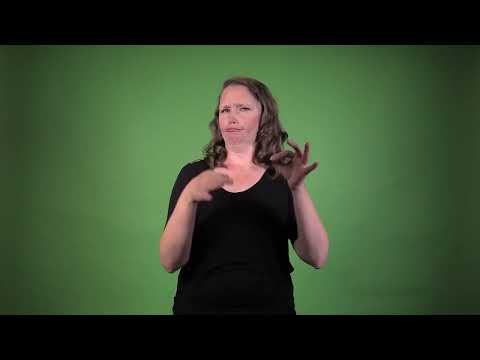
Definition: A person who makes sound decisions.
Sign for GOOD JUDGE in ASL
Practice Activities:
To become comfortable with the sign for GOOD JUDGE in ASL, start by practicing the individual signs “GOOD” and “JUDGE” separately. Use a mirror or record yourself to check handshape, movement, and facial expressions. Practice slowly at first, then increase speed as accuracy improves.
Once confident with the parts, combine them smoothly to produce the full phrase. Practice signing the phrase in isolation with natural facial grammar. Repeat it several times with different expressions to match various tones—such as serious, surprised, or approving.
Incorporate the phrase into short practice sentences such as “She is a good judge,” “I trust the good judge,” or “The good judge helped a lot.” Sign each sentence multiple times while focusing on clarity and flow. Vary the subject or object to explore different grammatical structures while still using the sign for GOOD JUDGE in ASL correctly.
Work with a partner and take turns signing scenarios that involve a good judge. One person signs a short story or incident, and the other responds by using the phrase in a sentence about the judge. For example, one partner might act out a courtroom scene, and the other responds, “That’s a good judge.”
Create storytelling prompts where a judge has to decide between right and wrong. Sign a short narrative where characters rely on a good judge to resolve a disagreement. Use descriptive phrases and support signs to highlight why the judge is good.
Watch videos of advanced signers using judge-related vocabulary and try to identify when and how they use the sign for GOOD JUDGE in ASL. Imitate the usage in your own signing practice, applying similar expressions and timing. Over time, this will help you develop natural fluency and comfort with the phrase.
Cultural Context:
In American Sign Language (ASL), the sign for GOOD JUDGE in ASL carries more than just its literal meaning. It reflects values connected to fairness, wisdom, and moral character. Within Deaf culture, someone identified as a good judge is often seen as a trusted figure who upholds community values and understands both Deaf and hearing world norms.
The sign for GOOD JUDGE in ASL combines clear concepts: good, meaning moral or beneficial, and judge, meaning someone with authority or discernment. When used together, the sign communicates respect not only for legal figures but also for individuals in community leadership roles. It implies a sense of justice grounded in cultural understanding.
Understanding the sign for GOOD JUDGE in ASL also means recognizing how Deaf communities view judgment and authority. A good judge is not only someone who is fair legally, but also someone who listens, observes, and respects Deaf perspectives and language. This sign can be used both formally and casually to describe someone with reliable judgment.
In daily conversation, the sign for GOOD JUDGE in ASL might refer to a teacher, counselor, or elder who gives wise advice. It’s often directed at people who handle situations with sensitivity to Deaf values, such as direct communication, visual access, and community consensus. By using this sign, Deaf individuals show appreciation for those who make inclusive and thoughtful decisions.
Culturally, the concept of a good judge connects with the Deaf community’s emphasis on fairness in communication access. Someone considered a good judge in ASL is often skilled at viewing both sides of a situation clearly without bias. This connection to balance and impartiality adds weight to the use of the sign.
The sign for GOOD JUDGE in ASL may also appear in educational settings when teaching values like integrity and fairness. ASL educators might use this sign to model how to talk about moral character and decision-making. It becomes a tool for not just communication, but also ethical instruction.
This specific sign may change slightly depending on context or regional variations, but the cultural value behind the sign for GOOD JUDGE in ASL remains consistent. Users of ASL often adapt the sign to match the person or situation they are describing, while keeping the core meaning intact. This flexibility shows how ASL reflects and respects real-life diversity in behavior and character.
In the Deaf world, visual languages carry strong emotional and social meaning, and the sign for GOOD JUDGE in ASL is no exception. It is part of how the community expresses trust, responsibility, and moral
Extended Definition:
The sign for good judge in ASL combines the concepts of fairness, wisdom, and sound decision-making. This phrase is often used to describe someone who exercises excellent judgment, particularly within legal or ethical situations. Using American Sign Language, the phrase can describe both formal roles like a courtroom judge and informal scenarios where someone’s judgment is trusted.
To sign good judge in ASL, you typically start with the sign for good, bringing your dominant hand from your mouth to your non-dominant palm. This represents a positive or beneficial quality. Then, the concept of judge is signed using a gesture that resembles weighing decisions, usually mimicking the balance scales associated with justice ⚖️. The hands mimic holding or tipping scales, reflecting the role of someone who compares options or arguments carefully.
When learning the sign for good judge in ASL, context is important. This phrase might be used to commend a person for making wise decisions or to speak about a person who holds an official position within the legal system. In conversations, the phrase often appears when evaluating choices, leadership, or fairness in actions.
ASL relies on facial expressions and body language along with hand signs to express full meaning. When signing good judge in ASL, a serious or thoughtful expression often accompanies the sign to reflect the gravity and respect associated with judgment. This non-manual signal strengthens the sign’s meaning and emotional impact.
It’s helpful to recognize that ASL is not a word-for-word translation of English. Instead, concepts like good and judge are signed in sequence with natural ASL grammar. This preserves the cultural and linguistic richness of American Sign Language while communicating the intended meaning. Watching fluent signers or consulting video resources can improve your understanding of how to sign good judge in real-world use.
The sign for good judge in ASL may come up in classroom settings, legal discussions, or community conversations. It often appears when talking about character qualities or in messages of appreciation for fairness and insight. Signing this phrase correctly not only improves communication but also shows cultural respect within the Deaf community.
Parents, teachers, and interpreters may all benefit from learning the sign for good judge in ASL. It can be used to reinforce positive behavior, describe role models, or encourage thoughtful decision-making in children and adults alike. In many cases, the phrase represents a value rather than just a role — it reflects trust in someone’s ability to judge wisely and justly.
Adding the sign for good judge in ASL to your vocabulary also supports inclusive and accessible
Synonyms: discerning evaluator, astute assessor, fair adjudicator, perceptive critic, wise arbitrator
Educational resources: Find related learning materials in our course bank!
Want more? Check out some of our popular learning activities on the homepage!
Need to look up a sign? Use our highly rated dictionary: https://aslinteractive.com/best-asl-dictionary/
Follow us on tiktok: https://www.tiktok.com/@aslinteractive. More social media links at the bottom of this page!
Long-tail Keywords: what is the sign for good judge in ASL, how do you sign good judge in American Sign Language, ASL sign for good judge
Categories:
tags: good judge ASL meaning, how to sign good judge in ASL, good judge American Sign Language, ASL dictionary good judge, learn good judge in ASL
Parameters
*Handshape*:
The handshape for the sign for GOOD JUDGE in ASL begins with a flat B-handshape. The dominant hand starts at the mouth and moves outward, representing “good.” For “judge,” both hands form S-handshapes resembling gavels, and they move alternately up and down in a manner that mimics a judge using a gavel in court.
In the sign for GOOD JUDGE in ASL, the transition between the B-handshape and S-handshapes is smooth and deliberate. Each part of the compound sign maintains distinct handshapes that are essential for clearly conveying the complete concept. ⚖️
*Palm Orientation*:
In the sign for GOOD JUDGE in ASL, the palm orientation begins with the dominant hand flat and facing upward. This is used during the sign for “good,” where the fingertips of the dominant hand touch the lips and then move forward to the palm of the non-dominant hand, which is also facing upward.
For “judge,” both hands form the F-handshape with palms facing each other, slightly forward. They move up and down alternately like a balance scale. The palm orientation helps convey the meaning clearly, making the sign for GOOD JUDGE in ASL visually distinct and easy to interpret. ⚖️
*Location*:
The sign for GOOD JUDGE in ASL uses two separate sign components performed in sequential locations. The sign for “good” begins at the chin, where the dominant flat hand touches the lips and then moves forward slightly. The sign for “judge” typically takes place in the neutral space in front of the torso, using both hands to mimic a weighing scale motion.
When combined to create the sign for GOOD JUDGE in ASL, both signs maintain their original locations. It starts with the hand at the chin for “good” and transitions smoothly into the balanced movement at chest level for “judge.” This spatial relationship emphasizes clarity and concept combination.
*Movement*:
The sign for GOOD JUDGE in ASL begins with the sign for “good.” Place the dominant flat hand with fingertips at the chin and move it forward and downward to land on the palm of the non-dominant flat hand. Next, for “judge,” form both hands into “F” handshapes and mimic the act of balancing scales by alternating them up and down.
Together, these motions create the full sign for GOOD JUDGE in ASL, clearly expressing the concept. The movement is fluid, transitioning from the forward motion of “good” to the small, deliberate movements for “judge,” showing fairness or legal judgment ⚖️.
*Non-Manual Signals*:
For the sign for GOOD JUDGE in ASL, non-manual signals should convey confidence and assertiveness. Maintain a neutral to slightly positive facial expression to match the context of “good,” with raised eyebrows if emphasizing qualities. Avoid exaggerated expressions unless discussing character traits or making comparisons. Proper eye contact and a composed demeanor help reinforce the sign for GOOD JUDGE in ASL, especially when referring to a person of authority or moral discernment.
*Prosody, Dominant/Non-Dominant Hand*:
The sign for GOOD JUDGE in ASL uses both hands in a combined motion. The dominant hand starts in a flat B-handshape and taps the chin, moving forward and downward into the palm of the non-dominant hand, mirroring the sign for GOOD. Right after, the dominant hand forms an F-handshape and mimics weighing, as in the sign for JUDGE, while hovering above the flat non-dominant palm.
The sign for GOOD JUDGE in ASL emphasizes fairness and evaluation. It combines the concept of ‘good’ with the dual F-handshape movement for ‘judge,’ highlighting the role of decision-making. This expressive combination uses clear symmetrical hand motions and reflects the duality of weighing pros and cons. ️
Tips for Beginners:
When learning the sign for GOOD JUDGE in ASL, break it down into two parts: the sign for GOOD and the sign for JUDGE. Start by mastering each individual sign clearly before combining them. The sign for GOOD involves placing the fingertips of one hand to the lips and then moving forward to meet the palm of the other hand. Make sure your facial expression remains neutral to slightly positive since it enhances the meaning contextually.
For the sign JUDGE, this usually involves mimicking the motion of holding and weighing scales using both hands. Each hand opens flat and moves up and down slightly in balance. Keep in mind that clear, small, concise movements work better than over-exaggerated ones. Avoid stiff or overly dramatic gestures, which can confuse the intent.
When combining the full sign for GOOD JUDGE in ASL, sign GOOD first, then follow with JUDGE. Maintain a slight pause or change in momentum between the two signs to help distinguish them for clarity. Facial expressions and body language carry weight in ASL, especially when describing a person’s character like being a good judge. Display confident but respectful expression when conveying this message.
Practice in front of a mirror to monitor your hand movements, angles, and facial expressions. Signing too quickly can lead to sloppiness; instead, aim for fluid, deliberate motion. Record yourself if helpful or ask for feedback from a fluent signer.
A common mistake with the sign for GOOD JUDGE in ASL is muddling the sequence or blending the signs too fast. Make sure each component is signed fully and accurately. Repetition, patience, and usage in real conversation are key to mastery. As always, consider cultural context—”good judge” might reflect different meanings depending on the scenario, such as a court judge or someone with good judgment.
sign for good judge in asl, how to sign good judge in asl, asl vocabulary good judge, learn the sign for good judge in asl, teach sign for good judge in asl
Connections to Other topics:
The sign for GOOD JUDGE in ASL connects to a broader group of concepts like ethics, fairness, and decision-making. The sign combines the signs for GOOD and JUDGE, which makes it a compound sign that conveys both personal quality and role. This mirrors how ASL often builds meaning by layering simpler signs for nuanced understanding.
The concept of judgment in ASL ties into other legal and evaluative terms such as LAWYER, COURT, and RULE. The sign for JUDGE alone often includes the idea of decision or evaluation, and when combined with GOOD, it implies moral soundness or fair judgment. This makes the sign for GOOD JUDGE in ASL useful not just for discussing legal professionals, but also in character description.
In ASL classifiers and role-shifting often enhance discussions around the sign for GOOD JUDGE in ASL, especially during storytelling or legal discourse. For instance, one might role-shift between a judge and a defendant to illustrate fairness in a courtroom scene, emphasizing the “good” quality through facial expression and body language.
This sign conceptually overlaps with other traits like HONEST, WISE, or FAIR in ASL. These signs share similar semantic space when discussing someone’s judgment or decision-making abilities. For ESL learners transitioning to ASL, recognizing that GOOD can precede many role or characteristic signs helps build vocabulary fluency.
The sign for GOOD JUDGE in ASL also opens pathways for broader moral and civic discussions. For example, it might be used in lessons on government, civics, or ethical behavior. By understanding how GOOD modifies professional roles in ASL, learners can create other valuable compound signs like GOOD LEADER or GOOD POLICE, reinforcing the grammatical structure and meaning-making in ASL.
Summary:
The sign for GOOD JUDGE in ASL combines two concepts into a layered expression. It starts with the sign for GOOD, then transitions into the sign for JUDGE, both of which are meaningful separately and together offer deeper cultural and linguistic insight when formed as a unit.
To sign GOOD, place the dominant hand in a flat B-handshape with fingers together, tapping the tips of the fingers from the chin and moving the hand slightly outward. This indicates positive or favorable assessment and is often used to denote things that are appreciated or approved.
The sign for JUDGE is more complex, reflecting abstract evaluation. Typically, it involves forming the F-handshapes on both hands and moving them up and down alternately, as if weighing or balancing something. This mimics scales, conveying fairness and justice — concepts tightly associated with the word judge.
When combined, the sign for GOOD JUDGE in ASL flows from the sign for GOOD immediately into the balanced scale-like motion for JUDGE. This sequential movement carries not only semantic value but also rhythm and clarity, serving as a coherent linguistic package.
Grammatically in ASL, this composite sign functions as a noun, referring to a person rather than an act or behavior. That is, signing GOOD before JUDGE qualifies the person’s capabilities or moral character, rather than just labeling a profession.
In a legal or moral context, signers use this phrase to describe a respected legal authority or someone with the ability to make sound decisions. It can also convey metaphorical judgment, such as someone being a good judge of character or of artistic merit.
Applied linguistics explores how these signs represent abstract nouns by using both iconic and metaphorical representation. The sign for GOOD uses body-to-space movement, and JUDGE uses spatial metaphor, reinforcing the intrinsic meaning through non-verbal channels enhanced by ASL syntax.
From a cultural perspective, the sign for GOOD JUDGE in ASL holds high value in Deaf communities where fairness, equity, and integrity are deeply respected traits. Someone described as a good judge in both legal and informal settings is often a community leader.
The component sign for JUDGE on its own can also be used in phrases like BAD JUDGE or FAIR JUDGE, demonstrating that this concept of judgment is fluid and can be modified by context. ASL’s flexible syntax allows evaluative language both before and after a subject.
Facial expressions often accompany the sign for GOOD JUDGE in ASL. A slight nod, raised brows or closed lips can enhance meaning, providing subtle social cues that deepen the perceived message.
The phrase is common in discussions about legal justice, moral decision-making, or experiential wisdom. Its frequent usage in educational environments fosters clarity when discussing decision-making skills or civic responsibilities.
The distinction between signs for JUDGE and COURT or LAWYER also helps learners understand contextual usage. These are not interchangeable and represent different professional and semantic realms, emphasizing ASL’s lexical richness.
Linguistically, the sign for GOOD JUDGE in ASL illustrates how classifier-like structures, such as balance scales for judgment, evolve into standard lexical items. This demonstrates ASL’s dynamic evolution and vocabulary development.
In interpreter training, signs like GOOD JUDGE serve as a point of discussion about verbs versus nouns, as well as the importance of adjectival qualifiers in professional and interpersonal descriptions.
Semantically, the sign functions as more than simply two isolated ideas. Together, GOOD and JUDGE form a blended meaning appreciated by native users, encouraging more advanced learners to focus on fluent transitions and expressive precision.
The phrase is heavily dependent on fluid movement, timing, and accurate direction. The sign transition must be executed with a smooth flow to maintain clarity and fluency in real-time communication.
In ASL poetry and storytelling, references to a good judge often appear metaphorically, symbolizing wisdom, internal fairness, or moral clarity. This lends an artistic dimension to the otherwise procedural sign.
Pragmatic use of the sign for GOOD JUDGE in ASL often requires a deeper social context. Complimenting someone’s deliberation in this way can have social implications and may be used ceremonially or appreciatively in community discussions.
The structure of the sign also offers insight into ASL’s use of sequential compounding, where two concepts are chained together to form a phrase. Instead of relying on linear grammar, ASL uses spatial and temporal sequencing.
Educators often introduce the sign for GOOD JUDGE in ASL during civic engagement lessons or ethics modules, where deaf students discuss decision-making, leadership, or the justice system from a culturally relevant perspective.
When rendered with exaggerated facial expression, the phrase can become sarcastic or ironic, depending on intonation and eye movement. This underlines the importance of prosody in ASL, where grammar and attitude are worn on the face.
The sign is also a frequent fixture in job interviews conducted in ASL settings, especially for roles requiring discernment, fairness, or legal knowledge. People identifying themselves or others this way invoke trust and competence.
For
Want more? Check out some of our popular learning activities!
ASL Interactive Resources
ASLInteractive YouTube Channel
Follow us on tiktok: @aslinteractive.com
Follow us on Instagram: aslinteractive
Facebook page: aslinteractive
Facebook group: aslinteractive
LInkedIn: ASL Interactive LLC
Twitter: @ASL_interactive
*Some information on this page is AI-generated. AI can make mistakes. Please check the information.


Responses