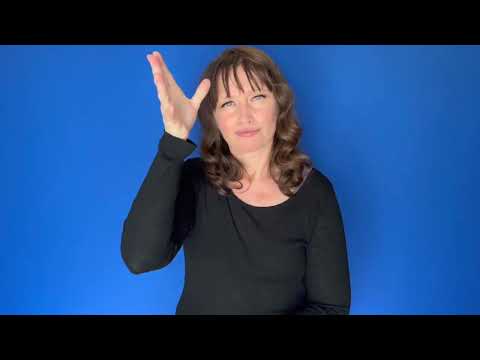
Definition: The father of one’s grandparent.
Sign for GREAT GRANDPA in ASL
Practice Activities:
To build fluency with the sign for GREAT GRANDPA in ASL, begin by practicing each component in isolation. Start with the sign for “great,” then move to “grandpa,” and finally combine them smoothly. Repeat the full sign in front of a mirror while focusing on accuracy and consistency in handshape and movement.
Create simple phrases incorporating the sign for GREAT GRANDPA in ASL, such as “my great grandpa lives in Florida” or “I visited my great grandpa last summer.” Practice saying these phrases aloud while signing to build connections between spoken English and ASL structure. Try fingerspelling your great grandpa’s name after the sign to make it more personalized.
Storytelling is a powerful tool for deepening comprehension. Create a brief story about a memory or favorite moment with your great grandpa. Sign the story while keeping eye contact with an imagined audience, emphasizing the use of space, facial expressions, and role shifting. Stories might include a family reunion or holiday tradition.
Work with a partner to practice conversational turn-taking. One person can ask a question like “Who is the oldest in your family?” and the other signs a response including the sign for GREAT GRANDPA in ASL. Switch roles and vary the questions to keep the interaction dynamic and meaningful.
Flashcard drills can help with recall. Create flashcards with family vocabulary and practice identifying and signing them quickly. Include the sign for GREAT GRANDPA in ASL alongside similar family signs like “grandpa,” “great grandma,” and “dad” to reinforce distinctions.
End each practice session with a signing game. For instance, describe a relative using signs and let your partner guess who you mean. This can help make the sign for GREAT GRANDPA in ASL more natural and fun to use in context.
Cultural Context:
In American Sign Language, family vocabulary carries deep meaning, often reflecting the importance of relationships across generations. The sign for GREAT GRANDPA in ASL not only communicates familial identity but also honors ancestry, tradition, and the cultural value of elders in the Deaf community. Knowing this sign gives both Deaf and hearing users a way to show respect and connection to their family history .
The sign for GREAT GRANDPA in ASL combines the concept of “great” with the sign for “grandpa,” showing generational depth. It’s used in storytelling, family conversations, and historical discussions where referring to a family elder is important. Signers often personalize signs with facial expressions or location markers that help clarify which great grandparent is being discussed.
In Deaf culture, elders like great-grandparents are considered carriers of family and community knowledge. Using the sign for GREAT GRANDPA in ASL connects younger generations to this wisdom and helps preserve the history and values passed down through time. Children in Deaf families often learn these signs early in life as a way to talk about family and honor their roots.
ASL is a visual language, and using signs like GREAT GRANDPA lets users point to specific relationships that spoken English might simplify. Where “great-grandpa” in English is just a word, the sign for GREAT GRANDPA in ASL carries visual and emotional emphasis. It may be accompanied by a pointing gesture or a name sign to give additional clarity and respect.
Family signs reinforce closeness, especially in intergenerational gatherings or storytelling events. The sign for GREAT GRANDPA in ASL is common in visual stories and narratives shared in Deaf schools, homes, and at community functions. These family signs bring richness to ASL conversations and highlight the value placed on knowing one’s heritage .
When teaching about heritage or explaining family trees, educators in Deaf culture rely on signs like GREAT GRANDPA in ASL to make relationships clear. Many Deaf students learn to map out family trees using ASL vocabulary, involving signs for great-grandparents, cousins, uncles, and more. These signs become key tools in nurturing a strong sense of identity and place.
The sign for GREAT GRANDPA in ASL might vary slightly by region or family tradition. Some families may introduce subtle variations in how they use space or signs, especially if a great-grandfather played a big role in Deaf education or community organizing. This personalization is part of what makes the sign so powerful and specific.
In Deaf storytelling, historical memory is often preserved
Extended Definition:
The sign for great grandpa in ASL is a compound sign that combines elements of family hierarchy and generational respect. It takes cues from the signs for great, grandpa, and sometimes even adds motion to express lineage or multiple generations. This layered approach makes it clear that the person being referred to is one’s great grandfather, showing both respect and specificity.
To form the sign for great grandpa in ASL, you typically start with the sign for grandpa. The sign for grandpa involves an open hand placed on the forehead, palm facing sideways, with a slight outward movement. This motion symbolizes the male figure from an older generation. To indicate the “great” part of the relationship, you add an extra movement or repeat the outward motion to show that the person is from yet another generation back. Some signers may clarify further by signing “great” before signing “grandpa,” depending on regional variations or viewer familiarity.
In American Sign Language, clarity and context are key. Using facial expressions alongside the sign for great grandpa in ASL helps reinforce the point that you’re discussing a specific family member from a distant generation. This becomes especially helpful in conversations where multiple family generations are being referenced. The sign is often combined with an indexing gesture or mouthing of the word “great” to ensure the meaning gets across clearly.
Like many ASL signs, the way you sign great grandpa can vary slightly depending on where you live or who you are signing with. Some regions follow a repeated motion technique, while others may include the full word “great” before signing grandpa. When introducing someone new to the sign for great grandpa in ASL, it’s helpful to explain the generational context first, so they understand why the sign uses repeated gestures or extra layers.
Family signs in ASL are often taught early on because they are commonly used in everyday conversation. The sign for great grandpa in ASL helps learners express important family history and relationships, offering a deeper understanding of how to talk about relatives beyond immediate family. This is useful not just in conversation, but also in storytelling and history-sharing contexts.
Using the correct sign for great grandpa in ASL can be an essential tool when teaching children about their heritage or when relaying information to a member of the Deaf community. It enables more personal family stories to be shared with precise meaning. Signers are encouraged to practice this layered sign in front of a mirror or with peers to ensure it’s conveyed correctly.
While fingersp
Synonyms: great grandfather, great granddad, great grandpapa, great grandpop, great granddaddy
Educational resources: Find related learning materials in our course bank!
Want more? Check out some of our popular learning activities on the homepage!
Need to look up a sign? Use our highly rated dictionary: https://aslinteractive.com/best-asl-dictionary/
Follow us on tiktok: https://www.tiktok.com/@aslinteractive. More social media links at the bottom of this page!
Long-tail Keywords: What is the sign for great grandpa in ASL, How do you sign great grandpa in American Sign Language, Learn the ASL sign for great grandpa
Categories:
tags: great grandpa in American Sign Language, how to sign great grandpa, learn ASL for great grandpa, ASL dictionary great grandpa, great grandpa sign language tutorial
Parameters
*Handshape*:
The handshape for the sign for GREAT GRANDPA in ASL uses a modified “5” handshape. Start with an open “5” hand with fingers spread, palm facing out. This handshape is typical for male family signs in ASL. For the sign for GREAT GRANDPA in ASL, the “5” hand moves from the forehead area outward in a slight arc, indicating a generational step back in family lineage. ♂️
*Palm Orientation*:
For the sign for GREAT GRANDPA in ASL, the palm orientation begins with both hands forming the handshape for “great” or “big,” typically with palms facing each other and slightly inward. When transitioning to “grandpa,” the dominant hand is in the “5” handshape, with the palm facing sideways or outward, and taps or bounces near the forehead.
Each part of the sign for GREAT GRANDPA in ASL maintains a distinct palm orientation, reflecting generational separation and familial connection. Be mindful to keep the motion smooth while shifting from the palm-inward orientation for emphasis on “great” to a forward or side-facing palm during the respectful gesture for “grandpa.”
*Location*:
The location for the sign for GREAT GRANDPA in ASL combines the signs for “great” and “grandpa” sequentially. The sign for “grandpa” begins with an open hand (spread fingers) starting at the forehead and moving slightly outward, indicating male lineage. To add “great,” you repeat the sign for “grandpa” twice or fingerspell G-R-E-A-T before signing “grandpa,” keeping both components in the upper head region. This maintains clarity while emphasizing generational distance. ✨
*Movement*:
To perform the sign for GREAT GRANDPA in ASL, start by signing “great” through a repeated gesture or by signing “big” with open curved hands moving outward slightly from the chest. Next, sign “grandpa” by extending the thumb of the open hand (the “5” handshape) and tapping it slightly forward from the forehead in an outward bounce, symbolizing the male side of the family.
The sign for GREAT GRANDPA in ASL combines these elements seamlessly, showing generational hierarchy and respect. The movement begins closer to the body and extends forward to indicate lineage, maintaining clarity and flow. ✨
*Non-Manual Signals*:
When signing the sign for GREAT GRANDPA in ASL, your facial expression should reflect warmth and familiarity, as this word carries emotional weight. A soft smile or affectionate look is appropriate, especially if you are referring to your own great grandpa.
Raised eyebrows may be used to indicate a yes/no question about the sign for GREAT GRANDPA in ASL, while a slight head nod can confirm understanding. Maintain eye contact to enhance clarity and connection during the conversation .
*Prosody, Dominant/Non-Dominant Hand*:
The sign for GREAT GRANDPA in ASL uses both hands and a combination of signs. Start by signing “great” through fingerspelling G-R-E-A-T, followed by the sign for “grandpa.” The dominant hand forms a 5-handshape, tapping the thumb to the forehead twice, a standard location for male family signs.
The non-dominant hand remains passive during most of the signing process. The movement and location of the dominant hand help convey the meaning in the sign for GREAT GRANDPA in ASL, showing generational distance and gender.
Tips for Beginners:
When learning the sign for GREAT GRANDPA in ASL, it’s helpful to understand that it usually combines the signs for “great,” “grandpa,” or may be fingerspelled depending on the context. In many ASL dialects, the word “great” may be added by repeating the sign for “grandpa” with a slight backward movement or adding a separate “great” component. Another common method is to fingerspell “GREAT” followed by the standard sign for “grandpa.” Make sure to check with native signers or your instructor to see which version is more appropriate for your community or setting.
Begin by mastering the handshape and placement for “grandpa,” which uses the dominant hand in the 5-handshape at the forehead, then moves outward in an arc. This motion distinguishes it clearly from the sign for “grandma,” which begins at the chin. To indicate “great,” you can fingerspell G-R-E-A-T smoothly and clearly, ensuring each letter is distinct and properly formed. Avoid rushing through the fingerspelling—precision helps avoid confusion.
Pay attention to your facial expressions and lip posture even when fingerspelling or combining signs. Non-manual markers play a big role in ensuring the sign for GREAT GRANDPA in ASL is understood clearly in context. Especially in familial signs, adding a facial expression to show affection, familiarity, or context (like a story) can make your meaning clearer.
When combining multiple signs or fingerspelling with a sign, watch your transitions. Keep your arms relaxed and avoid jerky movements. Practice slowly at first with a mirror or video recording to evaluate your clarity. Fingerspelling “GREAT” can be challenging for beginners, so repetition and thoughtful pacing go a long way. With practice, the sign for GREAT GRANDPA in ASL will feel more natural and expressive.
sign for GREAT GRANDPA in ASL, GREAT GRANDPA sign, sign language for GREAT GRANDPA, ASL sign GREAT GRANDPA, how to sign GREAT GRANDPA in ASL, GREAT GRANDPA American Sign Language
Connections to Other topics:
The sign for GREAT GRANDPA in ASL builds on foundational family signs, specifically the signs for “great,” “grandpa,” and “father.” It typically combines the sign for “great” by repeating the directional movement or fingerspelling “GREAT,” followed by the compound “GRANDPA,” which is a modification of “DAD” with a movement outward from the forehead. This construction reflects an overlay of generational markers, illustrating how layered family signs function in ASL grammar.
This sign connects directly to other compound family signs like GREAT GRANDMA, GREAT UNCLE, or SECOND COUSIN. These signs rely on sequencing or modifiers like “great” or “second” to indicate generational differences. Learners can draw parallels in structure and concept, especially when building more complex family trees using ASL. Awareness of such compound signs enriches narrative storytelling and enhances clarity in biographical conversation.
In contextual use, the sign for GREAT GRANDPA in ASL often appears in heritage discussions, family history, or storytelling. When signing about several generations, it’s common to combine signs fluidly, showing interpretive ease and a deep understanding of ASL syntax. For example, describing lineage such as “My great grandpa fought in the war and passed down this watch” will use sign placement to indicate timelines and family roles.
Another important connection is spatial referencing, a key component in describing extended family relationships in ASL. By establishing locations in signing space for each family member, including a great grandpa, visual clarity is maintained. This spatial mapping supports more immersive signing, especially in narratives or in educational settings discussing ancestry or cultural identity.
Finally, understanding the sign for GREAT GRANDPA in ASL supports development of classifiers, as learners begin to use handshapes to represent elderly figures or replicate generational depth. This contributes to more dynamic storytelling and a better grasp on how ASL references time, age, and familial hierarchy.
Summary:
The sign for GREAT GRANDPA in ASL is a compound sign that builds on multiple generations. It is typically formed by combining signs for ‘great’ and ‘grandpa’ sequentially, following the grammatical and cultural norms of American Sign Language.
To begin, the sign for ‘grandpa’ is made by extending the thumb of the open ‘5’ handshape and tapping it twice on the upper forehead. This sign visually represents the paternal lineage located on the top portion of the head.
For the ‘great’ portion, signers often include a forward motion or repeat the ‘grandpa’ sign with additional emphasis or space to mark generational distance. Some may choose to fingerspell G-R-E-A-T before signing ‘grandpa’ for clarity in formal or educational settings.
When constructing the sign for GREAT GRANDPA in ASL in natural conversation, the grammar places the emphasis first on lineage through repetition or placement. Signers may indicate a more distant generation by shifting the location of the sign slightly farther forward in space.
Space plays a grammatical function in ASL. When signing about family lineage, each successive generation is signed in a more forward or elevated location to imply age and generational distance. This spatial reference is especially important in signs like GREAT GRANDPA.
Some users prefer to sign ‘great’ using a gesture that mimics the concept of ‘big’ or ‘important,’ but this can vary by region and is not as common as fingerspelling or using spatial grammar. The flexibility highlights the dynamic and rich layering of generational concepts in ASL.
Culturally, the sign for GREAT GRANDPA in ASL represents not just an individual but a direct ancestral connection. For many Deaf families and communities, honoring ancestors through proper sign usage is both respectful and identity-affirming.
Family signs emphasize the value placed on lineage in Deaf culture. By refining and clarifying generational differences, users promote understanding of extended family relationships, which might be especially emphasized in shared storytelling or genealogical reflection.
ASL syntax allows for slight adjustments depending on the context. When narrating family trees or discussing birth order, the sign for GREAT GRANDPA in ASL might precede or follow identification markers, such as name signs or fingerspelled names.
From a linguistic viewpoint, this compound sign acts as a derivational process. It transforms the root sign for ‘father’ into ‘grandfather,’ and with another morphological addition, evolves into ‘great grandfather.’
This morphological layering reflects how ASL builds complex ideas from simpler parts. It showcases the language’s visual-spatial modality and preference for conceptual clarity through signs that are semantically and grammatically organized.
Applied linguistics in ASL education approaches signs like GREAT GRANDPA by teaching both the base sign and its derivatives. Educators emphasize the importance of visual planning and spatial awareness in executing such signs accurately.
In early childhood education for Deaf children, signs for extended family members, including the sign for GREAT GRANDPA in ASL, are introduced to facilitate emotional and social connections. These signs help children define roles and establish familial bonds.
When someone recalls a story involving their great grandpa, the ASL sign helps anchor the character in their narrative sequence, allowing clear storytelling from one generation to another. This clarity enhances the listener’s engagement and understanding.
For family history discussions, the sign for GREAT GRANDPA in ASL helps distinguish between the generations. It enables Deaf historians and genealogists to discuss ancestors with precision, especially when working with visual timelines.
In academic ASL research, linguists may analyze the syntax involved in phrases like sign for GREAT GRANDPA in ASL to understand how generational sequencing is handled grammatically. It provides a case study in temporal and hierarchical referencing.
The facial expressions used with this sign, and directional cues, also matter. Eyebrows might be raised slightly to express significance or respect, enhancing the emotional tone in personal storytelling or cultural narratives.
The concept of ‘great’ as a prefix in ASL isn’t as straightforward as in English. It often requires fingerspelling or an elaborated spatial configuration to imply extended family lineage clearly and naturally.
Community and regional variations exist. Some signers might adapt the structure of the sign based on whether they’re native users or learners adapting from English-based logic.
In Deaf families, the consistent use of the correct sign for GREAT GRANDPA in ASL reinforces tradition and shared memory across generations. It is one way ASL contributes to cultural identity formation and intergenerational legacy.
Children growing up in Deaf households often learn these distinctions organically. The repetition and consistent use of space help solidify their cognitive mapping of family trees visually.
The sign’s clarity ensures that conversations about ancestors aren’t ambiguous. When genealogical info is passed down, especially visually through signed stories or photo albums, the specific sign for GREAT GRANDPA in ASL helps pinpoint who exactly is being referred to.
When used in formal ASL interpretation settings, such as at genealogy presentations or intergenerational ceremonies, correct usage of signs like
Want more? Check out some of our popular learning activities!
ASL Interactive Resources
ASLInteractive YouTube Channel
Follow us on tiktok: @aslinteractive.com
Follow us on Instagram: aslinteractive
Facebook page: aslinteractive
Facebook group: aslinteractive
LInkedIn: ASL Interactive LLC
Twitter: @ASL_interactive
*Some information on this page is AI-generated. AI can make mistakes. Please check the information.


Responses