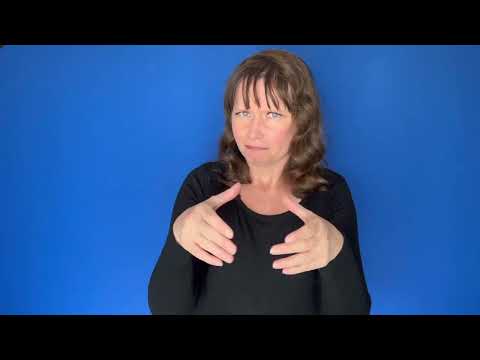
Sign for GROUP C in ASL | ASL Dictionary

Definition: A category or class of people or things.

Sign for GROUP C in ASL

YouTube player

Practice Activities:

Start by practicing the sign for GROUP C in ASL in isolation. Focus on the handshape for “group” and make sure it moves in a curved motion to represent a collection of people. Then, fingerspell the letter “C” clearly and fluidly after signing “group” to specify the subgroup. Repeating these steps daily will help reinforce accuracy and muscle memory.

Use a mirror or record yourself to observe facial expressions and body movements. This is especially helpful with fingerspelling “C” after the group sign to ensure your hand remains visible and fluid. Combine the sign with other basic signs like “join,” “belong,” and “meeting” to start forming short phrases. For example, “I join group C” or “Who is in group C?”

Set up flashcards with mock names like “group A,” “group B,” “group C” and practice quickly signing the correct group when shown a card. This builds recognition and fluency. You can also write short context prompts such as “Your name is called for group C during a science lab.” Sign how you would respond to this in ASL using facial expression and body position for clarity.

Partner up with a fellow learner to practice identifying and assigning roles, such as “You are in group C, please present first.” Switch roles and take turns giving and responding to group assignments. Use role-playing situations such as class projects or assemblies where students are assigned to different groups.

Tell a simple story about a school setting where students are divided into different groups, and your character is placed in group C. Narrate what happens during the project or activity, making sure to include at least three uses of the sign for GROUP C in ASL throughout the story. This will help integrate vocabulary with grammar and storytelling flow in ASL.

Cultural Context:

Understanding the sign for GROUP C in ASL requires a bit of cultural and contextual knowledge. American Sign Language often adapts signs based on context, especially when referring to specific groupings like letters or levels. When referring to something like Group C, such as in classroom settings, sports teams, or organizational structures, the sign often combines elements of fingerspelling and general group classification.

In ASL culture, fingerspelling is commonly used for anything involving individual letters, such as names, codes, or group identifiers. The sign for GROUP C in ASL typically features the concept of a group, which can involve circular or inclusive hand motions, followed by the letter C using the manual alphabet. This method ensures clarity while communicating structured levels or classifications within a group.

The concept of grouping is significant not just linguistically but socially in Deaf culture. Being placed in a group, such as GROUP C, may relate to academic levels, seating arrangements, or competition brackets. Knowing how to sign that specific letter designation increases inclusion and effective communication within both educational and community spaces.

ASL is a visual language rooted in Deaf culture, where precision often matters more than speed. Signing GROUP C accurately ensures that the intended meaning comes across clearly. It’s especially important in group meetings, classroom instructions, or team-based events where different groups need to be recognized and identified quickly and correctly.

Events like school plays, workshops, or community programs frequently use labeled groups such as GROUP A, B, or C to organize participants. Being fluent in how to sign GROUP C in ASL brings efficiency and accessibility to these environments. It also shows respect for the organizational norms and communication preferences within the Deaf and hard-of-hearing community.

Culturally, using ASL to refer to group labels reflects a deeper value of inclusivity. It empowers everyone, Deaf or hearing, to engage fully and naturally in structured environments. Whether organizing volunteers at an event or discussing student placements, signing something like GROUP C ensures equal participation and mutual understanding.

Group assignments also carry academic and social meaning. For example, a teacher assigning projects might use signs like GROUP C to help students gather and collaborate. In these moments, being able to use the sign for GROUP C in ASL promotes clarity and reduces confusion for all involved.

In casual social settings, the use of group designations may extend to games, breakout activities, or team-building exercises. Accurate signing of GROUP C in ASL ensures that everyone is on the same page, both visually and culturally. It strengthens

Extended Definition:

The sign for GROUP C in ASL is a unique and clear way to visually represent a specific category or subset within a larger group. In American Sign Language, this type of sign often combines the general concept of “group” with an indicator for the letter “C” to identify the exact grouping.

To begin the sign for GROUP C in ASL, you would typically start by making the ASL sign for “group.” This is done by forming both hands into the shape of the letter “G” and circling them around each other in a small motion to symbolize the idea of people or things being gathered together. After establishing the concept of a group, you then incorporate the sign for the letter “C” to specify that it’s Group C.

The letter “C” in ASL is signed by forming your dominant hand into the shape of a “C” from the manual alphabet. This handshape is then sometimes held adjacent to the group sign or used in a way that clearly labels the group as Group C. The entire sign for GROUP C in ASL should flow smoothly and clearly convey that you are referring to a subgroup identified by the letter C.

This sign may come up in academic settings, sports teams, conferences, or any scenario where individuals are divided into smaller sets labeled as Group A, B, C, and so on. Using the specific sign for GROUP C in ASL helps minimize confusion, especially in environments where signed communication is essential for clarity and inclusion. It’s an efficient way to organize people or information visually and effectively.

When learning the sign for GROUP C in ASL, it’s helpful to practice each element individually before combining them. First, make sure you are comfortable with the group sign. Then, master the letter “C” from the ASL fingerspelling alphabet. Finally, practice transitioning between the two so the full idea is presented smoothly.

Facial expressions and body language are also important when forming this sign. For example, if you’re pointing out Group C on a chart or directing someone to that group physically in a room, your head tilts or eye gaze can support the meaning. Visual direction and clarity are always important aspects of ASL that go beyond the hand movements themselves.

The sign for GROUP C in ASL can be used in both casual and formal settings. Whether you’re in a classroom distributing assignments or at a large event directing attendees, this sign allows for easy understanding and communication. Simply fingerspelling the letter “C” may work in some

Synonyms: Understood! Please provide the phrases or terms you’d like me to create synonyms for so I can proceed.

Educational resources: Find related learning materials in our course bank!

Want more? Check out some of our popular learning activities on the homepage!

Need to look up a sign? Use our highly rated dictionary: https://aslinteractive.com/best-asl-dictionary/

Follow us on tiktok: https://www.tiktok.com/@aslinteractive. More social media links at the bottom of this page!

Long-tail Keywords: what is the sign for group c in ASL, how do you sign group c in ASL, ASL sign for group c

Categories:

tags: ASL group signs, ASL categories, ASL vocabulary themes, clothing signs in ASL, food signs in ASL, travel signs in ASL, category-based ASL signs, grouping ASL vocabulary, themed ASL words

Parameters

*Handshape*:

The handshape for the Sign for GROUP C in ASL begins with both hands in the “C” handshape, which resembles the letter “C” in the manual alphabet. The fingers curve to form a semicircle while the thumbs remain parallel to the fingers.

To sign the word “group,” the “C”-shaped hands typically move in a circular motion, showing the idea of gathering or arranging. This is especially important in the Sign for GROUP C in ASL to convey both the concept of a collective and the specific letter C.

*Palm Orientation*:

The palm orientation for the sign for GROUP C in ASL begins with both hands in a “C” shape, palms facing each other, set apart to signify a collective area or number of individuals. As the sign progresses, the palms remain inward-facing toward each other while forming an arc shape to demonstrate a grouping gesture.

When fingerspelling the letter “C” for the sign for GROUP C in ASL, the dominant hand forms the “C” handshape with the palm facing forward or slightly to the side, depending on visibility and context. This palm orientation is typical when incorporating a letter into a compound ASL sign.

*Location*:

The sign for GROUP C in ASL is typically produced in the neutral space in front of the signer’s body, about chest level. This space allows for clear visibility as the hands form the sign for group followed by the fingerspelled letter C, ensuring clarity and distinction.

When doing the sign for GROUP C in ASL, be sure to keep your hands a few inches away from your torso to maintain an unobstructed view. The neutral zone is ideal for combining both the group concept and the letter C in one smooth, coherent motion.

*Movement*:

To show the sign for GROUP C in ASL, begin with both hands in the “C” handshape, palms facing each other, held outwards in front of the body. Move the hands in an arc shape inward so the fingertips nearly meet, forming a semicircle. This movement represents a group forming.

After signing GROUP, fingerspell the letter “C” using the dominant hand in a clear “C” handshape. Hold it steady for a moment to complete the sign for GROUP C in ASL .

*Non-Manual Signals*:

To clearly convey the sign for GROUP C in ASL, maintain a neutral yet focused facial expression, signaling organization or classification. Slight eyebrow raise can add clarity, especially if contrasting with other groups. Keep your eyes on the hand movements to support spatial referencing, which is key for group categorization.

Facial expression should stay consistent to avoid confusion with emotional signs when showing the sign for GROUP C in ASL. This helps visually group the concept and aids the viewer in understanding the designated label without verbal clarification.

*Prosody, Dominant/Non-Dominant Hand*:

The sign for GROUP C in ASL uses both hands to form the concept of “group” followed by the fingerspelling of the letter C. The dominant hand forms a loose 5-handshape and moves in a circular path to meet the non-dominant hand, which is also in a 5-handshape, mimicking the rounding or grouping motion. Then, the dominant hand fingerspells the letter C clearly to represent “C” in GROUP C.

This combination effectively conveys the sign for GROUP C in ASL, blending a conceptual sign with a fingerspelled letter. Keep the shape consistent and distinct to enhance clarity.

Tips for Beginners:

The sign for GROUP C in ASL requires combining a classifier or initialized sign for “group” with the fingerspelled letter “C.” Beginners should practice maintaining a clear circular or semi-circular motion when representing a group. Then, smoothly transition to forming the letter C with your dominant hand facing outward. Keep the motion fluid to ensure the meaning is easy to understand and doesn’t appear choppy.

One common mistake is rushing through the transition between group and the C. This can make the sign less readable, especially in conversations. It’s helpful to exaggerate the spacing and clarity slightly when you’re first learning to build muscle memory. Practicing in front of a mirror can help you fine-tune the motion and the shape of your hand during the sign for GROUP C in ASL.

Maintain a relaxed facial expression that aligns with the topic. If you’re signing in an academic context or during a presentation, a more neutral face is appropriate. If describing people or teams informally, your expression can help give more meaning. Control your signing speed—too fast can confuse your watcher, too slow can break sentence flow. ⏱️

It’s also vital to pay attention to the orientation of your fingers when forming the C. Ensure the C handshape is clear by avoiding fingers that are too close together or too flat. Palm orientation should face mostly outward, not inward. These fine points make the sign for GROUP C in ASL look more polished.

Lastly, watch experienced signers or video dictionaries focused on regional variations. There might be slight differences in how the sign is formed. Seeing the sign in real-life contexts can greatly enhance your understanding and confidence.

sign for group c in asl, how to sign group and label c in asl, detailed tutorial sign group c in american sign language, fingerspelling c after group sign in asl, asl tips beginner group c

Connections to Other topics:

The sign for GROUP C in ASL connects with broader sign categories like classifications, labels, and organizational structures. GROUP is a common base sign used in educational, social, and professional contexts, and adding the letter C modifies its meaning specifically for categorization. This combination shows how base signs can be modified or expanded with fingerspelled letters or handshapes for precise communication.

The sign for GROUP C in ASL shares a relation with other lettered group variations such as GROUP A or GROUP B, which follow similar sign structures. These letter-specified groups are especially popular in academic settings, like dividing students or levels into specific sections. This also mirrors alphabetical classifications like TEAM A, PLAN B, or LEVEL C.

The base sign GROUP is often used in compound phrases such as GROUP MEETING, GROUP DISCUSSION, or GROUP PROJECT. These compounds reflect how signs in ASL build on one another to represent complex ideas. Similarly, GROUP C might appear in a larger phrase like GROUP C PRESENTATION or STUDENTS GROUP C, seamlessly integrating into sentence-level communication.

Another helpful connection is how classifier handshapes represent different types of group arrangements. For example, a curved handshape for GROUP visually mimics people forming a circle, and this technique is mirrored in other abstract groupings like FAMILY or TEAM. The sign for GROUP C in ASL takes that spatial concept and attaches a specific label using the letter C, expanding precision in discussions.

Understanding GROUP C also supports learning fingerspelling integration with base signs for clarity. It’s similar to how courses are identified like ENGLISH 101 or MATH C, often fingerspelled in part but combined with sign categories for meaning. These skills reinforce both receptive and expressive fluency in ASL through modular usage.

Summary:

The sign for GROUP C in ASL is a compound of both visual representation and the alphabet letter C, and it integrates fingerspelling with a conceptual sign. In this case, the sign begins with the ASL representation of “group,” followed by the letter “C” formed in the dominant hand to indicate this specific grouping. When these elements are combined, they convey a specialized form of categorization within a larger context.

In signing “group,” both hands form the letter C and move in a circular motion to group invisible people or entities together. This captures the collective sense inherent in the idea of people or objects sharing common traits. Once that is signed, the signer then fingerspells the letter C or shows the C handshape to specify that it is Group C being referenced.

The sign for GROUP C in ASL is often used in educational and professional settings where categorization is essential. For example, students may be divided into Group A, B, or C for assignments, discussions, or presentations. Using ASL, a teacher or leader can designate “Group C” without relying on spoken words, ensuring equal communication access for deaf participants.

Cultural context plays a central role in understanding the importance of identifying groups. In Deaf culture, visual cues and spatial arrangements help structure information clearly. Signs like GROUP C offer clarity and precision when organizing people or items in a visual environment, reinforcing the spatial logic of ASL.

Grammatically, signs like GROUP C follow ASL’s topic-comment structure. The signer may first introduce the category or event and then specify “Group C” to indicate the subgroup within that event. This syntax not only aids comprehension but also helps maintain visual flow during communication.

From a linguistic standpoint, the sign for GROUP C in ASL illustrates morphological features where a base sign—GROUP—is modified by a classifier or letter. The letter C functions almost like a morpheme, adding detail to the root sign. This element of visual morphology is central to how ASL builds meaning through space and form.

The spatial use in the sign for GROUP C in ASL reinforces the metaphor of group organization. Often, groups are placed in distinct areas of signing space to define their uniqueness. Group A may be signed to the left, Group B in front, and Group C to the right, each occupying its own visual territory.

In classroom settings, the sign for GROUP C in ASL helps teachers manage multiple learners efficiently. A teacher can call on “Group C” to respond to a question or complete a task, and the group designation avoids needing to sign each individual’s name. This approach builds visual order and streamlines communication.

The visual principle here reflects broader themes in ASL where signs must correspond to real-world structures. Grouping is both a social and cognitive action, and ASL captures it by mapping it into visual space. The sign for GROUP C thus becomes more than a simple label—it’s a spatial and social construct.

Psycholinguistically, identifying groups such as GROUP C activates categorization mechanisms in the brain, which language reinforces. In ASL, the motion and handshape help form these concepts not just through words but through enacted space. The result is a more embodied and cognitively rich interaction.

Signers may modify non-manual markers, like facial expressions or eye gaze, when emphasizing GROUP C. A raised eyebrow may signal focus on this subgroup, giving emotional or structural weight to the sign. These subtle adjustments offer semantic layers beyond hand configurations.

The sign for GROUP C in ASL is frequently used during meetings to designate breakouts or task forces. Interpreters rely on consistency in forming such signs when translating from English to ASL, ensuring that participants accurately track who is responsible for what. Misrendering GROUP C could lead to confusion or mistaken roles.

In social events within the Deaf community, organizers might use GROUP C to manage competitions or performances. For example, a talent show may separate participants into groups for scheduling or scoring. The sign clearly delineates the lineup and guarantees equitable inclusion.

The semantic range of the sign for GROUP C in ASL is flexible. Though it often refers to people, it can also apply to objects, ideas, or systems. For instance, a scientist might refer to “test Group C” during an experiment, mapping the concept visually to match the logic of the spoken reference.

Sociolinguistically, this sign reflects how ASL evolves to accommodate schemas from other languages and contexts. The integration of the English letter C into an ASL sign shows how lexical borrowing adapts to visual modalities. The merger of native sign structure (group) with borrowed elements (letter) exemplifies ASL’s linguistic dynamism.

The classifier handshape used in group—a C-shape—is intentionally iconic. It visually suggests boundaries around members of the group. This helps signers immediately grasp the collective implication, amplifying cognitive recognition through sign shape.

Deaf students learn to interpret GROUP C as part of broader classroom routines. Early exposure

Want more? Check out some of our popular learning activities!

ASL Interactive Resources

ASLInteractive YouTube Channel

Follow us on tiktok: @aslinteractive.com

Follow us on Instagram: aslinteractive

Facebook page: aslinteractive

Facebook group: aslinteractive

LInkedIn: ASL Interactive LLC

Twitter: @ASL_interactive

*Some information on this page is AI-generated. AI can make mistakes. Please check the information.


Responses