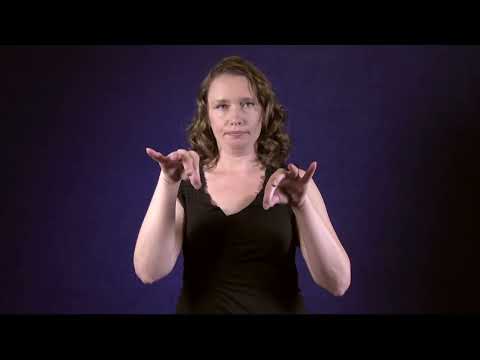
Definition: The color of a person’s hair.
Sign for HAIRCOLOR in ASL
Practice Activities:
To practice the sign for HAIRCOLOR in ASL, start by isolating each part of the sign. Since the sign often combines the sign for HAIR and then the concept of COLOR, begin by practicing each individually. Use a mirror to check your handshape and movements. Repeat each sign slowly and then blend them smoothly to form the full concept of HAIRCOLOR.
Next, incorporate the sign for HAIRCOLOR in ASL into simple sentences. For example, practice sentences like “YOUR HAIRCOLOR WHAT?” or “MY HAIRCOLOR BROWN.” This builds expressive language skills and helps with understanding sentence structure. Sign each sentence slowly at first, then build up speed as you become more confident.
Pair up with a practice partner and ask each other questions about different hair colors. Use visuals or photos of people with various hair colors and ask, “THEIR HAIRCOLOR WHAT?” Practice answering using complete sentences such as “HER HAIRCOLOR RED.” This reinforces vocabulary and improves receptive skills.
Create short storytelling prompts to use the sign for HAIRCOLOR in ASL throughout a story. For example, “TELL STORY ABOUT CHILD CHANGE HAIRCOLOR.” Try to include multiple color signs and descriptions. This exercise helps improve fluency and expressive storytelling techniques, plus expands your use of related signs like DYE or CUT.
Try describing people you see around you by their hairstyle and hair color. You can use a picture book, magazine, or online images. Pause and sign each person’s hair color using proper ASL syntax. For a challenge, describe changes in hair color over time or use comparisons.
Record a short video introducing yourself and mentioning your hair color and reasons for liking or disliking it. Watch your video back to evaluate clarity and accuracy. This activity helps you become more comfortable signing in front of others while reinforcing the sign for HAIRCOLOR in ASL.
Cultural Context:
In the Deaf community, discussing identity and appearance is an important cultural aspect, and expressing haircolor in American Sign Language is one meaningful way individuals share personal style. The sign for haircolor in ASL reflects not only a descriptive term but also a connection to self-expression and diversity. Through signs like this, users can communicate nuances about themselves and others with clarity and visual richness.
The sign for haircolor in ASL typically combines the sign for hair with a sign that represents color. This pairing of physical traits with descriptive elements is common in ASL, offering a natural and efficient way to communicate visual and stylistic characteristics. Signing haircolor is useful in everyday conversations, beauty-related discussions, and social settings where describing someone’s look adds to the context or story.
Haircolor often carries deeper cultural or personal meaning. People may select a specific haircolor to represent their identity, express creativity, or align with cultural heritage. The ability to talk about this in ASL using the sign for haircolor in ASL ensures that these forms of expression are accessible and celebrated in Deaf spaces.
In beauty salons that provide inclusive services, an understanding of the sign for haircolor in ASL can promote better accessibility for Deaf clients. Stylists who learn this sign can create a more welcoming space, strengthening communication and trust. ASL users can feel empowered in these environments by being able to participate fully in choosing and describing their hairstyles.
Describing haircolor is also relevant in storytelling, casual visual description, and in educational settings. For example, when describing a character or a friend, including haircolor through ASL enriches the detail and helps the audience form a clearer mental image. Children learning ASL also benefit from knowing the sign for haircolor in ASL, as it supports vocabulary development related to people and appearances.
Some cultures place symbolic meanings on different haircolors, and those associations can be discussed more fully when learners have the right signs to express them. Whether explaining the significance of natural gray, a cultural preference for certain tones, or even fashion trends, the sign for haircolor in ASL is a tool for deeper communication.
In visual media, such as films or theater performances involving Deaf actors, referencing someone’s haircolor through signing enhances the accessibility and visual clarity of the storyline. This makes the sign for haircolor in ASL relevant for artistic professionals as well as casual speakers. Shared understanding of such signs benefits both performers and audiences.
Knowing how to sign haircolor helps members of the Deaf and signing communities confidently describe
Extended Definition:
The sign for haircolor in ASL combines two separate signs to convey the concept. First, you sign hair by showing a small pinch near the side of the head, typically where hair grows. Then, you follow it with the sign for color, which is made by tapping the fingers on the chin with a slight wiggle of the fingers. When combined, these two signs clearly express haircolor in American Sign Language.
In ASL, compound signs like this are common, especially when expressing descriptive traits like haircolor. Each part of the sign carries meaning, and putting them together forms a complete idea. This visual representation helps ensure clarity and understanding during interactions.
There may be variations for the sign for haircolor in ASL across different regions or communities. Some signers may modify the motion slightly, perhaps emphasizing color more strongly if they are discussing a vibrant or unusual hair shade. Others might use fingerspelling for emphasis or clarity, especially in formal contexts or when describing a specific hair dye brand.
Context plays a major role when using the sign for haircolor in ASL. It’s often used in conversations about personal appearance, fashion, identity, or when scheduling services like hair appointments. You might also see this sign when asking or answering questions such as “What is your hair color?” or “Did you change your haircolor?”
Facial expressions and body language help to convey tone and additional information when signing haircolor. If someone is excited about a new haircolor, their facial expression will usually show that emotion even before the signs are fully formed. Likewise, a sign paired with a questioning eyebrow raise indicates curiosity or inquiry.
The sign for haircolor in ASL is also used in educational settings, especially for children learning descriptive concepts. Teachers often include it when talking about characters in books or during activities focused on self-identity. Signing haircolor helps reinforce visual and linguistic connections.
It’s essential to remember that ASL is its own language, and signs like the one for haircolor are not just gestures but culturally embedded expressions. They may differ from gestures used in other sign languages, such as British Sign Language or Auslan. Even the flow and rhythm of signing can vary slightly among native users depending on their background and experience.
When interpreting or translating from English to ASL, knowing how to correctly use compound signs like haircolor becomes extremely important. A fluent signer will ensure the signs are smooth, clear, and appropriately placed in the signing space to match the grammar of ASL rather than English
Synonyms: blonde, blond, light-haired, fair-haired, flaxen-haired
Educational resources: Find related learning materials in our course bank!
Want more? Check out some of our popular learning activities on the homepage!
Need to look up a sign? Use our highly rated dictionary: https://aslinteractive.com/best-asl-dictionary/
Follow us on tiktok: https://www.tiktok.com/@aslinteractive. More social media links at the bottom of this page!
Long-tail Keywords: what is the sign for hair color in ASL, how do you sign hair color in ASL, learn the ASL sign for hair color
Categories:
tags: hair signs, ASL colors, appearance in ASL, ASL vocabulary, descriptive ASL signs
Parameters
*Handshape*:
The handshape used in the sign for HAIRCOLOR in ASL starts with the dominant hand forming a closed “F” handshape . The thumb and index finger touch to create a small circle, while the other fingers are extended upward. This handshape touches or hovers near the hairline to reference “hair.”
To complete the sign for HAIRCOLOR in ASL, transition into a “1” handshape and then move into a “wiggle” or “strike” motion near the lips, representing “color.” This blend of handshapes clearly conveys the concept by combining the signs for “hair” and “color” into one fluid expression.
*Palm Orientation*:
The palm orientation for the sign for HAIRCOLOR in ASL involves a flat hand with the palm facing in toward the head when indicating “hair.” For the “color” portion, the hand shifts to a fluttering “5” handshape with the palm facing in toward the chin area.
Throughout the sign for HAIRCOLOR in ASL, the palm remains inward-facing, showing that the action is related to the body. This orientation helps clarify the connection between the concepts of hair and color.
*Location*:
The Sign for HAIRCOLOR in ASL is produced near the head, typically at or close to the temple or side of the forehead. This location is meaningful because it visually connects to where hair naturally grows, making the sign intuitive and contextually clear. When using the Sign for HAIRCOLOR in ASL, maintaining this placement ensures clarity and aligns with standard signing conventions.
*Movement*:
To produce the sign for haircolor in ASL, begin by using your dominant hand in a modified “F” handshape. Start near the temple, as if pinching a strand of hair, and gently twist the fingers slightly while moving downward about six inches. This mimics indicating hair and combining it with the sign for color.
The second part of the sign involves making the sign for color by bringing the fingertips of an open hand to the chin and wiggling the fingers slightly. Together, these two movements form the complete sign for haircolor in ASL, visually blending both concepts. ♀️
*Non-Manual Signals*:
The non-manual signals for the sign for HAIRCOLOR in ASL typically include a neutral or mildly inquisitive facial expression. Eyebrows may be slightly raised if asking about someone’s hair color, helping to indicate a question. Head tilting or slight nodding can emphasize interest or personalization when referring to someone’s appearance.
To clearly convey the sign for HAIRCOLOR in ASL, maintain appropriate eye contact and ensure a relaxed facial tone, unless context changes emotional intent. Combining clear non-manual cues supports the accurate meaning of the sign, especially when discussing specific shades or choices of hair color .
*Prosody, Dominant/Non-Dominant Hand*:
The sign for HAIRCOLOR in ASL uses both hands. The dominant hand forms a modified “F” or “G” handshape and touches the hair near the temple or side of the head, referencing “hair.” Then, the hand moves away and transitions into a color sign, such as “COLOR” near the chin.
The non-dominant hand is largely inactive but may stabilize facial expressions or remain at the side. For the sign for HAIRCOLOR in ASL, facial expressions support clarity, especially when distinguishing between hair types or specific colors.
Tips for Beginners:
When learning the sign for HAIRCOLOR in ASL, one helpful tip is to master the individual components first. The sign generally combines the sign for “hair” and the sign for “color,” so ensure you are confident with both before blending them. Use one hand to tug lightly near your temple to show “hair,” then transition smoothly into flicking the fingers at your chin to show “color.”
A common pitfall beginners face when practicing the sign for HAIRCOLOR in ASL is the transition between the two parts. Making the movement too choppy or hesitating between signs can make your meaning unclear. Practice the whole motion fluidly in front of a mirror to refine your coordination and build muscle memory.
Clarity is essential in ASL, so be sure you’re facing forward and your hands are visible to your conversation partner. Avoid signing too close to your face or too low by your chest, as this can make it difficult for your audience to comprehend. The sign for HAIRCOLOR in ASL should be performed at eye-level and with definite, confident motions.
Facial expressions also enhance meaning in ASL. While signing, you can mouth the word “haircolor” or raise an eyebrow if asking a question. Incorporating expression with precise hand movements will make your signing more natural and accurate.
If you’re using the sign for HAIRCOLOR in ASL in conversation, it can help to fingerspell different colors after the sign to describe a specific hair color. For example, follow it with F-S B-L-O-N-D or F-S R-E-D. This adds specificity and shows your expanding vocabulary.
Lastly, practice regularly with a partner or via ASL video sources. Repetition and context practice are key to mastering any sign and feeling confident using the sign for HAIRCOLOR in ASL in daily conversations.
Connections to Other topics:
The sign for HAIRCOLOR in ASL connects with several foundational concepts, including signs for physical appearance and self-description. It commonly combines the sign for HAIR and the sign for COLOR, highlighting ASL’s compound structure which builds on simpler signs to form more complex or specific meanings. The sign engages key classifiers and descriptive areas important to identity and conversation topics in the Deaf community.
This compound nature of the sign for HAIRCOLOR in ASL aligns it with other combination signs such as EYE+COLOR or SKIN+COLOR, which are similarly used to describe visual traits. Understanding how facial features or attributes are signed in ASL helps reinforce spatial and morphological awareness, both critical for fluency. These combinations offer learners practical context for applying descriptive signs in real interactions.
The sign also relates to the broader topic of grooming and fashion vocabulary in ASL. For example, signs like HAIRCUT, DYE, BRUSH-HAIR, and STYLE-HAIR all share connections with HAIR and appear in conversations about personal care. The expressive use of face and role-shifting can also indicate changes such as dyeing or switching haircolors, enhancing the visual storytelling aspect of ASL.
The sign for HAIRCOLOR in ASL may further be linked to emotion or identity expressions. For instance, discussing how someone changed their haircolor for pride events or seasonal trends can lead into deeper conversations about self-expression. This offers learners a way to practice describing and explaining decisions using layered vocabulary.
In ASL storytelling or narrative contexts, mentioning haircolor supports character description and plot development. It is common to describe multiple physical features to anchor the subject of discourse. The sign for HAIRCOLOR in ASL thus becomes a useful detail within a larger visual scene, enhancing clarity for the viewer and encouraging detailed, precise signing.
Summary:
The sign for HAIRCOLOR in ASL is a compound sign that combines the signs for HAIR and COLOR. It typically begins with the dominant hand showing the sign for HAIR—using a G-handshape to tug a small section of imaginary hair near the side or front of the head.
Immediately after the HAIR sign, the dominant hand transitions into the sign for COLOR. COLOR is formed by wiggling the fingers of an open hand, held near the chin. This gesture visually conveys the spectrum or variety of pigments, in context with appearance.
When combined, the sign for HAIRCOLOR in ASL efficiently expresses the concept of hair shade or pigmentation. It shows how ASL constructs compound signs that build meaning through the juxtaposition of two base concepts.
This sign is often used descriptively when introducing someone or describing a person’s appearance. ASL users might include it along with other features such as height, clothing, or distinguishing marks during identification or storytelling.
The sign is adaptable. If the specific hair color needs to be expressed, it is often followed by a color sign. For instance, one might sign HAIRCOLOR and then RED or BROWN to indicate red or brown hair.
In such sequences, classifiers may also be used. These non-lexical handshapes allow signers to describe hair texture or shape along with color, supporting more nuanced description when needed.
The sign for HAIRCOLOR in ASL is an example of how facial features and body depiction contribute additional clarifying information. For example, a signer might puff out cheeks slightly to imply volume or indicate that the color is dyed by the intonation of their movement.
Culturally, hair color plays a significant role in identity in Deaf communities, just as it does in hearing communities. Changes in hair color can signal age, fashion preferences, subcultural affiliations, or personal style, and ASL supports the expression of each nuance.
There is also growing acknowledgment of diversity in hair color and hairstyles, especially among Black Deaf and LGBTQIA+ individuals. The sign for HAIRCOLOR in ASL may therefore carry additional significance when used to affirm identity and presentation.
ASL, being a visually rich and spatial language, enables signers to give extensive detail about a person’s hair attributes. A signer can use the sign for HAIRCOLOR in ASL followed by various color names and directional cues to indicate highlights or multicolored styles.
This richness of detail makes ASL incredibly efficient. A simple structure like HAIR followed by COLOR and then a descriptor can turn into a dynamic depiction of something unique, such as ombré effects or dyed roots.
There are occasional variations in the sign for HAIRCOLOR in ASL based on region or generational influence. Some signers may incorporate a more mimetic or modified motion based on specific stylistic features of the hair being described.
Grammatically, the sign for HAIRCOLOR in ASL is often used adjectivally. For example, it may be woven into a sentence describing someone, like “MY FRIEND HAIRCOLOR BLACK.”
However, it can also function as a noun when discussing topics like dye or style, such as in the sentence “I LIKE THAT HAIRCOLOR.” ASL’s fluid grammar, based on topic-comment structure, accommodates both uses well.
The compound nature of the sign is rooted in ASL’s morphological capacity to create new meanings by combining existing signs. This capacity is a key feature of ASL’s natural linguistic evolution.
Children acquiring ASL naturally learn to use signs like HAIRCOLOR early, especially as they start to identify people in their environment. It becomes a fundamental tool in descriptive and referential communication.
Deaf education programs often teach the sign for HAIRCOLOR in ASL early along with eye color and other visual traits. These signs support literacy and identification activities across educational settings.
The cultural significance of hair within the Deaf community intersects with broader societal trends. Deaf individuals often use visual appearance, including hairstyle and color, to challenge norms or represent themselves more boldly than constrained environments may allow.
Media presence has influenced the mainstream adoption of labels and visual identifiers for personal expression. This includes embracing nontraditional hair colors, such as turquoise or lilac, all easily expressed using the HAIRCOLOR sign followed by the appropriate shade.
From a linguistic anthropology perspective, the sign for HAIRCOLOR in ASL reflects how personal identity is constructed through language. The visual-gestural modality of ASL makes it possible to foreground things like hair as central to social identity.
In storytelling, ASL users often utilize role shift and facial expression when referencing a person with unique hair color. In this way, the sign for HAIRCOLOR in ASL supports narrative immersion and realism.
ASL allows for animation of the sign to reflect personal opinion. For example, a signer can slow the movement or give an exaggerated facial reaction to convey approval or surprise about a hair color.
The handshape, location, movement, and non-manual signals play
Want more? Check out some of our popular learning activities!
ASL Interactive Resources
ASLInteractive YouTube Channel
Follow us on tiktok: @aslinteractive.com
Follow us on Instagram: aslinteractive
Facebook page: aslinteractive
Facebook group: aslinteractive
LInkedIn: ASL Interactive LLC
Twitter: @ASL_interactive
*Some information on this page is AI-generated. AI can make mistakes. Please check the information.


Responses