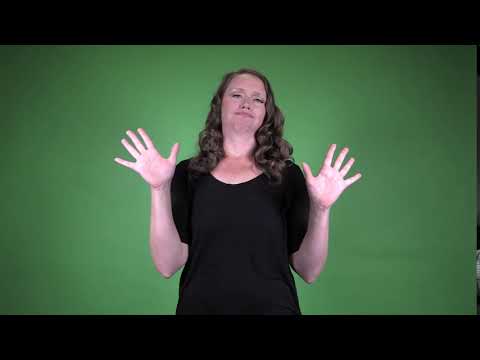
Definition: To have completed something happily.
Sign for HAPPY DONE in ASL
Practice Activities:
To build confidence in using the sign for HAPPY DONE in ASL, begin by practicing each sign independently. Stand in front of a mirror and sign HAPPY several times. Focus on your facial expression—showing true happiness is crucial to convey the correct meaning. Then, practice DONE, which typically uses a flat hand moving away from the body with a confirming motion. Once comfortable, try transitioning smoothly between the two signs.
Try using the sign for HAPPY DONE in ASL in basic sentences. For example, you could sign “I finished my homework, I feel HAPPY DONE” or “Party over, everyone HAPPY DONE.” Use these short phrases repeatedly until your handshapes and transitions feel natural. Record yourself signing and watch to observe your body language and expressiveness.
Challenge yourself with a storytelling prompt. Describe a joyful event like a birthday or holiday. Incorporate signs like FAMILY, CAKE, PRESENTS, and then wrap it up with the sign for HAPPY DONE in ASL. This helps make the sign feel integrated into real-life conversations.
Practice with a partner if possible. One person describes a situation, and the other responds using the sign for HAPPY DONE in ASL. For instance, one person signs “Work is finished,” and the other responds with “HAPPY DONE.” Switch roles to keep the activity interactive.
Create a simple video diary. Each day, sign about something that made you happy or a task you completed. Always end your entry with the sign for HAPPY DONE in ASL. Reviewing these clips weekly can help you track progress and increase fluency.
Finally, try games like charades focusing on emotional states or completed tasks. When guessing someone’s sign, be ready to respond using HAPPY DONE to make the learning fun and spontaneous.
Cultural Context:
In American Sign Language, the phrase sign for HAPPY DONE in ASL carries more than just a literal meaning. It blends grammar, facial expression, and cultural nuance to convey an emotional state that is both complete and satisfying. ASL users often use this sign combination to express contentment after completing a task or enjoying a fulfilling experience.
The concept of being both happy and done reflects a cultural way of communicating closure with positivity. The sign for HAPPY DONE in ASL often comes with specific non-manual signals, such as a satisfied smile or a head nod, to show emotional completeness. It’s not just about finishing an activity, but feeling emotionally good about it too.
When expressing the sign for HAPPY DONE in ASL, the facial expression is just as important as the hand movements. Deaf culture places high value on visual clarity and emotional expression. Using the correct body language helps make the intention behind the sign clearer in the absence of spoken tone.
This phrase is commonly used during social events or after group activities, especially in Deaf community gatherings where visual storytelling plays a central role. The sign for HAPPY DONE in ASL might appear at the end of a personal anecdote, indicating the story has ended on a joyful note. It encapsulates the feeling of satisfaction in an efficient, clear gesture.
Cultural fluency in ASL requires more than vocabulary—it requires an understanding of how concepts are paired and expressed. The sign for HAPPY DONE in ASL serves as a great example of how emotional and temporal ideas are joined together in a single thought. This is different from English, where a full sentence might be needed to communicate the same idea.
The use of DONE in ASL grammar can also imply completion or a change of state, depending on context. Pairing it with HAPPY enriches the emotional depth of what the signer is expressing. The sign for HAPPY DONE in ASL can suggest relief, joy, closure, or even gratitude, depending on how it’s delivered.
ASL is a rich, three-dimensional language that integrates gestures with movement space and facial cues. The sign for HAPPY DONE in ASL lives within this framework and reflects the values of clarity, emotion, and directness that are central in the Deaf community. It’s part of everyday language, used in both casual conversation and storytelling.
Understanding the cultural role of signs like this helps hearing learners and new signers become more respectful communicators. It shows how meaning is constructed differently depending on linguistic and cultural norms. The sign for HAPPY DONE in ASL
Extended Definition:
The sign for happy done in ASL is a combination of two important concepts: emotion and completion. This phrase is often used to express that not only is someone feeling joy or contentment, but that something has been settled or achieved with satisfaction. It’s a popular expression in American Sign Language because it reflects both a mood and an action.
To express the sign for happy done in ASL, you typically sign the word HAPPY followed by the sign for DONE. HAPPY is signed using a flat hand that brushes upward on the chest in a light, circling motion. It symbolizes the feeling of happiness or positivity. Right after that, DONE is signed by flipping both open hands forward from the body, as if to indicate that something is finished or over. This sequence captures both the emotion and the finality.
When people use the sign for happy done in ASL, they might be expressing relief that something is over and went well. For example, someone might sign it after finishing a big project, a long day, or after going through something emotionally challenging. It’s more than just saying you’re done — it’s adding a layer of positivity and personal satisfaction to the experience.
This phrase is also used in conversations to acknowledge mutual understanding or agreement. In group discussions or during storytelling in ASL, the sign for happy done can serve as a natural way to wrap up a thought or emotion with a complete, cheerful tone.
Learners of ASL often find it a useful phrase because it combines two high-frequency signs into a practical, expressive unit. It’s easy to remember and visually clear. By mastering the sign for happy done in ASL, you add a useful tool to your expressive vocabulary, helping you interact more naturally with others who use American Sign Language.
The meaning behind the combination of HAPPY and DONE goes beyond the literal. It often signals emotional closure or contentment with how things turned out. In this sense, the phrase can be very personal and specific to the person signing it. That emotional layer makes it a great example of how ASL captures deeper meanings in just a few quick movements.
In everyday ASL conversations, the sign for happy done is commonly paired with facial expressions that reinforce the emotional tone. A genuine smile, relaxed posture, and a slight head nod all add to the overall meaning. ASL relies heavily on facial grammar. So whenever you use this phrase, your face is just as important as your hands.
If you’re practicing the sign for happy done in ASL, make sure to sign each
Synonyms: content, joyful, pleased, satisfied, elated
Educational resources: Find related learning materials in our course bank!
Want more? Check out some of our popular learning activities on the homepage!
Need to look up a sign? Use our highly rated dictionary: https://aslinteractive.com/best-asl-dictionary/
Follow us on tiktok: https://www.tiktok.com/@aslinteractive. More social media links at the bottom of this page!
Long-tail Keywords: what is the sign for happy done in ASL, how do you sign happy done in ASL, ASL sign for happy done
Categories:
tags: emotion, feelings, positive signs, ASL adjectives, ASL expressions
Parameters
*Handshape*:
The handshape for the Sign for HAPPY DONE in ASL uses both open flat hands with fingers together and extended. For “happy,” the dominant hand circles in a small upwards motion on the chest, using an open palm and relaxed fingers.
For “done,” both hands use the same open B-handshape with palms facing up and then flick outward away from the body. The Sign for HAPPY DONE in ASL smoothly transitions between these two clear handshapes. ✨
*Palm Orientation*:
For the sign for HAPPY DONE in ASL, the palm orientation involves two parts. For “happy,” both hands are open with palms facing the chest, moving in small circles in an upward motion on the upper chest area. For “done,” the hands start with palms facing the body and then flip outwards so the palms face away, typically using a downward-outward motion. This transition clearly completes the sign for HAPPY DONE in ASL .
*Location*:
The sign for HAPPY DONE in ASL takes place primarily in the upper chest and lower face area. For HAPPY, both hands are usually placed just below the collarbone and move in an outward circular motion near the chest. The DONE sign transitions to a forward motion, with hands moving away from the body, generally at chest level or slightly lower.
Both parts of the sign stay within the neutral signing space and involve chest and arm-level placement. The facial expression changes slightly with DONE to indicate completion. The sign for HAPPY DONE in ASL maintains a smooth, continuous flow between both concepts.
*Movement*:
The sign for HAPPY DONE in ASL combines two separate movements. For “happy,” place both open hands just above the chest with palms facing inward and brush them upward and in small circular movements a couple of times, showing a joyful emotion . Then, transition to “done” by turning both hands palm-up and flicking them outward in front of you to indicate completion.
This fluid combination clearly expresses the sign for HAPPY DONE in ASL using natural transitions. Both parts should be performed with appropriate facial expressions to convey emotional tone and a sense of conclusion.
*Non-Manual Signals*:
The non-manual signals for the sign for HAPPY DONE in ASL include a bright facial expression with raised eyebrows and a gentle smile to reflect the emotion of “happy.” Head movement is typically minimal, although slight upward or forward movement can emphasize the sentiment.
When transitioning to “done,” the expression shifts subtly by relaxing the smile and possibly using a slight nod or head tilt to indicate completion. These facial cues enhance the clarity and emotion in the sign for HAPPY DONE in ASL .
*Prosody, Dominant/Non-Dominant Hand*:
The sign for HAPPY DONE in ASL uses both hands sequentially. Start with the dominant hand open and palm facing inward, patting the chest in small upward circles with a cheerful facial expression to show “happy.” Then transition to “done” by bringing both hands up, palms facing the signer, and then flipping them outward, indicating completion. The sign for HAPPY DONE in ASL uses facial expression for emotional nuance and to mark finality.
Tips for Beginners:
When learning the sign for HAPPY DONE in ASL, it’s helpful to understand that this concept combines two ideas: the expression of happiness and the completion of an action. Start by focusing on each part individually. For “happy,” use your dominant hand with an open palm and brush it upward on your chest a couple of times, showing a light, cheerful emotion. For “done,” flip both hands outward from the body, palms facing up, as if pushing something away to signal completion.
A common beginner mistake is to sign both concepts too quickly or with inconsistent facial expressions. Non-manual signals are crucial in ASL—showing joy or satisfaction when signing “happy done” adds to the meaning. Practice maintaining a slight smile or relaxed face when combining these signs to reflect that whatever was completed had a positive outcome.
The transition between the two signs should be smooth. Avoid pausing too long between “happy” and “done,” or it may look like you’re stating two separate thoughts rather than a cohesive idea. Think of the sign for HAPPY DONE in ASL as a fluid phrase; you’re telling a mini-story in a flash—joy with a conclusion.
Location and handshape are also key. Use your upper chest area for “happy” and maintain an open hand with relaxed fingers throughout. For “done,” remember to flick both hands forward in unison. Sloppy or limp movement in the “done” part may confuse viewers or weaken the clarity of your message.
Repetition helps with fluidity and natural movement. Practice in front of a mirror, or try recording yourself signing the phrase. Watch how your facial expressions complement the sign for HAPPY DONE in ASL so that it conveys both emotional tone and grammatical meaning clearly.
Connections to Other topics:
The sign for HAPPY DONE in ASL merges two concepts that are both foundational in sign language—emotions and aspect/modality. HAPPY is typically signed with open hands brushing upward over the chest, symbolizing a cheerful or light-hearted mood. DONE, often signed with a forward flick of open hands from chest position outward, signifies completion or finality. When these two are combined, they express emotional closure, like feeling content or glad something is finished.
This compound sign connects directly to other emotion-based signs such as PROUD, SAD, or EXCITED. While HAPPY DONE speaks to a feeling of satisfaction after an event, other emotions can be similarly layered with aspect signs. For example, SAD DONE could imply emotional closure after grief, showing how ASL expresses nuance through sign combinations.
The sign for HAPPY DONE in ASL also parallels how ASL uses aspect markers to modify verbs or states. The DONE component is often used in signs like FINISH-EAT or FINISH-WORK to denote past or completed actions. Adding HAPPY in front personalizes the message from a strictly temporal focus to an emotional reflection. This provides another way of expressing affective states in relation to time or completion, enriching discourse flow in ASL.
In storytelling or casual conversation, the sign for HAPPY DONE in ASL might be used when discussing the conclusion of a successful event, such as finishing a semester or completing a big task. It’s also a natural fit in narratives where characters undergo a journey and find peace at the end. This compound sign illustrates how ASL efficiently weaves emotion and temporal cues into one fluid concept.
Recognizing combinations like HAPPY DONE enables learners to better understand ASL’s grammar structures and creative expressions. It paves the way for understanding idiomatic expressions and linked concepts, reinforcing ASL’s spatial and conceptual depth.
Summary:
The sign for HAPPY DONE in ASL represents a combination of concepts that are common in daily communication. These two signs together carry both emotional and grammatical meaning, and when paired, can imply a sense of emotional resolution or closure.
The sign for HAPPY is typically made by placing both open hands, palms facing inward, just above the chest. The hands make small circular motions upward and outward, suggesting a sense of uplift or joy. The facial expression is key—it usually includes a genuine smile to reflect the positive emotion.
In ASL, facial expression is not just affective; it is grammatical. When signing HAPPY, the face should reflect the emotion genuinely. A flat expression can reduce clarity or shift meaning. The emotional content of the sign is reinforced through nonmanual markers.
The sign for DONE is performed by placing both hands palm-up near the body and then flicking them away from the body. The movement is quick and sharp, reflecting a sense of finality or completion. It is directional and carries an aspect of transition from one state to another.
Combined, HAPPY DONE in ASL produces a phrase that can express emotional closure or satisfaction. It is often used to mean something akin to “I feel good that this has ended” or “I’m content it’s over.” The context determines whether it is past tense or emphatic present perfect.
In terms of grammar, ASL uses placement and timing to convey temporal concepts. DONE often functions as a past marker in principles of ASL syntax. When paired with HAPPY, it may mark the emotional experience as complete or resolved in time.
The sign for HAPPY DONE in ASL also reflects ASL’s strong use of topic-comment structure. The emotional state (HAPPY) can be the focus, and DONE can serve as a closing comment, wrapping up the sentiment. This layering is typical in ASL narrative.
Culturally, the sign for HAPPY DONE in ASL can be found in many conversations related to endings of tasks, completion of stressful events, or resolution of emotional situations. It might be used after final exams, job interviews, or even emotional conversations.
ASL emphasizes time and emotion differently than English. In English, we typically say “I’m glad that’s over.” In ASL, HAPPY DONE captures this meaning visually and emotionally in a condensed, efficient form.
There is no auxiliary verb in ASL. Instead, DONE doubles as an aspectual marker. When used with signs like HAPPY or FINISH, it adds nuance that linguistically corresponds to perfective aspect theories found in spoken language analysis.
In academic linguistics, the sign for HAPPY DONE in ASL illustrates compound sign functionality. These signs retain individual meaning but combine into a more complex unit. Semantically, this phenomenon is similar to verb serialization in spoken creole languages.
Deaf Studies emphasizes the significance of visual-spatial relationships. Analyzing signs like HAPPY DONE in ASL helps us understand how the Deaf community processes emotional events. Unlike linear spoken languages, ASL’s meaning happens simultaneously with expression and space.
Variation may occur regionally. In some parts of the U.S., the intensity of the DONE sign is stronger to express dramatic closure, while in other locales, the motion is softer and symbolic. This reflects ASL’s diversity across geography.
Both signs are simple in morphology—single signs with uninflected roots—but their use together showcases ASL’s capacity for complex semantic layering. It is one of many examples of how concise ASL can be when expressing nuanced emotional states.
Syntax in ASL allows signs like HAPPY DONE to stand alone or be part of larger constructions. In storytelling, one might layer this pair between indexical references or role shifts. This adds depth and clarity to narratives where emotional evolution matters.
The facial expression when signing DONE plays into the meaning. It is not enough to flick the hands. A nod or raised eyebrows, combined with a subtle smile or look of relief, communicates the user’s emotional alignment with the concept.
The sign for HAPPY DONE in ASL is also often accompanied by body shift or a small head tilt that further supports its emotional connotation. Visual-spatial grammar supports such body movements as part of linguistic content, not merely extra information.
These forms of alignment with affect and tense in ASL are well-discussed in signed language linguistics. The combination of affective signs like HAPPY with tense-like signs such as DONE builds a compelling argument for nonverbal grammar.
In classroom ASL environments, teaching the sign for HAPPY DONE often correlates with vocabulary around emotions and past events. For beginners, it provides a useful example of how emotion and time connect in natural sign.
In interpretation settings, the phrase is key. When someone expresses relief in English, the interpreter may choose HAPPY DONE in ASL to render not just the information, but also the affective weight behind it. This ensures semantic fidelity.
In identity and culture, the ability to sign emotional concepts like HAPPY DONE embodies the Deaf community’s ability to share full human
Want more? Check out some of our popular learning activities!
ASL Interactive Resources
ASLInteractive YouTube Channel
Follow us on tiktok: @aslinteractive.com
Follow us on Instagram: aslinteractive
Facebook page: aslinteractive
Facebook group: aslinteractive
LInkedIn: ASL Interactive LLC
Twitter: @ASL_interactive
*Some information on this page is AI-generated. AI can make mistakes. Please check the information.


Responses