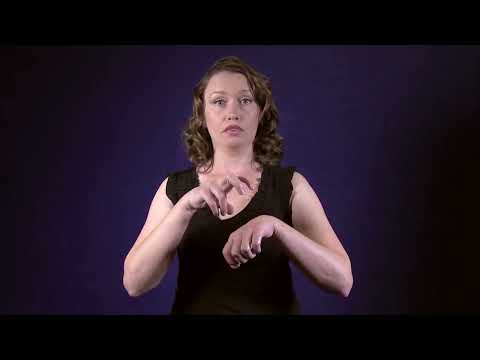
Definition: Shredded and fried potatoes.
Sign for HASHBROWNS in ASL
Practice Activities:
Start by practicing the sign for HASHBROWNS in ASL in isolation. Repeat the sign multiple times while facing a mirror to ensure correct handshape and movement. Record yourself signing and compare it with video sources or instructional materials to ensure clarity and accuracy.
Once you’ve practiced the sign in isolation, use it with food-related vocabulary. For example, pair it with signs like EGGS, BACON, TOAST, or BREAKFAST. Practice creating your own breakfast-themed sentence, such as: I LIKE HASHBROWNS WITH EGGS or I EAT HASHBROWNS EVERY MORNING.
Create a short story featuring a breakfast scene where the sign for HASHBROWNS in ASL appears at least three times. Include signs like COOK, EAT, ORDER, and RESTAURANT to build context. Retell your story to a partner or in front of a mirror to reinforce narrative skills.
Try a drawing-and-signing activity where you sketch a simple plate of food, including hashbrowns. Sign each item you drew out loud and focus on clear transitions between signs. This helps reinforce vocabulary recall and fluency in conversation.
Have a role-play activity with a partner where one person is a server and the other is ordering food. Incorporate the question: DO YOU HAVE HASHBROWNS? and respond appropriately. Switch roles and try variations like ordering different combinations or customizing dishes.
For listening and receptive skills, have a friend or teacher sign a short list of foods including the sign for HASHBROWNS in ASL. Try to identify all the items and then sign them back in order. This strengthens recognition and memory of new signs.
Finally, use the sign in a playful guessing game where one person describes a meal using ASL, and the other person guesses which dish is being described based on the signs used. Repetition in context will help solidify the sign for HASHBROWNS in ASL in your long-term memory.
Cultural Context:
The sign for hashbrowns in ASL reflects more than just a delicious breakfast food. Hashbrowns are a staple in American diners and breakfast menus, often associated with comfort food and morning routines. Incorporating a sign for hashbrowns in ASL allows Deaf and hard of hearing individuals to engage in conversations about food preferences, cooking, and social dining experiences.
Using the correct sign for hashbrowns in ASL supports inclusive communication in culinary spaces. Whether at brunch with friends or ordering at a drive-thru, knowing how to sign hashbrowns bridges language gaps. It makes the dining experience smoother and more interactive, especially for those who use ASL as their primary language.
Food plays an important role in culture and identity, and so does the ability to talk about it. The sign for hashbrowns in ASL gives users the vocabulary to express their food cravings and tastes. This is helpful in both casual settings and more structured environments like cooking classes, home economics courses, or recipe videos.
Teaching the sign for hashbrowns in ASL also opens up a conversation about how Deaf culture intersects with food culture. Many Deaf events and gatherings include shared meals where signs for specific dishes, like hashbrowns, can foster a stronger sense of community. Being able to sign familiar food items enhances the enjoyment and inclusion of everyone at the table ✨
Regional variations may exist, but the core idea behind the sign for hashbrowns in ASL is often inspired by the texture or preparation method. This visual and tactile approach to language is one of the unique strengths of ASL. When signing hashbrowns, the motion often mimics grating or frying, making it memorable and easy to learn.
For young children learning ASL or for people newly exposed to Deaf culture, food signs like the one for hashbrowns are both fun and educational. They can be incorporated into story time, mealtime, and play. Visual storytelling in ASL becomes richer when signs for familiar foods are added to the mix.
The sign for hashbrowns in ASL is not just practical, it’s also part of building language fluency around everyday life. Vocabulary that includes beloved foods helps build bonds and keeps language learning interesting. It’s also useful when learning about nutrition, menu planning, or even creating content as a Deaf chef or food blogger.
Using the correct sign for hashbrowns in ASL is one way to respect and support
Extended Definition:
The sign for hashbrowns in ASL reflects both the texture and preparation of this popular breakfast food. In American Sign Language, this sign often involves mimicking the motion of grating potatoes or the sizzling sound and movement of frying. Like many food signs in ASL, the sign for hashbrowns uses visual and contextual clues to express meaning.
When learning the sign for hashbrowns in ASL, it’s helpful to consider the physical characteristics of hashbrowns themselves. Some signers depict the grating motion by using both hands—the dominant hand acting like a grater while the non-dominant hand represents the potato. This motion gives a vivid visual of the preparation process, helping learners connect the concept with the gesture.
Another common version of the sign for hashbrowns in ASL focuses more on the frying aspect. In this variation, the dominant hand may stir, pat, or mimic flipping something in a frying pan. This sign variation emphasizes the cooking method, giving flexibility depending on the context.
As ASL is a visual, spatial language, the sign for hashbrowns in ASL can differ slightly depending on the region, user, or even the conversational setting. It’s always good to be aware that some signs are informal or home signs, created in specific families or communities. Regional differences are a normal part of language variation and should be embraced by anyone learning American Sign Language.
Food-related vocabulary, including hashbrowns, is essential for everyday ASL communication. Understanding the sign helps with meal discussions, ordering food at restaurants, and generally participating in daily conversations. The sign for hashbrowns in ASL can help learners build confidence when using food terminology in real-life situations.
Using the correct sign is also important in Deaf cultural contexts. Since food plays a central role in social gatherings, knowing how to sign various dishes—including hashbrowns—enhances social connection and interaction. Knowing the sign for hashbrowns in ASL shows respect and understanding when immersed in Deaf culture or community events.
For children or beginners learning ASL, the sign for hashbrowns can be a fun and engaging way to remember motion-based vocabulary. Mimicking actions such as grating or frying adds a kinesthetic element to language learning that improves recall. These kinds of food signs encourage learners to think photo-visually, a core principle in mastering American Sign Language.
When practicing or teaching the sign for hashbrowns in ASL,
Synonyms: hash browns, hashed potatoes, shredded fried potatoes, potato patties, pan-fried grated potatoes
Educational resources: Find related learning materials in our course bank!
Want more? Check out some of our popular learning activities on the homepage!
Need to look up a sign? Use our highly rated dictionary: https://aslinteractive.com/best-asl-dictionary/
Follow us on tiktok: https://www.tiktok.com/@aslinteractive. More social media links at the bottom of this page!
Long-tail Keywords: what is the sign for hashbrowns in ASL, how do you sign hashbrowns in ASL, ASL sign for hashbrowns
Categories:
tags: hashbrown sign, food signs in ASL, breakfast food ASL, ASL dictionary food, American Sign Language hashbrowns
Parameters
*Handshape*:
The handshape for the Sign for HASHBROWNS in ASL uses the dominant hand in a claw or curved 5-handshape, representing the motion of grating or shredding. This mimics the action of preparing hashbrowns, emphasizing the texture and cooking method associated with them.
The non-dominant hand may stay stationary or support the movement, depending on regional variations. This visual metaphor helps reinforce the meaning of the Sign for HASHBROWNS in ASL, connecting it to the real-life process of making the popular breakfast dish .
*Palm Orientation*:
For the sign for HASHBROWNS in ASL, the handshape typically begins with a dominant hand in a flattened “O” shape, palm facing down. While mimicking the motion of spreading or lightly pressing food on a pan, the palm orientation remains downward throughout the short movement.
This palm-down position helps emphasize the motion that reflects cooking or preparing hashbrowns. The sign for HASHBROWNS in ASL visually conveys flipping or spreading, giving it a tactile feel suitable for depicting food preparation .
*Location*:
The sign for hashbrowns in ASL is typically performed in the neutral signing space in front of the torso. The dominant hand may mimic a grating or shredding motion near the palm of the non-dominant hand, simulating the texture of shredded potatoes.
This location allows the movement to clearly represent food preparation, helping to visually convey the concept. Since the sign for hashbrowns in ASL is iconic, its placement in front of the body reinforces the clarity and recognizability of the term.
*Movement*:
Start with your dominant hand in a loose claw shape, palm facing down just above the non-dominant hand, which is also in a loose claw. Mimic a shredding motion by moving the dominant hand downward and slightly forward in a jagged line, as if grating potatoes.
Repeat the motion lightly once or twice to emphasize texture. The sign for hashbrowns in ASL imitates the action of shredding and frying, giving a visual cue to the preparation of the food.
*Non-Manual Signals*:
When demonstrating the sign for HASHBROWNS in ASL, the facial expression often conveys a sense of enjoyment or satisfaction, as if savoring a delicious breakfast . Eyebrows are usually neutral or slightly raised to match the context of discussing food, and the mouth may form a word-like shape replicating “hashbrowns” to support clarity.
The sign for HASHBROWNS in ASL can also be accompanied by a slight nod or a subtle smile to express familiarity or approval, especially if talking about a specific dish. Keep your head level and focused, enhancing the natural flow of conversational signing.
*Prosody, Dominant/Non-Dominant Hand*:
The sign for HASHBROWNS in ASL typically uses the dominant hand in a claw or bent handshape to mimic the grating motion of shredding potatoes. Starting near the non-dominant open palm or wrist, the dominant hand moves downward in a short, repeated scraping motion . This visual mimics the texture and preparation method of hashbrowns.
The non-dominant hand remains steady as a base, supporting the dominant hand’s grating action. The sign for HASHBROWNS in ASL visually represents how the food is made, enhancing clarity and conceptual accuracy.
Tips for Beginners:
The sign for HASHBROWNS in ASL is typically represented by mimicking the process of shredding and frying potatoes, which is iconic to this food item. To master this sign, be sure your movements are clear and intentional. Think of grating a potato with one hand on top of the other, moving as if you’re shredding onto an invisible grater. This visual cue helps connect the sign to the actual preparation of hashbrowns and reinforces memory retention.
When learning the sign for HASHBROWNS in ASL, keep your movements small and controlled. Overly dramatic motions can confuse the meaning or make the sign harder to understand. Use your non-dominant hand as a steady base while your dominant hand moves in quick motions to simulate grating, followed by a short movement to the side or down to show the cooking process. This shift quickly communicates the transformation from raw to cooked.
One common challenge is matching the pace and rhythm of native signers. When practicing, try to keep your hands relaxed and watch videos for repetition. Don’t rush—clarity is more important than speed, especially when learning the sign for HASHBROWNS in ASL. Focus your eyes on a signer’s handshape during practice sessions to avoid missing important elements.
Another helpful tip is to contextualize the sign in sentences. Practice using HASHBROWNS in phrases like “I like eggs and hashbrowns for breakfast” to get more comfortable using it naturally. This can improve fluency and boost your signing memory.
Lastly, feel confident practicing in front of a mirror or with a partner. Signing in front of others helps build clarity and receive real-time feedback. Gradual and mindful repetition is key to fully mastering the sign for HASHBROWNS in ASL. Keep at it, and don’t be afraid to revisit foundational movements.
Connections to Other topics:
The sign for HASHBROWNS in ASL connects closely with vocabulary related to food preparation, especially signs used in the context of breakfast or cooking methods. It often borrows from visible gestures associated with the preparation process, showing relationships to signs like POTATO, FRY, or COOK, depending on which variation is used. This makes it relevant not only in daily conversation but also in kitchen or restaurant-related discussions in ASL.
When analyzing the sign for HASHBROWNS in ASL, you’ll notice it can connect logically with signs like GRATE or SHRED if mimicked through movement, representing the traditional preparation of potatoes. These connections help develop a broader vocabulary by expanding from individual food items to their methods of creation—supporting topic-based learning. It encourages learners to think beyond iconic signs and into conceptual representations driven by context.
The sign can also be incorporated into compound signs such as BREAKFAST-HASHBROWNS or EAT-HASHBROWNS, linking it with the meal context and typical routines. By combining it with MORNING or EGG, for example, you can develop whole sentence structures that describe meals or preferences. This promotes communicative fluency in real-world situations like ordering in restaurants or talking about personal habits.
Learners also benefit by comparing the sign for HASHBROWNS in ASL to other food signs with similar classifiers or handshape uses. For instance, signs for SPAGHETTI or SALAD might incorporate repetitive motions or simulate texture, engaging the same abstract thinking skills to interpret meaning. This demonstrates how ASL uses physical space and motion to construct entire scenes visually.
Additionally, recognizing the sign for HASHBROWNS in ASL helps build cultural fluency since the dish itself is common in American breakfast culture. Understanding culturally relevant signs alongside general vocabulary prepares learners for deeper, more meaningful interactions in ASL across diverse settings.
Summary:
The sign for HASHBROWNS in ASL does not have a widely standardized default sign that is universally recognized. Instead, it is often conveyed through a combination of descriptive classifiers or the use of fingerspelling for clarity, especially in formal contexts or when a signer is communicating with someone not familiar with regional signs. This reflects the general ASL practice of blending visualization with linguistic structure.
One common approach involves fingerspelling H-A-S-H-B-R-O-W-N-S, especially in situations where specificity is important, such as discussing menu items or food preparation. Fingerspelling allows signers to transfer spoken language proper nouns or food names directly into ASL when there is no universally accepted sign. This method ensures accurate understanding and remains true to the word’s original form.
Another more expressive and visual method uses iconic classifiers to mimic the action of cooking and serving hashbrowns. This method uses the dominant hand in a flat “O” shape mimicking a scoop or pat mold and then laying it down onto an imagined plate. It may follow a motion similar to flattening or spreading hashbrowns on a grill or pan—aligning with ASL’s spatial grammar.
This layered approach to meaning highlights one of ASL’s most important traits: flexibility through depiction. ASL relies heavily on visual context, so describing the texture, cooking method, or appearance of hashbrowns can be preferable to defaulting to fingerspelling when audience familiarity allows for it. This enriches storytelling and allows for greater cultural engagement in daily conversation.
The sign for HASHBROWNS in ASL often appears in discussions related to breakfast or typical American diner foods. As part of meal-related vocabulary, it ties into broader food signs like PANCAKES, EGGS, BACON, and COFFEE. These create a cluster of signs important for everyday conversations, especially around routines and cultural food experiences.
From a cultural perspective, hashbrowns hold a strong place in American breakfast cuisine. The sign for HASHBROWNS in ASL may reflect this familiarity, as it may vary regionally or even within signing communities depending on local diner traditions or popular chain restaurant terminology. Signs may blend local slang, abbreviation, or gestures commonly associated with food textures.
Grammatically, the term hashbrowns functions as a plural noun. In ASL, pluralization may be shown through reduplication, size, or mouth morphemes rather than grammatical suffixes, so the sign doesn’t need to show the ‘s’ explicitly. When fingerspelling is used, however, the entire word including the ‘s’ is represented, clarifying both meaning and plurality.
The visual-spatial nature of ASL allows for conceptual accuracy, especially when there are no specific lexical signs. In discussing the sign for HASHBROWNS in ASL, it’s beneficial to situate it within a larger environment—for example, the plate arrangement, restaurant setting, or type of meal. These elements help reinforce understanding through context clues.
When describing how to make the food, ASL can further include pantomimed actions like shredding potatoes, pressing them onto a skillet, or flipping them with a spatula. Such classifiers and constructed actions exemplify ASL’s ability to narrate physical processes, something not as easily achieved in spoken English. These enrich the sign for HASHBROWNS in ASL by adding depth.
Food-related vocabulary in ASL often shows influence from both linguistic and cultural exposure. As hashbrowns gain popularity in various regions and age groups, the fingerspelled sign and accompanying classifiers may become more standardized through exposure on media, ASL cooking tutorials, or deaf community representations in hospitality fields. The fluidity of ASL allows for this evolutionary adaptation.
Applied linguistics principles come into play with the sign for HASHBROWNS in ASL when analyzing it as a borrowed term from English. Like many food names or products, hashbrowns originate from English and retain their orthographic form via fingerspelling. The speed, clarity, and rhythm of spelling can also vary with signer fluency and engagement.
In interpreter training, signs like the sign for HASHBROWNS in ASL become teaching moments for transliteration strategies. Interpreters must decide when to spell, describe, or combine elements to suit the receiver’s experience and context. They also learn how to use regional or idiomatic expressions effectively when a conceptual sign doesn’t yet exist.
Linguistically, this highlights the difference between lexicalized fingerspelling and raw fingerspelling. Lexicalized signs tend to become smoother, with changes in handshapes and movement that mimic a native sign feel. While the sign for HASHBROWNS in ASL is not yet widely lexicalized, it has the potential to become so within food-heavy discourse or in specialized fields like culinary ASL classes.
The sociolinguistic dimension is also critical. Regional dialects of ASL may feature slight differences for food signs
Want more? Check out some of our popular learning activities!
ASL Interactive Resources
ASLInteractive YouTube Channel
Follow us on tiktok: @aslinteractive.com
Follow us on Instagram: aslinteractive
Facebook page: aslinteractive
Facebook group: aslinteractive
LInkedIn: ASL Interactive LLC
Twitter: @ASL_interactive
*Some information on this page is AI-generated. AI can make mistakes. Please check the information.


Responses