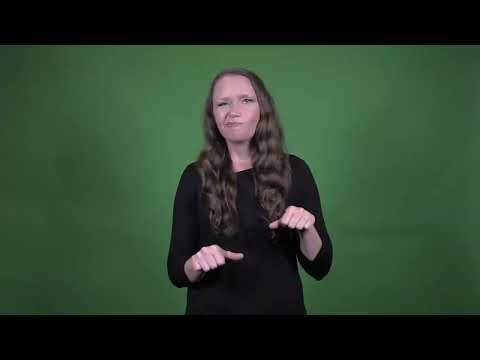
Sign for HESITATE in ASL | ASL Dictionary

Definition: To pause before saying or doing something.

Sign for HESITATE in ASL

YouTube player

Practice Activities:

To practice the sign for HESITATE in ASL effectively, start with isolation drills in front of a mirror. Repetition will build muscle memory, so sign the word slowly and then at conversational speed. Pay attention to the direction, palm orientation, and handshape each time you practice.

Incorporate the sign for HESITATE in ASL into short phrases such as “I hesitate to ask,” or “She hesitated before answering.” This helps transition the sign from isolated practice to fluid conversation. Try signing these phrases both with and without voice to promote expressive fluency.

Create a list of everyday situations where someone might feel unsure or slow to act. Examples include ordering food, answering a difficult question, or making a decision. Use these prompts to form full ASL sentences or brief narratives describing those moments of hesitation.

For storytelling, describe a scenario involving a decision, like choosing between two job offers or deciding whether to speak in public. Add emotional facial expressions and pauses to support the meaning of the sign. Incorporate the sign for HESITATE in ASL at natural points in the story to improve context use.

Try a partner activity where one person tells a story using ASL that includes a moment of hesitation and the other has to guess why the person hesitated. This works both receptive and expressive skills while reinforcing comprehension of the sign.

Use ASL flashcards with emotional states or reactions to encourage spontaneous responses. When you pull a card that implies uncertainty or decision-making, include the sign for HESITATE in ASL in your sentence as a reaction.

Record yourself signing several of the above scenarios and review the videos to assess accuracy. Pause at key points to ensure the sign is placed correctly in the sentence and matched with corresponding facial grammar.

Cultural Context:

In American Sign Language, the sign for hesitate in ASL carries deeper cultural context than just a physical gesture. It reflects how Deaf people communicate uncertainty or a pause in decision-making, often in nuanced and expressive ways that extend beyond spoken language equivalents.

The sign for hesitate in ASL might be used during storytelling or conversation when someone is unsure, second-guessing, or cautiously moving forward in a decision. In Deaf culture, this visual expression plays a key role in conveying emotion and tone, serving as an important non-verbal cue that listeners immediately understand.

Understanding the cultural background of the sign for hesitate in ASL helps provide insight into how emotions are conveyed visually and expressively. The sign is not just about pausing but about showing inner conflict or reluctance, making it a vital part of more complex communication.

In Deaf communities, communication style is more direct than in many hearing cultures, but signs like hesitate add layers of depth to storytelling and dialogue. They allow signers to express internal thoughts and emotional hesitations without needing to voice them.

Because ASL relies heavily on facial expressions and body language, the sign for hesitate in ASL is rarely used alone. It is frequently supported by subtle changes in facial expression or the pace of signing to make the message more precise. This visual grammar creates context that shapes meaning for the viewer.

In a classroom or learning setting, students might encounter the sign for hesitate in ASL when practicing conversations or dialogues that mirror everyday interactions. Teachers often highlight how this sign can be strategically used to represent thinking, careful consideration, or emotional pause.

For Deaf individuals, the timing of the sign and any accompanying non-manual markers can change its meaning slightly. A fast movement combined with a worried brow could suggest nervous hesitation, while a slower movement might indicate deep thought or reflection. The cultural interpretation depends on the entire context of the conversation.

When learning the sign for hesitate in ASL, it’s helpful for students to observe live conversations in the Deaf community or engage with fluent signers. It provides a real-world example of how hesitation is naturally embedded in social interaction and storytelling. Watching interviews, stories, or vlogs in ASL also showcases how naturally this sign is used in context.

Deaf culture values honesty and clarity, but also appreciates the subtleties of expressiveness, which makes this sign important in conveying unspoken thoughts. Mastering how and when to use the sign for hesitate in ASL is part of becoming a more fluent signer who aligns with these cultural norms

Extended Definition:

The sign for hesitate in ASL captures the natural human response to uncertainty or second-guessing. In American Sign Language, this concept is expressed visually, often with subtle hand movements that reflect a moment of pause or indecision. The sign for hesitate in ASL typically includes finger movements that mirror a slight, unsure motion, representing the inner feeling of reluctance or doubt.

This sign can vary slightly depending on region or personal signing style. It’s often performed by using a handshape that glides forward in a hesitant or stuttering motion, showing the mental stop-and-start of someone who’s unsure. Mastering the sign for hesitate in ASL involves observing the nuance and pacing, as the movement should reflect the emotional tone of hesitation.

ASL is a visual language where context plays a big role, and the sign for hesitate in ASL may change subtly based on how it’s used in a sentence. Facial expressions are also key. Pairing the appropriate facial expression—like eyebrows slightly raised or lips pressed together—adds clarity and emotional detail to the sign for hesitate in ASL.

This sign is often used in everyday conversations when someone is unsure about making a decision or when retelling a story about a past hesitation. It’s common in narratives, interviews, and dialogues where someone is being honest about their uncertainty. Teaching students how to express the concept of hesitation in signing helps with storytelling skills and conversational fluency.

For learners, it’s helpful to practice the sign for hesitate in ASL by role-playing scenarios where they feel hesitant. For example, pretending to be unsure about trying a new food or answering a difficult question can provide a realistic context. This helps reinforce the use and natural rhythm of the sign in a way that’s both expressive and easy to remember.

When watching native signers use the sign for hesitate in ASL, one can notice the graceful blend of hand motion and facial cues. The sign isn’t rigid, and fluent signers make it flow naturally within full sentences. This fluid motion gives a more authentic feel and helps non-native signers develop better communication habits.

Because the sign reflects a mental state, it’s often paired with other emotion-based signs or expressions in conversation. Someone might sign hesitate before or after signing nervous, unsure, or thinking to build a fuller idea. This creates a layered, expressive dialogue that tells more than words alone ever could.

To increase understanding of the sign for hesitate in ASL, videos and live demonstration offer visual reference that written definitions alone can’t capture. Hands

Synonyms: pause, waver, delay, falter, vacillate

Educational resources: Find related learning materials in our course bank!

Want more? Check out some of our popular learning activities on the homepage!

Need to look up a sign? Use our highly rated dictionary: https://aslinteractive.com/best-asl-dictionary/

Follow us on tiktok: https://www.tiktok.com/@aslinteractive. More social media links at the bottom of this page!

Long-tail Keywords: what is the sign for hesitate in ASL, how do you sign hesitate in ASL, ASL sign for hesitate

Categories:

tags: hesitation signs, ASL emotions vocabulary, feel uncertain in ASL, expressions of doubt in ASL, ASL communication gestures

Parameters

*Handshape*:

The handshape for the sign for HESITATE in ASL uses flat hands, also known as the “B” handshape . Both hands are positioned palm-down with fingers held together and extended naturally.

In the sign for HESITATE in ASL, the hands move in a slight alternation forward, as if skimming lightly along a surface. This flickering motion mimics the uncertainty or pause that the concept of hesitation represents.

*Palm Orientation*:

In the sign for HESITATE in ASL, the dominant hand is typically in a flat-B shape with the palm facing downward toward the floor. The non-dominant hand is often not used, keeping focus on the subtle flicking movement involved.

The palm maintains a downward orientation throughout the movement, gently sliding forward in a hesitant or tentative manner. This palm orientation conveys the uncertainty or pause represented by the sign for HESITATE in ASL.

*Location*:

The sign for hesitate in ASL is typically produced in the neutral space in front of the torso, just below chest level. This space allows for clear visibility of the hand movement associated with the sign without obstructing facial expressions or other contextual signals.

When signing the sign for hesitate in ASL, the hand moves forward and slightly bounces or wavers, reflecting the uncertainty or pause conveyed by the concept. Keeping the sign in this mid-torso region ensures clarity and consistency in communication.

*Movement*:

The sign for HESITATE in ASL uses the dominant hand shaped in a flat B-hand, palm facing down. It makes a quick double tap forward onto the non-dominant flat B-hand, also palm down and held steady in front of the chest. The movement is light, short, and may resemble a stuttering or uncertain motion to convey hesitation.

This double-tap movement mimics the uncertain step or pause associated with the concept. To effectively express the sign for HESITATE in ASL, facial expression should show uncertainty or reluctance .

*Non-Manual Signals*:

When using the sign for HESITATE in ASL, the non-manual signals should reflect uncertainty or inner conflict. The eyebrows are often slightly furrowed, and the eyes may shift subtly side to side or look downward, as if searching for the right response.

The mouth might form a slight pursing or a brief tightening of the lips to enhance the unsure feeling. These non-manual cues strengthen the meaning of the sign for HESITATE in ASL, reinforcing the sense of indecision.

*Prosody, Dominant/Non-Dominant Hand*:

The sign for hesitate in ASL generally uses the dominant hand shaped like a flat hand (B-handshape), palm facing down, with slight wavering or tapping motion on the chest or in front of the body. The non-dominant hand is not usually involved unless for added expression or context.

This motion shows indecision or uncertainty. The sign for hesitate in ASL may be accompanied by a shift in facial expression to emphasize reluctance or pause.

Tips for Beginners:

When learning the sign for HESITATE in ASL, it’s helpful to focus on the hand movement that mimics a stutter or a slight pause in action. Typically, the dominant hand hovers or makes a soft repeated motion, often resembling the action of faltering steps or uncertain movement. Make sure the movement is subtle, not overly exaggerated, to keep it natural looking and clear to a native signer.

To practice the sign for HESITATE in ASL, watch various signers use it in context through signing videos or fluent signers on social media. Seeing how the sign is incorporated in casual conversation helps you understand its rhythm and when it’s used most appropriately. Pay attention to non-manual markers like a furrowed brow or a reflective facial expression that accompanies the sign—it adds important context.

Beginners often struggle with making the hand motion hesitant but still deliberate. Avoid freezing or making no motion at all, as this can lead to confusion. You want to suggest uncertainty or delay without appearing stiff. Loose and controlled hand movement is key when signing the sign for HESITATE in ASL, so keep wrists relaxed while practicing.

Repetition is important when learning any new sign. Use the sign for HESITATE in ASL in mini-conversations or roleplay situations. For example, try expressing phrases like “I hesitated before answering” or “She looked like she might hesitate” to reinforce the context.

Don’t forget to check in with fluent signers or tutors to get feedback on your execution of the sign. As with many ASL signs, precision in movement and facial expression contributes greatly to being understood. A mirror or video recording of your signing sessions can be very helpful in improving accuracy and confidence.

Connections to Other topics:

The sign for HESITATE in ASL connects deeply with emotions, cognitive processing, and decision-making. It is often used in contexts where someone is unsure, delaying action, or mentally revisiting an option. This sign shares conceptual space with signs like THINK, WONDER, and UNCERTAIN, making it relevant in conversations that involve expressing doubt or introspection.

Understanding the sign for HESITATE in ASL enhances one’s ability to express nuanced emotional states. It can be compound with signs like DECIDE or TRY to form expressions such as “hesitate to decide” or “try but hesitate,” reinforcing layered meanings. These combinations allow signers to fluently describe internal conflict or reluctance.

The facial expressions paired with the sign for HESITATE in ASL contribute significantly to its clarity. Raised eyebrows, a tilted head, or a tight mouth might accompany the sign to emphasize discomfort or lack of confidence. These expressive components echo how nonmanual signals work cohesively with manual signs across a range of mental and emotional vocabulary.

In storytelling or narrative contexts, the sign for HESITATE in ASL helps convey pacing and emotional tone. For example, when recounting a difficult choice or a moment of doubt, this sign can signal a pause in action or dialogue, creating dramatic effect. It’s also useful when interpreting hesitation in others, such as when relaying a conversation or interpreting live events.

Signs like WAIT, PAUSE, and THINK-ABOUT are conceptually related and are often taught alongside the sign for HESITATE in ASL to create a thematic set of cognitive actions. These terms enrich discussions on mental processing and emotional reaction, making them vital for both everyday conversation and academic topics.

Overall, the sign for HESITATE in ASL enhances fluency by bridging the internal experience with external communication, allowing signers to express a wide range of reflective and uncertain states ️.

Summary:

The sign for HESITATE in ASL is a subtle yet expressive gesture that captures the feeling of uncertainty or reluctance. It often mimics the act of pausing or taking a small, reconsidering step forward, aligning well with the emotional context of hesitation.

To produce the sign, one hand—typically the dominant—extends outward with fingers flat and palm down. The hand makes a small, brief forward motion and then pauses or retracts slightly, as if metaphorically pulling back from making a decision.

Facial expressions are essential in the sign for HESITATE in ASL. A furrowed brow or a slight frown often accompanies the sign to enhance the emotional undertone of doubt or indecision, helping convey nuance.

The movement in the sign can vary slightly in intensity or speed depending on the situation. A slow, tentative gesture communicates deep uncertainty, while a quicker version suggests fleeting indecision.

In terms of grammatical function, the sign for HESITATE in ASL can serve as a verb or be incorporated into larger sentence structures to indicate mood or attitude. It’s often used alongside signs for THINK, MAYBE, or LIKE to build expressive and layered messages.

Culturally, hesitation holds meaning in ASL, often acting as a narrative device in storytelling or conversational recounts. Deaf storytellers may use the sign for HESITATE in ASL to amplify suspense or signal a turning point in a narrative.

This sign can also appear in discussions about important life decisions, ranging from job opportunities to romantic relationships. The visual nature of the sign reinforces the emotional struggle underlying even minor choices.

ASL captures intonation visually, so the sign for HESITATE in ASL benefits greatly from rhythm and pacing. Extending the duration or repeating the motion subtly modifies the meaning to reflect ongoing or recurring uncertainty.

Some signers incorporate other signs in tandem with HESITATE to communicate a layered state of doubt. For example, combining HESITATE with DON’T-KNOW or CONFUSED supports a complex emotional picture.

In classroom settings, students are taught this sign early when learning emotional vocabulary. It serves both as practical vocabulary and as a foundation for verbs that express internal states.

Linguistically, the sign for HESITATE in ASL demonstrates ASL’s ability to portray internalized, abstract feelings through visible, external action. The sign transforms the private sensation of doubt into a public, observable symbol.

Its motor pattern involves a partial, incomplete movement that consciously avoids completion—paralleling how hesitation interrupts action. This mirrors the linguistic feature of interruptability, where something begins but doesn’t fully execute.

In bilingual contexts, when Deaf individuals express English idioms involving hesitation, such as “on the fence,” they may use this sign for clarity. The sign for HESITATE in ASL can either stand alone or be incorporated in such metaphorical translations.

Regional variations of the sign exist within signing communities. Some may sign HESITATE with a repeated finger movement instead of a whole-hand gesture, emphasizing fine visual distinctions.

Understanding this sign invites attention to embodied experience in language. Hesitation isn’t a concrete object—it’s a mental and emotional moment—and ASL makes these intangible feelings visible through motion and expression.

The sign also appears commonly in interpreted conversations, especially among those navigating decisions during group discussions, debates, or interviews. Interpreters make rapid, accurate use of the sign to reflect the speaker’s emotional subtleties.

Its presence in interpreted media such as television or theater reveals how ASL can reflect the pacing and psychological pauses in speech. The sign for HESITATE in ASL gives form to otherwise invisible human processes.

Teachers and ASL instructors often introduce this sign alongside others like WORRY, DOUBT, and THINK. These emotional or cognitive states form a thematic set that helps learners express complex mental landscapes.

The psychology of hesitation aligns with the nonmanual behaviors used during this sign. Micro-expressions, like darting eyes or pursed lips, often accompany the motion, enriching the semantic quality of the sign.

In Deaf literature, characters may use the sign for HESITATE in ASL to mark uncertainty during plot twists or unexpected choices. It becomes a storytelling device that provides clarity in moments of suspense.

The sign also plays a role in persuasion and negotiation, when one wants to signal caution without directly rejecting an offer. It acts as a socially polite alternative to outright refusal, allowing communication to stay open.

Some use HESITATE when reflecting on past mistakes or missed opportunities. For instance, during a narrative, someone might sign HESITATE as a flashback to a decision they didn’t take.

In linguistic studies, the sign for HESITATE in ASL serves as an example of visual semantics, where meaning is co-constructed by context, body posture, and rhythm rather than only symbolic handshapes.

From a grammatical lens, it can appear in conditional clauses or as an emotional modifier. For

Want more? Check out some of our popular learning activities!

ASL Interactive Resources

ASLInteractive YouTube Channel

Follow us on tiktok: @aslinteractive.com

Follow us on Instagram: aslinteractive

Facebook page: aslinteractive

Facebook group: aslinteractive

LInkedIn: ASL Interactive LLC

Twitter: @ASL_interactive

*Some information on this page is AI-generated. AI can make mistakes. Please check the information.


Responses