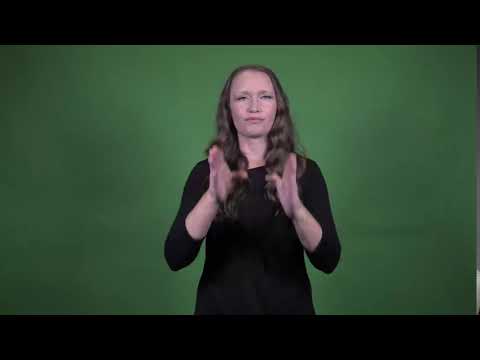
Definition: A person who hits something.
Sign for HITTER in ASL
Practice Activities:
To begin practicing the sign for HITTER in ASL, start by isolating it. Practice forming the base sign for “HIT,” then repeat the movement while incorporating the agent marker, which indicates a person who performs the action. Do this in front of a mirror to watch your handshape and movement for accuracy. Repeat the sign multiple times until it feels natural.
Create flashcards with different actions like “RUN,” “DRAW,” and “HIT,” then add the agent marker to form signs like “RUNNER,” “DRAWER,” and “HITTER.” This helps reinforce how the sign for HITTER in ASL fits into a larger pattern of occupations or roles. Use these cards to test your recognition and production.
Practice making sentences using the sign for HITTER in ASL, such as “The baseball hitter is strong” or “That boy is a hitter, not a pitcher.” Sign these in full ASL grammar, using appropriate facial expressions and topic-comment structure. Video yourself to evaluate fluency and expression.
For storytelling practice, create a short story about a sports game where a hitter plays a main role. Use signs like BASEBALL, TEAM, SCORE, and HIT along with the sign for HITTER in ASL. This allows you to embed the sign naturally in narrative form.
Engage in partner activities where one person signs a sentence using the sign for HITTER in ASL and the other interprets. Then switch roles. This encourages expressive and receptive skills development. You can also play charades-style games, where you act out roles like “boxer” or “baseball hitter,” and your partner has to respond with the correct ASL sign.
Using digital tools or apps, watch videos demonstrating the sign for HITTER in ASL used in different scenarios. Pause and mimic the sign, trying to match handshape, palm orientation, and movement. Consistent repetition and real-life context use are key to developing fluency.
Cultural Context:
In American Sign Language, cultural awareness is key when learning signs like the sign for hitter in ASL. This particular sign isn’t just about showing an action—it reflects how the Deaf community communicates ideas about physical actions, aggressive behavior, and even sports with clarity and precision. Since ASL often incorporates facial expression and body movement, these elements add deeper meaning to the sign for hitter in ASL beyond just handshape.
Understanding the cultural context of violence-related signs is important. In Deaf culture, clear and direct communication matters, but so does sensitivity. For example, using the sign for hitter in ASL might vary depending on whether you’re talking about someone who hit another person, a batter in a baseball game, or describing an accidental strike. Each scenario may adapt the sign slightly depending on tone and context.
ASL tends to reflect the values of the Deaf experience, and avoiding miscommunication is one of them. When using the sign for hitter in ASL, it’s essential to consider facial grammar—one of the defining aspects of ASL—that helps convey the difference between something playful, aggressive, or accidental. A raised eyebrow, a serious face, or an exaggerated motion can shift how the sign is received.
When you see the sign for hitter in ASL used in media like Deaf-led theater or ASL storytelling, it often plays a dramatic or illustrative role. These performances highlight how the sign can be exaggerated or stylized to represent threat or impact. It shows the richness of ASL and how one sign can be adapted to different expressive needs while still maintaining its roots.
In educational environments, especially when teaching children or young learners, the sign for hitter in ASL must be taught with context. It gives kids the tools to express themselves if someone hits them or if they want to describe a scene from a book. However, instructors will also stress the importance of understanding when and how to use such a sign appropriately.
Sports is another area where the sign for hitter in ASL can be used widely, especially in baseball or martial arts discussions. Coaches and players often rely on signs to communicate quickly and clearly during games or training. For Deaf athletes, using the correct sign helps blend Deaf culture with mainstream sporting experiences, reinforcing community and inclusion.
In everyday conversation within the Deaf community, the sign for hitter in ASL may come up during discussions about behavior, fights, or even watching action films. That versatility shows how signs can evolve and flow with daily life. Just like in spoken language, the context of a conversation
Extended Definition:
The sign for hitter in ASL uses a common classifier to show an action being done to a person or object. It’s a visual representation of the concept of hitting, depending on who or what is being hit and how the action takes place. American Sign Language often relies on context, so the way the sign is formed changes slightly based on the situation.
To create the sign for hitter in ASL, you typically use the dominant hand to act out the motion of hitting. Then, you follow that with the person ending or agentive marker, which is made by placing both hands straight up and bringing them down vertically. This adds the meaning of someone who hits — a hitter — to the base sign.
Since ASL is a visual language based on movement and space, facial expressions and body movements strengthen the meaning. When signing hitter in ASL, a more forceful facial expression emphasizes a strong impact, while a lighter expression may show a playful or accidental hit. These non-manual markers are important for clear communication and understanding.
The sign for hitter in ASL can change depending on context and who is involved. If you’re referring to a baseball hitter, you might use a modified version or combine the sign with baseball to show the specific meaning. Context plays a big role in how the viewer understands whether you’re referencing a sport, violence, or something else.
Many signs in ASL, including the sign for hitter in ASL, are built from root verbs. In this case, the sign “to hit” becomes “hitter” when you add the person marker. This structure is commonly used in American Sign Language to expand vocabulary without creating entirely new signs for every word form.
In conversations about sports, conflict, or behavior, knowing the sign for hitter in ASL is useful and practical. For instance, when discussing a situation at school or describing actions in a game, this sign quickly conveys the intended meaning. It helps deepen expression and clarity in storytelling or reporting events.
ASL learners should practice the hand movement and the timing between the verb and the person marker to sign hitter correctly. Watching fluent users of ASL can help with understanding how the sign flows in casual and formal use. The more exposure one has to native or fluent signing, the more natural the signs, including the sign for hitter in ASL, will become.
This sign is also helpful when interpreting between English and ASL, especially in real-time situations. Having a strong grasp of noun forms such as hitter ensures you can
Synonyms: batter, slugger, striker, ballplayer, swinger
Educational resources: Find related learning materials in our course bank!
Want more? Check out some of our popular learning activities on the homepage!
Need to look up a sign? Use our highly rated dictionary: https://aslinteractive.com/best-asl-dictionary/
Follow us on tiktok: https://www.tiktok.com/@aslinteractive. More social media links at the bottom of this page!
Long-tail Keywords: What is the sign for hitter in ASL, How do you sign hitter in ASL, ASL sign for hitter
Categories:
tags: sports terms in ASL, action words in ASL, verbs in ASL, baseball signs in ASL, ASL vocabulary for sports
Parameters
*Handshape*:
The handshape for the sign for HITTER in ASL uses two key forms. The dominant hand forms an “S” handshape, representing a closed fist as if holding something to strike. The non-dominant hand takes on a flat “B” handshape, acting as the object being hit.
To complete the sign for HITTER in ASL, the “S” hand moves toward and makes contact with the flat palm, showing the action of hitting. This construction mimics the motion of striking or punching, reinforcing the meaning visually.
*Palm Orientation*:
In the sign for HITTER in ASL, the dominant hand forms the shape of the index finger extended, resembling the motion of hitting. The palm of this hand typically faces sideways, toward the non-dominant hand, which is in a flat position with the palm facing inward.
The palm orientation is crucial in the sign for HITTER in ASL because it illustrates the direction and action of striking, highlighting both contact and impact in the visual grammar of the sign. ️
*Location*:
The sign for HITTER in ASL is typically performed in the area directly in front of the upper chest, about mid-torso level. This location allows for clear visibility and easy execution of the striking motion involved in the sign, which mimics the action of hitting.
When producing the sign for HITTER in ASL, the dominant hand physically strikes the non-dominant index finger, which is held upright. Keeping the movement in the central body space ensures clarity and maintains the grammatical structure within ASL signing parameters.
*Movement*:
The sign for HITTER in ASL uses two hands and involves a clear directional action. Begin with your dominant hand in an “S” shape, resembling a fist, and your non-dominant hand flat and horizontal in front of your body, palm facing to the side.
To perform the sign for HITTER in ASL, strike the fist into the flat hand as if punching it once. This movement mimics a hitting motion, conveying the concept of someone who hits.
*Non-Manual Signals*:
The non-manual signals for the sign for HITTER in ASL typically feature a neutral to slightly assertive facial expression. Your eyebrows may be slightly raised or furrowed to show emphasis or seriousness, depending on the context. A focused gaze toward the direction of the subject is also important to convey the impact.
Using strong eye contact and a firm mouth posture enhances the clarity of the sign for HITTER in ASL. Head movement may mimic the striking motion being portrayed, reinforcing the intensity or target of the action.
*Prosody, Dominant/Non-Dominant Hand*:
The sign for HITTER in ASL uses both hands. The dominant hand forms the shape of a fist, representing a striking action, while the non-dominant hand stays flat, palm facing inward, mimicking the object or person being hit. The dominant hand makes a quick, firm motion toward the side of the non-dominant hand, as if punching it with controlled force.
For the sign for HITTER in ASL, the motion and handshape are crucial to showing the concept clearly. The prosodic emphasis generally falls on a strong, deliberate movement by the dominant hand, reflecting the action of “hitting” with intent. Facial expression often includes a slight grimace to convey intensity.
Tips for Beginners:
When learning the sign for HITTER in ASL, it’s important to focus on the concept behind the sign rather than a direct, word-for-word translation. The sign is usually a combination of the sign for HIT followed by a directional movement toward a person or object. Make sure your handshape and motion are clear, as sloppy execution can completely change the meaning.
Beginners should practice the correct handshape for HIT, which often uses an “A” hand lightly striking or making contact with an open palm, creating a visual representation of impact. Pay close attention to facial expressions, as aggressive or neutral expressions can affect how the sign for HITTER in ASL is interpreted. A serious or stern face better matches the idea of someone being a hitter, adding weight to the sign.
One common pitfall is confusing the sign for HITTER with similar aggressive signs like FIGHT or BEAT UP. These differences matter in ASL, so practicing with a fluent signer or instructor can help you fine-tune those subtleties. It’s also helpful to record yourself signing and compare it with verified videos to catch any inconsistencies in your movement.
When working on fluency, try placing the sign into short sentences or real-life context. For example, sign “he is a hitter” to get used to the flow of ASL grammar. Doing this repeatedly will help build confidence and smooth transitions between signs.
Don’t forget to practice both receptive and expressive skills. Watching others sign can improve your understanding, while signing regularly yourself can build muscle memory. With consistent practice and feedback, the sign for HITTER in ASL will become second nature and more clearly understood by others.
Connections to Other topics:
The sign for HITTER in ASL is closely related to the verb sign HIT. ASL often uses an agentive marker to indicate someone who performs an action, so HITTER combines HIT with the person-ending sign, which is made by moving both open hands down the sides of the body, palms facing inward. This structure parallels many professions or roles in ASL, like TEACH + PERSON becoming TEACHER, or DRIVE + PERSON becoming DRIVER. This shows how HITTER follows a common morphological pattern in the language.
In storytelling and conversational ASL, the sign for HITTER may appear as part of a broader context involving sports or physical altercations. For instance, in a discussion about baseball, you might see the sign for BASEBALL followed by HITTER to specify a batter. In talking about bullying, HITTER might be combined with signs like SCHOOL or KID to discuss someone who hits others. This versatility reflects how signs can be combined fluidly to express complex ideas.
The sign for HITTER in ASL also connects with classifier usage, particularly when showing motion or the force of an action. After identifying someone as a HITTER, classifiers can help visually represent which hand was used, the direction of the hit, or even the intensity. This elevates a simple label into a vivid, three-dimensional description.
Additionally, the concept behind the sign for HITTER in ASL connects to other action-based agentive signs. Words like RUNNER or FIGHTER follow similar formation principles, building on verbs like RUN or FIGHT respectively. This consistency provides learners with a framework to predict new signs and expand their vocabulary effectively . Understanding the sign for HITTER in ASL opens the door to grasping how ASL expresses roles and actions in a visual and organized way.
Summary:
The sign for HITTER in ASL draws from the base sign for HIT, which is often used as a classifier or modified sign depending on context. It typically involves a dominant hand shaped like the number one handshape (index finger extended) moving in a striking motion against the non-dominant hand, which is in an open B-handshape or a closed fist. To create the noun form, which is HITTER, a common method in ASL grammar involves adding an agent marker.
The agent marker is formed by bringing both open hands, facing each other, down the sides of the body as if outlining a rectangle. This marker is used in many noun forms and abstractions of verbs to create meaning like teacher, driver, and worker. Thus, the sign for HITTER in ASL is the verb HIT followed by the agent marker, forming a compound sign.
This morphological structure is a classic example of how ASL uses compounding to form nouns from verbs. This relies heavily on visual and spatial grammar, which makes ASL distinct from spoken English in both syntax and function. The grammar of the sign for HITTER in ASL illustrates the verb-noun morphology common in sign languages.
In conversation, the sign for HITTER in ASL may differ based on nuance or context. For instance, someone known for hitting in sports like baseball may require modifying the agentive form with contextual classifiers or role-shifting. Facial expressions and body posture often accompany the sign to show tone, intent, or frequency.
The cultural meaning of the word “hitter” varies by community and context. In everyday English, “hitter” could refer to an athlete, an aggressor, or even, in some slang, someone involved in an illicit activity. In ASL contexts, the meaning must be explicit based on conversation and situational cues.
Because ASL is a highly contextual language, differentiation between a baseball hitter and someone who is violent must be shown in surrounding signs, gestures, or classifiers. The physicality of the base sign HIT lends itself easily to conceptual blending in ASL, allowing a signer to portray an individual or repetitive action in real-time space.
In an academic context, the sign for HITTER in ASL is frequently used in classrooms when discussing people involved in sports or behavioral issues. Teachers might use it when describing character actions or roles in storytelling. ASL storytelling uses such classifiers and noun markers to make visual narratives vivid and accessible.
In linguistics, the sign for HITTER in ASL is a prime example of derivational morphology. It supports the principle that ASL, though visual, follows structured rules, similar to spoken languages. ASL shows how form and meaning are connected through movement, shape, and non-manual markers.
Applied linguistics also studies how signs like HITTER are processed by learners of ASL. Native signers and late learners may differ in how they use the agent marker and integrate it into conversational flow. Understanding the sign’s grammar helps in both teaching and learning ASL fluency.
The sign for HITTER in ASL can also connect with community-driven efforts to teach non-violent communication. When addressing issues of behavior in students or within therapeutic settings, the sign may be used in role-plays or as part of social-emotional learning curricula. It serves dual educational and expressive purposes.
In sports discourse, the sign for HITTER in ASL is frequently adjusted to include references to specific positions or techniques. For baseball, one might include signs referencing a bat or field position before using HITTER. This reflects ASL’s capacity to build complex visual-linguistic messages from a small set of signs.
The sign is also part of idiomatic expressions in Deaf culture when expressing someone with a strong impact or ‘powerful presence.’ A “hard hitter” metaphorically might take on layered meanings through intensifiers, facial expressions, or temporal markers.
ASL users often lean on classifiers to describe the action of a hitter. These classifiers can illustrate repeated hits, locations of hitting, or even metaphorical “hitting” as in scoring a point or making progress. The richness of ASL shines in its flexibility and spatial grammar.
Use of the sign for HITTER in ASL often requires setting up roles or locations in space for clarity. Role shifting is essential, where the signer takes on the persona of the hitter, demonstrating action visually. This brings clarity and engagement in storytelling or teaching.
The frequency or repetition of the hit motion can also imply characteristics of the hitter. A soft, single hit might imply someone who hit once or unintentionally, while repeated forceful hits show aggression or enthusiasm. These subtle shades of meaning are core to how ASL conveys depth.
Understanding the sign for HITTER in ASL also invites discussions about intention versus identity. Someone who hits once may not necessarily be labeled a hitter in the same way as someone who hits regularly. This differentiation is conveyed in ASL through frequency, affect, and classifier use.
The sign also intersects
Want more? Check out some of our popular learning activities!
ASL Interactive Resources
ASLInteractive YouTube Channel
Follow us on tiktok: @aslinteractive.com
Follow us on Instagram: aslinteractive
Facebook page: aslinteractive
Facebook group: aslinteractive
LInkedIn: ASL Interactive LLC
Twitter: @ASL_interactive
*Some information on this page is AI-generated. AI can make mistakes. Please check the information.


Responses