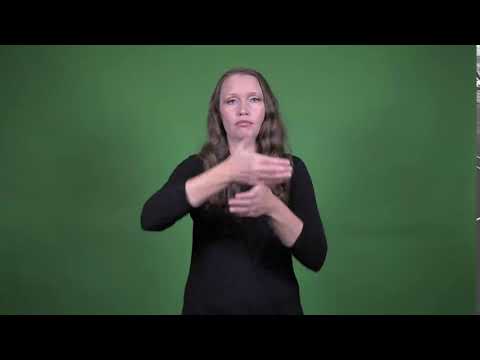
Definition: To raise a sail using a rope or pulley system.
Sign for HOISTED SAIL in ASL
Practice Activities:
To practice the sign for HOISTED SAIL in ASL, start by isolating each concept: first, practice the sign for HOIST or LIFT, then the sign for SAIL, depending on how it’s typically shown in your region or instructional material. Use wide, upward sweeping motions for HOIST to mimic the physical action, and a flat palm or a curved gesture for SAIL to convey the fabric or motion. Once you’re confident with both parts, combine them into the complete expression. Repeat the phrase slowly, then increase your speed while maintaining clarity.
Mirror practice is helpful for refining hand shapes and facial expressions. Practice signing the full phrase while watching yourself, paying attention to whether your movement properly depicts the effort and direction of hoisting a sail. Try to vary the size and speed of the motion to show different scenarios like hoisting a small sail or a large, heavy one.
Use the sign for HOISTED SAIL in ASL in simple phrases like: “Yesterday, we HOISTED SAIL,” “Captain said to HOISTED SAIL fast,” or “They HOISTED SAIL before the storm.” Focus on keeping the tense clear with facial expressions and contextual signs. Record yourself and watch for flow and timing between HOISTED and SAIL.
Partner practice can deepen understanding. One partner explains a sailing story using the sign for HOISTED SAIL in ASL, while the other responds or asks follow-up questions. Prompt ideas include retelling a day at sea, a pretend regatta, or a stormy sailing challenge.
Use storytelling to expand fluency. Create a narrative about a sailing trip from start to finish, emphasizing when you HOISTED SAIL, how it looked, who helped, and what happened after. Incorporate weather signs, directionals, and emotions for added depth.
Finish with a signing game where one person acts out a sailing action and others guess or describe using the target sign phrase for fluency reinforcement.
Cultural Context:
In Deaf culture, visual storytelling plays a central role in communication, especially when describing real-world experiences like sailing. The sign for hoisted sail in ASL captures this visual aspect, as it mirrors the physical action of pulling a sail upward, connecting language directly to lived experience. Within the Deaf community, signs related to nature, movement, and equipment often follow this pattern of visual and spatial representation.
Sailing is both a recreational and professional activity embraced by many Deaf individuals. The sign for hoisted sail in ASL reflects the dynamic nature of the action. The motion in the sign conveys not just the literal hoisting but also the feeling of wind lifting the sail, making the sign more immersive and expressive.
Maritime vocabulary in ASL is a specialized but important domain, especially for those who work on boats or enjoy water sports. The sign for hoisted sail in ASL makes it easier for Deaf boaters and sailing enthusiasts to communicate detailed actions quickly and clearly. This sign becomes especially useful during teamwork on deck, where clear, fast communication is essential for safety and coordination.
In Deaf sailing clubs or inclusive maritime programs, using specific signs like the sign for hoisted sail in ASL fosters a sense of belonging and shared understanding. It bridges communication gaps between Deaf and hearing sailors through visual clarity and mutual learning. These signs form a vocabulary around maritime culture that enriches both linguistic understanding and community bonding.
Cultural context also matters when teaching or learning these terms in bilingual environments. In classrooms or workshops where Deaf students learn about marine life or sailing, instructors use the sign for hoisted sail in ASL to incorporate hands-on and visual learning. This method supports deeper vocabulary retention and enhances engagement through culturally appropriate strategies.
The sign for hoisted sail in ASL illustrates how language evolves to meet the needs of specific experiences. It reflects an intersection of Deaf identity, language adaptation, and technical knowledge. As more Deaf individuals engage in diverse careers and hobbies, ASL continues to expand with vocabulary like this, emphasizing inclusivity and accessibility in all aspects of life.
Even in storytelling or narratives, this sign plays a vivid role. When describing a sailing adventure or fictional tale involving boats, signing the hoisted sail adds authenticity and action to the story. This enhances the audience’s understanding and emotional experience, aligning closely with how ASL is rooted in visual storytelling.
The sign for hoisted sail in ASL is also used in poetry and visual performance art. It connects language with movement and environment, creating opportunities for artistic
Extended Definition:
The sign for hoisted sail in ASL represents a concept that combines both sailing terminology and descriptive classifiers. In American Sign Language, nautical or sailing-related terms often require visual-spatial elements to communicate the action or the object accurately. To show the idea of a sail being raised or hoisted, signers typically use a combination of classifiers, movement, and directional cues.
When expressing the sign for hoisted sail in ASL, you might use one hand to represent the action of pulling a rope upward, which mimics the real-life motion of hoisting a sail on a sailboat. Your non-dominant hand can function as the mast of the boat, while your dominant hand does the lifting motion. This creates a clear visual representation of the sail being raised into position on the boat.
In ASL, it’s common to incorporate role-shifting and body classifiers to depict scenes or actions more vividly. The sign for hoisted sail in ASL uses these strategies. Depending on context, you might set up a boat in front of you using both hands and then describe the process of the sail going up, involving hands, direction, and movement to show what’s happening on the boat.
Some signers prefer to fingerspell the phrase depending on fluency and the audience’s familiarity with sailing terms. However, for fluent signers or within the sailing community, using the sign for hoisted sail in ASL is more visual and efficient. The goal is always to convey the concept clearly while staying true to the principles of ASL grammar and structure.
Classifier handshapes such as the flat B hand or the F hand are often used to show the sail’s positioning. You may use directional movement to indicate wind interaction or to help give context to the action. Location can also matter in expressing the full meaning. Describing the height of the sail or illustrating the rigging system is possible depending on how much detail you want to include.
Context plays a big role when using the sign for hoisted sail in ASL. You might be narrating a boat trip, sharing a story involving sailing, or offering instructions at a sailing lesson conducted in sign language. In each case, visual accuracy and context will shape how the sign is presented.
The richness of ASL allows for layering of meaning. This means you can first establish the boat, then transition into the action of hoisting. You can then add details like wind blowing into the sail or adjustments being made. This makes the sign for hoisted sail in
Synonyms: raised sail, lifted sail, unfurled sail, elevated sail, deployed sail
Educational resources: Find related learning materials in our course bank!
Want more? Check out some of our popular learning activities on the homepage!
Need to look up a sign? Use our highly rated dictionary: https://aslinteractive.com/best-asl-dictionary/
Follow us on tiktok: https://www.tiktok.com/@aslinteractive. More social media links at the bottom of this page!
Long-tail Keywords: what is the sign for hoisted sail in ASL, how do you sign hoisted sail in ASL, learn the ASL sign for hoisted sail
Categories:
tags: sailing terminology, travel-related ASL, nautical signs, outdoor activities in ASL, maritime vocabulary
Parameters
*Handshape*:
The handshape for the sign for HOISTED SAIL in ASL typically uses open flat hands or relaxed B-hands to represent the sail’s shape and motion. Hands may start at lower chest level and move upward together to mimic the action of hoisting a sail.
In the sign for HOISTED SAIL in ASL, the palms face forward as they rise, showing the upward pulling motion. This handshape clearly conveys the idea of lifting or raising something large like a sail on a boat. ⛵
*Palm Orientation*:
The palm orientation for the sign for HOISTED SAIL in ASL involves both hands starting in an open flat (B-handshape), palms facing down or slightly forward. As the hands move upward to mimic the action of hoisting a sail, the palms maintain their downward or forward orientation, showing the physical motion of raising something large like a sail ⛵.
In the sign for HOISTED SAIL in ASL, the upward movement is key, and the palms either remain facing down or slightly adjust forward depending on the signer’s natural motion. This keeps the action visually clear and connected to the real-life concept of pulling or raising a sail.
*Location*:
The sign for hoisted sail in ASL is typically produced in the neutral space in front of the body, around chest to head height depending on the motion depicted. It may start lower and move upward to represent the sail being raised, following the natural vertical direction of hoisting.
This movement is carried out mid-air, symbolizing the hoisting action clearly. The location plays an important role in visually conveying the upward force behind the sign for hoisted sail in ASL ⛵.
*Movement*:
To show the sign for HOISTED SAIL in ASL, start with both hands in an open-B shape, palms facing inward and placed in front of the body. Move both hands upward in a coordinated motion, mimicking the action of pulling or raising a sail with a halyard. Slightly wiggle the fingers as the hands ascend to show the fabric catching wind ⛵.
For the sign for HOISTED SAIL in ASL, this upward pulling action often ends above the head to indicate the full elevation of the sail. The motion is smooth and deliberate, conveying the effort and direction of hoisting. Facial expression should show exertion or focus, enhancing the meaning.
*Non-Manual Signals*:
When demonstrating the sign for HOISTED SAIL in ASL, the non-manual signals often include a focused facial expression that mimics effort or exertion, such as tightening the lips or slightly puffing the cheeks to show the action of raising a sail. Eyebrows may be slightly furrowed to accompany the physical motion.
Contextual emphasis is key for the sign for HOISTED SAIL in ASL. Eye gaze typically follows the imagined upward movement of the sail, enhancing the visual storytelling. A slight head tilt upward can also support the directional nature of the sign ⛵.
*Prosody, Dominant/Non-Dominant Hand*:
The sign for hoisted sail in ASL uses both hands to mimic the action of raising a sail. The dominant hand grasps an imaginary rope and pulls upward repeatedly, starting from about waist level and moving above the head. The non-dominant hand may remain stationary or slightly follow the motion to indicate tension.
This sign incorporates the upward motion typically used to indicate hoisting. The sign for hoisted sail in ASL visually represents the physical action involved in sailing, making it intuitive and easy to understand. ⛵
Tips for Beginners:
When learning the sign for HOISTED SAIL in ASL, it’s helpful to understand the concept visually and spatially. Since this sign typically describes raising a sail on a sailboat, think of the mechanics involved—pulling a line upward as the sail unfurls. Use both hands to mimic that upward motion, usually as if gripping and pulling a rope hand-over-hand. It’s not just the hand movement but also your facial expression and body posture that can bring the meaning across clearly.
Be mindful of the direction and height of your movements. The motion should move upward with a slight pull, capturing the idea of lifting the sail. A common beginner mistake is making the movement too small or too fast. In ASL, clarity depends not just on speed but visual accuracy. Slowing down your movement helps solidify meaning and supports better comprehension.
Proper use of non-manual markers (facial expressions) can also elevate your clarity. When signing the sign for HOISTED SAIL in ASL, consider pairing it with a slight upward head tilt or an alert expression that conveys effort. This added detail helps native signers process meaning more fluently. Practice this in front of a mirror or with a tutor to refine your flow.
Another helpful tip is to visualize the entire action within the correct signing space. Imagine the sail being hoisted above your head and create that vertical axis in the air. Rehearse the movement in different contexts—talking about sailing, storytelling, or describing the process to others. Exposure to different situations helps you master its accurate usage.
Finally, remember that consistency is key. Watching videos of experienced signers using the sign for HOISTED SAIL in ASL within sentences can help you better understand rhythm and pacing. Don’t be afraid to repeat it many times to build natural muscle memory ⛵.
sign for HOISTED SAIL in ASL, hoisted sail ASL sign, ASL sailboat vocabulary, ASL hoist sail movement
Connections to Other topics:
The sign for HOISTED SAIL in ASL intersects with the broader category of boating, sailing, and transportation-related signs. It often uses classifiers and directional verbs, which are essential tools in ASL for showing movement and spatial relationships. For example, classifiers mimicking the motion of pulling a rope upward can represent hoisting a sail, connecting it to other manual-action signs like LIFT or RAISE.
This sign also links to compound signs involving boat terminology. For example, combining the sign for BOAT with descriptive classifiers for setting up the SAIL creates a clear mental image. This compound use helps reinforce spatial language, encouraging learners to think about how objects interact in space—vital for fluency in ASL.
The sign for HOISTED SAIL in ASL is thematically related to weather and environment signs, especially when describing sailing conditions. Signs like WIND, WATER, or STORM often accompany it to describe a narrative or scene, enriching storytelling in ASL. These contextual links support more comprehensive communication, especially in storytelling, weather discussions, or leisure activities involving boats.
Understanding the sign for HOISTED SAIL in ASL opens the door to more advanced marine and travel vocabulary. It connects with directionality techniques used for DESTINATION or MOVEMENT, making it easier for learners to visualize and express journeys. It also shares motion principles with other elevation-related signs like FLAG-RAISED or CURTAIN-PULLED.
Additionally, this sign encourages learners to explore verbs that show effort or motion, such as PULL, PUSH, or TUG. These connections expand expressive capabilities and help in generating more vivid descriptions. By practicing the components that make up the sign for HOISTED SAIL in ASL, students build their understanding of how actions can be broken down into visual segments, a crucial aspect of effective ASL communication. ⛵
Summary:
The sign for HOISTED SAIL in ASL typically combines multiple concepts to capture both motion and nautical elements. Since the phrase is not a single iconic sign, it’s usually expressed as a compound using classifiers, body shifts, and directional verbs. This phrase integrates conceptual accuracy and visual storytelling, which are central to ASL grammar.
To express the sign for HOISTED SAIL in ASL, one often begins with the dominant hand in a flat-B shape and moves upward diagonally as if raising a large object into the air. This part represents the “hoisting” motion. The sail can be indicated by expanding the hands apart to suggest the surface or form of the sail itself.
Movements are everything in ASL. Directionality, speed, and facial expression help convey context. In this case, a slight lean forward or focused gaze can suggest effort or intention in hoisting.
The noun “sail” can be shown using classifiers like CL:3 or CL:C to depict the shape or positioning of a sail on a boat. These help signal that the speaker is referencing a physical object and not using the verb “sail” in a more abstract way.
When used in a sentence, the sign for HOISTED SAIL in ASL functions like a verb phrase. It’s not static. It embraces the ASL structure where the object often appears before the action.
Facial expressions can change the meaning. If one raises eyebrows while signing, it might be part of a question. A firm mouth and raised shoulders can add the nuance of strain or strength, emphasizing the action of hoisting.
This ASL phrase beautifully illustrates how classifiers and spatial relations enrich storytelling. Hoisting a sail isn’t just about lifting; it’s about showing location, movement, and intent, all at once.
Classifier use in ASL for this phrase helps differentiate what is being hoisted. For example, using a classifier for a pole or mast provides context about the environment, such as setting the stage on a boat.
The sign for HOISTED SAIL in ASL can also be influenced by verb agreement. If multiple characters are involved, signers may shift body positions to show who is doing what, such as one person hoisting while another is steering.
This phrase has cultural relevance as sailing has deep maritime roots in several communities, including the Deaf community. Maritime life, sailing events, and boating excursions often include Deaf participants who describe these rich experiences through signing.
Understanding the sign for HOISTED SAIL in ASL also means appreciating how ASL handles motion-based concepts. ASL is inherently dynamic, so any verbs related to movement must show the mechanics of that action visually.
Linguistically, this compound phrase shows elements of polysynthetic language features. Multiple ideas—object, motion, effort—combine into one fluid expression, rather than isolating each part.
Applied linguistics helps us understand how native signers learn to depict complex motions such as “hoisted sail” through exposure and repetition, often using storytelling and natural conversation instead of textbook learning.
Grammatically, this phrase may be used in statements, questions, or narratives by adjusting facial grammar. Topic-comment structure may see “sail” established first before describing the hoisting using body and hand motion.
In maritime storytelling within the Deaf community, using the sign for HOISTED SAIL in ASL adds immersion. The realistic motion and spatial use pull viewers into the scene just like a vivid verbal narrative would in spoken English.
ASL signs related to sailing often require improv and adaptation. There might not be standard signs for every boat part, so visual explanations using classifiers help bridge gaps in vocabulary.
Because of its reliance on spatial awareness, this ASL phrase supports cognitive development. It strengthens the learner’s ability to visualize and sequence events logically when depicting the action of hoisting a sail.
It also highlights how ASL is not simply a manual code of English. The syntax and morphology for phrases like the sign for HOISTED SAIL in ASL are fundamentally different from spoken English.
Technology and Deaf sailing programs may incorporate this phrase in educational settings. VR and AR programs teaching boating safety or navigation to Deaf individuals could embed this ASL phrase naturally in the curriculum.
This phrase illustrates how descriptive verbs work in ASL. Rather than using a single fixed sign, signers adjust size, location, speed, and intensity to convey more meaning using fewer signs.
Signers in maritime careers or with sailing hobbies regularly use classifiers and visual storytelling. They have developed shared ways to represent complex gear like sails, masts, and rigging.
There is a poetic element in signing nautical actions. For instance, the upward motion paired with flowing outward moves when showing the sail billowing captures a kind of visual rhythm—almost like non-verbal poetry.
From a translation perspective, the sign for HOISTED SAIL in ASL might be translated differently depending on time, location, and focus. It might be interpreted as “raised the sail
Want more? Check out some of our popular learning activities!
ASL Interactive Resources
ASLInteractive YouTube Channel
Follow us on tiktok: @aslinteractive.com
Follow us on Instagram: aslinteractive
Facebook page: aslinteractive
Facebook group: aslinteractive
LInkedIn: ASL Interactive LLC
Twitter: @ASL_interactive
*Some information on this page is AI-generated. AI can make mistakes. Please check the information.


Responses