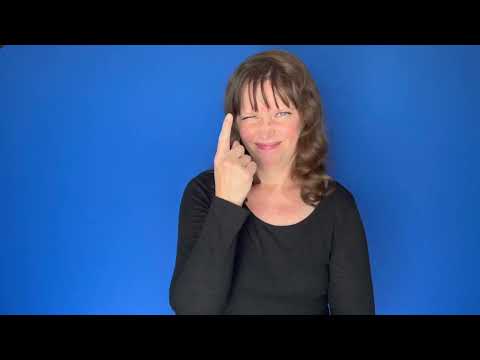
Definition: To not comprehend something.
Sign for I DON’T UNDERSTAND in ASL
Practice Activities:
Start by practicing the sign for I DON’T UNDERSTAND in ASL in front of a mirror. Focus on the individual components—start with the sign for “I” by pointing to your chest, move to the sign for “understand” by flicking your index finger upward from the side of your forehead, then emphasize the negative with the head shake and furrowed brow. Repeat it slowly, then try it at conversational speed while maintaining clarity.
Once you can sign it confidently in isolation, move on to contextual use. Watch simple ASL conversations or videos and pause when someone expresses confusion. Sign the phrase in response, imagining that you are in the same conversation. Practice saying the sign out loud in your mind as you move your hands to reinforce memory.
Create short responses using the sign for I DON’T UNDERSTAND in ASL. For example: I don’t understand the question. I don’t understand her signing. Then move on to asking questions—Did you say that again? I don’t understand you. Practicing both statements and questions will help solidify how to include the sign in different situations.
Use storytelling prompts where the character encounters something confusing. Create a story about a student in a new school or a tourist in another country. Include two or more instances where the sign for I DON’T UNDERSTAND in ASL naturally fits into the narrative. Sign the story out loud or write it, then retell it using signs.
Pair up with a friend or language partner and simulate short conversations. One person explains something or gives directions, and the other person uses the sign for I DON’T UNDERSTAND in ASL when necessary. Switch roles to practice both expressive and receptive skills. Finish with a game of charades where players guess signs, and if confused, respond in ASL with this useful phrase .
Cultural Context:
Understanding the cultural context of the sign for I don’t understand in ASL is important for respectful and accurate communication. In Deaf culture, the sign for I don’t understand in ASL is more than a literal statement—it’s a key to ensuring clear conversation and mutual understanding. This sign is widely used during conversations when clarification is needed or when someone is trying to express confusion in a respectful way.
In American Sign Language, facial expressions, body language, and context matter just as much as the hand movements. The sign for I don’t understand in ASL is typically accompanied by a raised eyebrow or a slight head shake to reflect confusion or lack of clarity. This cultural practice highlights how ASL is a visual and expressive language deeply rooted in human interaction.
Using the sign for I don’t understand in ASL shows that you are engaged in the conversation and committed to communication. In Deaf culture, asking for clarification is not seen as rude or disruptive—it reflects active listening. Signing I don’t understand gives the speaker an opportunity to rephrase or provide more detail, fostering a respectful exchange.
It’s common in Deaf spaces for signers to pause when they see the sign for I don’t understand in ASL, ensuring that communication isn’t rushed. This shows how interactions in ASL prioritize mutual understanding. The sign is just one part of a broader strategy to ensure everyone is included and respected in a conversation.
In classrooms, meetings, or casual discussions, the sign for I don’t understand in ASL is a useful tool to bridge communication gaps. Teachers, interpreters, and peers often repeat signs more clearly or slow down when they notice someone sign I don’t understand. This shared responsibility for clear communication reveals how collective and supportive Deaf culture can be.
The sign for I don’t understand in ASL also reflects patience and empathy. It’s a reminder that not all information is understood the first time, and that’s okay. Practicing the sign and using it when needed encourages better communication and reduces frustration on all sides.
For hearing people learning ASL, understanding when and how to use the sign for I don’t understand in ASL can enhance interactions with the Deaf community. It shows humility, a willingness to learn, and respect for a different communication style. This openness can lead to deeper connections and fewer misunderstandings.
In video calls or group discussions, the sign for I don’t understand in ASL helps make visual cues clear, especially when audio isn’t available or is poor quality. Because ASL thrives on visual clarity, this sign becomes particularly valuable in digital
Extended Definition:
The sign for I don’t understand in ASL is a commonly used expression in both conversational and classroom settings. It’s an essential phrase for learners, travelers, and anyone communicating with Deaf individuals. This sign helps clarify communication quickly and respectfully when there’s confusion about what was said or signed.
To make the sign for I don’t understand in ASL, start by pointing to yourself with your index finger to indicate “I.” Then place your dominant hand next to your forehead with your index finger pointing upward and flick it upward twice. This motion means “understand.” To express “don’t,” shake your head and include a facial expression that indicates confusion or lack of understanding. You can also sign “not” before “understand” to emphasize the negation.
The facial expression is a crucial part of signing the phrase correctly. In American Sign Language, non-manual markers like head shakes, raised eyebrows, or puzzled looks help give meaning and emotion to what is being signed. When using the sign for I don’t understand in ASL, make sure your facial expression communicates that you’re confused or seeking clarification.
This phrase is particularly useful in educational environments where ASL is used as the primary language of instruction. Whether you’re a student trying to follow a lecture or a parent communicating with a Deaf child, knowing how to sign I don’t understand in ASL builds stronger, more respectful communication. It also shows that you’re engaged in the conversation and eager to participate.
Understanding how to ask for clarification is a key part of learning any language. The sign for I don’t understand in ASL gives users a natural and polite way to indicate that they need something repeated or explained differently. It invites the other person to slow down, rephrase, or offer support.
Using the sign for I don’t understand in ASL can also encourage more interactive communication. It opens the door for deeper engagement, helping the speaker or signer adjust their message to your needs. This promotes not only language learning but also a more accessible environment for everyone.
As with many ASL signs, context and body language play a vital role. You might use a more subtle version of this sign in casual conversation but add emphasis when the message is critical. Regardless of the setting, the ability to communicate misunderstanding clearly is an important communication skill.
Deaf culture highly values clear and respectful communication. Using ASL phrases like I don’t understand shows a commitment to inclusion and learning. It reflects your willingness to be an active participant in a visual language environment and demonstrates cultural awareness.
If you’re learning ASL
Synonyms: I don’t get it, I don’t follow, I’m confused, I don’t comprehend, I can’t grasp it
Educational resources: Find related learning materials in our course bank!
Want more? Check out some of our popular learning activities on the homepage!
Need to look up a sign? Use our highly rated dictionary: https://aslinteractive.com/best-asl-dictionary/
Follow us on tiktok: https://www.tiktok.com/@aslinteractive. More social media links at the bottom of this page!
Long-tail Keywords: what is the sign for I don’t understand in ASL, how do you sign I don’t understand in ASL, ASL sign for I don’t understand
Categories:
tags: understanding in ASL, common phrases in ASL, communication in ASL, feelings and emotions in ASL, learning ASL basics
Parameters
*Handshape*:
The handshape for the Sign for I DON’T UNDERSTAND in ASL begins with the dominant hand in an index-finger-up position, while the rest of the fingers are loosely folded against the palm, resembling the handshape for the number one. This handshape is used near the forehead, mimicking a lightbulb turning on .
In the Sign for I DON’T UNDERSTAND in ASL, the hand flicks upward slightly at the wrist, emphasizing the emergence of an idea. The non-dominant hand may be used beforehand in a flat handshape to sign the negative “don’t” part by brushing under the chin.
*Palm Orientation*:
For the sign for I DON’T UNDERSTAND in ASL, the palm orientation plays a key role in expressing the concept clearly. The dominant hand forms the number 1 handshape with the palm facing toward the head, specifically near the temple. During the motion, the index finger flicks upward, with the palm still facing in.
In this sign, the palm orientation remains consistent throughout the movement. Correct palm positioning will help reinforce the meaning when using the sign for I DON’T UNDERSTAND in ASL . Misalignment may confuse viewers or misrepresent the concept.
*Location*:
The sign for I don’t understand in ASL is produced near the forehead. The dominant hand is in an “L” shape, and the tip of the index finger starts close to the temple area, then flicks upward to indicate the concept of understanding.
The negative modifier, such as a head shake or a preceding sign for “I don’t,” is also done in front of the chest or face area, maintaining proximity to the head. The location for the sign for I don’t understand in ASL stays mainly in the neutral to upper head region for clarity.
*Movement*:
To perform the sign for I don’t understand in ASL, begin by placing your dominant hand in the “1” handshape near your forehead, palm facing back. Then quickly flick the index finger upward, as if a lightbulb just lit up over your head .
Simultaneously, shake your head side to side to show negation, reinforcing that you do not understand. The facial expression is crucial—raise your eyebrows slightly and show confusion. The movement makes the sign for I don’t understand in ASL clear and expressive.
*Non-Manual Signals*:
The non-manual signals for the sign for I don’t understand in ASL include a slight head shake from side to side to indicate negation. Eyebrows are typically furrowed, showing confusion or lack of comprehension.
Facial expression plays a key role in conveying the meaning behind the sign for I don’t understand in ASL. A puzzled or uncertain look helps reinforce that the signer did not grasp the concept or idea being discussed.
*Prosody, Dominant/Non-Dominant Hand*:
The sign for I don’t understand in ASL uses the dominant hand in an “L” handshape near the forehead. The index finger flicks upward once, indicating the concept of understanding, while a head shake and facial expression convey negation. The non-dominant hand is not used in this sign.
When learning the sign for I don’t understand in ASL, be sure to coordinate facial grammar with the hand movement. The flicking motion with the dominant hand signifies the idea clicking, while the negative head movement shows you don’t get it.
Tips for Beginners:
When learning the sign for I DON’T UNDERSTAND in ASL, one of the first keys to success is using clear facial expressions. The sign combines the standard sign for UNDERSTAND with a head shake and a negative facial expression to communicate the full meaning. A neutral face or lack of movement can confuse the viewer and muddle the message, so emphasize your face—look slightly puzzled or shake your head gently.
The finger position for the sign is also important. To begin, hold your dominant hand next to your forehead in an “L” handshape, with the index finger extended. Flick the index finger upward once to indicate UNDERSTAND, then pair it with a head shake and the facial cue to transform it into “I don’t understand.” Don’t forget to point to yourself quickly first to indicate “I” at the beginning of the sentence.
A common pitfall with the sign for I DON’T UNDERSTAND in ASL is making the flicking motion too quickly or too high above the head. Keep the motion close to your forehead without touching it, and aim for a smooth, natural movement rather than a jerky flick. Be careful not to exaggerate the finger flick, as this can be distracting.
Consistency will help you improve. Practice the sign in front of a mirror to sync your head movement, facial expression, and hand motion. This holistic approach ensures your meaning comes across clearly to fluent signers.
In everyday conversations, you may not need to sign every word—sign for I DON’T UNDERSTAND in ASL might sometimes be simplified to just a puzzled face and the UNDERSTAND sign with a head shake. It’s okay to adjust depending on the speed and context of a conversation. Over time, your fluency and comfort will naturally grow with repetition and exposure .
sign for I DON’T UNDERSTAND in ASL, how to sign i don’t understand, asl i don’t understand, sign language confusion, beginner asl expressions
Connections to Other topics:
The sign for I DON’T UNDERSTAND in ASL closely relates to the concept of comprehension and questioning. It typically combines the signs for I, NOT, and UNDERSTAND, and this structure helps learners see how negation is built into a sentence in ASL. Understanding how negation works can also support learning signs like I DON’T KNOW or I DON’T REMEMBER, which follow similar sentence structures using NOT for negation.
This sign is especially connected to the broader topic of clarification in ASL. In conversations, people often use related signs like EXPLAIN or REPEAT to further express a lack of understanding or to request clarification. The sign for I DON’T UNDERSTAND in ASL may be paired with facial expressions that show confusion, which is essential in non-manual grammar.
A useful variation comes when the signer uses the sign more emphatically in contexts like teaching or customer service interactions. For example, a teacher might sign I DON’T UNDERSTAND followed by WHY or EXPLAIN AGAIN to indicate the need for additional information. This compound structure expands vocabulary and allows for richer expression in complex conversations.
Another related sign is I UNDERSTAND, which differs from I DON’T UNDERSTAND only in the omission of the NOT sign and change in facial expression. Understanding both provides a good foundation for comparing positive and negative sentence forms. This connection helps learners become more flexible when expressing both comprehension and confusion in ASL.
The sign for I DON’T UNDERSTAND in ASL also introduces learners to typical sentence order in ASL, where it’s common to sign the subject first, followed by the verb and then modifiers like negatives. Learning this helps in building other meaningful phrases and questions. As learners master this structure, they gain the tools to express more layered meanings across a variety of conversations.
Summary:
The sign for I DON’T UNDERSTAND in ASL is a combination of body movement, facial expression, and manual signs that convey both the concept and the emotional context behind not comprehending something. This sign uses negation and a concept sign, combining the expression of understanding with an attached negative modifier.
To produce this sign, begin with the dominant hand in the “1” handshape, held close to the side of the forehead, palm facing the body. The index finger is then flicked upward with a slight movement, and the head usually tilts or shakes a little side-to-side. At the same time, the brows are furrowed or the lips form a negative expression, indicating confusion or misunderstanding.
Before forming the flicking gesture, the signer typically adds a headshake or the negative expression “don’t.” This can be expressed non-manually or using the sign for “don’t,” which is a separate grammatical negation gesture. However, in most natural conversations, the negation is understood through facial grammar.
The flicking sign by the temple represents a “light bulb” turning on, symbolizing comprehension. When combined with negative non-manual markers (like shaking the head), it shifts the meaning to “I don’t understand.” The cultural reliance on non-manual markers adds depth and authenticity to the sign.
ASL relies heavily on facial expressions and non-manual grammar to indicate nuances like negation, questions, emotion, and modal shifts. In the case of the sign for I DON’T UNDERSTAND in ASL, the intuitive blending of hand and face demonstrates how rich and layered the language is.
Culturally, this sign is essential in both classrooms and informal settings. Deaf individuals use it often in educational environments to signify when clarification is needed. It emphasizes the importance of direct and respectful communication in Deaf culture.
The sign aligns with ASL’s general principles of topic-comment structure, often appearing with the topic first, followed by the comment that includes the sign for I DON’T UNDERSTAND in ASL. For example, a teacher might sign a concept, and a student might respond using this sign as a comment.
Linguistically, it’s interesting to observe that the sign combines a lexical sign with non-manual negation. Unlike English, where words like “not” and “don’t” are mandatory for grammatical negation, ASL allows negation to be embedded in facial expressions and head movements.
The sign for I DON’T UNDERSTAND in ASL is not passive. Instead, it advocates for clarity and active engagement. Its use represents a request for collaboration between the signer and the communication partner, which reflects community values in Deaf culture.
Conceptually, this sign embodies more than just lack of comprehension—it can express confusion, the need for repetition, or indicate that the answer expected was not received. Its flexibility makes it useful in many contexts from casual conversation to professional situations.
Learners of ASL may initially struggle with this sign because it requires comfort using non-manual signals. The idea that a shake of the head or a raised brow can change meaning is quite different from spoken-language structure and must be practiced.
In signed discourse, the sign for I DON’T UNDERSTAND in ASL becomes a bridge for deeper exchanges. It opens up conversations, invites repetition, offers a moment of pause, and signals that comprehension is not yet achieved. This is vital in communication parity.
When taught to new ASL learners, instructors often break the sign down into two components—UNDERSTAND and DON’T. This separation helps learners grasp how ASL uses visual-spatial grammar by juxtaposing affirmative signs with negation using non-verbal cues.
Advanced ASL users tend to fluidly incorporate the sign in real-time interactions without breaking it apart. Their use includes a natural speed, confident fingerspelling of unfamiliar terms before the phrase, and deliberate eye contact that underlines the sign’s intent.
Comparatively, across sign languages globally, the concept of “not understanding” is treated similarly with light bulb or forehead-related gestures, though the exact forms differ. Such universality suggests a shared metaphorical base in visual-manual languages.
The sign for I DON’T UNDERSTAND in ASL can be paired with indexing signs to emphasize who or what is not understood. For example, pointing at a teacher or an object and then signing this phrase clarifies who or what is being referenced.
Grammatically, this sign encapsulates subject + predicate with embedded negation. While English relies on auxiliary verbs and contractions, ASL simplifies this through syntax rearrangement, topicalization, and facial inflection.
Applied linguists analyze this sign to understand how children acquire negation in ASL. Young deaf children often mimic the flick without the correct facial expression first and only later learn how to integrate both elements fluidly—which reflects cognitive and visual development patterns.
From a pedagogical lens, the sign for I DON’T UNDERSTAND in ASL is central to metacognitive awareness in signed environments
Want more? Check out some of our popular learning activities!
ASL Interactive Resources
ASLInteractive YouTube Channel
Follow us on tiktok: @aslinteractive.com
Follow us on Instagram: aslinteractive
Facebook page: aslinteractive
Facebook group: aslinteractive
LInkedIn: ASL Interactive LLC
Twitter: @ASL_interactive
*Some information on this page is AI-generated. AI can make mistakes. Please check the information.


Responses