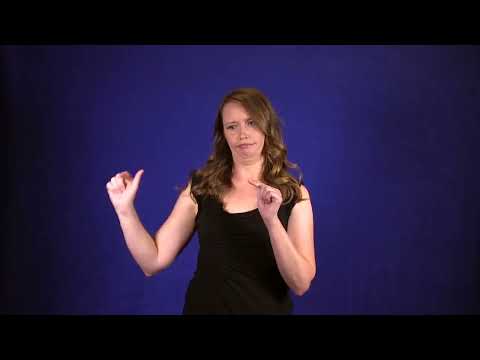
Sign for I WAS CONFUSED BY… in ASL | ASL Dictionary

Definition: To be puzzled or unclear about something.

Sign for I WAS CONFUSED BY… in ASL

YouTube player

Practice Activities:

To practice the sign for I WAS CONFUSED BY… in ASL, start with isolation drills. Stand in front of a mirror and repeat the sign slowly, focusing on your facial expression, which should reflect confusion. Do this ten times, checking each time for clarity and accuracy of movement.

Next, shift to short context phrases. Try signing phrases like “I was confused by the instructions,” “I was confused by the movie,” or “I was confused by her answer.” Record yourself and review to ensure your signs flow smoothly. This will help integrate the sign for I WAS CONFUSED BY… in ASL into sentences you might use in daily conversations.

Use storytelling exercises to deepen understanding. Think of a real or imagined time when you didn’t understand something. Create a short narrative in ASL beginning with the sign for I WAS CONFUSED BY… and describe what caused the confusion and how you responded. This lets you practice sequencing and elaborate gestures while staying in context.

Partner up with a fellow learner or fluent signer. Take turns describing confusing scenarios using the sign for I WAS CONFUSED BY… in ASL. Your partner can respond with clarifying signs or questions, turning the exchange into a dialogue. This reinforces receptive and expressive skills.

Use visual prompts such as abstract art, complex math problems, or scenes from unfamiliar films. After observing, sign a reaction sentence beginning with the sign for I WAS CONFUSED BY… This creative activity allows you to combine visual interpretation with expressive signing.

Incorporate expressive role-play practice. Pretend you’re in a classroom, watching a confusing lecture. Act out looking lost, then clearly sign the phrase. Emphasize non-manual signals, especially facial confusion for full clarity. Use this technique to build fluency in showing real emotions while communicating your message.

Cultural Context:

Understanding the cultural context of the sign for I was confused by… in ASL helps deepen your appreciation for how emotions and experiences are expressed in the Deaf community. American Sign Language is not just about translating English words—it’s a rich, visual language shaped by cultural norms, facial expressions, and shared experiences.

When learning the sign for I was confused by… in ASL, it’s essential to understand that confusion in Deaf culture is not only shown through hand signs but also through non-manual markers like facial expressions. These visual cues help convey the emotional state more vividly than words in spoken languages often can.

For example, when someone signs I was confused by… in ASL, they typically incorporate a furrowed brow, head movement, and a shift in posture to match the feeling of confusion. This combination of body language and sign creates a richer, more nuanced communication experience. ASL is deeply contextual, so how you sign confusion can differ depending on the situation.

In Deaf culture, it’s common to openly express emotions through sign without the fear of being misunderstood or judged. The sign for I was confused by… in ASL reflects this cultural openness. The clarity and intensity with which someone signs this phrase can show how deep or minor the confusion was.

Many ASL users rely on storytelling to describe their experiences, and phrases like I was confused by… in ASL serve as important narrative markers. They help transition into explanations, reveal emotional reactions, or highlight unexpected moments during storytelling. This use of emotional expression is an essential part of how knowledge and experiences are shared within the Deaf community.

It’s also important to approach the sign for I was confused by… in ASL with awareness that ASL grammar differs from English. You won’t always sign it word-for-word as it’s spoken in English. Instead, native signers might structure the sentence differently but still include the concept of confusion and what caused it.

ASL is highly visual and spatial, allowing the signer to indicate what exactly caused the confusion by pointing or establishing reference points in space. When using the sign for I was confused by… in ASL, the signer creates a visual layout of the situation, putting emphasis on both the subject and the confusing element.

Facial expressions are just as important as hand movements when using the sign for I was confused by… in ASL. A blank or neutral expression could lead to miscommunication, while a confused or puzzled face ensures that the message hits home clearly and culturally appropriately.

This sign also opens a doorway

Extended Definition:

The sign for I was confused by… in ASL expresses a past experience where something caused confusion or was difficult to understand. This sign is commonly used during storytelling or conversations to explain how a situation or person left you puzzled. It conveys an emotional or intellectual reaction to something that wasn’t immediately clear.

To sign this phrase in ASL, you generally establish the subject, including yourself, with a pronoun like “I.” Then, you show the state of confusion, often through facial expressions and the directional sign for confused. To complete the idea of “I was confused by…”, you include the source of your confusion afterward, making sure to use appropriate spatial referencing and classifiers.

The sign for I was confused by… in ASL involves more than just hand movements. Facial expression and body posture are essential to emphasize that the confusion happened in the past. Some signers may also sign “before” or “past” before the confusion sign depending on the context, though it’s not always necessary if the tense is understood.

This phrase can apply in many different situations. For example, someone might use it to describe being confused by a math problem, a person’s behavior, or a complicated set of directions. Because ASL is a visual language, the signer should clearly show what caused the confusion either by signing it or by pointing to it within their signing space.

When teaching or learning the sign for I was confused by… in ASL, it’s important to understand that this is a concept rather than a strict translation. Unlike English, ASL often expresses ideas through combined signs and context. You don’t need to sign each word, but you need to show the overall message using recognized ASL grammar and structure.

Some features of the sign can differ depending on regional dialects or personal signing style. However, the core idea remains consistent: expressing that you were affected by something that disrupted your understanding. Non-manual markers like furrowed brows or a shaking head can enhance the message and make it more clear to fluent ASL users.

This sign is especially useful in both everyday conversations and more formal settings like educational discussions or therapy sessions. You might say the sign for I was confused by… in ASL when recounting a past event, explaining a learning moment, or even sharing a funny misunderstanding.

For ASL students and interpreters, mastering this phrase helps improve fluency and natural communication. It also gives you tools to describe emotional states and reactions, which are important parts of expressive sign

Synonyms: I was unclear about, I misunderstood, I felt unsure about, I was unsure of, I was perplexed by

Educational resources: Find related learning materials in our course bank!

Want more? Check out some of our popular learning activities on the homepage!

Need to look up a sign? Use our highly rated dictionary: https://aslinteractive.com/best-asl-dictionary/

Follow us on tiktok: https://www.tiktok.com/@aslinteractive. More social media links at the bottom of this page!

Long-tail Keywords: what is the sign for I was confused by in ASL, how do you sign I was confused by in ASL, ASL sign for I was confused by

Categories:

tags: confused signs in ASL, learning ASL emotions, ASL signs for feelings, understanding ASL phrases, advanced ASL vocabulary

Parameters

*Handshape*:

The handshape used in the sign for I WAS CONFUSED BY… in ASL typically involves both hands forming the “claw” handshape, similar to a loose “C” with fingers curved. These clawed hands move in a twisting or circling motion near the head to represent mental confusion or scrambled thoughts .

This expressive handshape captures the essence of a chaotic or unclear state of mind. In the sign for I WAS CONFUSED BY… in ASL, the claw handshape adds emphasis to internal disorientation or puzzlement, effectively supporting the overall concept.

*Palm Orientation*:

The palm orientation for the sign for I WAS CONFUSED BY… in ASL typically begins with both hands open and slightly cupped, with palms facing each other or toward the signer’s head. As the confusion concept is conveyed, the dominant hand may twist or move in small circular motions near the forehead, shifting to a palm-in or slightly downward-facing orientation.

In the sign for I WAS CONFUSED BY… in ASL, the fingers may interlock briefly or pass by one another, showing a mental jumble. The palm movement adds dimension, enhancing the sense of disorientation or bewilderment.

*Location*:

The sign for I was confused by… in ASL is generally produced in the area in front of the forehead, reflecting internal thought or mental state. The dominant hand often approaches the forehead before moving outward or in a circular motion, depending on context.

This forehead-to-front-of-face location helps to convey the mental disruption or puzzlement that aligns with the meaning behind the sign for I was confused by… in ASL . This spatial placement emphasizes a conceptual shift from understanding to confusion.

*Movement*:

To express the sign for I was confused by… in ASL, begin by pointing to yourself using the index finger to indicate “I.” Then transition into the sign for “confused” by forming both hands into relaxed claw shapes. Move the hands in front of your forehead and circle them around each other once, showing the idea of mental disarray or puzzlement.

The movement signifies that confusion happened in the past, so use appropriate facial expressions like a puzzled or slightly bewildered look. The phrase is often followed by showing the source of confusion using directional referencing. The sign for I was confused by… in ASL combines these elements to convey emotion and cause.

*Non-Manual Signals*:

For the sign for I was confused by… in ASL, the non-manual signals include a furrowed brow, widened eyes, and a slightly open mouth to show mental disarray or puzzlement. Head movement is also important—tilting the head slightly or shifting it can emphasize confusion. This facial expression enhances clarity and perfectly captures the emotional tone of being bewildered in the sign for I was confused by… in ASL.

*Prosody, Dominant/Non-Dominant Hand*:

The sign for I was confused by… in ASL typically uses the dominant hand in a claw-like “5” shape circling near the forehead, symbolizing mental disorientation. The non-dominant hand may stay neutral at the side or mirror some movement for added emphasis. Facial expressions play a big role, showing bewilderment or uncertainty . The sign for I was confused by… in ASL often follows the sign for “I” and incorporates an expressive body shift to indicate the source of confusion.

Tips for Beginners:

When learning the sign for I WAS CONFUSED BY… in ASL, start by focusing on each individual component of the phrase. First, you’ll need to understand how to sign “I” or “me,” which is typically indicated by pointing to yourself. Next, knowing the sign for “confused” is key—it often involves both hands in claw shapes circling near the head to represent mental disarray or confusion. Finally, you’ll want to understand how facial expressions contribute significantly; raising your eyebrows or adopting a puzzled expression will give the sentence more emotional depth.

One of the biggest hurdles beginners face when signing the phrase is getting the handshape and movement right for “confused.” Practice the circling motion in front of your forehead while maintaining claw handshapes. Try signing in front of a mirror to observe your own facial expressions and ensure they match the tone of being perplexed or unsure.

Another tip is to remember time markers in ASL. Since “was” indicates past tense, you can briefly gesture backward over your shoulder (the typical past-time direction) to suggest that it happened in the past. Combine this smoothly into your sentence so that it flows naturally rather than appearing as separate, choppy signs.

When practicing the sign for I WAS CONFUSED BY… in ASL, avoid overcomplicating the sentence with English grammar rules. ASL has its own structure, so stick to simpler sentence construction until you’re more comfortable. Also, be aware that the sign for “by” may not be necessary depending on the context and how you’re referencing the cause of your confusion—this often comes through in your facial grammar and use of space.

Daily practice and real-life usage can dramatically improve your fluency. Try using the sign when recounting stories or giving examples. The more frequently you use the sign for I WAS CONFUSED BY… in ASL in your conversations, the more instinctual it will become.

Connections to Other topics:

The sign for I WAS CONFUSED BY… in ASL connects to a broader category of signs that deal with emotional or cognitive states. This includes signs like THINK, FEEL, UNDERSTAND, and FRUSTRATE. These signs often involve facial expressions and body posture to emphasize the degree or type of mental or emotional state, helping to give the message clarity and tone.

This phrase brings attention to how time is expressed in ASL. The use of I WAS refers to a past tense construction, usually shown with a backward movement or a time-related sign like BEFORE or PAST at the beginning of the sentence. This is a critical grammatical structure in ASL, which lacks verb conjugation like English but uses time indicators to mark tense.

The phrase also involves directional verbs and topicalization. In the sign for I WAS CONFUSED BY… in ASL, one might use CONFUSED with a shift in body position or eye gaze to indicate what caused the confusion. This segues into how ASL manages subjects and objects, especially in sentences that express an agent causing an effect on the signer.

Other signs related to CONFUSED include LOST (as in lost in thought), DON’T UNDERSTAND, or MIXED-UP, which can all be contextually chosen depending on the nuance intended. For example, if someone says I WAS CONFUSED BY HER EXPLANATION, the sign sequence may change slightly to clarify the source, similar to how WH-questions like WHY or WHAT can follow to give more detail.

Learners exploring the sign for I WAS CONFUSED BY… in ASL can also benefit by studying signs like SURPRISED, SHOCKED, and PUZZLED, which have overlapping meanings but distinct uses. Distinctions in facial expressions and movement help clarify intent, and understanding these subtleties enhances receptive and expressive skills in ASL conversations. ✋

Summary:

The sign for I WAS CONFUSED BY… in ASL combines facial expression, body orientation, and grammatical structure to convey a past experience of mental disorientation. The base idea of “confused” typically uses both hands in a clawed shape, rotated near the forehead as if thoughts are all tangled up. To show “was confused by,” native signers commonly change the non-manual markers and use temporal context to show that the confusion happened in the past because of an external cause.

Grammatically, American Sign Language often conveys past tense not with separate words but through context or temporal adverbs. In the case of the sign for I WAS CONFUSED BY… in ASL, this could mean use of the before-time marker such as PAST at the beginning of the sentence. This shift in timeline, alongside modifications to eyebrows and mouth shapes, provides a clear temporal marker without requiring additional signed words.

The sign for I WAS CONFUSED BY… in ASL highlights the deeply visual and spatial nature of ASL grammar. Directionality plays a significant role in meaning. For instance, if the confusion was caused by another person, the signer might subtly shift the movement or gaze toward where that person is set up in the signing space, thereby establishing agency and cause.

Another key aspect is non-manual signals. Raised eyebrows, head tilts, and squinting eyes are commonly used to show mental struggle or confusion. These facial elements aren’t optional—they’re essential for correctly conveying the emotional and cognitive experience behind the sign for I WAS CONFUSED BY… in ASL.

Culturally, showing vulnerability through signs like this is ordinary and expressive in Deaf culture. Rather than hiding emotional responses, ASL embraces them through rich bodily storytelling. Signing I WAS CONFUSED BY… not only communicates content but adds emotional texture that can lead to shared empathy or clarification within conversation.

There are also multiple variations of this sign depending on dialect or regional usage. Some Deaf communities may incorporate a more dramatic swirling hand motion to depict intense confusion, while others may rely on a slight furrow of the brow and simple hand orientation change. Regardless of the variant, the sign’s meaning is user-dependent and shaped by context.

Linguistically, the use of role shift is also common when expressing perspectives in ASL. In the sign for I WAS CONFUSED BY…, a signer might shift into a second character or external agent to visually establish what or who caused the confusion. This makes the interpretation richer and helps to avoid ambiguity that may arise in purely verbal languages.

Interestingly, the sign doesn’t translate word-for-word from English. Instead, it culturally contextualizes emotion and mental state into a singular, expressive phrase. The result is a compact, holistic message that avoids the layering of prepositions like “by” which are common in English grammar but absent in ASL form.

The keyword phrase also teaches us how spatial referencing in ASL helps explain abstract concepts. By pointing or positioning, a signer can make visual associations— for example, indicating an object or event to the side when referencing what caused the confusion. These spatial cues replace embedded clauses in spoken English with elegant, direct visuals.

In applied linguistics, this structure exemplifies ASL’s use of classifier handshapes to represent mental states. Sometimes, classifiers resembling chaotic movement or blurry handshapes can show the internal state of confusion. These subtle layers enhance the conceptual understanding of the sign while offering flexibility for nuanced meaning.

The sign for I WAS CONFUSED BY… in ASL also connects to related emotional states. Signs for FRUSTRATED, LOST (meaning mentally lost), or UNSURE may also be used alongside or instead of this form, depending on context. This semantic field underlines how ASL clusters meanings visually and cognitively around bodily metaphors.

Emotionally, this phrase serves as an invitation to clarification, signaling to the interlocutor that something needs to be explained again. It can be part of classroom discourse, medical conversations, storytelling, or even casual chat, making it a frequently used construction in many domains of communication.

If the confusion was about a written text or lecture, a signer might add an explanatory phrase, like “BOOK,” “TEACHER,” or “EXPLAIN” afterward. This modular aspect supports ASL’s high context awareness, where layers are built visually and hierarchically rather than linearly like spoken English.

The grammatical strategy in this phrase aligns with ASL’s preference for topic-comment structure. The signer may first state the broader topic, point toward the source of confusion, and only then insert the actual sign for confused. This aligns more with native ASL syntax than a direct translation of an English past-tense sentence.

The sign for I WAS CONFUSED BY… in ASL visually recalls the sensation of cognitive overload—rotating hands, almost like gears grinding—matched with a confused, squinting face. It invites real-time empathy from viewers, making it especially effective in interpersonal or educational settings.

In

Want more? Check out some of our popular learning activities!

ASL Interactive Resources

ASLInteractive YouTube Channel

Follow us on tiktok: @aslinteractive.com

Follow us on Instagram: aslinteractive

Facebook page: aslinteractive

Facebook group: aslinteractive

LInkedIn: ASL Interactive LLC

Twitter: @ASL_interactive

*Some information on this page is AI-generated. AI can make mistakes. Please check the information.


Responses