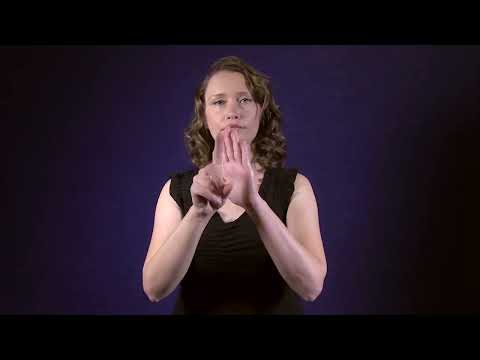
Sign for IDENTIFICATION in ASL | ASL Dictionary

Definition: The action or process of identifying someone or something.

Sign for IDENTIFICATION in ASL

YouTube player

Practice Activities:

Practice the sign for IDENTIFICATION in ASL by starting with isolated repetition in front of a mirror. Focus on making the handshape and movement clear and accurate. Sign it slowly, then increase speed as you gain confidence, keeping your movements crisp and deliberate.

Use flashcards that include the English word on one side and the ASL sign description or image on the other. Repeat the sign after viewing the English word and then check your form against video references or a partner. This reinforces muscle memory and improves recall under different settings.

Move into short phrase practice such as “need identification” or “ask for identification.” You can also use example sentences like “I lost my identification” or “Please show your identification.” Practice signing both slowly and at conversational pace to develop fluency.

Create storytelling prompts where the sign for IDENTIFICATION in ASL appears naturally, like at an airport, during a police encounter, or checking into a hotel. Describe the setting in ASL and include this sign at the appropriate moment. This builds practical, real-world application.

Set up partner activities where one person plays a role such as a security officer and the other is a traveler or student. The officer can ask for identification, and the other responds in ASL. Rotate roles to practice different sentence structures and question-answer formats.

Record yourself signing a short monologue about times when you use identification. Watch the recording to self-evaluate accuracy, fluidity, and facial grammar. Make notes and re-record to improve.

Use an online ASL dictionary to view different versions of the sign for identification in ASL, noting any regional variations. Repeat them to enhance receptive skills and flexibility. Watch conversations or short ASL clips that include identification-related topics to build comprehension.

Cultural Context:

In Deaf culture, the sign for identification in ASL carries more than a simple label or name. It’s a way for someone to introduce themselves with authenticity and pride, often followed by explanations about their background, affiliations, or how they identify in the Deaf community.

Using the sign for identification in ASL often happens at the beginning of conversations, especially in more formal or group settings. It’s culturally appropriate and respectful to establish who you are through sign, embracing both linguistic and cultural identity.

When learning the sign for identification in ASL, it’s helpful to understand the deeper connections it can express. Identification might include your name sign, Deaf or hearing status, where you’re from, or your connection to the community.

In ASL, communication is visual, so the sign for identification in ASL visually reflects the concept of recognizing or establishing identity. It’s not just about a word; it’s about social belonging and personal story.

Within the Deaf community, identification plays a key role in building trust and relationships. Using the proper sign for identification in ASL demonstrates respect for Deaf culture and shows that you are aware of social norms in ASL conversation.

The sign for identification in ASL may appear in classroom settings, introductions at Deaf events, or even in storytelling. These all use clear, expressive signs to show who people are and how they connect with others.

Children in Deaf schools often learn the sign for identification in ASL early, as part of self-awareness and social development. It helps students express themselves clearly and confidently.

When interacting in diverse Deaf communities, the sign for identification in ASL allows people from different regions or backgrounds to connect. It bridges cultural gaps and builds understanding between individuals.

The sign for identification in ASL also comes up in legal or medical contexts, where someone may need to clarify their identity or status. Proper sign usage in these moments ensures accuracy and avoids confusion.

For people learning ASL, mastering the sign for identification in ASL opens up many social interactions. It prepares signers to introduce themselves and communicate effectively in both formal and casual conversations.

Storytelling in Deaf culture often includes moments where the sign for identification in ASL is used, not only to name characters but also to describe roles and traits. It adds visual clarity and depth to the narrative.

When participating in Deaf community events, knowing the sign for identification in ASL signals cultural competence. It shows you’ve taken the time to respect communication norms and understand social frameworks in ASL-speaking spaces.

Overall, the sign

Extended Definition:

The sign for identification in ASL is a useful and commonly used term when discussing personal details, verifying someone’s identity, or talking about documents like an ID card or badge. Like many ASL concepts, it blends meaningful handshapes with expressive facial grammar to clearly convey the idea in a visual way.

The sign for identification in ASL is typically made by combining the sign for ID or identify with another relevant concept, such as name or card. These signs are produced using specific handshapes and movements that relate closely to the English word, making it easier for learners to remember.

In real conversations, the sign for identification in ASL may be used in various settings such as airports, schools, or workplaces — anywhere a person may need to show proof of identity. Deaf individuals often rely on clear communication in these areas to ensure access and understanding, making this sign especially valuable in daily life.

Understanding how to sign identification also allows for more complex discussions around security, personal rights, and official paperwork. For instance, a conversation about needing a photo ID at the DMV would naturally include the sign for identification in ASL as part of the dialogue.

Some variations exist based on region or community. While the general sign is understood across most of the Deaf community in the United States, local versions may differ slightly in handshape or motion. In all cases, facial expressions help provide the context needed for clear understanding.

Interpreters and ASL learners benefit from practicing the sign for identification in ASL in a variety of sentence types. Thinking about how it’s used in real-life scenarios strengthens both receptive and expressive skills, which are essential for effective communication.

Children learning ASL also encounter this sign early on, especially when exploring themes of who they are and how they are identified in school or family settings. Teachers often include this sign when building vocabulary that connects to personal health, safety, and social studies units.

Storytelling, especially in educational videos or Deaf culture resources, may incorporate the sign for identification in ASL to explain rules or introduce characters with specific roles. For example, showing someone presenting an ID card during a story helps tie visual storytelling to relevant vocabulary.

The sign for identification in ASL also supports interactions in public advocacy and accessibility work. When discussing voter ID laws, housing applications, or government paperwork, advocates must include this concept to clearly express key issues.

For content creators, knowing how to use the sign for identification in ASL appropriately can make vlogs, lessons, or social media posts more relatable and

Synonyms: recognition, verification, authentication, classification, validation

Educational resources: Find related learning materials in our course bank!

Want more? Check out some of our popular learning activities on the homepage!

Need to look up a sign? Use our highly rated dictionary: https://aslinteractive.com/best-asl-dictionary/

Follow us on tiktok: https://www.tiktok.com/@aslinteractive. More social media links at the bottom of this page!

Long-tail Keywords: what is the sign for identification in ASL, how do you sign identification in ASL, identification sign language meaning

Categories:

tags: ASL vocabulary, clothing signs in ASL, food signs in ASL, travel signs in ASL, identification signs in ASL

Parameters

*Handshape*:

The handshape for the sign for IDENTIFICATION in ASL uses the dominant hand in an “L” shape and the non-dominant hand forming a closed “S” or fist. The tip of the “L” hand lightly taps or meets the back or side of the non-dominant fist, often twice.

This sign incorporates small, precise movements to reflect the concept of ID or confirming identity. The handshape plays a key role in the sign for IDENTIFICATION in ASL and helps convey clarity and understanding in context.

*Palm Orientation*:

For the sign for IDENTIFICATION in ASL, the dominant hand typically forms the letter “I” and the palm faces inward toward the body. When the fingers of the dominant hand move toward the nondominant hand, the palm stays in this inward orientation.

The nondominant hand remains relatively stationary with the palm also facing inward or slightly angled. This consistent inward palm orientation helps convey the meaning of the sign for IDENTIFICATION in ASL clearly and fluidly.

*Location*:

The sign for IDENTIFICATION in ASL is typically performed in the neutral space in front of the chest. This general area allows clear visibility and comfortable execution of both the movement and the handshape changes involved in the sign.

In some variations, the dominant hand moves closer to the chest as part of the motion, briefly touching or hovering near the sternum. This placement ensures clarity when expressing the sign for IDENTIFICATION in ASL and supports natural facial expressions for context.

*Movement*:

To perform the sign for IDENTIFICATION in ASL, start by making the handshape for the sign “NAME” using both index and middle fingers of each hand in an “H” shape. Tap the dominant hand on top of the non-dominant hand twice, mimicking the standard sign for “name.”

Then transition into the sign for “SHOW” by extending the index finger of the non-dominant hand upward while the dominant hand, in a flat “B” shape, moves forward and slightly upward from the palm, as though presenting information. This combination expresses the sign for IDENTIFICATION in ASL . The movement is purposeful and fluid, linking the concept of naming and presenting together.

*Non-Manual Signals*:

When using the sign for IDENTIFICATION in ASL, maintain a focused and neutral facial expression, conveying clarity and specificity . Slight eyebrow-furrowing may occur when clarifying an ID or verifying personal details, reflecting attentiveness and accuracy.

The non-manual signals accompanying the sign for IDENTIFICATION in ASL help reinforce the concept of proving who someone is or defining something officially. Eye contact should remain steady and direct, highlighting the importance of the subject.

*Prosody, Dominant/Non-Dominant Hand*:

The sign for IDENTIFICATION in ASL uses a dominant hand in the “I” handshape, tapping the thumb side of the letter “D” on the non-dominant hand. The non-dominant hand stays in a stable “D” handshape while the dominant “I” hand taps toward it, showing a connection between identity markers. This motion visually represents linking identity features, which suits the meaning of the sign for IDENTIFICATION in ASL.

Tips for Beginners:

When learning the sign for IDENTIFICATION in ASL, it’s important to first break down the concept. Since this sign is based on fingerspelling, you’ll want to ensure you are confident and accurate with each individual letter. Practice fingerspelling the word “identification” slowly at first, making sure each handshape is clear and transitions smoothly to the next.

A good tip is to work on your speed only after clarity is established. It’s better to be understood slowly than to sign quickly and unclearly. People often rush when fingerspelling longer words, which can make the sign for IDENTIFICATION in ASL hard to interpret. Use a mirror or record yourself to check for correct handshapes, orientation, and movement between letters.

Pay attention to your hand placement. Fingerspelling should stay within your signing space—roughly from your chin down to your upper chest. Don’t drift too far to the side or too low, as this can confuse your audience. Keep your hand steady and fingers relaxed, not rigid.

Spelling long words like identification can be intimidating, so break it down into syllables practiced in chunks. That approach helps build muscle memory and enhances fluency over time. You can also ask a fluent signer or teacher to model the sign for IDENTIFICATION in ASL so you get a good feel for the flow of the letters.

Make a habit of incorporating fingerspelling in daily practice, especially for complex terms. Flashcards, name tags, and mock conversations using the term “identification” can be helpful. Pair that with receptive practice—watching others fingerspell the word—to strengthen both sides of your language skills. Staying consistent will help the sign for IDENTIFICATION in ASL become second nature as you progress.

Connections to Other topics:

The sign for IDENTIFICATION in ASL connects closely to signs like NAME, IDENTIFY, and PERSON. Understanding this sign helps reinforce the concept of describing or verifying an individual, which is commonly used in both personal and institutional settings such as schools, workplaces, and government offices. The motion and handshape choices used in the sign for IDENTIFICATION in ASL often borrow elements from the sign for IDENTIFY, establishing a visual link between abstract validation and specific people.

This sign also relates to signs used in introductions and formal transactions, such as ID, LICENSE, and VERIFY. Learners may encounter the sign for IDENTIFICATION in ASL as part of phrases like IDENTIFICATION CARD or ASK FOR IDENTIFICATION. These compound phrases can be constructed using a combination of core concept signs and fingerspelling, especially when specific documents or credentials are being referenced.

Social topics such as immigration, voting, and access to services often rely on the sign for IDENTIFICATION in ASL to describe verifying identity legally or officially. These cultural connections support a deeper understanding of civic language in ASL and promote vocabulary expansion when discussing legal rights, documentation, and obligations.

Grammatically, this sign provides practice with classifiers and role shifting when demonstrating interactions involving ID cards and identification checks. The visual-spatial storytelling format in ASL allows signers to dramatize the moment someone shows or asks for ID, providing context and reinforcing communication clarity.

Vocabulary tied to official documents like PASSPORT, DRIVER LICENSE, and SOCIAL SECURITY integrates well with the sign for IDENTIFICATION in ASL. These connections are especially useful for interpreters, students, and professionals who deal with legal or medical settings. Making these links across signs enhances retention and enables signers to build more fluent and diverse conversations about personal identity and verification .

Summary:

The sign for IDENTIFICATION in ASL usually involves a combination of signs to convey the concept effectively. A common way to sign this word is by combining the sign for IDENTIFY with a noun marker or incorporating context around labels or documents. This approach supports ASL’s grammatical structure, which tends to be topic-comment based.

To produce the sign for IDENTIFY, the dominant hand typically forms the letter “I” while the nondominant hand becomes a flat “1” handshape held in front. The “I” hand taps or brushes against the index finger of the nondominant hand, suggesting a contact or recognition. In the context of the sign for IDENTIFICATION in ASL, this baseline structure is key.

When used in sentences, the sign for IDENTIFICATION in ASL often follows the topic. For example, if someone is talking about an ID card, they may first describe the card, then sign IDENTIFICATION. This maintains clarity and parallels the visual shape of the interaction.

Cultural elements can influence how this sign is used within the Deaf community. In many Deaf cultural contexts, formal identification takes on special meaning, particularly when navigating hearing-majority systems where visual ID documentation is essential. This added layer makes the sign emotionally or socially significant.

Linguistically, the sign for IDENTIFICATION in ASL leans on morphological structures seen in compound signs. Since ASL doesn’t have a direct one-word-to-one-word translation for many English terms, signs are built up using smaller elements. That’s the case here, allowing users to construct a full conceptual meaning using visual-spatial grammar.

The sign’s movement involves subtle fingers and wrist motion. It’s not exaggerated, but the precision of contact or brushing suggests recognition or verification. The directionality and contact of the sign add to its real-world implications, especially about checking or confirming identity.

Contexts like airport security or entering a workplace often require the concept of identity confirmation. In such conversations, the sign for IDENTIFICATION in ASL becomes functionally important. ASL speakers may accompany the sign with facial expressions to show questioning, assertion, or uncertainty about the document or the process.

This layered structure reflects an applied linguistics perspective—how signs reflect and adapt to real-world contexts. Just like spoken language adapts with new terms, ASL evolves with changing technology and social systems. For example, digital ID concepts may incorporate gestures that suggest scanning or mobile devices along with the sign for IDENTIFICATION in ASL.

The sign can also reference social identification, not just legal ID. In some contexts, it’s adapted to refer to identity in the sense of self-recognition or group association—such as cultural, racial, or gender identity. This makes the sign more fluid, depending on the interpretation and discussion within the Deaf community.

There are related signs such as NAME, IDENTIFY, CARD, RECORD, and DOCUMENT. These overlap with or occur near the use of the sign for IDENTIFICATION in ASL. They provide semantic support and clarity, depending on what aspect of identification is being discussed.

Grammatically, the sign often functions as either a verb (to identify) or a noun (identification). ASL allows this flexibility based on sentence structure, inflection, and nonmanual markers. It’s an example of how ASL leverages spatial and visual strategies for multilayered meaning.

Sometimes the sign may be fingerspelled, especially in formal or technical settings, such as law enforcement, immigration offices, or academic discussions. Fingerspelling the word may emphasize specificity or reflect that the item is labeled in English. This is another example of language contact phenomena within bilingual environments.

Interestingly, the sign for IDENTIFICATION in ASL also plays a role in discussions around access and barriers. Not all Deaf individuals can obtain certain forms of ID due to bureaucratic norms that prioritize spoken communication. The inclusion of this sign in community discourse signals advocacy for equal access.

In pedagogical contexts, the sign is vital when teaching vocabulary about personal information. Used in ASL classes or bilingual environments, learners often relate it with names, addresses, and dates of birth. This instructional use builds foundational signing for interacting in formal settings.

It’s also worth noting how the sign for IDENTIFICATION in ASL may vary slightly by region or age. Some older signers may still use more traditional signs, while younger signers adapt new movements depending on their exposure to technology. Regional dialects within ASL add interesting diversity here.

In terms of classifier use, storytellers may use descriptive classifiers to mimic showing or presenting ID cards. This could accompany or stand in place of the full sign for IDENTIFICATION in ASL. Such classifier use appeals to ASL’s spatial storytelling strengths, along with reinforcing visualization.

Technological tools, like video relay interpretation or ASL avatars, sometimes include this sign within their lexicon. The accuracy of presenting the sign for IDENTIFICATION in ASL digitally reflects advances in computational linguistics. It brings interesting questions around how signs are encoded,

Want more? Check out some of our popular learning activities!

ASL Interactive Resources

ASLInteractive YouTube Channel

Follow us on tiktok: @aslinteractive.com

Follow us on Instagram: aslinteractive

Facebook page: aslinteractive

Facebook group: aslinteractive

LInkedIn: ASL Interactive LLC

Twitter: @ASL_interactive

*Some information on this page is AI-generated. AI can make mistakes. Please check the information.


Responses