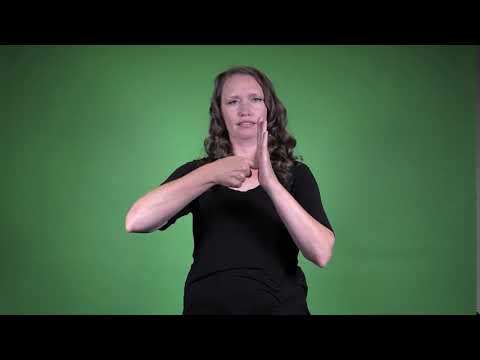
Definition: A small, shaped metal instrument for moving the bolt of a lock.
Sign for KEY in ASL
Practice Activities:
Cultural Context:
Practice Activities
To master the sign for KEY in ASL, begin with mirror work. Stand in front of a mirror and practice the handshape and movement repeatedly. Focus on the orientation of your hand and ensure that your movements are smooth and accurate. This will help you build muscle memory and visual feedback at the same time.
Use recorded signing to evaluate your progress. Record yourself signing the sign for KEY in ASL in both isolated and contextual settings. Compare your recordings with native signers or ASL dictionary videos to check for accuracy and fluency.
Practice signing in context by incorporating the sign for KEY in ASL into everyday conversations. For example, sign sentences like “Where is my key?” or “I lost the key” with fluent transitions between signs. This helps you understand how the sign functions in real-life language use.
Advanced learners can create drills using multiple signs related to KEY. For instance, combine signs like DOOR, LOCK, OPEN, and KEY in short narratives. Try storytelling exercises that involve losing or finding a key, locking a door, or giving someone a spare key. These drills promote retention and natural use of the sign for KEY in ASL.
SEO Cultural Context
The sign for KEY in ASL carries both linguistic and cultural significance in the Deaf community. Like many signs, it reflects both the physical object and the social interactions around it. In Deaf culture, the exchange of keys may represent trust, access, or responsibility—just as it does in hearing culture, but communicated visually and spatially.
Deaf culture places emphasis on visual clarity and functional communication. When someone signs KEY, it can represent a literal object or a conceptual reference, such as the key to a problem or the key to understanding. Context determines the meaning, and facial expressions support the intended nuance.
Regional variations exist in how the sign for KEY in ASL is performed. In some areas, the sign might be more iconic, mimicking the motion of inserting a key into a lock. In other regions, a more abstract version might be used. Being aware of these differences is important when communicating with signers from different parts of the country.
In real-life situations, the sign for KEY in ASL is used frequently in conversations about security, housing, transportation, and personal belongings. Whether you’re asking for the key to a hotel room or discussing who has the car key, this sign appears in both casual and formal contexts.
Extended Definition
The sign for KEY in ASL is typically performed using a dominant hand in the “X” handshape (index finger bent), mimicking the action of turning a key in a lock on the non-dominant hand, which often represents the lock. The dominant hand twists slightly, illustrating the turning motion.
This sign is iconic, meaning it visually represents the object it refers to. Because of its iconic nature, it’s easy for beginners to misunderstand or over-animate the motion. A common error is making the twist too exaggerated or using the wrong handshape, such as a fist or “S” hand rather than the correct “X” hand.
There are related signs that share similar movements or conceptual space. For example, the sign for LOCK begins with a similar setup but ends differently. It’s important to distinguish between LOCK and KEY, as each has its specific form and function in a sentence.
Another related sign is DOOR. Understanding how KEY interacts with DOOR in a sentence helps learners build more fluent communication. For instance, “KEY OPEN DOOR” is a typical ASL sequence that conveys a clear mental image and action.
Tips for Beginners
When learning the sign for KEY in ASL, be patient with your handshape and movement. Start slow and focus on accuracy rather than speed. Use a mirror to check that your “X” handshape is tight and that the twisting motion is small yet clear.
Avoid over-exaggerating the sign. It’s tempting to make the motion big to emphasize the meaning, but ASL values efficiency and clarity. A subtle, accurate motion is more natural and understood better by native signers.
Another common beginner mistake is forgetting to use facial expressions. When signing about losing a key or being locked out, your facial expression adds emotional context. ASL is a visual language, and your face plays a major role in delivering the message.
Don’t be afraid to ask Deaf friends or teachers for feedback. Signing with others is one of the best ways to improve your comfort and fluency with the sign for KEY in ASL. Practice in real conversations whenever possible.
Connections to Other Topics
The sign for KEY in ASL connects closely with the sign for DOOR. These two signs often appear together when discussing locking or unlocking something. Understanding their relationship helps with narrative flow and sentence structure.
Another related sign is LOCK. While LOCK and KEY can be used in the same conversation, each has a specific motion and meaning. Learning both helps you talk about security and access more accurately.
The sign for OPEN is also commonly paired with KEY. You might sign “KEY OPEN DOOR” to tell someone how to enter a room. These combinations show how ASL relies on sequencing for clear communication.
A conceptual cousin to the sign for KEY is the sign for SOLUTION. In metaphorical language, KEY can mean a solution or answer. Advanced learners can explore how to shift from concrete uses to abstract meanings in ASL.
Finally, the sign for CAR is often used with KEY in everyday conversation. For example, you might sign “WHERE CAR KEY?” or “GIVE ME CAR KEY.” These real-life applications make the sign for KEY in ASL especially useful.
Lengthy Summary
The sign for KEY in ASL is a highly functional and frequently used sign that plays a vital role in everyday communication. Its iconic nature makes it easy to learn visually, but mastering it requires attention to detail in handshape, movement, and context. Through mirror work and recorded practice, learners can build accuracy and confidence. Signing in context and engaging in advanced drills helps reinforce the sign and integrate it into broader linguistic patterns.
Culturally, this sign reflects how the Deaf community communicates about personal security, access, and trust. Whether you’re borrowing a car key, unlocking a door, or giving someone a spare, the sign for KEY in ASL is versatile and essential. Regional variations add nuance, and understanding these differences supports respectful and effective communication with diverse signers.
The extended definition of the sign reveals its close relationship to other signs such as LOCK, DOOR, and OPEN. These associations deepen your vocabulary and comprehension of ASL structure. Beginners are encouraged to focus on precision, avoid common errors, and keep facial expressions active to convey full meaning.
Connecting this sign to others like CAR, SOLUTION, and HOME enables more robust conversations. The sign for KEY in ASL unlocks not just doors, but new levels of fluency and cultural insight.
Keep practicing, stay curious, and continue exploring the many layers of American Sign Language. The sign for KEY in ASL is just one example of how language, culture, and everyday experience come together in the visual richness of ASL. Keep signing!
Extended Definition:
Synonyms: understanding, comprehension, grasp, awareness, perception
Educational resources: Find related learning materials in our course bank!
Want more? Check out some of our popular learning activities on the homepage!
Need to look up a sign? Use our highly rated dictionary: https://aslinteractive.com/best-asl-dictionary/
Follow us on tiktok: https://www.tiktok.com/@aslinteractive. More social media links at the bottom of this page!
Long-tail Keywords: what is the sign for key in ASL, how do you sign key in ASL, ASL sign for key
Categories:
tags: ASL vocabulary, ASL everyday objects, key sign in ASL, American Sign Language dictionary, ASL travel signs
Tips for Beginners:
Connections to Other topics:
Summary:
Want more? Check out some of our popular learning activities!
ASL Interactive Resources
ASLInteractive YouTube Channel
Follow us on tiktok: @aslinteractive.com
Follow us on Instagram: aslinteractive
Facebook page: aslinteractive
Facebook group: aslinteractive
LInkedIn: ASL Interactive LLC
Twitter: @ASL_interactive
*Some information on this page is AI-generated. AI can make mistakes. Please check the information.


Responses