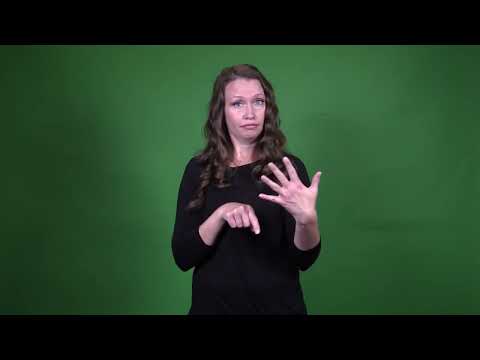
Definition: Being placed in the third position.
Sign for LISTED 3RD in ASL
Practice Activities:
Cultural Context:
Practice Activities
To master the sign for LISTED 3RD in ASL, start with mirror work. Stand in front of a mirror and sign slowly, watching your handshape, facial expressions, and body orientation. This helps you build muscle memory and ensure accuracy in movement and placement.
Use recorded signing to evaluate your progress. Record yourself signing the concept in full sentences or as part of a list. Play it back to spot inconsistencies or unclear transitions, especially when indicating the third item in a sequence.
Practice the sign for LISTED 3RD in ASL in conversational contexts. Join a study group or practice partner and incorporate the sign in storytelling or list-making exercises. Try listing three things: favorite books, chores, or events. Emphasize the third item clearly to reinforce your understanding.
For advanced drills, mix the sign for LISTED 3RD in ASL with numbers and ranking signs. Try listing items in reverse, or change the order of sequences to challenge your fluency and flexibility. Add time constraints to simulate real-time signing speed without losing clarity or grammar.
SEO Cultural Context
Understanding the sign for LISTED 3RD in ASL requires some cultural insight into ASL structure and Deaf communication norms. In Deaf culture, visual clarity and order are deeply valued in storytelling and information sharing. When listing items, signers often use spatial referencing to indicate the sequence—first, second, third, and so on.
The sign for LISTED 3RD in ASL is not just about showing a number; it’s about visually organizing information. This is especially true in academic, workplace, or social contexts where presenting ideas in order is critical. Signers often point to different parts of the signing space for each item, and the third item is indicated by pointing to the third previously established location.
Regional variations may exist in how people show sequence, especially in how numbers are incorporated. Some might use a combination of listing handshapes and directional pointing. Others may rely on facial expressions and pauses to emphasize each item in the list. It’s important to observe native signers and adapt to your region’s norms while maintaining grammatical accuracy.
This sign is commonly used in classrooms, presentations, and everyday conversations. For example, when telling a story or giving instructions, a Deaf signer might say, “I have three things to do today,” and then sign each one in order. The sign for LISTED 3RD in ASL would clearly mark the final item in the list, anchoring it visually for the audience.
Extended Definition
The sign for LISTED 3RD in ASL is a combination of numerical sequencing and spatial referencing. It involves listing items by assigning them to specific locations in the signing space. When you get to the third item, you refer to the third established point, typically on your non-dominant hand or in the air.
To sign it correctly, begin by establishing a list. Most signers use their non-dominant hand in a palm-up orientation as a base. Then, the dominant hand touches the index finger, middle finger, and ring finger in order to show first, second, and third. The third tap or point represents the sign for LISTED 3RD in ASL.
Another method involves using space without relying on the hand. You assign each item a unique location in the air: left, center, and right. When referring back to the third item, you point to the rightmost location. This technique is especially useful when listing abstract concepts or ideas.
A common error is using the wrong finger for the third item or confusing the order of points in the air. Some learners also forget to establish the list before referencing the third item, which can make the sign unclear. Always ensure the sequence is visually anchored before signing the third point.
Related signs include FIRST, SECOND, FOURTH, and LAST. These signs follow similar patterns and rely on consistent use of space. Understanding the sign for LISTED 3RD in ASL helps reinforce your grasp of visual grammar and sequencing in ASL.
Tips for Beginners
If you’re just starting to learn the sign for LISTED 3RD in ASL, don’t worry—this is a foundational concept that will become second nature with practice. Begin by learning how to count on your non-dominant hand. Familiarize yourself with the standard listing technique using your fingers or spatial referencing in the air.
A helpful tip is to physically feel each finger as you count. This tactile cue can assist you in remembering the correct order. Use your eyes to track the fingers or locations as you go. This strengthens your visual attention, a key part of fluent signing.
One of the most common beginner mistakes is reversing the order of the list or inconsistently pointing to the wrong location. Always establish your list points clearly and consistently. Practice slowly at first and gradually increase your speed as your confidence grows.
Another challenge is forgetting to use facial expressions to match the sequencing. Use your eyebrows and head movement to signal that you’re listing or emphasizing a particular point. This makes your sign for LISTED 3RD in ASL more natural and grammatically correct.
Be patient with yourself. Listing is an essential part of communication in ASL, and mastering the sign for LISTED 3RD in ASL will open the door to clearer storytelling, instructions, and descriptions. Keep practicing regularly, and don’t be afraid to ask for feedback from fluent signers.
Connections to Other Topics
The sign for LISTED 3RD in ASL connects directly with the broader category of ASL numbers and ordinal indicators. Other signs like FIRST, SECOND, and FOURTH follow a similar structure and use of space. Learning them together can help reinforce patterns and consistency.
Another related topic is spatial grammar. ASL often uses the signing space to represent people, places, and things. When you use the sign for LISTED 3RD in ASL, you’re also practicing how to assign and refer back to spatial locations, a critical skill in fluent ASL communication.
The concept of sequencing in ASL is tied closely with timeline indicators such as BEFORE, AFTER, NEXT, and THEN. These signs are often used to link items in a list or describe a process. Understanding how the sign for LISTED 3RD in ASL fits into these sequences strengthens your narrative abilities.
Classifiers also play a role. In some cases, you might use classifiers to describe the items in your list, especially if they are objects or people. This provides a rich opportunity to combine classifiers with listing techniques, making your signing more descriptive and dynamic.
Finally, the sign for LISTED 3RD in ASL is tied to academic and professional vocabulary. When giving a presentation, writing an essay in ASL, or explaining a procedure, listing is a natural part of structured discourse. Mastering this sign will enhance your ability to communicate in formal and informal settings.
Lengthy Summary
The sign for LISTED 3RD in ASL is a vital component of ASL grammar that emphasizes order, clarity, and visual structure. It is used to indicate the third item in a sequence, whether listing activities, steps in a process, or ideas in a story. By using finger listing or assigning spatial locations in the air, signers make their communication more organized and accessible.
This sign is deeply rooted in Deaf cultural practices. Clear visual sequencing is not only a grammatical requirement in ASL—it’s a cultural expectation. Signers rely on space and movement to express logic and order, and the sign for LISTED 3RD in ASL plays an essential role in that process. Whether in classrooms, social conversations, or formal presentations, this sign helps structure information in a way that aligns with the visual nature of ASL.
For learners, practicing the sign for LISTED 3RD in ASL offers opportunities to refine their use of space, non-manual signals, and sequencing strategies. Start with mirror work and recorded practice, then expand into conversation and advanced drills. Avoid common pitfalls like inconsistent finger use or unclear spatial referencing by practicing deliberately and observing fluent signers.
This sign is connected to a wide array of other ASL concepts, including ordinals, spatial grammar, sequencing, and classifiers. Mastering it gives you a solid foundation for more complex ASL skills and enhances your overall fluency.
Keep practicing the sign for LISTED 3RD in ASL every day. Use it in your conversations, stories, and presentations. The more you use it, the more natural it will feel. Embrace the challenge, stay consistent, and you’ll find that listing in ASL becomes a powerful tool in your communication toolbox.
Extended Definition:
Synonyms: Got it! Please provide the first term you’d like me to work on.
Educational resources: Find related learning materials in our course bank!
Want more? Check out some of our popular learning activities on the homepage!
Need to look up a sign? Use our highly rated dictionary: https://aslinteractive.com/best-asl-dictionary/
Follow us on tiktok: https://www.tiktok.com/@aslinteractive. More social media links at the bottom of this page!
Long-tail Keywords: What is the sign for listed third in ASL, How do you sign listed third in ASL, ASL sign for listed third
Categories:
tags: ASL vocabulary categories, signing grouped by topic, clothing-related signs in ASL, food-themed ASL signs, travel and transportation ASL signs
Tips for Beginners:
Connections to Other topics:
Summary:
Want more? Check out some of our popular learning activities!
ASL Interactive Resources
ASLInteractive YouTube Channel
Follow us on tiktok: @aslinteractive.com
Follow us on Instagram: aslinteractive
Facebook page: aslinteractive
Facebook group: aslinteractive
LInkedIn: ASL Interactive LLC
Twitter: @ASL_interactive
*Some information on this page is AI-generated. AI can make mistakes. Please check the information.


Responses