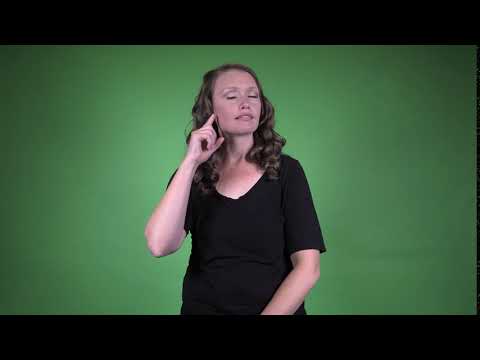
Definition: To give one’s attention to a sound.
Sign for LISTEN in ASL
Practice Activities:
Cultural Context:
Practice Activities
To master the sign for LISTEN in ASL, learners can begin with mirror work. Stand in front of a mirror and watch your handshape, movement, and facial expressions closely. This helps build self-awareness and muscle memory. Focus on your dominant hand forming the correct gesture near the ear and ensure your body language aligns with the concept of attentive listening.
Recorded signing is another powerful method. Record yourself signing short phrases that include the sign for LISTEN in ASL. Watch your videos to evaluate clarity, fluidity, and consistency. Compare your sign to native signers or trusted ASL sources to make adjustments.
Practice using the sign in context. Try signing simple sentences like “I listen to music” or “Please listen to me.” This reinforces both vocabulary and grammar. Use the sign for LISTEN in ASL during storytelling or role-play activities with classmates or language partners.
For more advanced learners, timed drills can enhance recall speed. Use flashcards or apps to prompt you with situations where you would need to sign LISTEN. Respond quickly and accurately. Adding facial expressions that match the emotional tone of the sentence—curiosity, urgency, or calmness—will also improve fluency.
SEO Cultural Context
The sign for LISTEN in ASL reflects both linguistic structure and cultural values within the Deaf community. American Sign Language is a visual language, so signs related to hearing are often conceptual rather than literal. While hearing people use ears to listen, Deaf culture emphasizes the importance of visual attention and eye contact.
The sign for LISTEN in ASL is often used to mean “pay attention” or “focus,” especially in classroom or formal settings. For Deaf individuals, listening doesn’t involve hearing; it means visually engaging with the signer. This cultural perspective shapes how and when this sign is used.
In some regions, variations may exist. For example, some signers may use a sign that mimics cupping the ear, while others may point toward the ear or use a more abstract gesture. These regional differences highlight the living, evolving nature of ASL.
In Deaf culture, respect is shown by visually “listening” to someone—maintaining eye contact and showing engagement. Using the sign for LISTEN in ASL appropriately demonstrates understanding and respect for these values. It also helps bridge communication between Deaf and hearing individuals.
Extended Definition
The sign for LISTEN in ASL traditionally involves pointing or gesturing toward the ear using the dominant hand. The most common form uses a bent or open hand near the ear, sometimes with a slight movement to indicate the act of listening or receiving sound. However, in context, especially in the Deaf community, the sign can be adapted to mean “pay attention” rather than the auditory act of listening.
This sign can be closely related to signs like HEAR, PAY-ATTENTION, or WATCH. It’s important to distinguish between them. For example, HEAR is more literal and may not be used as frequently in Deaf-centric conversations, while PAY-ATTENTION involves both hands and a strong facial expression to emphasize focus.
A common mistake beginners make is overemphasizing the ear or using a sign that’s too closely related to spoken-language concepts. Remember, ASL is not a translation of English; it has its own grammar and cultural context. Refrain from using spoken-language logic when interpreting or producing the sign for LISTEN in ASL.
Another error is forgetting the importance of non-manual markers. Your facial expression should match the intent behind the message. A serious “listen!” command looks very different from a curious “are you listening?” in terms of facial grammar.
Tips for Beginners
If you’re just beginning to learn the sign for LISTEN in ASL, start by slowing down the motion and isolating each part of the sign. Focus first on handshape, then location near the ear, and finally on the motion. Use video references from reliable ASL resources to ensure accuracy.
It’s completely normal to confuse the sign for LISTEN in ASL with related signs like HEAR or PAY-ATTENTION at first. Don’t worry—these distinctions become clearer with time and practice. Concentrate on the context in which the sign is used to help you remember when to choose LISTEN over other signs.
One helpful strategy is to practice signing in front of a friend or language partner. Ask them to guess your meaning, and see if they interpret the sign as LISTEN. If not, adjust your form and try again. This real-time feedback builds confidence.
Avoid the trap of adding extra movements or gestures that mimic spoken language. ASL is visual but concise. The correct form of the sign for LISTEN in ASL does not need exaggerated motions to be effective.
Connections to Other Topics
The sign for LISTEN in ASL is closely connected to the sign for PAY-ATTENTION. Both involve the idea of focusing on a source of information, though PAY-ATTENTION is broader and more formal. It’s useful in classroom settings or when addressing a group.
Another related sign is HEAR. Though similar in meaning, HEAR is more about the physical act of auditory perception, which may not be relevant in all contexts within the Deaf community. Understanding the difference between HEAR and LISTEN is key to using the right sign for the situation.
The sign for UNDERSTAND is often used in combination with LISTEN. For example, a teacher might sign “LISTEN, UNDERSTAND, THEN ANSWER.” Practice using these signs together to improve your expressive fluency.
The concept of EYE-CONTACT is also relevant. In ASL, maintaining visual engagement is a form of listening. The sign for EYE-CONTACT can be used to explain how someone is or isn’t effectively listening in a conversation.
Lastly, the sign for WATCH is related but distinct. WATCH focuses on observing something actively, like a video or a person. LISTEN, by contrast, suggests attention to what is being communicated, whether signed or spoken.
Lengthy Summary
The sign for LISTEN in ASL is more than just a representation of auditory perception—it’s a culturally rich expression of attention, respect, and engagement. Learning this sign involves understanding both its physical form and the deeper cultural values it conveys. It’s commonly used in educational settings, conversations, and narrative storytelling to direct attention or indicate focus.
By practicing with mirrors, recordings, and contextual drills, learners can refine their use of the sign for LISTEN in ASL and integrate it smoothly into their daily signing. Understanding the cultural context—where “listening” means visual attentiveness rather than hearing—helps bridge the gap between hearing and Deaf perspectives.
A detailed understanding of similar signs like HEAR, PAY-ATTENTION, and WATCH helps clarify when and how to use LISTEN correctly. Beginners are encouraged to stay patient, practice consistently, and seek feedback. Avoid common pitfalls like exaggerated movements or misinterpreting the sign through a spoken-language lens.
The sign for LISTEN in ASL connects naturally with other important ASL concepts such as UNDERSTAND, EYE-CONTACT, and expressive facial grammar. These connections form the foundation of clear and respectful communication in American Sign Language.
Learning the sign for LISTEN in ASL opens the door to deeper interaction and cultural understanding. Keep practicing, stay curious, and immerse yourself in the rhythm and richness of ASL. With time and dedication, you’ll not only learn the sign—you’ll embody the value of true, attentive listening.
Extended Definition:
Synonyms: hear, attend, heed, monitor, catch
Educational resources: Find related learning materials in our course bank!
Want more? Check out some of our popular learning activities on the homepage!
Need to look up a sign? Use our highly rated dictionary: https://aslinteractive.com/best-asl-dictionary/
Follow us on tiktok: https://www.tiktok.com/@aslinteractive. More social media links at the bottom of this page!
Long-tail Keywords: what is the sign for listen in ASL, how do you sign listen in ASL, ASL sign for listen
Categories:
tags: ASL verbs, communication signs, auditory-related signs, learn ASL online, American Sign Language dictionary
Tips for Beginners:
Connections to Other topics:
Summary:
Want more? Check out some of our popular learning activities!
ASL Interactive Resources
ASLInteractive YouTube Channel
Follow us on tiktok: @aslinteractive.com
Follow us on Instagram: aslinteractive
Facebook page: aslinteractive
Facebook group: aslinteractive
LInkedIn: ASL Interactive LLC
Twitter: @ASL_interactive
*Some information on this page is AI-generated. AI can make mistakes. Please check the information.


Responses