Cultural Context:
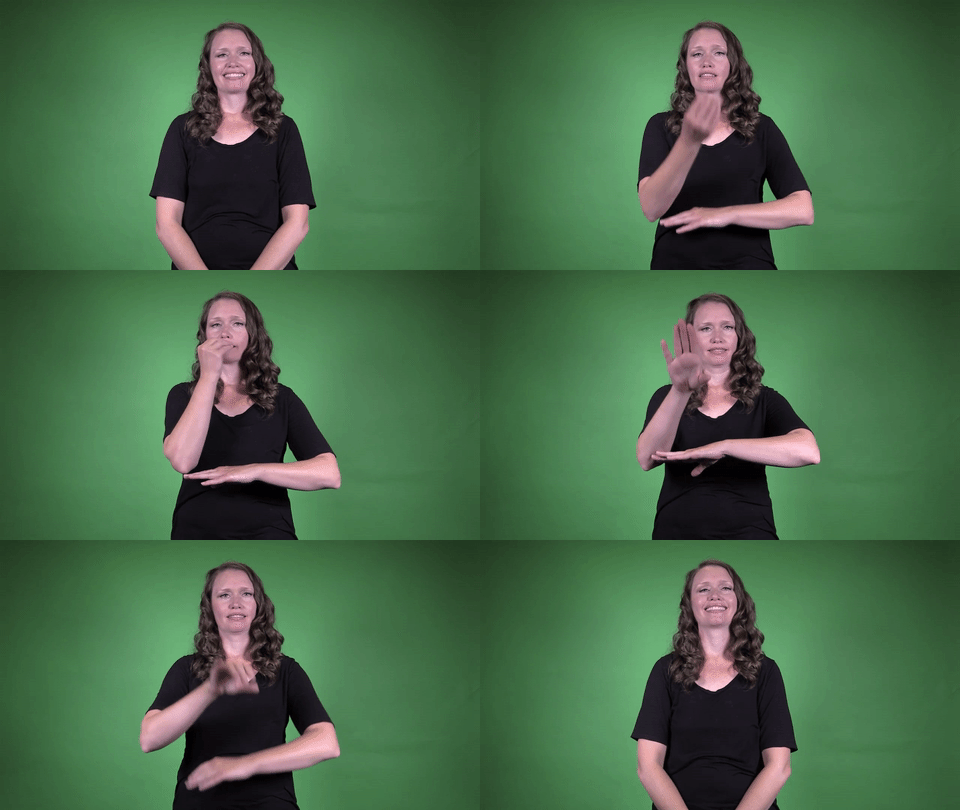
Practice Activities To effectively learn the sign for LUNCH in ASL, consistent and varied practice is essential. Start by using a mirror to observe your handshape, movement, and facial expressions. This hands-on technique helps you recognize and correct any mistakes early in your learning process. Recording yourself while signing is another powerful method. Play back the video to analyze your accuracy and fluency. Compare your version of the sign for LUNCH in ASL with videos from trusted ASL sources or teachers. Signing in context is key to building fluency. Use the sign for LUNCH in ASL during daily routines. For example, sign “What’s for lunch?” or “Let’s eat lunch” while preparing or discussing meals. This helps reinforce vocabulary through natural usage. Advanced learners can engage in drills with a partner. Practice creating full sentences around meal times, such as “I eat lunch at noon” or “Lunch is my favorite meal.” Incorporate facial grammar and classifiers to elevate your signing skills. Role-playing scenarios like ordering food at a Deaf-friendly café or describing a lunch menu can also increase confidence and contextual understanding. The more immersive your practice becomes, the more naturally the sign for LUNCH in ASL will become part of your vocabulary. SEO Cultural Context In Deaf culture, food signs hold a special place because they relate to daily life, social interaction, and community gatherings. The sign for LUNCH in ASL is frequently used in everyday conversations, especially when scheduling meetups, attending school, or taking breaks at work. The sign for LUNCH in ASL combines the signs for “eat” and “noon,” reflecting the cultural logic of constructing compound signs. This mirrors how many concepts in ASL are built through the combination of simpler, meaningful signs. In Deaf schools and social settings, meal times like lunch are often communal and structured, so using the correct sign is vital for clarity and respect. Understanding when and how to use the sign for LUNCH in ASL also supports smoother communication in classroom settings, family gatherings, and community events. Regional variation in the sign for LUNCH in ASL is minor, but some signers may use different handshapes or movement styles. For example, while most signers use a flat “O” handshape near the mouth followed by a perpendicular flat hand to indicate “noon,” others might simplify the sign depending on context. Always consider the regional norms of the Deaf community you’re engaging with. Extended Definition The sign for LUNCH in ASL is a compound sign made by combining “eat” and “noon.” The sign for “eat” involves tapping a flat “O” handshape (as if holding food) to your mouth. Immediately after, the sign for “noon” is made by placing your dominant hand in a flat position, palm down, resting on the non-dominant arm held horizontally. This combination of signs visually represents the concept of a midday meal. It’s a powerful example of how ASL uses spatial and iconic features to express meaning clearly and efficiently. When performed correctly, the sign for LUNCH in ASL communicates both the time of day and the act of eating. Common errors include omitting one part of the compound or confusing “lunch” with similar signs like “eat” or “food.” Another mistake learners often make is incorrect hand placement. For instance, placing the hand too low or too far from the mouth can obscure the meaning. Accurate facial expressions also matter—neutral or pleasant expressions are typical unless emotion needs to be conveyed. Related signs like “breakfast” and “dinner” follow a similar structure, combining “eat” with signs for “morning” or “evening,” respectively. Learning these patterns helps reinforce the underlying grammar and logic of ASL. Tips for Beginners If you’re new to ASL, learning the sign for LUNCH in ASL can be both exciting and approachable. Start by mastering the individual components—“eat” and “noon”—before combining them into a fluid motion. This step-by-step approach builds muscle memory and confidence. Pay close attention to handshape and positioning. The flat “O” handshape should touch near the lips, not hover in front of the face. When signing “noon,” ensure your dominant hand stands vertically on your non-dominant forearm, which lies flat like a clock’s base. Avoid rushing through the sign. Many beginners perform it too quickly, which can lead to sloppy execution and misunderstandings. Take your time to sign clearly and deliberately, especially when practicing new vocabulary like the sign for LUNCH in ASL. Practice daily and in context. Say the word aloud while signing to reinforce the connection between English and ASL in your mind. Use flashcards, apps, or ASL learning websites to keep your practice routine fresh and engaging. Confidence comes with repetition. Don’t worry about making mistakes—every signer starts somewhere. Focus on improvement and enjoy the process of expanding your ASL vocabulary, starting with foundational signs like the sign for LUNCH in ASL. Connections to Other Topics The sign for LUNCH in ASL connects naturally to the signs for other meals, such as “breakfast” and “dinner.” Each of these is similarly constructed, combining “eat” with a time-of-day sign. Recognizing this pattern helps learners internalize the structure of compound signs in ASL. The sign also relates to time concepts in ASL. Knowing how to sign “noon,” “morning,” and “evening” is essential for specifying when meals happen. These temporal signs are frequently used in daily conversations and scheduling. Food vocabulary is another area closely tied to the sign for LUNCH in ASL. Learning signs for “sandwich,” “salad,” “fruit,” and “drink” enhances your ability to talk about what you eat during lunch. This expands your conversational range and helps you describe your preferences. In terms of grammatical structure, the sign for LUNCH in ASL often appears in Subject-Verb-Object (SVO) or Topic-Comment sentence formats. For example, “LUNCH, I EAT AT SCHOOL” follows the Topic-Comment format, which is common in ASL. Lastly, the sign connects with social interaction. In Deaf culture, meals provide opportunities for gathering and bonding. Being able to sign “lunch” allows you to participate in conversations about plans, preferences, and shared experiences. Lengthy Summary Mastering the sign for LUNCH in ASL is more than memorizing a hand movement—it’s about understanding a cultural and linguistic concept that plays a key role in everyday communication. This compound sign, combining “eat” and “noon,” reflects the visual and logical nature of ASL. It’s used regularly in schools, workplaces, and social settings, making it a high-frequency sign that learners should prioritize. Practicing the sign for LUNCH in ASL through various methods—mirror work, video recording, contextual use, and advanced drills—helps reinforce both form and meaning. Beginners benefit from a slow and focused approach, while more experienced signers can challenge themselves with sentence construction and real-time conversation. The cultural context of the sign for LUNCH in ASL reveals how deeply language is tied to daily life in the Deaf community. Understanding when, why, and how this sign is used allows learners to communicate more respectfully and effectively. Regional variations, though subtle, also remind us that language evolves within communities. By connecting the sign for LUNCH in ASL to related vocabulary and grammar, learners build a broader understanding of how ASL works. Whether exploring time-of-day signs, constructing compound words, or discussing food preferences, this sign opens the door to richer conversations. In your ASL journey, let the sign for LUNCH in ASL be both a starting point and a bridge to more advanced language skills. Keep practicing, stay curious, and immerse yourself in the vibrant world of ASL. Every time you sign “lunch,” you’re not just saying a word—you’re connecting with a language and culture full of meaning. ️Extended Definition:
Synonyms: meal, midday meal, noon meal, luncheon, bite Educational resources: Find related learning materials in our course bank! Want more? Check out some of our popular learning activities on the homepage! Need to look up a sign? Use our highly rated dictionary: https://aslinteractive.com/best-asl-dictionary/ Follow us on tiktok: https://www.tiktok.com/@aslinteractive. More social media links at the bottom of this page! Long-tail Keywords: what is the sign for lunch in ASL, how do you sign lunch in ASL, lunch sign language explanation Categories: tags: food signs, ASL meals, American Sign Language vocabulary, lunch-related ASL signs, everyday ASL phrasesTips for Beginners:
Connections to Other topics:
Summary:
Want more? Check out some of our popular learning activities!
ASL Interactive Resources
ASLInteractive YouTube Channel
Follow us on tiktok: @aslinteractive.com
Follow us on Instagram: aslinteractive
Facebook page: aslinteractive
Facebook group: aslinteractive
LInkedIn: ASL Interactive LLC
Twitter: @ASL_interactive
*Some information on this page is AI-generated. AI can make mistakes. Please check the information.
Responses