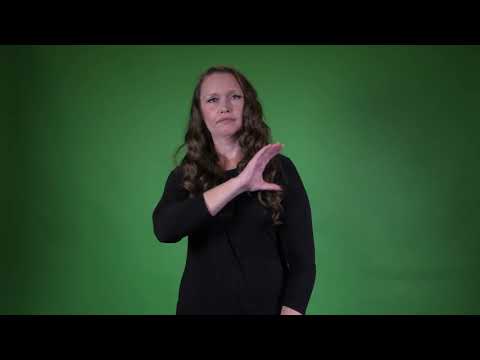
Definition: The protagonist of a story.
Sign for MAIN CHARACTER in ASL
Practice Activities:
Cultural Context:
Practice Activities
To master the sign for MAIN CHARACTER in ASL, learners should start with mirror work. Stand in front of a mirror and slowly perform the sign while focusing on handshape, facial expressions, and body positioning. This helps reinforce muscle memory and ensures that the sign looks accurate from the viewer’s perspective.
Recorded signing is another effective approach. Record yourself signing the sign for MAIN CHARACTER in ASL and play it back to analyze your accuracy. Compare your version with native signers from trusted ASL video dictionaries or educational platforms.
Signing in context is essential for retention. Practice using the sign for MAIN CHARACTER in ASL while retelling stories, discussing books, or describing movies. Replace spoken references to main characters with the appropriate sign to build fluency.
Advanced learners can engage in drills that focus on speed and clarity. Try signing multiple related sentences involving characters and plots while maintaining correct grammar and pacing. Role-playing with peers or tutors can further reinforce how the sign for MAIN CHARACTER in ASL fits naturally into storytelling and conversation.
SEO Cultural Context
The sign for MAIN CHARACTER in ASL holds an important place in both language and culture, especially within storytelling—a core tradition in Deaf culture. Visual storytelling is a powerful tool in the Deaf community, and the concept of a main character is central to narratives in ASL literature, film, and daily conversation.
This sign is used when discussing books, TV shows, movies, folktales, or even real-life scenarios where identifying a central person is key. In classroom settings, Deaf students and educators regularly use the sign for MAIN CHARACTER in ASL to analyze plot structures and to engage in critical thinking about media.
There may be slight regional variations in how this sign is performed. Some communities may emphasize different aspects of the sign, such as the direction of movement or incorporation of classifiers. However, the general concept remains widely understood across the U.S.
Understanding when and how to use the sign for MAIN CHARACTER in ASL also involves awareness of ASL grammar, including topic-comment sentence structure and the use of space to represent different characters in a narrative. The sign is not only functional but also deeply integrated into expressive forms of communication in the Deaf community.
Extended Definition
The sign for MAIN CHARACTER in ASL typically combines the sign for MAIN or IMPORTANT with the sign for CHARACTER or PERSON in a narrative. MAIN is often signed using the dominant hand in the form of the letter “A” sliding forward over the non-dominant flat hand, symbolizing prominence or priority. CHARACTER can be signed using a “C” handshape that circles around the chest area or using the sign for PERSON with added context.
Together, the sign for MAIN CHARACTER in ASL communicates the concept of a central figure in a story. It is essential to distinguish this from supporting character or background figures, which may be signed differently or indicated through spatial referencing in ASL storytelling.
Common errors include confusing the sign for CHARACTER with PERSON or using incorrect handshapes that can alter the meaning. Some learners may also overemphasize facial expressions or underuse them, which can cause the sign to lose its emotional impact or clarity in context.
It’s also important to note that ASL is not a word-for-word translation of English. The sign for MAIN CHARACTER in ASL functions within a visual linguistic system, and its meaning is shaped by movement, space, and non-manual signals. This makes it unique and rich in expressive potential.
Tips for Beginners
Beginners learning the sign for MAIN CHARACTER in ASL should take their time to learn the component signs separately before combining them. Focus first on mastering MAIN and CHARACTER with correct handshapes, movements, and facial grammar.
A common mistake is signing too quickly without clarity. Beginners sometimes rush through the sign, which compromises accuracy. Slow, deliberate practice helps prevent this and builds confidence.
Another tip is to watch native ASL signers use the sign for MAIN CHARACTER in ASL in real contexts, such as storytime videos or educational discussions. Observing how the sign is used naturally helps learners understand its function and emotional tone.
Don’t be discouraged by initial challenges. ASL has its own rhythm and visual logic, and with consistent practice, newcomers will gain fluency. Use resources like flashcards, video dictionaries, and peer feedback to reinforce your learning.
Connections to Other Topics
The sign for MAIN CHARACTER in ASL connects closely with the sign for STORY. Both are frequently used together in narrative contexts. STORY is signed by clasping hands and moving them in a circular motion, representing the unfolding of a tale.
Another related concept is PLOT. This sign often appears alongside MAIN CHARACTER when discussing the structure of a narrative. PLOT may be signed with a combination of signs like EVENT or DEVELOP, depending on context.
The sign for HERO is also relevant. In many stories, the main character is a hero or protagonist. HERO is signed using a strong facial expression and a gesture that symbolizes bravery or significance.
Setting or LOCATION is another connected sign. In storytelling, knowing where the action takes place helps ground the identity of the main character in a place and time. This sign involves a circular motion at the base hand, symbolizing placement.
Lastly, the use of CLASSIFIERS in ASL storytelling often supports the sign for MAIN CHARACTER in ASL. Classifiers help visually represent characters’ size, shape, and actions, enhancing the narrative and clarifying who the main character is in any given scene.
Lengthy Summary
The sign for MAIN CHARACTER in ASL is an essential part of visual storytelling and conversation within the Deaf community. It combines the concept of importance or centrality (MAIN) with the identity of a person in a narrative (CHARACTER). Used in contexts ranging from classroom discussions to film analysis and personal stories, this sign plays a vital role in expressing plot dynamics and narrative focus.
Culturally, the sign for MAIN CHARACTER in ASL represents more than just language. It reflects how Deaf individuals share and experience stories visually. Its use reinforces the importance of storytelling traditions and the value placed on narrative structure in ASL discourse.
Learning this sign involves understanding both its form and function. Beginners benefit from slow, focused practice, while advanced learners can refine their usage through contextual immersion and feedback from native signers. Awareness of regional variations, grammatical structure, and non-manual signals enhances overall accuracy and fluency.
Connected signs like STORY, PLOT, HERO, SETTING, and CLASSIFIERS offer learners a broader framework for expressing complex ideas in ASL. These connections help build a richer vocabulary and deeper understanding of how ASL works as a complete visual language.
To fully integrate the sign for MAIN CHARACTER in ASL into your signing repertoire, continue practicing it in real-world contexts. Whether you’re retelling your favorite movie or analyzing a book in class, this sign is a powerful tool for communication. Keep observing, practicing, and signing with purpose—your fluency and confidence will grow with every story you tell .
Extended Definition:
Synonyms: protagonist, lead character, primary character, central figure, main figure
Educational resources: Find related learning materials in our course bank!
Want more? Check out some of our popular learning activities on the homepage!
Need to look up a sign? Use our highly rated dictionary: https://aslinteractive.com/best-asl-dictionary/
Follow us on tiktok: https://www.tiktok.com/@aslinteractive. More social media links at the bottom of this page!
Long-tail Keywords: what is the sign for main character in ASL, how do you sign main character in ASL, main character in ASL signs
Categories:
tags: main character vocabulary, ASL storytelling signs, character traits in ASL, ASL narrative structure, signing personality traits
Tips for Beginners:
Connections to Other topics:
Summary:
Want more? Check out some of our popular learning activities!
ASL Interactive Resources
ASLInteractive YouTube Channel
Follow us on tiktok: @aslinteractive.com
Follow us on Instagram: aslinteractive
Facebook page: aslinteractive
Facebook group: aslinteractive
LInkedIn: ASL Interactive LLC
Twitter: @ASL_interactive
*Some information on this page is AI-generated. AI can make mistakes. Please check the information.


Responses