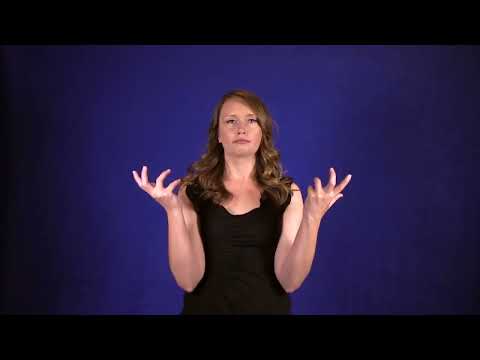
Definition: To pair things together.
Sign for MATCH UP in ASL
Practice Activities:
Cultural Context:
Practice Activities
To master the sign for MATCH UP in ASL, start with mirror work. Stand in front of a mirror and produce the sign slowly, watching your handshape, movement, and facial expression. This helps internalize the correct form and gives immediate visual feedback.
Record yourself signing the word in different sentences. Play the recording back to evaluate clarity, speed, and non-manual markers. This is a great way to fine-tune your signing and catch subtle errors.
Signing in context is key. Practice the sign for MATCH UP in ASL during real conversations or role-play scenarios. For example, when discussing dating, sports, or matching socks, insert the sign naturally into conversation.
Advanced learners can use drills. Rapid-fire matching of opposite signs or matching vocabulary sets can challenge fluency. Try translating short English phrases like “we match up well” or “they were matched up in the tournament” into ASL and sign them fluidly.
You can also pair up with another learner and quiz each other. Cards with different scenarios or visual prompts work well for spontaneous practice and reinforce the flexibility of the sign in different contexts.
SEO Cultural Context
The sign for MATCH UP in ASL carries both literal and metaphorical meanings, making it culturally rich and versatile. In Deaf culture, this sign is often used in social settings to describe romantic pairings, team assignments, or compatible elements. It’s common to see this sign during discussions about relationships, competition, or similarities between people or ideas.
In some regions, you may encounter slight variations in how the sign is made. Some signers may use a more linear movement, while others may emphasize the clasping motion. These differences reflect regional dialects in ASL, which are shaped by local Deaf communities and educational backgrounds.
Facial expressions are crucial when using the sign for MATCH UP in ASL. A neutral or inquisitive expression may indicate a question, such as “Do they match up?” whereas a confident nod might affirm compatibility. Cultural norms in the Deaf community place strong emphasis on these non-manual signals for clarity and meaning.
It’s also important to note that matching in ASL doesn’t always mean identical. It can imply compatibility, similarity, or pairing for a specific reason. This nuance is culturally significant and mirrors how Deaf individuals describe relationships and group dynamics in nuanced, visual terms.
Extended Definition
The sign for MATCH UP in ASL typically involves both hands, starting with open or slightly curved handshapes that come together as if two puzzle pieces are fitting into one another. The motion suggests alignment or compatibility, and the hands may move toward each other and interlock slightly, depending on the context.
This sign can represent romantic relationships, sports teams being paired, or objects that go together. It’s a multifunctional sign that adapts to both serious and casual conversations. Pronouns and context determine whether it’s about two people, two ideas, or inanimate objects.
Be careful not to confuse this sign with signs for “same,” “fit,” or “connect.” While they may look similar, the palm orientation, movement, and use of space often differ. Beginners may mistakenly use the sign for “same” or “equal” when they mean “match up,” which can lead to misunderstandings.
In some cases, classifiers may be used before or after the sign to show what is being matched. For example, showing two people or two items with CL:1 or CL:3 classifiers can visually establish the subjects before using the sign for MATCH UP in ASL to indicate their connection.
Tips for Beginners
If you’re new to ASL, learning the sign for MATCH UP in ASL can seem tricky at first. Focus on the handshape and movement, but don’t forget the meaning behind the sign. Think of two things coming together in harmony—this mental image can help reinforce the motion.
Common mistakes include incorrect hand orientation or missing the slight inward movement that makes the sign visually clear. Practice slowly and deliberately, and don’t rush through the motion. Speed can come later with comfort and fluency.
Another beginner error is using a flat facial expression. Facial grammar is crucial in ASL, and failing to use it can make your message ambiguous. Add a slight smile or inquisitive look depending on the context, and you’ll convey your message more effectively.
Try practicing in front of a camera and reviewing your signs. This helps build muscle memory and gives you a reference point for improvement. Watching experienced signers use the sign for MATCH UP in ASL in everyday conversation or through online videos can also help reinforce correct usage.
Connections to Other Topics
The sign for MATCH UP in ASL connects closely with several other signs. The sign for “fit” is often used in clothing contexts, but it can look similar. Knowing the difference helps avoid confusion, especially in visual storytelling.
“Compatible” is another related concept. Though not always signed directly, it shares the theme of things working well together. The sign for MATCH UP in ASL expresses this idea visually when talking about relationships or teamwork.
The sign for “connect” is also relevant. While “connect” may refer more to physical or metaphorical linking, it shares similar visual elements. Understanding when to use each sign accurately leads to more precise communication.
“Same” and “different” offer important contrast. These signs are often used alongside or in comparison to the sign for MATCH UP in ASL. Being able to distinguish between similarity and compatibility adds depth to your signing vocabulary.
Finally, classifiers play a major role. Using CL:1 or CL:3 to show what’s being matched helps contextualize your signing. When used effectively, classifiers bring clarity and richness to the message being communicated.
Lengthy Summary
Learning the sign for MATCH UP in ASL opens the door to a wide range of expressions around compatibility, pairing, and teamwork. Whether you’re discussing romantic relationships, sports pairings, or object alignment, this sign serves as a flexible and expressive tool within the ASL lexicon.
Practice is essential. From mirror work to advanced drills, there are many techniques you can use to build fluency. Recording yourself and signing in structured contexts helps reinforce correct motion and appropriate facial grammar. These skills are vital for communicating clearly and naturally in ASL.
Culturally, the sign for MATCH UP in ASL reflects the Deaf community’s emphasis on visual clarity and social connection. Regional variations exist, but the core meaning remains consistent. Non-manual markers like facial expressions play a key role in conveying nuance, whether you’re affirming a match or questioning compatibility.
Understanding the extended definition helps avoid errors and confusion. The sign is distinct from similar signs like “same” or “fit,” and correct usage depends on both hand configuration and context. Classifiers can enhance the sign’s meaning by setting up the subjects being matched.
For beginners, gaining confidence with this sign means starting slow, watching experienced signers, and staying patient. Mistakes are part of the learning journey, but with continuous practice, accuracy and fluency will develop.
The sign for MATCH UP in ASL also connects to broader vocabulary and grammatical structures in the language. Related signs like “connect,” “compatible,” and “same” enrich your understanding and provide variety in expression. Classifiers deepen your visual storytelling and clarify your message.
By committing to regular practice and cultural learning, you’ll not only master the sign for MATCH UP in ASL but also expand your overall ASL proficiency. Keep practicing, stay curious, and enjoy the journey of connecting through sign language .
Extended Definition:
Synonyms: pair, align, correspond, correlate, coordinate
Educational resources: Find related learning materials in our course bank!
Want more? Check out some of our popular learning activities on the homepage!
Need to look up a sign? Use our highly rated dictionary: https://aslinteractive.com/best-asl-dictionary/
Follow us on tiktok: https://www.tiktok.com/@aslinteractive. More social media links at the bottom of this page!
Long-tail Keywords: what is the sign for match up in ASL, how do you sign match up in ASL, ASL sign for match up
Categories:
tags: ASL match up vocabulary, ASL clothing signs, ASL food signs, ASL travel signs, ASL categories for beginners
Tips for Beginners:
Connections to Other topics:
Summary:
Want more? Check out some of our popular learning activities!
ASL Interactive Resources
ASLInteractive YouTube Channel
Follow us on tiktok: @aslinteractive.com
Follow us on Instagram: aslinteractive
Facebook page: aslinteractive
Facebook group: aslinteractive
LInkedIn: ASL Interactive LLC
Twitter: @ASL_interactive
*Some information on this page is AI-generated. AI can make mistakes. Please check the information.


Responses