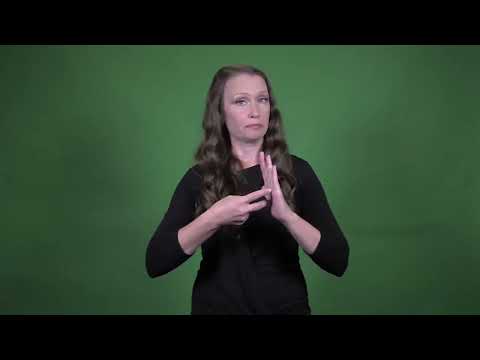
Sign for MEANS MUST in ASL | ✅ ASL Dictionary

Definition: Indicating necessity or obligation.

Sign for MEANS MUST in ASL

YouTube player

Practice Activities:

Cultural Context:

Practice Activities

To build fluency with the sign for MEANS MUST in ASL, consistent engagement through varied practice methods is essential. Start by using a mirror to observe your facial expressions and handshape. Since MEANS and MUST can vary slightly in context, mirror work helps reinforce the difference between the two and ensures clarity in your signing.

Recording yourself is another powerful tool. Sign full sentences that naturally include the sign for MEANS MUST in ASL, then review the video to check accuracy, fluidity, and facial grammar. This allows you to self-correct and track your progress over time.

Contextual practice is key. Try incorporating the sign for MEANS MUST in ASL into real-life scenarios—like explaining rules, giving directions, or stating obligations. For instance, sign, “You MUST be on time” or “This MEANS we need to study.” Signing in context strengthens your understanding of usage.

Advanced learners can challenge themselves with storytelling or interpreting exercises. Use short stories or news articles and translate them into ASL, integrating the sign for MEANS MUST in ASL where appropriate. Pair with a fluent signer for feedback or join an ASL meetup to test your skills in live conversations.

SEO Cultural Context

Understanding the cultural context behind the sign for MEANS MUST in ASL is important for respectful and accurate communication. In Deaf culture, directness is valued, and signs like MUST carry strong emphasis. This sign is often used in situations of urgency, necessity, or obligation—aligning with the cultural norm of being clear and intentional in conversation.

The sign for MEANS MUST in ASL may show slight regional variations. For example, in some areas, MEANS is signed with a more abstract or conceptual motion, while in others, it’s more literal. MUST tends to be more standardized, often signed with a firm downward movement of the index finger, expressing intensity and non-negotiability.

In real-life interactions, the sign for MEANS MUST in ASL is frequently used in educational settings, workplace conversations, and community discussions. It helps convey rules, expectations, or logical consequences, such as “This MEANS you MUST finish your homework.” Understanding when and how to use the sign respectfully within Deaf communities shows cultural competence and linguistic maturity.

Extended Definition

The sign for MEANS MUST in ASL combines two distinct concepts that are often used together in logical or instructional statements. MEANS typically involves a movement that connects ideas—showing cause, definition, or explanation. MUST, on the other hand, is a strong modal verb in ASL and is signed with a sharp, deliberate motion, emphasizing necessity or obligation.

When signing MEANS, a common approach is to use both index fingers, one moving forward to ‘meet’ the other in a tapping or connecting motion. This suggests a concept leading to a result or definition. MUST is often signed with a downward “X” handshape (similar to a bent index finger) that flicks down once with force. This motion reflects certainty and non-optionality.

Learners sometimes confuse the sign for MEANS MUST in ASL with similar verbs like HAVE-TO, NEED, or SHOULD. While they share related meanings, they differ in intensity and usage. MUST is stronger than SHOULD and more definitive than NEED. It’s important to match your facial expressions to the intensity of MUST—serious or urgent expressions will reinforce your meaning.

A frequent mistake is dropping facial grammar or using the wrong handshape. Beginners might also blend the two signs into one unclear motion. Always separate MEANS and MUST clearly unless the context allows for fluent blending. Practice them individually before combining them in sentences.

Tips for Beginners

Starting with the sign for MEANS MUST in ASL can feel challenging, but it becomes easier with focused practice. Begin by learning each sign separately. Use slow, deliberate motions and exaggerate your facial expressions to reinforce the meaning.

One common beginner mistake is using a flat hand for MUST instead of the correct bent index finger. Another is signing MEANS too quickly or without proper contact between fingers. Slow down and watch videos of native signers to internalize the correct motion.

It’s also helpful to mouth the English equivalent softly while signing—not as a substitute, but as a mnemonic. Over time, drop the mouthing as your ASL fluency grows. Remember, ASL is a visual language, and the sign for MEANS MUST in ASL is most effective when paired with intentional facial expressions.

Keep sentences simple at first. Practice “This MEANS study,” or “You MUST go.” These short phrases help you build confidence. Don’t be discouraged by early mistakes—every signer improves with time and repetition.

Connections to Other Topics

The sign for MEANS MUST in ASL connects closely with other modal verbs and logical connectors. One important related sign is HAVE-TO, which is similar to MUST but can be less intense. Comparing these signs helps learners understand ASL’s rich modal system.

Another related concept is NEED, which also uses the bent index finger but with a repeated motion. Understanding the difference in repetition and facial expression between NEED and MUST helps clarify your intent.

The sign for BECAUSE ties closely to MEANS. Both introduce reasoning or explanation, but BECAUSE focuses more on cause than on definition or requirement. Practicing both in context sharpens your ability to explain ideas clearly.

SHOULD is another useful comparison. It uses a similar handshape but with a gentler motion and expression. This allows nuanced communication—knowing when to sign MUST versus SHOULD empowers you to express obligation versus recommendation.

Finally, the concept of CONSEQUENCE often follows the use of the sign for MEANS MUST in ASL. When explaining rules or logic, you might say: “This MEANS you MUST follow directions, or there’s a consequence.” Learning these related signs creates fluency and depth in your ASL communication.

Lengthy Summary

Mastering the sign for MEANS MUST in ASL opens the door to more confident and competent signing in academic, professional, and everyday contexts. This phrase combines two distinct but often linked concepts—MEANS, representing cause or explanation, and MUST, showing obligation or necessity. Together, they form a powerful linguistic tool used frequently in the Deaf community.

Through a variety of practice methods—mirror work, video recording, contextual use, and storytelling—you can build muscle memory and expressive clarity. Cultural awareness also strengthens your communication. In Deaf culture, expressions of necessity like MUST are not just linguistic markers—they reflect values of honesty, clarity, and shared understanding. Recognizing regional variations in MEANS or the intensity of MUST helps you adapt to different signing environments.

The extended definition highlights how the sign for MEANS MUST in ASL should be approached step by step. MEANS uses directional and conceptual motion, while MUST requires a sharp, firm movement. Avoiding common errors like incorrect handshapes or dropped facial expressions is crucial. Beginners should be patient, starting with simple phrases and gradually building complexity as their confidence grows.

This sign also connects to broader ASL topics, including modal verbs like SHOULD, NEED, HAVE-TO, and logic-based signs like BECAUSE or CONSEQUENCE. Learning these connections not only expands your vocabulary but also helps you think in ASL, moving beyond English word-for-word translations.

The sign for MEANS MUST in ASL is a fundamental part of expressing logic, rules, and obligations in conversations. Whether you’re explaining that something is required or defining a situation’s outcome, this phrase will empower your communication. Keep practicing, stay curious, and continue engaging with the language and community. Every day you sign brings you closer to fluency. Keep going—you’ve got this!

Extended Definition:

Synonyms: require, necessary, essential, imperative, obligatory

Educational resources: Find related learning materials in our course bank!

Want more? Check out some of our popular learning activities on the homepage!

Need to look up a sign? Use our highly rated dictionary: https://aslinteractive.com/best-asl-dictionary/

Follow us on tiktok: https://www.tiktok.com/@aslinteractive. More social media links at the bottom of this page!

Long-tail Keywords: what is the sign for means must in ASL, how do you sign means must in ASL, ASL sign for means must explained

Categories:

tags: ASL modal verbs, ASL necessity signs, must in American Sign Language, ASL grammar and sentence structure, ASL verb usage

Tips for Beginners:

Connections to Other topics:

Summary:

Want more? Check out some of our popular learning activities!

ASL Interactive Resources

ASLInteractive YouTube Channel

Follow us on tiktok: @aslinteractive.com

Follow us on Instagram: aslinteractive

Facebook page: aslinteractive

Facebook group: aslinteractive

LInkedIn: ASL Interactive LLC

Twitter: @ASL_interactive

*Some information on this page is AI-generated. AI can make mistakes. Please check the information.


Responses