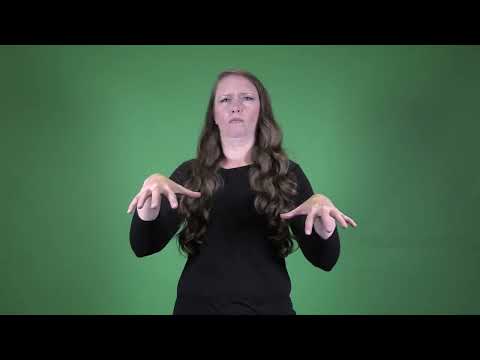
Sign for MIND FROZEN (idiomatic expression) in ASL | ❄️ ASL Dictionary

Definition: Idiomatic expression meaning to be unable to think clearly or remember something-shocked.

Sign for MIND FROZEN (idiomatic expression) in ASL

YouTube player

Practice Activities:

To practice the sign for MIND FROZEN (idiomatic expression) in ASL, begin by isolating the motion. This expression often involves a stunned or mentally stuck gesture, such as a C-handshape near the forehead suddenly freezing in place, eyes wide or blank. Practice the sign slowly at first while focusing on maintaining the facial expression of confusion or mental block .

Next, move into short phrases and incorporate the sign into everyday contexts. Say things like “I studied all night, but this morning—my mind was frozen!” or “During the job interview, my mind froze and I forgot my name!” Pair the sign with relevant expressions of nervousness or mental pause to convey emotion more clearly.

Storytelling prompts are another great way to strengthen understanding. Tell a short story where the character experiences stress or sudden panic, such as forgetting test material or being called to speak publicly. Use the sign for MIND FROZEN (idiomatic expression) in ASL at the peak moment of tension, emphasizing the frozen mind effect visually and emotionally ❄️.

Working with a partner can deepen learning. One partner can describe a situation, and the other reacts using the sign expressively. Reverse roles and try incorporating variations in setting or reason for the mental freeze, such as stage fright, confusion, or fear. This allows flexibility in applying the sign in different emotional tones and contexts.

Video yourself retelling a personal experience when your mind suddenly went blank. Watch your playback to evaluate the clarity of your signing and whether your facial expressions supported the meaning. Doing this regularly helps with self-awareness and retention of the sign for MIND FROZEN (idiomatic expression) in ASL.

Finally, check comprehension by watching someone else describe a scenario and see if you correctly identify or use the sign appropriately. This practice develops both expressive and receptive skills for this idiomatic structure.

Cultural Context:

In Deaf culture and American Sign Language (ASL), idiomatic expressions enrich the language with visual metaphors. The sign for MIND FROZEN (idiomatic expression) in ASL is a vivid way to express a mental state where someone feels paralyzed or unable to process thoughts.

This unique sign captures a moment of mental “pause” or overwhelming confusion. Just like in spoken English, when someone says their mind went blank, the sign for MIND FROZEN (idiomatic expression) in ASL uses a metaphor to describe that mental shutdown. It’s not about literal freezing but a symbolic depiction of mental overload.

The sign for MIND FROZEN (idiomatic expression) in ASL is often seen in conversations where someone is describing a stressful or high-pressure situation. For example, if a person forgets what they were about to say during a presentation, they might use this idiom to explain their state of mind. It adds emotional depth and clarity to the situation, creating a shared understanding within the Deaf community.

Culturally, the sign for MIND FROZEN (idiomatic expression) in ASL reflects how Deaf individuals use body language, facial expressions, and spatial awareness to convey complex ideas. Idioms like this one are a testament to the richness of ASL and its ability to portray both internal and external experiences. The expressiveness of ASL makes such idioms powerful tools for storytelling and personal expression.

ASL idioms frequently rely on cultural knowledge and shared experiences. Because of this, the sign for MIND FROZEN (idiomatic expression) in ASL is something that Deaf communities understand and use in familiar contexts. It may not translate directly into spoken English, but it delivers the same meaning through a visual-spatial format that feels natural in ASL.

The concept of mental paralysis, where one cannot think clearly, resonates across cultures, making the sign for MIND FROZEN (idiomatic expression) in ASL particularly universal. Yet, it remains deeply rooted in ASL’s own linguistic and cultural foundations. That blend of shared human experience and cultural uniqueness is what makes this idiom so special.

In real-life situations, the sign for MIND FROZEN (idiomatic expression) in ASL might come up during everyday dialogues or in storytelling. Whether describing a scary exam moment or a forgetful episode , using this idiom adds visual drama and emotional relatability. It brings stories to life through action and expression

Extended Definition:

The sign for MIND FROZEN (idiomatic expression) in ASL conveys the feeling of mental paralysis, where a person is so overwhelmed, shocked, or confused that they can’t think clearly or respond quickly. This unique American Sign Language idiom captures a state of mental overload using expressive features, facial expressions, and specific sign combinations.

In ASL, idioms like this one are not always literal. The sign for MIND FROZEN (idiomatic expression) in ASL doesn’t involve the actual signs for mind or frozen in a direct, word-for-word way. Instead, it uses symbolic movements and expressions to represent the figurative meaning—someone’s brain just stopping cold, like when you’re stunned or caught off guard. Think of freezing mentally during a test, conversation, or while hearing shocking news.

This idiomatic expression can be shown by combining a sign for the mind area, typically pointing to the forehead, with a sudden stilling motion. The facial expression plays a crucial role, often showing surprise , confusion , or blankness . The body may stiffen slightly to emphasize the idea that the person is frozen in place, mentally or emotionally.

Deaf signers may use the sign for MIND FROZEN (idiomatic expression) in ASL during storytelling, casual conversations, or when describing a relatable moment of mental block. It’s a visual and expressive way to say you’re so shocked or confused you can’t process anything. This idiom helps convey emotional experiences in ASL that may be hard to express in English alone.

For example, if someone forgets what they were about to say mid-sentence or they’re staring blankly at a math problem, they might use this sign. The context will determine whether the meaning is more humorous , dramatic , or serious . ASL is rich with these kinds of visual idioms that bring spoken-language expressions to life in a dynamic and engaging way.

Keep in mind that idiomatic expressions, including the sign for MIND FROZEN (idiomatic expression) in ASL, can vary slightly depending on region and community. While the core idea remains consistent, some signers may use a slightly different movement or expression to convey the same message. It’s valuable to watch native ASL users and engage with Deaf culture to fully understand and correctly apply idiomatic expressions like this one.

The use of this sign is also influenced by tone, mood, and the situation. A

Synonyms: Please clarify the term “IE mind frozen” or provide more context for accurate synonyms.

Educational resources: Find related learning materials in our course bank!

Want more? Check out some of our popular learning activities on the homepage!

Need to look up a sign? Use our highly rated dictionary: https://aslinteractive.com/best-asl-dictionary/

Follow us on tiktok: https://www.tiktok.com/@aslinteractive. More social media links at the bottom of this page!

Long-tail Keywords: what is the sign for IE mind frozen in ASL, how do you sign IE mind frozen in ASL, ASL sign for IE mind frozen

Categories:

tags: ASL idioms, ASL expressions, ASL feelings and emotions, American Sign Language slang, frozen mind in ASL

Parameters

*Handshape*:

The handshape for the Sign for MIND FROZEN (idiomatic expression) in ASL typically begins with a modified “5” handshape. The fingertips of the dominant hand touch the forehead, symbolizing the “mind.” Then the hand pulls slightly away while the fingers seem to stiffen or freeze, conveying mental paralysis or shock ❄️.

This expressive handshape visually represents the idea of thought coming to a halt. The Sign for MIND FROZEN (idiomatic expression) in ASL uses this sharp freeze effect to illustrate being stunned or mentally locked.

*Palm Orientation*:

The palm orientation for the sign for MIND FROZEN (idiomatic expression) in ASL starts with the dominant hand in a claw or slightly curved 5-handshape. The palm faces inward toward the forehead, tapping or hovering slightly over the temple to show the “mind” aspect.

For the “frozen” part, both palms are open and face downward or slightly inward toward the body. The hands then move away from the head, freezing in place as if suddenly stuck. This conveys the trapped, stuck feeling conveyed by the sign for MIND FROZEN (idiomatic expression) in ASL ❄️.

*Location*:

The sign for MIND FROZEN (idiomatic expression) in ASL is typically performed at the forehead, referencing the location of the mind or thoughts. The dominant hand moves toward the forehead and then abruptly stops, symbolizing a mental block or frozen thought process . This location emphasizes the internal cognitive aspect represented in the idiom.

Using the sign at the forehead helps convey the meaning behind the sign for MIND FROZEN (idiomatic expression) in ASL. It visually connects the concept of mental freeze or being mentally stuck directly to where thinking occurs.

*Movement*:

To express the sign for MIND FROZEN (idiomatic expression) in ASL, begin by forming an open hand and placing the fingertips to the center of the forehead, palm facing in. Quickly pull the hand slightly away from the forehead and then freeze in place, as if your thoughts suddenly stopped.

This motion vividly conveys the meaning behind the sign for MIND FROZEN (idiomatic expression) in ASL ❄️, showing a moment where mental processing has halted, similar to mental shock or confusion. The halt in movement is crucial and dramatizes the idiomatic expression effectively.

*Non-Manual Signals*:

The non-manual signals for the sign for MIND FROZEN (idiomatic expression) in ASL include wide eyes to show shock or a mental freeze, paired with slightly tensed facial muscles. The jaw might drop slightly or be held tight, emphasizing a moment of being mentally stuck or overwhelmed ❄️.

Eyebrows are often raised and held for a moment to express sudden realization or mental overload. These facial cues help convey the idiomatic meaning behind the sign for MIND FROZEN (idiomatic expression) in ASL, making the concept clear to the viewer.

*Prosody, Dominant/Non-Dominant Hand*:

The sign for MIND FROZEN (idiomatic expression) in ASL typically uses the dominant hand in a claw shape, starting at the forehead and quickly pulling slightly outward and freezing in place, mimicking a “brain freeze” or mental block . The non-dominant hand is not usually involved, keeping focus on the expressive, frozen motion of the dominant hand.

This sign for MIND FROZEN (idiomatic expression) in ASL is often paired with a facial expression of confusion or being stuck, reinforcing the idiomatic meaning. The handshape and movement work together to visually illustrate a moment where the brain feels halted or overwhelmed.

Tips for Beginners:

When learning the sign for MIND FROZEN (idiomatic expression) in ASL, it’s crucial to first understand that this is not a literal term. It refers to a mental state where a person feels stuck or unable to think clearly, similar to the idea of “freezing up” mentally. Mastering this concept-based expression requires focusing on facial expressions and body language, not just hand movements.

To accurately produce the sign for MIND FROZEN (idiomatic expression) in ASL, use a combination of signs that convey both “mind” and a sense of “stuck” or temporarily shut down. A common way to sign “mind” is tapping the forehead with the tip of the index finger. For “frozen,” signers often mime a locking or jammed motion while showing a blank or tense facial expression to suggest mental block—this is key to getting the idiomatic meaning across clearly.

Practice in front of a mirror to develop better control of your facial expressions . This helps you see if you are visually expressing confusion, frozen thoughts, or a cognitive crash. Without the correct expressive cues, the sign may lose its intended meaning and be misunderstood.

One common mistake is being too stiff or robotic. Remember, ASL is a fluid and expressive language. Soften your movements but keep them deliberate. Another pitfall is overexaggerating—try not to turn the sign into a skit. Instead, aim for naturalness in motion and emotion.

Watching fluent signers in context, like in storytelling or conversations, is also a great way to grasp how the sign for MIND FROZEN (idiomatic expression) in ASL flows naturally. Real-life use will help you internalize timing, pacing, and attitude. Don’t forget to also interpret the emotional tone—it’s just as important as the hand positions!

Connections to Other topics:

The sign for MIND FROZEN (idiomatic expression) in ASL connects directly with ASL’s rich use of visual metaphors to express internal mental states. This idiom is often used when someone is overwhelmed, stunned, or cannot think clearly due to shock or stress, similar to the English expression “mind blown” or “brain freeze.” It taps into the broader category of mental-state signs like THINK, CONFUSED, or FORGET, which also illustrate abstract cognitive processes using physical gestures.

This idiomatic sign can relate to expressions like STUCK, which in ASL may describe mental or emotional stuckness, often layered with facial expressions to intensify meaning. Another closely related sign is BRAIN FREEZE, an idiomatic phrase sometimes expressed nonliterally in ASL to capture the momentary paralyzing shock of a cold thought or rapid information overload. These signs all demonstrate how ASL leverages space, handshape, and movement to evoke powerful internal reactions.

The sign for MIND FROZEN (idiomatic expression) in ASL might also resemble a compound of the signs THINK and FREEZE, combining conceptual roots to form a new idiomatic idea. This kind of compounding is similar to how ASL expresses ideas like OPEN-MINDED or CLOSE-MINDED using modified versions of MIND combined with directional or qualitative movement. It shows how flexible and creative ASL can be in capturing nuance.

In conversational ASL, this sign finds a home in narratives about anxiety, public speaking moments, or surprise examinations where a person “freezes” mentally. It’s useful for learners to understand when idioms like the sign for MIND FROZEN (idiomatic expression) in ASL should be used contextually, as direct translations into English may not always carry the same weight or image. Recognizing its idiomatic nature helps signers convey emotion more naturally and effectively .

Summary:

The sign for MIND FROZEN (idiomatic expression) in ASL is a vivid, culturally rich gesture that captures a moment of mental freeze, confusion, or cognitive overload. It’s often used to describe situations when someone is unable to think clearly or gets mentally stuck, much like a computer freezing and becoming unresponsive.

In making the sign, the dominant hand typically moves in a way that mimics the head locking up—a clenched hand near the temple might shake slightly, then freeze to represent the moment thinking stops. Facial expression plays a vital role: wide eyes, a paused or stunned expression, and tight lips convey the emotional impact.

This idiom isn’t literally about cold or ice but metaphorically references how the brain “freezes” under pressure, like forgetting a word when you’re on the spot or getting overwhelmed during a test. The sign relies heavily on contextual interpretation, which underscores the deep connection between gesture and meaning in ASL.

ASL uses space, body, and movement to embed idiomatic expressions like the sign for MIND FROZEN (idiomatic expression) in ASL within a broader narrative. It blends lexical choices with grammar unique to signed languages—showing how idioms are both visual and spatial.

This sign is most commonly used in fast-paced storytelling, humor, or expressive anecdotes. It connects instantly with Deaf audiences by evoking shared cognitive experiences, including moments when thinking is impaired or stunned due to emotions.

Culturally, the sign for MIND FROZEN (idiomatic expression) in ASL reflects the creative ways Deaf individuals use the body to showcase concepts that spoken language often renders abstractly. Such idioms show how ASL thrives in illustrating internal mental states.

In linguistics, this kind of idiom serves as an example of metonymy—using physical freezing to represent psychological inertia. Its non-transparent meaning makes it an ideal case study in metaphor and embodiment in language.

Applied linguistics would categorize this idiom under high-context usage patterns. Understanding it requires more than vocabulary knowledge—it demands familiarity with ASL cultural norms and narrative storytelling styles.

The syntax of the sign doesn’t follow English order. Instead, the emotion or scenario is often set up first (e.g., describing an exam), followed by the idiomatic sign to punch in the meaning. The flexibility of order enhances expressive range.

When teaching the sign for MIND FROZEN (idiomatic expression) in ASL, instructors often emphasize the need for appropriate facial grammar. Without matching the face to the frozen state, the sign may lose its depth or be misunderstood.

This idiom sits among a family of thought-related ASL expressions, like SIGN THINK GONE or HEAD SPIN. All capture various dimensions of mental load or processing difficulty with visual brilliance and layered meaning.

A signer might pair the sign for MIND FROZEN (idiomatic expression) in ASL with affective nonmanual markers, including raised eyebrows before the sign and an open mouth locked mid-expression. These amplify the narrative force of the sign.

The idiom often comes up in educational setups, especially when talking about test anxiety or performance blocks. Students and teachers use it to efficiently convey moments of cognitive breakdown while maintaining a storytelling tone.

Deaf comedians and storytellers love employing this sign to create relatable characters who get stuck mentally. It’s a go-to symbol for comedic depiction of frustrating and familiar life moments involving overload or confusion.

The sign also shows how American Sign Language draws upon analogy and drama rather than abstract description. It’s emotional, story-driven, and requires both mind and body to perform effectively.

This idiom isn’t usually fingerspelled or signed via exact English translation. Attempting to manually sign the words “mind” and “frozen” separately will result in a miscommunication of the idiomatic essence and leave Deaf viewers puzzled.

Learning the sign for MIND FROZEN (idiomatic expression) in ASL gives learners a deeper perspective on how the Deaf community conceptualizes internal states. It bridges emotion and gesture without reliance on spoken words or sound-based metaphor.

In interpretation, conveying this idiom demands skill in tone rendering. Interpreters must accurately show the mental snag without flattening its expressive power into a too-literal or awkward translation.

Emotion is the driving force of this idiom. Whether the signer uses an exaggerated pause, a blink of silence, or a comic gasp, it’s how they embody the freeze that truly brings meaning to the phrase.

Kids learning ASL often pick this idiom up naturally because it’s so performative. It allows them to act out freeze moments and understand that language can work at both conceptual and physical levels simultaneously.

Symbolically, the sign for MIND FROZEN (idiomatic expression) in ASL represents more than mental shutdown. It functions as a cultural cue, hinting at shared experiences with information overload in a fast-moving world.

The versatility of the sign spans generations and signing styles. Older signers may use

Want more? Check out some of our popular learning activities!

ASL Interactive Resources

ASLInteractive YouTube Channel

Follow us on tiktok: @aslinteractive.com

Follow us on Instagram: aslinteractive

Facebook page: aslinteractive

Facebook group: aslinteractive

LInkedIn: ASL Interactive LLC

Twitter: @ASL_interactive

*Some information on this page is AI-generated. AI can make mistakes. Please check the information.


Responses