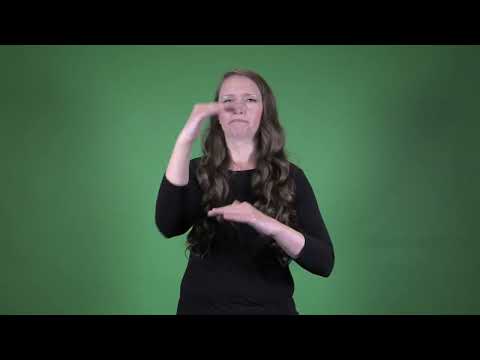
Definition: Idiomatic expression meaning I can’t think or take-in anymore just now, or my brain is tired and full
Sign for MIND LIMIT (idiomatic expression) in ASL
Practice Activities:
Start by practicing the sign for MIND LIMIT (idiomatic expression) in ASL in front of a mirror. Focus on precise handshape, movement, and facial expression. Repeat the sign in isolation ten times, making sure to keep a flat “B” hand near your forehead and then making a sharp movement indicating a limit or barrier. Record yourself and compare to video models online if possible.
Next, create simple example sentences using the sign for MIND LIMIT (idiomatic expression) in ASL. Try signing phrases like “I was so tired, my mind limit reached” or “After working all day, mind limit.” These examples help anchor the meaning, which relates to mental exhaustion, overwhelm, or being mentally maxed out.
Partner activities can be very effective. One student shares a stressful scenario like studying for finals, while the other responds using the sign. Example interaction: “I had three tests, no sleep” → “Wow, your MIND LIMIT hit.” This gives practice with the sign in natural conversation.
Storytelling prompts also help deepen understanding. Create a short story about a character trying to focus but gets too tired—students then incorporate the sign for MIND LIMIT (idiomatic expression) in ASL at the climax. Encourage dramatic facial expressions to emphasize stress or overwhelm.
Create a visual “scale of stress” with emoji or drawings. Label low stress to high mental load, and sign MIND LIMIT just as the mental scale hits its peak. This visual helps reinforce context and idiomatic use of the phrase.
Have learners watch vlogs or stories in ASL about stressful or overwhelming experiences, then identify where the native signer uses the sign. Reproduce or paraphrase these stories using the idiom themselves. Regular exposure and repetition with different types of context supports retention of the sign for MIND LIMIT (idiomatic expression) in ASL.
Cultural Context:
In American Sign Language, the sign for MIND LIMIT (idiomatic expression) captures a uniquely Deaf cultural perspective on mental capacity, overwhelm, or cognitive saturation. This expression is often used in casual conversations among Deaf signers to describe when someone has hit a mental wall or can no longer mentally process information. It reflects not just an emotional state, but a nuanced cultural way of expressing limitations of thought or comprehension.
The sign for MIND LIMIT (idiomatic expression) is deeply rooted in visual and spatial representation, consistent with ASL’s reliance on visual metaphors. The movement and facial expression help intensify the message, showing frustration or reaching capacity. This expression often conveys a powerful visual cue that something is just too much to handle mentally.
Within the Deaf community, using the sign for MIND LIMIT (idiomatic expression) is a way to validate personal experiences of cognitive overload. Whether due to stress, information, or emotionally taxing situations, this idiom provides a shared way to communicate something all people experience in a visually descriptive manner. It’s common in conversations touching on education, work, or emotionally charged topics.
Deaf culture emphasizes clear, honest communication, and the sign for MIND LIMIT (idiomatic expression) respects this value. It’s a straightforward yet expressive sign that resonates across different age groups and generations of signers. Using it reinforces a sense of shared understanding and empathy within the community.
The sign for MIND LIMIT (idiomatic expression) also represents a cultural attitude of knowing personal boundaries. Instead of pushing through to the point of burnout, members of the Deaf community might use this sign to indicate it’s time to step back, pause, and reset. It’s a powerful cultural marker for mental self-awareness and care.
In educational and professional Deaf settings, teachers, students, and colleagues will often use the sign for MIND LIMIT (idiomatic expression) to express mental fatigue. It serves as both an emotional and intellectual boundary setter, helping to communicate complicated feelings clearly and quickly. The idiomatic nature of the sign showcases ASL’s rich complexity and the way it captures abstract ideas.
Using the sign for MIND LIMIT (idiomatic expression) can also be a humorous or light-hearted gesture among friends, expressing that too much information has been shared or that someone is simply overwhelmed. Context, facial expressions, and the pacing of the sign help convey the intended tone. It demonstrates ASL’s flexibility in tone and emotional nuance.
In storytelling and ASL literature, the sign for MIND LIMIT (
Extended Definition:
The sign for mind limit (idiomatic expression) in ASL conveys the concept of mental or emotional overwhelm. It’s commonly used when someone is feeling maxed out, whether due to stress, frustration, or intense emotion. This idiom vividly illustrates when a person feels like they just can’t handle any more mental input.
In American Sign Language, the sign for mind limit (idiomatic expression) typically combines facial expressions and specific hand movements to reflect the idea of the mind reaching its capacity. This isn’t a literal sign for the words “mind” and “limit,” but rather an expressive motion that captures the emotional or psychological state. ASL often uses the space around the head, facial intensity, and nuanced hand gestures to show abstract emotions and mental states.
When signing mind limit, the signer might use a hand movement that starts at the temple and then abruptly stops or pulls away. This motion symbolizes a mental wall or a breaking point. The facial expression adds important context, often showing frustration, exasperation, or disbelief that the brain can no longer process what’s going on.
Because ASL is a visual language, non-manual markers such as brow furrowing, eye widening, or sudden head movements play a huge role in conveying the full essence of the sign for mind limit (idiomatic expression) in ASL. These cues help clarify that it’s not just about thinking hard but hitting an internal breaking point. That’s why watching the sign in context through videos or live interaction is essential for deep understanding.
The sign is highly contextual and often surfaces in conversations about emotionally charged situations, exhausting circumstances, or even when someone has heard enough nonsense that their brain metaphorically short-circuits. It expresses an internal reaction that can’t always be easily put into spoken words, making it a powerful tool in ASL discourse.
Native signers might modify the sign for mind limit (idiomatic expression) based on intensity. For instance, exaggerating the motion or pairing it with a strong head shake can show that the person feels completely overloaded. In contrast, a more subtle use might indicate mild mental fatigue or irritation. ASL allows this kind of flexibility, adapting signs for richer expression.
Learners should watch examples of this sign in conversations or ASL storytelling to grasp subtle variations in usage. The sign for mind limit (idiomatic expression) in ASL is a favorite among native signers because it delivers a full emotional punch with just a few motions. It’s both efficient and visually expressive.
Understanding idi
Synonyms: It seems like there’s some confusion with the term “IE mind limit.” If you are referring to a specific SEO phrase or specialized concept, could you clarify or provide more context for the synonyms you’re looking for? For now, I’ll assume you want synonyms for something related to framework or conceptual boundaries. Here are five generalized interpretations:
boundary, restriction, cap, threshold, limitation
Educational resources: Find related learning materials in our course bank!
Want more? Check out some of our popular learning activities on the homepage!
Need to look up a sign? Use our highly rated dictionary: https://aslinteractive.com/best-asl-dictionary/
Follow us on tiktok: https://www.tiktok.com/@aslinteractive. More social media links at the bottom of this page!
Long-tail Keywords: what is the sign for IE mind limit in ASL, how do you sign IE mind limit in ASL, IE mind limit ASL sign meaning
Categories:
tags: ASL idioms, ASL phrases, figurative language in ASL, ASL concepts, ASL dictionary terms
Parameters
*Handshape*:
The handshape for the Sign for MIND LIMIT (idiomatic expression) in ASL begins with a dominant hand in the flat “B” handshape near the forehead, representing the concept of the mind. The non-dominant hand is also in a flat “B” handshape, placed outward in front of the face.
The dominant hand moves forward from the forehead while both hands create a barrier space to indicate limitation. This handshape vividly represents the figurative boundary associated with the Sign for MIND LIMIT (idiomatic expression) in ASL ⛔.
*Palm Orientation*:
For the sign for MIND LIMIT (idiomatic expression) in ASL, the palm orientation typically begins with the dominant hand in a flat “B” handshape, palm facing in toward the side of the forehead. As the sign progresses, the hand moves outward and slightly upward, flipping so the palm gradually faces forward. This conveys the concept of one’s mental boundary being reached or pushed .
In context, the sign for MIND LIMIT (idiomatic expression) in ASL is expressive, and the shifting palm direction emphasizes an internal mental threshold becoming external. The change in palm orientation helps highlight frustration or cognitive overload in an idiomatic way.
*Location*:
The sign for MIND LIMIT (idiomatic expression) in ASL is produced in the area around the forehead. The dominant hand typically starts near the temple or forehead, indicating a mental or cognitive reference point. From there, the hand moves outward, suggesting the concept of a boundary or restriction.
This sign is usually executed in the signing space just in front of the head, symbolizing a personal or internal limit. Since the forehead is associated with thought, it forms a natural location for expressing the idea behind the sign for MIND LIMIT (idiomatic expression) in ASL .
*Movement*:
Start with your dominant hand in a flat B-handshape, palm facing in, touching the temple to represent “mind.” Then move the hand outward from the temple rapidly while changing the expression to show frustration or overwhelm, often shaking the hand slightly as it pulls away. This movement expresses the figurative breaking point of mental tolerance, crucial in conveying the sign for MIND LIMIT (idiomatic expression) in ASL .
Facial expression plays a vital role, usually involving widened eyes or a sharp exhale to emphasize the emotional constraint being exceeded. The overall flair and sharpness of the motion help capture the idiomatic nuance of the sign for MIND LIMIT (idiomatic expression) in ASL.
*Non-Manual Signals*:
For the sign for MIND LIMIT (idiomatic expression) in ASL, non-manual signals play a crucial role in conveying the figurative meaning. The brows are often raised slightly, combined with a somewhat wide-eyed expression to emphasize surprise or mental overwhelm. A slight head tilt or backward jerk may be added to enhance the visual depiction of mental restriction or reaching a cognitive boundary.
Facial expression is key in the sign for MIND LIMIT (idiomatic expression) in ASL. The signer’s mouth may form a mouthing like “wow” or blow out air to show how far the mind has gone. The combination of these signals reflects the idea that someone has reached their mental capacity or tolerance level .
*Prosody, Dominant/Non-Dominant Hand*:
The sign for MIND LIMIT (idiomatic expression) in ASL uses both hands in a dynamic way. The dominant hand forms a modified bent-hand or claw-handshape near the forehead, representing “mind” , and then moves sharply outward and stops abruptly, symbolizing a mental boundary or being overwhelmed. The non-dominant hand may stay still or assist in marking an invisible wall.
In this expression, both hands highlight the figurative meaning of the mind reaching its limit. The sign for MIND LIMIT (idiomatic expression) in ASL is often used for feelings like frustration, reaching capacity, or mental exhaustion. Hand motion and facial expression play a crucial role in conveying intensity.
Tips for Beginners:
When learning the sign for MIND LIMIT (idiomatic expression) in ASL, it’s important to understand that this phrase isn’t meant to be taken literally. This idiomatic expression typically refers to mental exhaustion or feeling overwhelmed, like when someone has had enough mentally. To express this in ASL, it’s standard to use a combination of facial expressions and an emphatic sign movement often associated with the concept of mental limits or boundaries.
One useful tip is to focus on your facial expression —this is crucial to convey the idiomatic meaning. A confused, frustrated, or even exasperated look can transform the meaning of the sign to match the intended phrase. Remember, in ASL, facial grammar is just as important as hand movements.
Practice the hand movement starting by pointing to the temple area, then transitioning that motion outward and upward with a flick of the fingers. This mimics a “mind blowing” effect, which helps visually represent being maxed out mentally. Make the movement clear and deliberate; don’t rush through it.
A common mistake is to keep the face neutral or to sign too softly. If your expression does not show stress or frustration, your audience might misinterpret the sign. You’re not just signing the concept—you’re telling a story using your entire upper body.
Watching native signers or fluent ASL users perform the sign for MIND LIMIT (idiomatic expression) in ASL can be incredibly helpful . Try recording yourself and compare it to fluent examples. Lastly, use the keyword phrase in different contexts during your practice, like storytelling or casual conversation to see how the idiomatic nature varies depending on tone and intent.
Connections to Other topics:
The sign for MIND LIMIT (idiomatic expression) in ASL connects closely with concepts like “can’t handle,” “mentally exhausted,” or “overwhelmed.” It draws on the metaphor of reaching a cognitive or emotional breaking point, often expressed visually with a gesture resembling a limit being met or surpassed inside the head. This sign mirrors how ASL uses space and movement to embody abstract mental experiences in a tangible, expressive way.
This idiomatic sign is conceptually linked to signs like THINK-GONE or BRAIN-FREEZE, which also rely on the mind as a central location in the signing space. In expressive ASL storytelling, these elements are frequently used to illustrate emotional burnout, stress, or encountering something intellectually incomprehensible. The use of facial expressions in conjunction with the sign for MIND LIMIT (idiomatic expression) in ASL helps clarify the intensity or suddenness of reaching that mental threshold.
The sign for MIND LIMIT (idiomatic expression) in ASL often appears in narratives that depict emotional or academic pressure, making it useful vocabulary in education and counseling settings. Compound phrases like PRESSURE-MIND LIMIT or SCHOOL-STRESS-MIND LIMIT are common when signed fluidly in conversation, effectively conveying “mental breakdown due to stress.” These compound uses allow signers to create nuanced expressions that reflect complex emotional states.
The idiom ties into broader themes in Deaf culture where communication of emotional and mental health states is highly visual and embodied. This makes signs like MIND LIMIT especially valuable in representing feelings that are deeply human and universally felt, such as frustration, overwhelm, or confusion. It promotes clarity and expressiveness in ASL, emphasizing how non-verbal cues, sign placement, and intensity refine meaning.
For advanced learners, exploring variations of the sign for MIND LIMIT (idiomatic expression) in ASL with different classifiers can deepen fluency. It’s an ideal entry point into understanding how ASL handles abstract ideas using layering, body language, and spatial grammar .
Summary:
The sign for MIND LIMIT (idiomatic expression) in ASL expresses a concept that doesn’t translate literally into English but is deeply felt in conversational contexts. It conveys emotional or cognitive overwhelm, like when someone has reached their mental capacity or can’t process any more information.
This idiom is particularly expressive in ASL due to the language’s visual and spatial richness. The hands and facial expressions together show a buildup of thought pressure that finally reaches its boundary.
To sign this idiom, the dominant hand typically takes a “5” handshape starting at the temple, then quickly flips outward, away from the forehead. This movement mirrors something pushing out of the mind or a mental wall being hit.
A key feature of this sign is the intensity shown on the face. Eyebrows are often furrowed or raised, eyes may either widen in surprise or squint in frustration, illustrating just how mentally overwhelming the situation is.
The sign for MIND LIMIT (idiomatic expression) in ASL acts as a conceptual metaphor. While the motion is literal—something leaving the mind—the meaning is abstract: “I can’t think about this anymore” or “I’m mentally exhausted.”
This idiom is often used in heated debates, stressful educational settings, moments of emotional intensity, or even in humorous ways. The context determines whether it’s used seriously or playfully.
The sign encapsulates a mental and emotional threshold. It reflects a cognitive overload signal, much like the overloaded processor in a computer—a point where the system crashes or freezes due to excess input.
From a cultural standpoint, this idiomatic sign demonstrates how Deaf culture values clear and emphatic communication. The visual nature of the sign makes the inner state of the signer instantly obvious to the viewer.
Other signs may accompany the sign for MIND LIMIT (idiomatic expression) in ASL to deepen the meaning, such as signs for EXASPERATED, TIRED, or FRUSTRATED. Stacking these signs enhances the emotional weight of the idiom.
Syntactically, this idiomatic expression behaves like an interjection or reaction marker in conversation. It doesn’t always require a full sentence; it can stand alone or be used at the end of a phrase or story to punctuate thought.
It often shows up in story contexts where a signer narrates a chain of events that progressively gets more chaotic or difficult to mentally process. Signing MIND LIMIT at the climax conveys a full arc of experience in just a few seconds.
This sign reveals how ASL relies heavily on spatial logic and movement dynamics to reflect internal states. The direction, speed, and force of the sign’s movement help communicate the speaker’s psychological limit.
In deeper linguistic terms, MIND LIMIT serves as an example of mapping abstract thought processes onto physical actions. The metaphor of a mind reaching its boundary reflects embodied cognition, a term often used in cognitive linguistics.
This idiom also highlights ASL’s reliance on iconicity. The movement of the hand away from the forehead doesn’t just symbolically represent leaving thought—it looks like thought being expelled, giving it power.
Children in Deaf education settings often learn this sign to describe moments of confusion or when overwhelmed by too much academic input. It becomes a tool for self-awareness and communication of needs.
The sign for MIND LIMIT (idiomatic expression) in ASL is part of a broader group of cognitive-expressive signs like THINK DESTROYED, CAN’T PROCESS, or BRAIN EXPLODE. These are often used together or interchangeably based on nuance.
Even slight changes in movement or handshape can alter meaning. For example, a sharp flick suggests sudden overload, while a slower scoop movement implies a gradual mental weariness.
Though not standardized in written form, the sign is frequently used in vlogs, online Deaf storytelling platforms, and classroom settings. It helps connect viewers with the signer’s psychological landscape immediately and intuitively.
From a grammatical lens, this idiom behaves similarly to other expressions in ASL that act as modifiers. It adds emotional context and depth rather than delivering the core idea alone.
When learning the sign for MIND LIMIT (idiomatic expression) in ASL, students are encouraged to internalize not just the motion but the expression. It functions effectively only when performed with congruent affect.
Teachers of ASL often use this idiom as a teaching tool to explain the difference between literal and idiomatic meaning. It bridges linguistic comprehension with cultural fluency.
The idiom underlines the importance of metaphor in signed languages. Since ASL is inherently a high-context language, metaphorical thinking is essential for full understanding.
Translation poses a unique challenge. In English captions or interpretations, the phrase may appear as “I can’t take it anymore” or “My brain is full,” but these lose the power of the visual metaphor in the ASL original.
Deaf performers and artists use the sign for MIND LIMIT (idiomatic expression) in ASL to dramatic effect. Its visual
Want more? Check out some of our popular learning activities!
ASL Interactive Resources
ASLInteractive YouTube Channel
Follow us on tiktok: @aslinteractive.com
Follow us on Instagram: aslinteractive
Facebook page: aslinteractive
Facebook group: aslinteractive
LInkedIn: ASL Interactive LLC
Twitter: @ASL_interactive
*Some information on this page is AI-generated. AI can make mistakes. Please check the information.


Responses