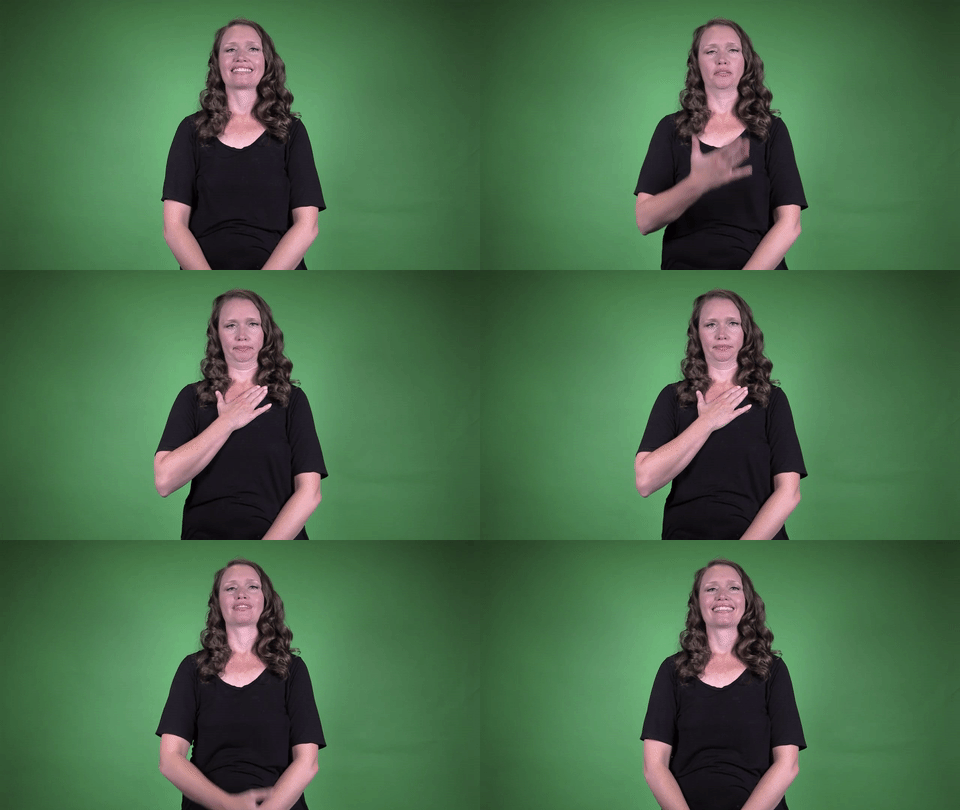
Definition: Belonging to me.
Sign for MINE in ASL
Practice Activities:
Cultural Context:
Practice Activities
Practicing the sign for MINE in ASL involves more than just memorizing a handshape—it also requires understanding how to use it in real-life communication. Start by standing in front of a mirror and practicing the sign slowly and clearly. Observe your palm orientation, facial expression, and body movement to ensure accuracy. Since the sign for MINE in ASL involves touching your chest with an open palm, it’s important to place the hand naturally and not stiffly, which can appear awkward or robotic.
Another great method is recorded signing. Use your phone or computer to film yourself signing everyday phrases that include the sign for MINE in ASL. Reviewing these recordings helps you track your progress and identify areas for improvement. Create practice sentences like “That toy is mine” or “This is mine” to reinforce contextual usage.
For intermediate learners, try using the sign in role-play or storytelling. Describe scenarios where you would claim ownership—like picking out your coffee mug or pointing to your backpack. This helps anchor the meaning of the sign for MINE in ASL within natural language.
Advanced learners can incorporate drills like rapid-fire sentence creation or peer-led mini conversations. Working with a partner, take turns using the sign in varied emotional contexts—assertive, playful, even disappointed—to build expressive range. These activities help ensure that your use of the sign for MINE in ASL is not only correct but also fluent and culturally appropriate.
SEO Cultural Context
Understanding the cultural context of the sign for MINE in ASL deepens your language fluency and shows respect for Deaf culture. In ASL, ownership is often expressed through body language and context, making the sign for MINE in ASL particularly expressive. It’s not just about the vocabulary—it reflects how the Deaf community communicates ideas of personal space, possession, and identity.
The sign for MINE in ASL is typically performed with a flat open hand tapping the chest once. The gesture is simple yet powerful. It is often used with facial expressions that emphasize the speaker’s intent. In Deaf culture, ownership and boundaries are communicated not just through signs but through eye contact and spatial referencing. So when you use the sign for MINE in ASL, it’s important to pair it with appropriate non-manual markers to ensure clarity and respect.
Regional variation in this sign is rare, but some slight differences in speed or emphasis may be noticed depending on the signer’s background or age. The sign is frequently used in educational settings, particularly with young Deaf children, as they learn concepts of possession and sharing. It also shows up in everyday adult conversations, especially when discussing personal items or preferences.
Real-life use of the sign for MINE in ASL can be observed in a variety of contexts—from children on a playground to adults in a workplace setting. Whether you’re signing “That’s mine” to clarify ownership or “This one is mine” to express preference, the sign plays a key role in everyday interactions.
Extended Definition
The sign for MINE in ASL is made by placing the open B-hand (flat hand with fingers together and thumb extended) on the center of your chest. The motion is typically a single pat, though it can be repeated for emphasis in emotionally charged situations. The palm should face inward, directly toward your body, and the fingers should rest flat against your chest.
This sign differs from the sign for YOURS in ASL, which uses the same handshape but extends outward toward the other person. Beginners sometimes confuse the directionality, so it’s crucial to remember that the sign for MINE in ASL always involves inward movement toward your own body. This inward direction reflects the concept of personal ownership.
Another common mistake is turning the palm sideways or using a bent handshape, which can confuse viewers or alter the meaning. Precision in handshape and motion is essential. The sign for MINE in ASL is related to other possessive signs like HIS, HERS, and THEIRS, which follow similar structures but are directed toward third-person referents rather than the signer.
Also, be aware that using the sign for MINE in ASL repeatedly or too forcefully can come across as overly aggressive, especially in group settings. Always pair the sign with appropriate facial grammar and tone to match the context.
Tips for Beginners
If you’re new to ASL, learning the sign for MINE in ASL is a great way to begin understanding possessive structures. One helpful tip is to associate the hand motion with the idea of keeping something close to your heart—literally and figuratively. The sign for MINE in ASL is not just a word; it’s a reflection of personal connection and ownership.
Beginners often forget to include facial expressions. In ASL, facial grammar is not optional—it adds meaning and clarity. When signing MINE with a neutral or confused face, it can send unintended messages. Always think about how you’re feeling when you use the sign, and let your face show it.
Another tip is to avoid rushing the motion or slapping your chest. The sign should appear smooth and natural. Use a gentle tap to convey calm ownership or a firm touch to express strong feelings. Practicing in front of a mirror can help you refine this nuance.
Don’t get discouraged if you make mistakes. Even fluent signers sometimes adjust their signs. The key is to practice regularly and seek feedback from native signers or instructors. The more you immerse yourself, the more natural the sign for MINE in ASL will become.
Connections to Other Topics
The sign for MINE in ASL connects naturally with other possessive signs such as YOURS, HIS, HERS, OURS, and THEIRS. These signs follow similar patterns, using the same handshape but shifting direction to indicate different owners. Studying them together helps reinforce your understanding of ASL grammar.
Another related topic is the use of personal pronouns in ASL. Signs like I, YOU, HE, SHE, and WE are often used alongside possessive signs to clarify meaning. Learning how to combine these signs with MINE enhances both clarity and fluency.
The concept of spatial referencing is also closely tied to the sign for MINE in ASL. ASL relies on visual space to organize ideas, so placing objects or people in specific spatial locations helps clarify who owns what. For example, you might point to a location before using the sign for MINE to indicate which object belongs to you.
Emotional expression is another important connection. The sign for MINE in ASL can be adjusted in intensity to match emotions, such as excitement, jealousy, or pride. Understanding how ASL uses facial expressions and body language to convey emotion will make your signing more effective.
Finally, the concept of turn-taking and communication etiquette in the Deaf community is relevant. Knowing when and how to use possessive signs like MINE shows that you understand social norms. It’s not just about vocabulary—it’s about communicating respectfully and clearly.
Lengthy Summary
Learning the sign for MINE in ASL is a foundational step in mastering possessive expressions and understanding the deeper structure of American Sign Language. This simple yet powerful sign uses a flat open hand placed on the chest, symbolizing personal ownership and emotional connection. Whether you’re claiming a toy, stating a preference, or expressing pride, the sign for MINE in ASL plays an essential role in everyday communication.
Practice is key. Mirror work helps you see your handshape and facial expressions in real time. Recording yourself adds another dimension, allowing you to observe your signing from an outsider’s perspective. Role-playing and advanced conversation drills move you from isolated signs into fluent, expressive use. Each of these methods strengthens your grasp of the sign for MINE in ASL and builds confidence.
Culturally, this sign reflects the Deaf community’s emphasis on clarity, emotion, and spatial awareness. The sign for MINE in ASL is more than just a label—it’s a visual representation of belonging and identity. It aligns with broader ASL grammar and social norms, making it a critical sign for both new and experienced learners.
As you deepen your skills, exploring related signs like YOURS, OURS, and HERS will enrich your understanding. You’ll see how direction, location, and expression all work together to build meaning in ASL. You’ll also learn how to avoid common errors, like incorrect hand orientation or lack of facial grammar, which can change your message entirely.
Mastering the sign for MINE in ASL opens the door to more nuanced and heartfelt communication. It teaches you not only how to express ownership but also how to do so with cultural awareness and respect. Keep practicing, stay curious, and don’t be afraid to make mistakes. Every sign you learn brings you closer to fluency and connection within the Deaf community. Keep signing, keep growing!
Extended Definition:
Synonyms: dig, excavate, quarry, bore, tunnel
Educational resources: Find related learning materials in our course bank!
Want more? Check out some of our popular learning activities on the homepage!
Need to look up a sign? Use our highly rated dictionary: https://aslinteractive.com/best-asl-dictionary/
Follow us on tiktok: https://www.tiktok.com/@aslinteractive. More social media links at the bottom of this page!
Long-tail Keywords: what is the sign for mine in ASL, how do you sign mine in ASL, ASL sign for mine
Categories:
tags: possessive pronouns in ASL, common ASL vocabulary, personal pronouns in sign language, beginner ASL signs, everyday ASL use
Tips for Beginners:
Connections to Other topics:
Summary:
Want more? Check out some of our popular learning activities!
ASL Interactive Resources
ASLInteractive YouTube Channel
Follow us on tiktok: @aslinteractive.com
Follow us on Instagram: aslinteractive
Facebook page: aslinteractive
Facebook group: aslinteractive
LInkedIn: ASL Interactive LLC
Twitter: @ASL_interactive
*Some information on this page is AI-generated. AI can make mistakes. Please check the information.


Responses