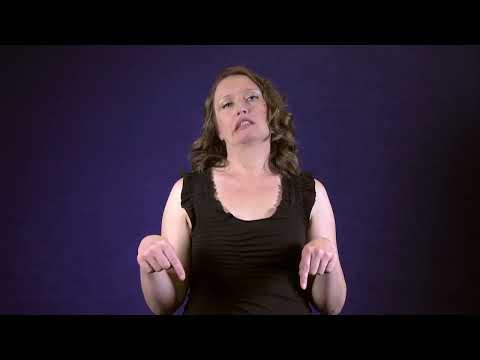
Definition: The state of being anxious or worried.
Sign for NERVOUSNESS in ASL
Practice Activities
One of the most effective ways to become comfortable with the sign for nervousness in ASL is to practice in front of a mirror. This allows you to observe your facial expressions and hand movements at the same time. Nervousness is often shown not just through the handshape and motion, but also through body language and facial cues like shifting eyes or a furrowed brow.
Another great method is recording yourself signing. Play back your video to evaluate your fluency and accuracy. Watch videos of native signers and compare your version of the sign for nervousness in ASL to theirs. Take note of the subtle emotional expressions that accompany the sign.
Contextual learning is also key. Use the sign for nervousness in ASL during storytelling, role-playing, or while describing personal experiences. For example, practice signing about a time when you had to give a speech or go to a job interview. Embedding the sign in real-life scenarios makes it easier to remember and use naturally.
Advanced learners can try drills that involve switching between emotion-related signs quickly. Pair the sign for nervousness in ASL with similar vocabulary like scared, anxious, or excited. This will help you sharpen your receptive and expressive skills in fast-paced conversations.
SEO Cultural Context
In Deaf culture, emotions are often expressed visually and with a high degree of clarity. The sign for nervousness in ASL is not simply a literal translation from English—it reflects the internal feeling in a physical and cultural way. Facial expressions and body movement are essential components of the sign, and without them, the meaning can be unclear or even incorrect.
The sign for nervousness in ASL may vary slightly depending on region or signing community. Some signers use a motion involving alternating open hands rubbing together, while others might use shaky hands to show internal tension. These differences are respected within the Deaf community, and it’s important to be open to variation while maintaining clarity.
This sign is commonly used in both informal and formal settings. Whether you’re sharing feelings in a casual conversation or interpreting in structured environments like therapy sessions or school settings, understanding how to convey nervousness appropriately is crucial. In Deaf culture, being transparent with your emotions is valued, and signing nervousness accurately helps build trust and communication.
Extended Definition
The sign for nervousness in ASL typically involves both hands held slightly apart and shaking in a manner that mimics trembling. The hands may be open or slightly curved, and the motion suggests internal anxiety or discomfort. Facial expression plays a critical role—eyes may dart, eyebrows may be raised or furrowed, and the mouth might show apprehension.
This sign is closely related to other emotion-based signs such as scared, anxious, and worried. However, each has its own distinct movement and facial expression. For example, scared often involves a sudden motion and a wide-eyed expression, while the sign for nervousness in ASL is more subtle and sustained.
A common error is using stiff hands or forgetting the facial expression entirely. This can make the sign confusing or reduce its emotional impact. Another mistake is over-exaggerating the shaking motion, which can make the sign look unnatural or suggest a different emotion altogether.
Tips for Beginners
If you’re just starting to learn the sign for nervousness in ASL, don’t worry if it feels awkward at first. Practice slowly and focus on coordination between your hand movements and facial expression. Remember, ASL is a visual language, and your face is just as important as your hands.
One helpful tip is to think about a moment in your life when you truly felt nervous. Channel that experience into your practice. This will make your signing more authentic and emotionally accurate.
Avoid locking your elbows or stiffening your hands. Keep your movements fluid and natural. It’s easy to overthink the sign, but with consistent practice, your comfort and fluency will grow. Don’t be discouraged by early mistakes—every fluent signer has been where you are now.
Connections to Other Topics
The sign for nervousness in ASL connects closely with the sign for anxiety. Both involve gestures that convey internal tension, but anxiety usually includes more intense or prolonged shaking and a more distressed facial expression. Understanding the difference helps you express specific emotions more clearly.
Scared is another related sign. It’s usually performed with a sudden inward motion and a startled face, representing a quick and intense reaction. In contrast, the sign for nervousness in ASL is more about ongoing discomfort or anticipation.
Excited is an emotional sign that uses both hands brushing upward against the chest. While excitement and nervousness can feel similar, their signs and facial expressions are distinctly different, helping you express nuanced emotions more accurately.
The sign for worried also complements nervousness. It often involves circular hand motions near the head, suggesting mental stress. These signs together form a useful emotional vocabulary set in ASL.
Finally, the sign for embarrassed may overlap in context with nervousness, especially in social situations. Recognizing the difference between these signs will help you become more articulate in expressing feelings.
Lengthy Summary
Mastering the sign for nervousness in ASL involves more than just memorizing hand movements. It requires an understanding of facial expressions, emotional context, and cultural norms within the Deaf community. The sign is typically shown with trembling hands and a concerned or uneasy facial expression, capturing the essence of inner tension.
Using practice tools like mirrors and recorded videos can significantly improve your fluency. Incorporating the sign into storytelling or daily conversations helps you internalize it. For advanced learners, emotion-based drills that alternate between related signs such as scared, anxious, or embarrassed are beneficial for speed and accuracy.
Culturally, the sign for nervousness in ASL carries weight. It’s used in various settings where emotional expression is key—from casual chats to professional counseling. Regional variations exist, but all are grounded in the need to visually and authentically convey emotion. Understanding these differences and respecting Deaf cultural norms enhances your communication skills.
As a beginner, take time to focus on coordination between your hands and face. Mistakes are part of the journey, but with consistent practice, you’ll build confidence. Remember to keep your movements natural and avoid over-exaggeration.
The sign for nervousness in ASL does not exist in isolation. It shares connections with signs like anxiety, scared, excited, worried, and embarrassed. Learning these related signs helps you communicate a broad range of emotions, making your ASL more expressive and effective.
Keep practicing, stay curious, and immerse yourself in the language. The more you engage with signs like the sign for nervousness in ASL, the more naturally they will come to you. With time and effort, you’ll gain not only fluency but also a deeper appreciation for the richness of ASL and the Deaf culture it represents .
Synonyms: anxiety, unease, apprehension, jitteriness, restlessness
Educational resources: Find related learning materials in our course bank!
Want more? Check out some of our popular learning activities on the homepage!
Need to look up a sign? Use our highly rated dictionary: https://aslinteractive.com/best-asl-dictionary/
Follow us on tiktok: https://www.tiktok.com/@aslinteractive. More social media links at the bottom of this page!
Long-tail Keywords: what is the sign for nervousness in ASL, how do you sign nervousness in ASL, ASL sign for feeling nervous
Categories:
tags: emotion signs, feelings in ASL, ASL nervous, mental health ASL, expressing emotions in sign language
Want more? Check out some of our popular learning activities!
ASL Interactive Resources
ASLInteractive YouTube Channel
Follow us on tiktok: @aslinteractive.com
Follow us on Instagram: aslinteractive
Facebook page: aslinteractive
Facebook group: aslinteractive
LInkedIn: ASL Interactive LLC
Twitter: @ASL_interactive
*Some information on this page is AI-generated. AI can make mistakes. Please check the information.


Responses