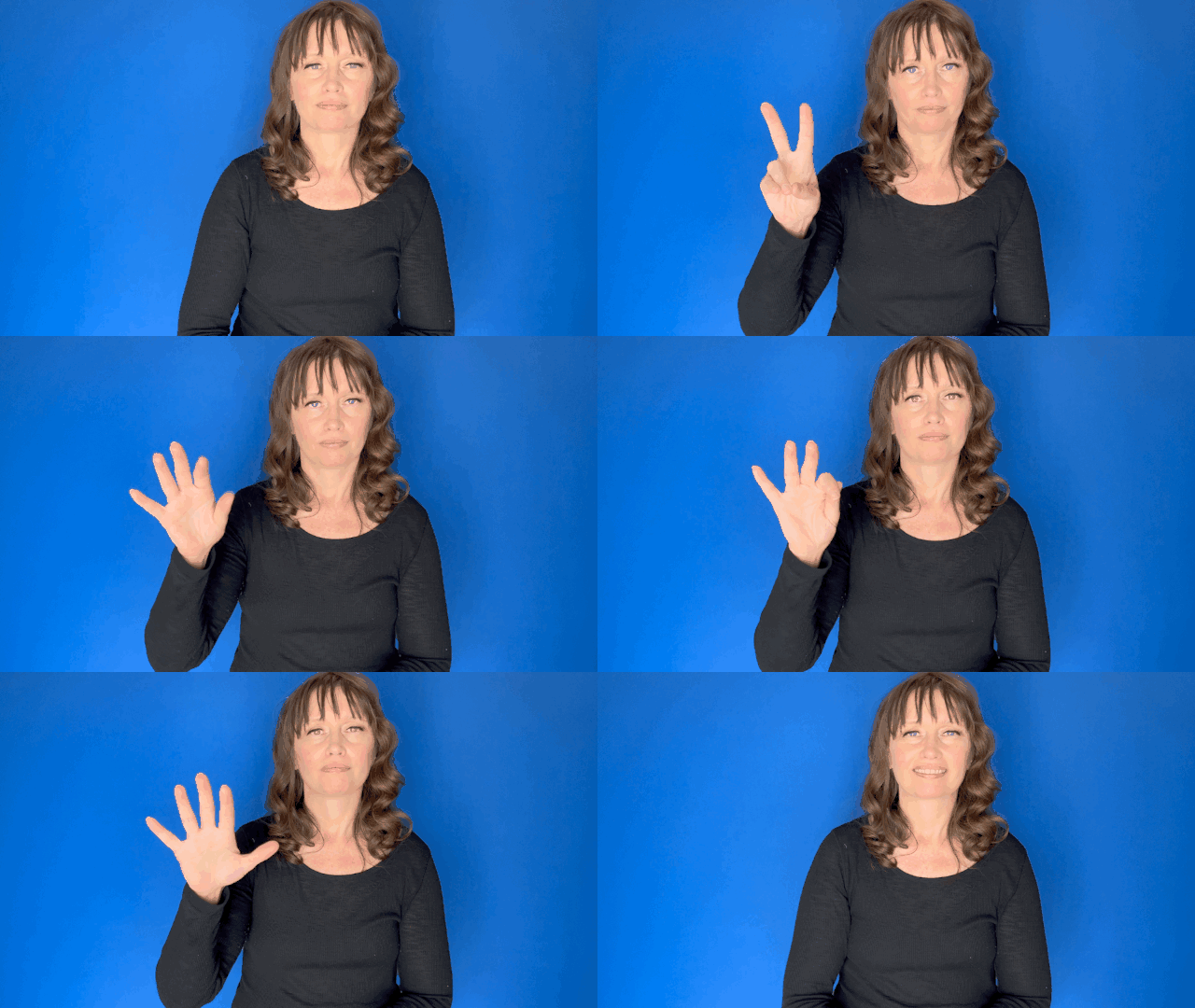
Definition: Spelling variation of 1951-1960.
Sign for NINETEEN FIFTY-ONE TO NINETEEN SIXTY in ASL
Practice Activities:
To practice the sign for nineteen fifty-one to nineteen sixty in ASL, start by signing the numbers clearly and fluidly. Hold the number nineteen high near the dominant temple, then smoothly transition to fifty-one through sixty. Focus on maintaining numerical accuracy and proper transitions between numbers.
Try signing different years within this time frame while saying them aloud to reinforce recognition. For variation, practice signing the years at different speeds, first slowly to ensure clarity, then gradually increasing your pace. Record yourself signing and compare it to examples from fluent signers to improve accuracy.
Use the sign for nineteen fifty-one to nineteen sixty in ASL in full sentences. For example, sign “My grandmother was born in 1953” or “The civil rights movement was active in the 1950s.” Create five to ten sentences that involve these years and practice signing them fluently.
Engage in a partner activity where one person fingerspells an event that took place between nineteen fifty-one to nineteen sixty, and the other signs the corresponding years. For example, one partner fingerspells “Rosa Parks protest,” and the other signs “nineteen fifty-five.” This helps with historical knowledge and active recall of numbers.
For storytelling practice, describe an imaginary day in the 1950s. Sign about the clothes, music, and daily life during that time while incorporating specific years from nineteen fifty-one to nineteen sixty. This will make practicing numbers more engaging while improving overall signing fluency.
End with a quiz-style activity where a partner or teacher signs different years randomly between nineteen fifty-one to nineteen sixty in ASL, and you quickly recognize and repeat them. This strengthens receptive skills and improves your ability to sign the years accurately under pressure.
Cultural Context:
The sign for nineteen fifty-one to nineteen sixty in ASL represents a significant decade in Deaf culture and the broader societal changes of the mid-20th century. This period was marked by advancements in Deaf education, with schools for the Deaf expanding and American Sign Language gaining more recognition. More Deaf individuals began advocating for their rights, paving the way for future accessibility improvements.
During the era of nineteen fifty-one to nineteen sixty in ASL, technology started to influence communication for the Deaf community. Early developments in television captioning and amplified telephones provided new ways for Deaf people to connect with the hearing world. These changes laid the groundwork for later technological advancements such as relay services and video phones.
Deaf clubs thrived in the nineteen fifty-one to nineteen sixty timeframe, serving as critical gathering places for socialization and cultural preservation. Since mainstream entertainment was often inaccessible, Deaf clubs hosted performances, sports events, and discussions in ASL. These spaces helped preserve the linguistic and cultural traditions of the Deaf community.
Education for Deaf children in nineteen fifty-one to nineteen sixty was still dominated by oralism, but the seeds of change were being planted. More advocates pushed for the recognition of ASL as a legitimate language rather than relying solely on lip-reading and speech training. This advocacy contributed to the eventual shift toward bilingual education policies in later decades.
The Deaf community during nineteen fifty-one to nineteen sixty in ASL also saw the emergence of influential leaders who fought for equal opportunities. Organizations such as the National Association of the Deaf (NAD) played a pivotal role in defending Deaf rights and promoting ASL. Their efforts set the stage for future legislative victories like the Americans with Disabilities Act (ADA).
Entertainment and media representation of Deaf individuals remained limited throughout nineteen fifty-one to nineteen sixty, but there were notable exceptions. Some Deaf actors and performers gained recognition, bringing more awareness of ASL and Deaf culture to the general public. These early representations laid the foundation for greater inclusion in later decades.
Overall, the years nineteen fifty-one to nineteen sixty in ASL were transformative for the Deaf community. Despite challenges, this period saw the strengthening of Deaf culture, growing recognition of ASL, and the early stages of major accessibility advancements. The resilience and persistence of the Deaf community during this time continue to inspire generations today.
Extended Definition:
The sign for nineteen fifty-one to nineteen sixty in ASL represents the decade spanning from 1951 to 1960. This period in history was marked by significant cultural, political, and technological changes that influenced the development of society and language. Understanding how to sign this range correctly is essential for clear communication in American Sign Language.
To sign nineteen fifty-one to nineteen sixty in ASL, you must use a combination of number signs to represent each year in the decade. ASL follows a pattern for signing numbers like nineteen, fifty-one, and sixty, ensuring clarity and accuracy. By structuring the numbers fluently, signers can convey the time frame efficiently.
This decade saw the rise of rock ‘n’ roll, the civil rights movement, and early space exploration. Many deaf individuals of this era experienced advances in education and accessibility, influencing ASL and its usage. Discussing historical events from nineteen fifty-one to nineteen sixty in ASL requires fluency in number signs and a good understanding of historical context.
When signing years in ASL, it is important to maintain proper handshape and movement. Each number is signed separately but smoothly, ensuring the recipient understands the full date range. Practicing the sign for nineteen fifty-one to nineteen sixty in ASL can improve fluency and make conversations about history more engaging.
ASL users frequently sign years to discuss historical events, personal stories, or cultural milestones. Expressing a decade, like nineteen fifty-one to nineteen sixty in ASL, allows for a precise way to frame discussions in an ASL conversation. Learning to sign decades enhances communication skills and helps preserve historical narratives in the deaf community.
Numbers are a key element of ASL, and signing them correctly ensures accurate information exchange. The sign for nineteen fifty-one to nineteen sixty in ASL follows standard numerical rules, with distinct hand movements for each number. Mastering number signs strengthens overall ASL proficiency, making conversations clearer and more effective.
By understanding how to sign this decade smoothly, ASL users can reference historical topics with ease. Whether discussing major events or personal experiences, knowing the sign for nineteen fifty-one to nineteen sixty in ASL supports fluid storytelling. Using proper signing techniques maintains accuracy in communication and historical references.
Learning how to sign decades in ASL is valuable for both beginner and advanced signers. The sign for nineteen fifty-one to nineteen sixty in ASL is useful in educational, historical, and casual conversations. Practicing these number signs regularly helps
Synonyms: None
Educational resources: Find related learning materials in our course bank!
Want more? Check out some of our popular learning activities on the homepage!
Need to look up a sign? Use our highly rated dictionary: https://aslinteractive.com/best-asl-dictionary/
Follow us on tiktok: https://www.tiktok.com/@aslinteractive. More social media links at the bottom of this page!
Long-tail Keywords: What is the sign for Nineteen Fifty-One to Nineteen Sixty in ASL, How do you sign Nineteen Fifty-One to Nineteen Sixty in ASL, Learn ASL signs for Nineteen Fifty-One to Nineteen Sixty
Categories: Numbers – Basics, years, year numbers
tags: Numbers, Years, Counting, Mathematics, Educational, Language Learning
Parameters
*Handshape*:
The sign for nineteen fifty-one to nineteen sixty in ASL uses number handshapes to represent the years. The dominant hand forms the number signs sequentially, starting with “19” followed by the specific year digits. For example, for nineteen fifty-one, sign “19” and then “51.” Each number is formed with clear, distinct movements to ensure accuracy. The sign for nineteen fifty-one to nineteen sixty in ASL follows the same pattern for all years in this range.
*Palm Orientation*:
For the sign for nineteen fifty-one to nineteen sixty in ASL, the palm orientation follows the standard number formation in ASL. The dominant hand forms the number signs with the palm facing outward for nineteen and fifty-one, then transitions smoothly to the following numbers. As you move from nineteen fifty-one to nineteen sixty, maintain a natural handshape shift while keeping the palm orientation mostly forward for clarity. ✋ This ensures the sign for nineteen fifty-one to nineteen sixty in ASL is visually distinct and easy to understand.
*Location*:
The sign for nineteen fifty-one to nineteen sixty in ASL is shown on the dominant hand using number signs. The hand is typically near the chest or shoulder area, maintaining consistent placement for clarity. Each year is signed individually using the number signs for nineteen, followed by fifty-one through sixty. The movement is fluid, ensuring a natural transition between numbers while staying within the neutral signing space in front of the upper body.
*Movement*:
To sign for nineteen fifty-one to nineteen sixty in ASL, begin with the number nineteen, formed by extending the index finger and thumb while the hand twists slightly. Then sign fifty-one by showing the number five, followed by flicking the index finger for one. For the range, move both hands slightly apart or use the sign for “to.” Next, sign nineteen again, followed by sixty, where the hand forms a six and then briefly opens to a zero. Repeat each number clearly for accuracy.
*Non-Manual Signals*:
When signing the sign for nineteen fifty-one to nineteen sixty in ASL, maintain a neutral facial expression while fingerspelling or using number signs. Slight brow raise may occur naturally when conveying a range of years, as it shows clarity. Head nodding can emphasize the specified years, supporting comprehension. Keep eye contact with the listener to ensure engagement and understanding. If emphasizing a historical reference, a slight furrow of the brow may provide additional context.
*Prosody, Dominant/Non-Dominant Hand*:
For the sign for nineteen fifty-one to nineteen sixty in ASL, use the dominant hand to form the number signs. Start with the number nineteen, transitioning smoothly into fifty-one, then sign “to” by shifting to the right. Continue with nineteen sixty, ensuring each number flows naturally. Keep your palm facing outward for clarity. Maintain a consistent rhythm and slight pauses between each section to mark the range effectively.
Tips for Beginners:
When signing the sign for nineteen fifty-one to nineteen sixty in ASL, make sure to clearly articulate each number with distinct hand movements. Start with “nineteen” by forming the number 9 and twisting it slightly twice, then move on to each subsequent number using the typical ASL number signs. Each number should be fluid and clear to maintain accuracy.
One common mistake is rushing through the numbers, which can cause confusion. Remember to keep your hand steady and ensure each digit is fully formed before transitioning into the next one. It’s helpful to maintain a smooth but deliberate rhythm to prevent misinterpretation.
Finger placement is crucial for clarity, particularly for the numbers in the fifties, which require a slightly open palm. Pay attention to hand orientation—fifty-one through fifty-nine involve forming the number five first and then shifting into the second digit. Practicing in front of a mirror can help reinforce proper hand positioning.
Another challenge is signing “to” smoothly in the sign for nineteen fifty-one to nineteen sixty in ASL. You can use a small forward movement or a transition gesture to indicate a range. Keeping the movement subtle but intentional will help maintain a natural flow.
Try practicing with a partner to improve fluency and feedback. Watching native signers or reference videos can provide additional insight. Don’t hesitate to slow down when learning—accuracy is more important than speed. Over time, your signing will become second nature, allowing for greater ease and confidence when expressing date ranges.
Connections to Other topics:
The sign for NINETEEN FIFTY-ONE TO NINETEEN SIXTY in ASL connects closely with how years are structured in ASL. Typically, years are signed by dividing the four-digit number into two parts, such as signing “19” first, followed by “51.” This approach applies to decades as well, where each number is signed sequentially rather than as a full numeral. Understanding this pattern helps learners construct other year-based signs fluently.
This pattern also ties into broader discussions of historical events and time periods in ASL discourse. When referencing specific decades, signers may indicate a range using movement or signs such as “THROUGH” to clarify continuity. The sign for NINETEEN FIFTY-ONE TO NINETEEN SIXTY in ASL can be useful in conversations about mid-20th-century events, including social movements, political changes, or technological advancements from that era.
Decade numbers often appear in discussions about anniversaries or generational references. For instance, someone signing about being born in the 1950s might sign the specific year or generalize it with “1950s.” This structure applies when comparing decades, such as contrasting 1950s culture with the 1960s. Recognizing how these signs fit into narrative structures enhances storytelling and discussions in ASL.
There are also variations when referencing timelines in ASL. While some may fingerspell part of a year, others may use a numerical system depending on clarity and context. The sign for NINETEEN FIFTY-ONE TO NINETEEN SIXTY in ASL demonstrates how numerical representation in ASL is structured for efficiency. This same structure can be applied to signing other time spans, making it easier to discuss different historical periods seamlessly.
Summary:
The sign for nineteen fifty-one to nineteen sixty in ASL follows the conventional structure for signing years. Each individual number within the range is represented distinctly using numerical signs. The transition between the two years is typically indicated by a small pause or a shift in signing space.
To sign nineteen fifty-one, start with the sign for nineteen. The number nineteen is formed by extending the index finger and forming a light flicking motion with the thumb. Then, sign fifty-one with a flowing number handshape, combining five and one sequentially.
For nineteen sixty, begin the same way with the sign for nineteen. Then, sign sixty by forming a six-handshape followed by a zero. The movement between these numbers should be fluid and natural.
A slight pause can indicate the transition between nineteen fifty-one and nineteen sixty. Alternatively, some signers may slightly shift their dominant hand to the side when transitioning between the two years. This helps establish a visual distinction between the two numbers.
The sign for nineteen fifty-one to nineteen sixty in ASL is typically used in historical contexts. This period covers significant moments in American and world history, making accurate representation crucial. Clarity in forming the numerical signs ensures proper communication.
ASL follows a logical pattern when signing years, reflecting linguistic structure. Numbers are signed sequentially rather than fused into one gesture. This maintains the readability of numeric expressions in ASL.
In conversations, signing years is common when discussing historical events, personal memories, or academic contexts. The sign for nineteen fifty-one to nineteen sixty in ASL may appear in historical documentaries interpreted in ASL. It is also used in lectures, museum presentations, and storytelling.
When signing years in a historical range, maintaining consistency in signing space is important. A left-to-right progression is often used for linear timelines, helping establish chronological order. This technique is useful when discussing multiple time periods.
Numbers in ASL have their own regional variations. Some signers may prefer slight modifications in movement or space usage. However, the numbers themselves remain consistent to maintain clarity.
When signing a range of years, facial expressions can add nuance. A neutral face is standard, but slight changes in expression can convey historical significance or personal connections. Non-manual markers help anchor signing meaning.
If fingerspelling is necessary, the word “to” between nineteen fifty-one and nineteen sixty can be fingerspelled quickly. However, this is often unnecessary as the natural pause or shift conveys the range. The structure adheres to ASL’s efficiency principles.
The sign for nineteen fifty-one to nineteen sixty in ASL is often incorporated into discussions about the 1950s and early 1960s. Topics like the civil rights movement, Cold War events, and technological advancements are common. Understanding how to sign historical years accurately enhances comprehension.
ASL has evolved in numerical representation, but year signs have remained relatively stable. They follow rules designed for ease of understanding. Consistency and clarity are critical in numeric communication.
When teaching the sign for nineteen fifty-one to nineteen sixty in ASL, instructors emphasize fluency in number signs. Practicing handshape accuracy and smooth transitions ensures learners can communicate accurately. The numerical structure in ASL aids language acquisition.
ASL is a visual language that relies on structured number use. Correctly signing years allows for a clear exchange of information. Historical accuracy depends on properly presenting dates and numeric sequences.
Using the correct numerical formation enhances communication efficiency. The sign for nineteen fifty-one to nineteen sixty in ASL reflects a structured approach to signing time periods. Practicing different year ranges supports fluency in expressing dates.
Signers may modify pacing or emphasis when discussing specific events from nineteen fifty-one to nineteen sixty. This range encompasses major cultural, social, and political changes. Understanding year signs supports historical discussions.
Historical awareness plays a role in ASL communication. The ability to sign numerical years precisely allows for effective storytelling. The sign for nineteen fifty-one to nineteen sixty in ASL contributes to seamless narrative flow.
ASL provides an expressive way to discuss time periods. Different techniques, such as pausing or shifting signing space, help distinguish between year ranges. These conventions adhere to linguistic efficiency in ASL.
By maintaining consistency in signing years, communication remains clear. The sign for nineteen fifty-one to nineteen sixty in ASL follows a predictable numerical structure. Mastery of number signs enables fluid communication about history.
To ensure others understand year signs, practicing hand shapes and transitions is beneficial. The number nineteen is signed with a flick of the index finger and thumb, while fifty-one and sixty follow standard numerical conventions. Sequential signing supports comprehension.
ASL allows for a rich expression of historical sequences. The sign for nineteen fifty-one to nineteen sixty in ASL appears in academic and casual discussions. Accurate execution allows deaf and hard-of-hearing individuals to discuss history seamlessly.
To enhance fluency, signers can practice different year ranges.
Want more? Check out some of our popular learning activities!
ASL Interactive Resources
ASLInteractive YouTube Channel
Follow us on tiktok: @aslinteractive.com
Follow us on Instagram: aslinteractive
Facebook page: aslinteractive
Facebook group: aslinteractive
LInkedIn: ASL Interactive LLC
Twitter: @ASL_interactive
*Some information on this page is AI-generated. AI can make mistakes. Please check the information.


Responses