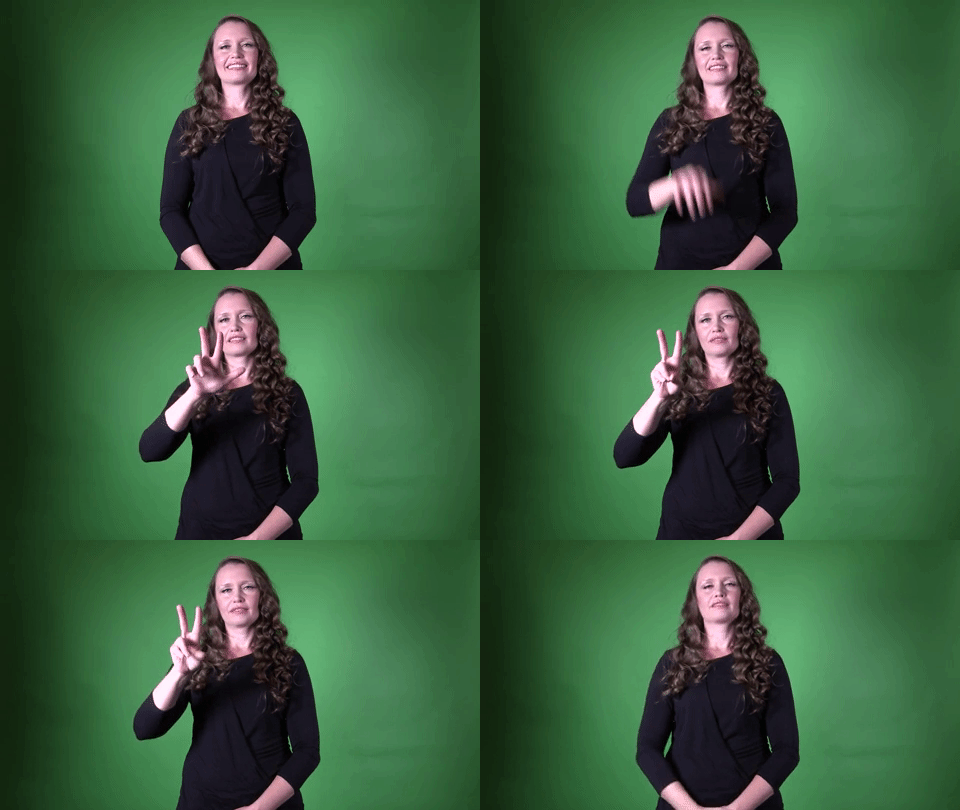
Definition: Refers to the number thirty-two
Sign for NUMBER 32 in ASL

Practice Activities:
Begin by practicing the sign for number 32 in ASL in isolation. Hold up the number 3, then transition smoothly to the number 2. Repeat this transition multiple times, focusing on maintaining clarity and fluidity. Try signing it slowly at first, then increase your speed while keeping accuracy.
Use flashcards with different numbers to reinforce recognition. Mix in other numbers to ensure you can sign the number 32 naturally when it appears. Look at a series of random numbers and sign each one correctly, paying attention to the transition between digits.
Practice counting aloud in ASL from 30 to 35, ensuring you smoothly sign each number along the way. Say the numbers in your head as you sign to reinforce the connection. Try skipping numbers and jumping directly to 32 to ensure recall without a predictable pattern.
Use the sign for number 32 in ASL in real-world scenarios. Pretend you are calling out a ticket number, giving an address, or sharing your age. For an extra challenge, come up with five realistic situations in which you’d need to sign 32 and practice using it in context.
Engage in a partner activity where one person fingerspells a set of numbers, and the other signs them back, including 32. Switch roles to build comprehension. You can also play a game where one person signs a number, and the other has to quickly state what it is.
Tell a short story that includes the number 32. It could be about someone celebrating their 32nd birthday, traveling on bus 32, or counting 32 objects. Use expressive signs and facial expressions to make the story engaging.
Cultural Context:
The sign for number 32 in ASL is an important part of understanding how numbers work in American Sign Language. Numbers in ASL follow specific patterns and structures, making them unique compared to spoken languages. The number 32 in ASL follows the general numbering rules but has its own specific handshape and movement.
Numbers are essential in daily conversations, especially when discussing ages, addresses, measurements, and time. The sign for number 32 in ASL is often used in contexts like birthdays, sports scores, financial transactions, and counting objects. Knowing how to correctly sign numbers improves communication and fluency in ASL conversations.
The sign for number 32 in ASL, like other numbers, follows a natural flow that makes signing swift and efficient. Many two-digit numbers, including 32, use a combination of movements that transition smoothly from one numeral to the next. This makes it easier to sign numbers quickly without breaking the flow of conversation.
Cultural context is an important part of learning ASL because it is more than just a language—it represents the Deaf community and their way of life. Using the sign for number 32 in ASL correctly demonstrates respect for the language and its rules. Mastering ASL numbers enhances communication skills and fosters deeper connections within the Deaf and hard-of-hearing community.
Numbers in ASL also reflect the visual nature of the language, prioritizing clarity and efficiency. The sign for number 32 in ASL exemplifies this by following the standard number system while ensuring the signer’s hand movements are fluid and distinct. Learning and practicing these signs increases confidence when using ASL in real-world situations.
When using the sign for number 32 in ASL, it’s important to pay attention to hand orientation and movement to avoid confusion. Since ASL relies on specific signing patterns, slight changes can alter meaning or make a number difficult to understand. Practicing frequently will help reinforce accuracy and fluency.
The sign for number 32 in ASL is commonly used in various settings such as schools, workplaces, sports, and casual conversations. Mastering number signs is essential for effective communication, especially in professional and educational settings. Numbers play a significant role in signing dates, prices, statistics, and other numerical information.
Understanding the sign for number 32 in ASL also helps with recognizing other numbers more easily. Many two-digit numbers in ASL have similar movement patterns, so learning one helps in understanding others. Practicing number signs regularly builds
Extended Definition:
The sign for number 32 in ASL is a combination of the numbers 3 and 2, produced in a specific fluid motion. This number sign follows the standard pattern for signing two-digit numbers in American Sign Language. Learning how to sign number 32 in ASL helps improve fluency when discussing numbers in conversations.
To form the sign for number 32 in ASL, start by showing the number 3 with your dominant hand. Then, smoothly transition to the number 2 without breaking the motion. This movement creates a two-step sign that clearly represents the number 32.
Signing numbers correctly is essential for effective communication in ASL. The sign for number 32 in ASL is commonly used in daily interactions, such as sharing addresses, listing ages, or discussing quantities. Practicing this number sign helps strengthen overall ASL number skills.
In ASL, number signs must be clear and distinct to avoid confusion. The sign for number 32 in ASL follows the same structure as other double-digit number signs. Maintaining a natural hand movement ensures clarity and accuracy when signing.
Consistent practice of the sign for number 32 in ASL helps with smooth and confident signing. Familiarity with number signs makes it easier to discuss dates, prices, and appointments. Mastering numbers in ASL improves overall communication skills.
When signing in ASL, facial expressions and hand movements play a key role in conveying meaning. The sign for number 32 in ASL should be performed with precise finger placement. Keeping the sign accurate ensures it is easily understood by others.
ASL number signs are an essential part of fluent communication. The sign for number 32 in ASL follows a logical structure that aligns with other number signs in ASL. Learning these patterns makes it easier to remember and use numbers correctly.
Many ASL learners practice number signs to build confidence in signing. The sign for number 32 in ASL is frequently used in different contexts, such as discussing sports scores or listing numerical facts. Practicing regularly ensures the sign is both accurate and fluid.
A strong foundation in ASL number signs makes everyday conversations more natural. The sign for number 32 in ASL is part of a structured system that follows consistent rules. Becoming comfortable with these signs enhances overall communication skills.
Mastering the sign for number 32 in ASL contributes to better fluency and comprehension. Numbers are commonly used in both casual and formal ASL discussions. Practicing
Synonyms: thirty-two, number thirty-two, number 32, the number 32, the number thirty-two
Educational resources: Find related learning materials in our course bank!
Want more? Check out some of our popular learning activities on the homepage!
Need to look up a sign? Use our highly rated dictionary: https://aslinteractive.com/best-asl-dictionary/
Follow us on tiktok: https://www.tiktok.com/@aslinteractive. More social media links at the bottom of this page!
Long-tail Keywords: what is the sign for Number 32 in ASL, how do you sign Number 32 in ASL, learn to sign Number 32 in American Sign Language
Categories: Numbers – Basics, Numbers 31-40, cardinal numbers
tags: Numbers 31-40, Numbers, Math, Educational, Language Learning
Parameters
*Handshape*:
The sign for NUMBER 32 in ASL uses two distinct handshapes in sequence. First, form the “3” handshape by extending the index, middle, and thumb while keeping the ring and pinky fingers curled. Then transition into the “2” handshape, where only the index and middle fingers remain extended while the thumb, ring, and pinky are tucked in. This dynamic motion represents the numeric value accurately.
*Palm Orientation*:
The palm orientation for the sign for NUMBER 32 in ASL begins with the dominant hand forming the number 3, palm facing outward. The fingers then transition to the number 2, maintaining the same palm orientation. This movement alternates between the two numbers in a quick, fluid motion. The palm remains facing forward throughout, ensuring clear visibility. Proper palm orientation is key to accurately conveying the sign for NUMBER 32 in ASL. ✋
*Location*:
The sign for number 32 in ASL is produced in the neutral space in front of the signer, typically at chest level. The hand remains within a comfortable signing area, ensuring clear visibility. Since numbers are an essential part of ASL, maintaining a steady hand position while transitioning between digits ensures clarity. Consistency in placement helps maintain the visual flow when signing a sequence of numbers.
*Movement*:
To sign for number 32 in ASL, begin with the number 3 handshape, palm facing outward. Quickly transition into the number 2 handshape by folding the thumb in and extending the index and middle fingers. This transition should be smooth and slightly bouncy to show the distinction between the digits. The motion remains in place without moving forward or backward. This ensures clarity when expressing the sign for number 32 in ASL accurately. ✋
*Non-Manual Signals*:
When signing the sign for NUMBER 32 in ASL, maintain a neutral or slightly focused facial expression to indicate precision. The eyebrows may stay neutral, as this is a factual number. If emphasizing or clarifying, slightly raise the eyebrows or shift the head forward. Eye gaze should remain on the hands to keep attention on the numerical formation. A small head nod can be used for reinforcement, especially in instructional settings.
*Prosody, Dominant/Non-Dominant Hand*:
The sign for NUMBER 32 in ASL uses the dominant hand. Start by forming the number “3” with the thumb, index, and middle fingers extended while the ring and pinky fingers remain closed. Then, transition smoothly to the number “2” by lowering the thumb and extending only the index and middle fingers. The movement maintains a slight bounce between the two numbers, ensuring clarity. The non-dominant hand is not used in this sign.
Tips for Beginners:
When learning the sign for NUMBER 32 in ASL, it’s helpful to practice the numbers separately first. The number 3 is formed with the index, middle, and thumb extended, while the number 2 is signed with the index and middle fingers. Since 32 is a combination of these numbers, ensure your handshape remains clear as you transition smoothly from one to the other.
One common mistake beginners make when signing the sign for NUMBER 32 in ASL is losing control of finger positioning. Make sure your numbers are crisp and distinct rather than letting your fingers shift into unclear placements. Practicing in front of a mirror or recording yourself can help you check how well you are forming each number.
Hand orientation is also critical in making sure your sign is understood correctly. The palm should be facing outward as you show each number. Some beginners accidentally rotate their hand or change the angle too much, which can make the sign harder to read. Keep your wrist steady to avoid any confusion.
It’s important to maintain a relaxed but precise motion when transitioning between 3 and 2. Moving too fast or too stiffly can make the sign difficult to follow. A smooth transition will make the sign for NUMBER 32 in ASL appear more natural and fluid.
To reinforce your learning, practice signing other two-digit numbers in the same range. Familiarity with number transitions will make signing larger numbers much easier over time. Repetition through drills, games, or real-life situations—like signing dates or prices—will improve your confidence.
Lastly, watch native signers or fluent ASL users for accuracy and consistency. Observing how experienced signers move between numbers can help refine your approach. With patience and practice, your number signs will become second nature.
Connections to Other topics:
The sign for number 32 in ASL connects to broader number-related concepts in ASL, such as cardinal and ordinal numbers. In ASL, numbers have different movements and handshape modifications based on their use in counting, ranking, or identifying. Since 32 is made by combining two individual number signs, it demonstrates number patterns within ASL and how numbers in the 30s share a common movement pattern.
This sign also relates to foundational number signs such as 3 and 2, both of which are frequently used in ASL counting and numerical expressions. Many numbers in the 30s follow a similar pattern of starting with three fingers extended and transitioning into the second digit in a fluid motion. Recognizing these movement patterns can help learners quickly pick up other numbers in this range.
The sign for number 32 in ASL connects to clock times, addresses, and years. For example, signing a year such as 1932 or 2032 uses a similar hand movement pattern, emphasizing the role of number sequences in communicating dates. Sports scores, statistics, and measurements also frequently incorporate number signs for clear communication.
Understanding how the sign for number 32 in ASL fits into numerical expressions can support fluency in mathematical discussions, pricing concepts, and educational settings. In financial contexts, numbers such as 32 dollars or 32 percent are commonly used, reinforcing the importance of mastering numbers. This application extends to phone numbers, identification codes, and lottery numbers, all of which rely on precise number signing for clarity.
Numbers are often combined with classifiers and quantifiers, which is useful when discussing groups or amounts. For instance, signing 32 people or 32 items pairs the number with a classifier sign, reinforcing ASL’s rule-based numerical structure. Mastering this number will enhance overall number fluency, making complex number communication smoother.
Summary:
The sign for NUMBER 32 in ASL follows the general structure of numbering in American Sign Language, using the dominant hand to form each digit in sequence. Unlike some numbers that follow a smooth transition, 32 is a combination of two distinct digits: 3 and 2. The movement involves starting with the number 3 handshape and then shifting into the 2 handshape, maintaining clarity for accurate recognition.
Numbers play a fundamental role in ASL, as they do in all languages, and the sign for NUMBER 32 in ASL contributes to numeric fluidity in conversation. Within ASL grammar, numbers can function within age, time, and listing structures, adding specificity and clarity to signed conversations. Because ASL numbers include unique forms for different number combinations, understanding each smoothly is essential for fluency.
The number 3 handshape in ASL is formed with the index, middle, and thumb extended while the ring and pinky fingers remain tucked. This initial handshape for the sign for NUMBER 32 in ASL must be clearly formed to avoid confusion with nearby numbers such as 2 or 4. The transition to 2 is simple, requiring the signer to close the thumb while leaving the index and middle fingers extended.
In natural ASL signing, the transition between the digits in NUMBER 32 should flow smoothly while maintaining distinct shapes. Some signers may employ a slight bounce or repositioning movement between the two numbers to enhance clarity. This is especially important in rapid discourse where numbers must be immediately recognized to ensure effective communication.
ASL numbers hold significant cultural importance, as signed numbers are embedded in daily exchanges, financial interactions, and even storytelling. The sign for NUMBER 32 in ASL appears in contexts such as birthdays, addresses, sports scores, and academic discussions. Native signers develop strong number fluency, ensuring efficiency in numerical-based conversations.
Within ASL linguistics, the formation of numbers follows certain phonological structures that differ from English digit pronunciation. The sequential nature of two-digit numbers like 32 creates a unique visual rhythm that contributes to ASL’s overall linguistic structure. Because ASL is a visual-spatial language, number representation requires precise hand movements and controlled transitions.
In applied linguistics, teaching numbers such as NUMBER 32 in ASL requires engaging techniques to help learners internalize proper number formation. Many ASL educators use visual drills or interactive number games to reinforce rapid recognition of numbers in signed contexts. This ensures that students build comfort with number sequencing, which is vital for fluency in everyday conversations.
Signed numbers like 32 are not simply mathematical representations but function dynamically within ASL grammar. Numbers in ASL can integrate into classifiers, dates, and measurement references, which expands their communicative purpose beyond simple counting. Understanding these applications makes ASL learners better equipped for real-world interactions where numbers frequently appear.
Number signs, including the sign for NUMBER 32 in ASL, demonstrate how ASL relies on handshape precision to maintain lexical integrity. If the handshape shifts unintentionally or the number transition is unclear, it can create misunderstandings. This makes practicing number signs essential for achieving clear communication in signed conversations.
Because ASL numbers can have regional variations, the sign for NUMBER 32 in ASL should be learned with consideration for localized signing preferences. While most numbers maintain standardized formations, some Deaf communities may add slight articulatory distinctions when signing double-digit numbers. Engaging with native ASL users helps learners refine their signing style while recognizing acceptable variations.
The importance of rapid number recognition extends beyond signing speed—it ensures accessibility in education, business, and daily exchanges. The clarity of the sign for NUMBER 32 in ASL becomes essential in contexts such as classroom discussions, financial transactions, and scheduling appointments. This makes mastering clear and fluid number signing a critical part of ASL proficiency.
Numbers also intersect with ASL storytelling and history, where culturally significant dates and numerical references are often highlighted. In Deaf history, important events are often recounted with clear numerical distinctions to mark key timeframes. The ability to fluently sign numbers enhances a signer’s ability to engage with historical, cultural, and educational narratives.
Numbers in ASL visually enhance communication and contribute to ASL’s spatial linguistic characteristics. The sign for NUMBER 32 in ASL exemplifies how numerical concepts in ASL depend on handshape accuracy rather than spoken phonetics. This highlights the distinct linguistic structure of ASL, which relies on visual components rather than auditory processing.
In sports and entertainment, numbers like 32 are often referenced for player uniforms, team scores, and event years. When discussing a jersey number, for instance, a signer would use the sign for NUMBER 32 in ASL to refer to an athlete with that uniform designation. This demonstrates how seamlessly ASL number signs integrate into discussions about competitive and recreational activities.
The memorization of numbers in ASL is reinforced through repetition and immersive number usage in signed
Want more? Check out some of our popular learning activities!
ASL Interactive Resources
ASLInteractive YouTube Channel
Follow us on tiktok: @aslinteractive.com
Follow us on Instagram: aslinteractive
Facebook page: aslinteractive
Facebook group: aslinteractive
LInkedIn: ASL Interactive LLC
Twitter: @ASL_interactive
*Some information on this page is AI-generated. AI can make mistakes. Please check the information.


Responses