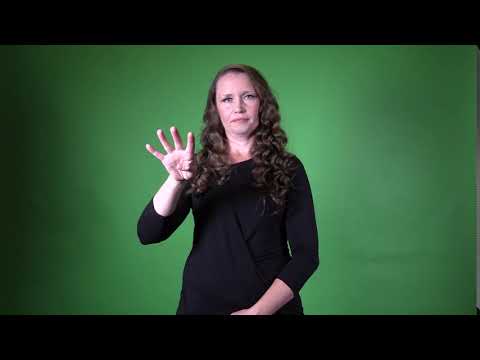
Sign for NUMBER 34 in ASL | 🔢 ASL Dictionary

Definition: Refers to the number thirty-four

Sign for NUMBER 34 in ASL 

YouTube player

Practice Activities:

To practice the sign for number 34 in ASL, start by repeatedly forming the numbers 3 and 4 in sequence. Hold up your dominant hand, forming the number 3 with the thumb, index, and middle fingers extended while the ring and pinky fingers are folded against the palm. Then smoothly transition to the number 4 by extending the ring finger while keeping the thumb tucked in. Repeat this alternation several times to build muscle memory.

Once you are comfortable forming the sign for number 34 in ASL, try incorporating it into real-world contexts. Count aloud in ASL from 30 to 40, emphasizing 34 as you pass through it. Challenge yourself by signing different numbers in the 30s out of order, ensuring that you can smoothly transition between them. This will improve flexibility in signing and enhance recall.

Use the sign for number 34 in ASL within sentences to strengthen understanding. Try signing phrases like “I am 34 years old,” “The class has 34 students,” or “I saw 34 birds in the park.” Practice saying the numbers silently in your head while signing them to reinforce comprehension. For an extra challenge, watch a friend sign various numbers and quickly identify them.

Engage in a number-sign relay game with a partner or group. One person signs a number, and the next person must sign the following number in sequence. When 34 appears, take note of its formation and ensure accuracy. Speed up over time to test fluency.

Finally, write down several situations where the sign for number 34 in ASL could be used, then try signing those complete thoughts without looking at your notes. Practicing in context strengthens recall and builds confidence in using ASL numbers naturally.

Cultural Context:

The sign for NUMBER 34 in ASL follows a specific pattern using the dominant hand. In American Sign Language, numbers are an essential part of communication, especially for expressing ages, addresses, and quantities. Learning the sign for NUMBER 34 in ASL helps improve fluency when discussing numerical values.

Numbers play a significant role in ASL and are often used in daily conversations. The sign for NUMBER 34 in ASL is created by smoothly transitioning between the digits 3 and 4. This movement needs to be fluid to ensure proper understanding.

In Deaf culture, numbers are often used in storytelling, sports discussions, and even name signs. The sign for NUMBER 34 in ASL may appear in discussions about sports jersey numbers, prices, or statistics. Practicing this sign helps improve number recognition and conversation skills.

American Sign Language relies on clear handshapes and movement to convey meaning. The sign for NUMBER 34 in ASL, like other number signs, follows standard ASL numerical rules. Consistent practice with number signs strengthens overall ASL comprehension and signing speed.

Using the correct handshape and movement for the sign for NUMBER 34 in ASL is important for clarity. ASL numbers follow a structured format, making it easier for signers to understand each other across different settings. Fluency with numbers enhances overall signing ability and communication effectiveness.

Deaf and hard-of-hearing individuals use numbers frequently in their daily interactions. The sign for NUMBER 34 in ASL can be useful in contexts such as phone numbers, receipts, or measuring quantities. Mastering number signs adds to a signer’s confidence in using ASL naturally.

Numbers in ASL are also used in educational settings and workplaces. The sign for NUMBER 34 in ASL, along with other numbers, is essential for math-related conversations, schedules, and financial transactions. Signing numbers accurately ensures smooth communication in both casual and professional environments.

Many ASL learners focus on number fluency early in their studies. The sign for NUMBER 34 in ASL is just one example of how numbers are signed in quick succession. Knowing how to sign numbers smoothly helps with both receptive and expressive skills.

Practicing the sign for NUMBER 34 in ASL regularly will build muscle memory and confidence. Watching native ASL signers use numbers in context aids in understanding natural number signing patterns. Exposure to ASL media, such as videos and live conversations, also enhances learning.

Mastering number signs

Extended Definition:

The sign for number 34 in ASL is a combination of the numbers 3 and 4, signed in sequence using one hand. This number is commonly used in everyday conversations, such as discussing age, addresses, or measurements. Understanding how to sign numbers correctly is essential for clear communication in ASL.

To sign number 34 in ASL, start by forming the number 3 with your dominant hand, with your thumb, index, and middle fingers extended. Then smoothly transition to the number 4, extending your four fingers while keeping the thumb tucked. This movement should be fluid to ensure clarity when signing.

Number signs in ASL follow a structured pattern, making it easy to communicate numerical concepts. Learning how to sign numbers like 34 helps in expressing dates, counting, and even discussing financial figures. Proper handshape and movement ensure the sign is understood correctly.

Signing numbers in ASL requires precision with finger positioning and transitions. The sign for number 34 in ASL is often used in sequences when signing addresses, phone numbers, or prices. Practicing number transitions will improve fluency and make communication more natural.

ASL numbers are an essential part of daily interactions, from telling time to giving directions. The sign for number 34 in ASL is a straightforward combination that follows the natural number sequence. Once learned, it can be easily incorporated into various conversations.

Learning the sign for number 34 in ASL enhances overall numerical fluency in sign language. Many ASL users rely on number signs to exchange information quickly and effectively. Mastering these numbers will help in both casual and professional interactions.

Consistency in signing numbers ensures clear messages between ASL users. The sign for number 34 in ASL follows the same numerical structure as other double-digit numbers. Practicing each number individually before combining them will help in achieving smoother transitions.

ASL numbers play a crucial role in communication, particularly in education, finance, and social settings. The sign for number 34 in ASL can be useful when discussing statistics, sports scores, or identification numbers. Understanding number signs contributes to greater fluency in ASL.

When learning ASL numbers, repetition and practice are key to retaining accuracy. The sign for number 34 in ASL is created by forming each digit clearly and transitioning smoothly. Watching native signers can help reinforce proper techniques and improve signing speed.

Mastering number signs allows for efficient communication within the Deaf and hard-of-hearing community

Synonyms: thirty-four, number thirty-four, number 34, the number 34, the number thirty-four

Educational resources: Find related learning materials in our course bank!

Want more? Check out some of our popular learning activities on the homepage!

Need to look up a sign? Use our highly rated dictionary: https://aslinteractive.com/best-asl-dictionary/

Follow us on tiktok: https://www.tiktok.com/@aslinteractive. More social media links at the bottom of this page!

Long-tail Keywords: what is the sign for number 34 in ASL, how do you sign number 34 in American Sign Language, learn how to sign number 34 in ASL

Categories: Numbers – Basics, Numbers 31-40, cardinal numbers

tags: Numbers 31-40, Numbers, Math, Educational, Language Learning

Parameters

*Handshape*:

The sign for NUMBER 34 in ASL uses a fluid movement between two number handshapes. First, the hand forms the number 3, with the thumb, index, and middle fingers extended while the other fingers remain folded. Then, the hand shifts into the number 4, extending all four fingers while the thumb remains tucked.

This transition between digits is smooth, ensuring clarity in numerical representation. The sign for NUMBER 34 in ASL should be performed with relaxed fingers and a steady wrist movement, maintaining proper hand positioning.

*Palm Orientation*:

The palm orientation for the sign for NUMBER 34 in ASL starts with the dominant hand facing outward with the index and middle fingers extended to form the number 3️⃣. Then, smoothly transition to the number 4️⃣ by extending the ring finger while maintaining the same outward palm orientation. Throughout the sign for NUMBER 34 in ASL, the hand remains in a natural position with fingers slightly curved, ensuring clear visibility for the viewer.

*Location*:

The sign for number 34 in ASL is made in the neutral space in front of the body, roughly around chest level. The hand remains in a comfortable position without touching the body or face. Because this is a number sign, the movement is clear and visible, ensuring easy recognition. Maintaining proper hand orientation is key for clarity when performing the sign for number 34 in ASL.

*Movement*:

To perform the sign for number 34 in ASL, form the number 3 handshape with your dominant hand, extending the thumb, index, and middle fingers. Then smoothly transition into the number 4 handshape by extending the ring finger while keeping the pinky down. The movement should flow naturally, with each handshape clearly visible. Keep the palm facing outward and maintain a steady, fluid motion to ensure clarity when signing the number 34 in ASL.

*Non-Manual Signals*:

When signing the sign for NUMBER 34 in ASL, maintain a neutral facial expression, as numbers generally do not require exaggerated non-manual signals. However, if the sign for NUMBER 34 in ASL is used in a specific context, such as listing items or providing an address, slightly raised eyebrows may indicate clarification. If you’re emphasizing the number, a slight nod or forward movement of the head can help convey importance.

*Prosody, Dominant/Non-Dominant Hand*:

The sign for number 34 in ASL uses the dominant hand, forming the numbers in sequence. Start with the number 3, with the thumb, index, and middle fingers extended while the ring and pinky fingers remain folded. Then smoothly transition to the number 4 by extending the ring finger while keeping the thumb tucked. The movement should be fluid, with a slight bounce or shift between the two digits to indicate the changing numbers clearly.

Tips for Beginners:

When learning the sign for NUMBER 34 in ASL, focus on forming the numbers clearly and fluidly. This sign involves smoothly transitioning between the number 3 and the number 4 with one hand. Make sure your fingers are in the correct position for each number to maintain accuracy.

A common mistake beginners make is not properly forming the numbers before transitioning. When showing the number 3, extend your thumb, index, and middle fingers while keeping the other fingers folded. Then, swiftly change to 4 by extending all four fingers except the thumb. Keeping your hand steady while transitioning will make the sign appear fluid.

Finger placement is crucial for the sign for NUMBER 34 in ASL, especially because similar handshapes can be confused with other numbers. Avoid curling your fingers too much or spreading them too far apart. Practicing in front of a mirror can help ensure your handshape is correct and clear.

Another important tip is to maintain appropriate facial expressions and eye contact when using numbers in ASL. While signing, your gaze should be natural and directed at the person you are communicating with. This helps maintain fluid conversation and shows confidence in your signing.

Consistency is key when mastering the sign for NUMBER 34 in ASL. Repeating the motion slowly at first and then increasing speed will build fluidity over time. Try signing different number combinations to strengthen your ability to transition between numbers smoothly.

Watching native signers or ASL videos can improve your accuracy. Pay attention to the way experienced signers transition between numbers and replicate their techniques. Regular practice will help you develop muscle memory, making it easier to sign numbers effortlessly in real conversations.

Connections to Other topics:

The sign for NUMBER 34 in ASL connects to the broader system of signing numbers, which follows consistent patterns based on handshape and repetition. The transition between 3 and 4 in this sign mirrors similar movements in other double-digit numbers, such as 23, 45, and 56. Understanding these numerical transitions helps learners develop dexterity and fluency when signing multi-digit numbers.

Number signs often appear in contexts related to counting, addresses, phone numbers, and mathematical concepts. Recognizing the pattern in the sign for NUMBER 34 in ASL improves the ability to quickly sign other two-digit numbers. This skill is essential for everyday communication, especially when providing numerical information in ASL conversations.

This number can also play a role in dates, sports jerseys, or quantities in various settings. When discussing historical events, sports teams, or scores, signers may need to use numbers fluidly within sentences. The ability to transition between numbers smoothly ensures clarity in communication, whether referring to player statistics or numbered lists.

In discussions of ranking, pricing, or sequences, using the sign for NUMBER 34 in ASL in conjunction with classifiers can add precision. For example, a signer might describe 34 items using a classifier for small objects or vehicles. This combination of numerical signs and classifiers enhances descriptive details and helps create a clearer visual representation of what is being communicated.

When learning numbers in ASL, practicing handshape control is crucial for accuracy. Since digits use specific palm orientations and movements, confusing similar numbers—such as 34 and 43—may lead to misunderstandings. Developing muscle memory for number sequencing ensures signers can convey numerical information accurately in everyday communication.

Summary:

The sign for NUMBER 34 in ASL involves a two-digit hand movement, forming the numbers sequentially. To sign it correctly, begin with the number 3 handshape, extending the thumb, index, and middle fingers while keeping the ring and pinky fingers curled. Then, smoothly transition into the number 4 handshape by extending the ring finger while keeping the thumb tucked against the palm.

This movement is fluid, with the transition occurring in a slight twisting motion of the wrist. The orientation of the hand typically faces outward, ensuring clarity for the viewer. The sign for NUMBER 34 in ASL follows the same principles as counting or expressing multidigit numbers with discrete but connected movements.

Numbers in ASL function differently than spoken numerals because they must be seen rather than heard. When conveying multidigit numbers like 34, signers must consider clarity and speed. The sequential shifting from one numeral to the next ensures an accurate representation, as opposed to blending them into a single gesture.

ASL incorporates number signs in various aspects of communication, including telling age, stating quantities, and expressing addresses or phone numbers. The sign for NUMBER 34 in ASL may arise in contexts involving age description, jersey numbers, and numerical references in casual conversations. When signed correctly, it ensures that numerical information is both understood and fluidly communicated.

Numbers in ASL are governed by linguistic and spatial rules, with certain gestures following a natural rhythm. Some number signs require more wrist movement, while others rely on finger dexterity. In the case of 34, the transition between handshapes must be clean to avoid ambiguity.

The placement of the sign within a sentence depends on grammatical context. For quantity-based expressions, the sign for NUMBER 34 in ASL may follow a noun, while in references like jersey numbers, it may appear at the end. Signers must adjust their pacing based on the surrounding sentence structure.

ASL prioritizes efficiency, and fluent signers often transition numbers quickly. However, clarity always takes precedence over speed. When signing numbers for new learners or in unfamiliar contexts, the shift between digits should be deliberate and well-formed.

Historical influences on ASL numerals stem from both French Sign Language (LSF) and naturally evolved American conventions. Early signers developed strategies for counting that allowed for distinct numeral representation. The sign for NUMBER 34 in ASL adheres to these foundational principles.

Numbers in sign language possess a visual rhythm that mimics spoken intonation patterns. The way a signer moves through digits conveys emphasis and intent. Emphasizing 34 outwardly rather than signing it too quickly ensures comprehension for others engaging in signed conversation.

ASL incorporates numerals into broader linguistic frameworks, where meaning often depends on context. The sign for NUMBER 34 in ASL may indicate a count, a sequence, or an identifier. Recognizing this variation allows signers to adapt based on the scenario at hand.

Cultural significance plays a role in numbering systems within ASL discourse. Some numbers carry connotations in Deaf culture, relating to historical events or community practices. While 34 itself may not have broad cultural weight, its use follows culturally established signing conventions.

Learning ASL numbers involves both memorization and smooth execution. Beginners often focus on mastering each number individually before integrating them into sequences. Practicing the sign for NUMBER 34 in ASL repeatedly ensures greater comfort in combining multiple digits.

Numbers in ASL often serve practical purposes in daily communication. From financial transactions to timekeeping, clear numerical expression is vital. Understanding how to form and transition between numbers like 34 strengthens overall ASL fluency.

In signed storytelling or descriptive signing, numbers sometimes emphasize important details. As stories unfold visually, numerical accuracy remains crucial. Skipping or misforming digits can alter meaning, making precision essential in the sign for NUMBER 34 in ASL.

ASL syntax differs from English in how numbers are often used. Instead of embedding them into phrases with prepositions, ASL places them more spatially. Facial expressions and body positioning also influence how numbers such as 34 are interpreted.

In educational settings, ASL students frequently practice number sequences for mastery. Exercises in counting, age representation, and metric expressions help reinforce fluency. The sign for NUMBER 34 in ASL fits into larger learning frameworks aimed at numerical competency.

Regional variation may sometimes influence number signing, though 34 typically remains consistent. Some minor differences in finger positioning or movement speed can occur, particularly among different ASL communities. Despite this, the core structure of the sign remains widely understood.

ASL users often rely on repetition to ensure clarity in numbers. When signing crucial figures like scores or statistics, restating the number may prevent miscommunication. The sign for NUMBER 34 in ASL benefits from slight pauses to confirm accuracy in certain contexts.

Technology plays a role in enhancing number signs within ASL-based digital communication. Video

Want more? Check out some of our popular learning activities!

ASL Interactive Resources

ASLInteractive YouTube Channel

Follow us on tiktok: @aslinteractive.com

Follow us on Instagram: aslinteractive

Facebook page: aslinteractive

Facebook group: aslinteractive

LInkedIn: ASL Interactive LLC

Twitter: @ASL_interactive

*Some information on this page is AI-generated. AI can make mistakes. Please check the information.

Sign for THIRTY-FOUR in ASL, Sign for NUMBER THIRTY-FOUR in ASL, Sign for THE NUMBER THIRTY-FOUR in ASL, Sign for THE NUMBER 34 in ASL, Sign for NUMBER 34 in ASL 

Responses