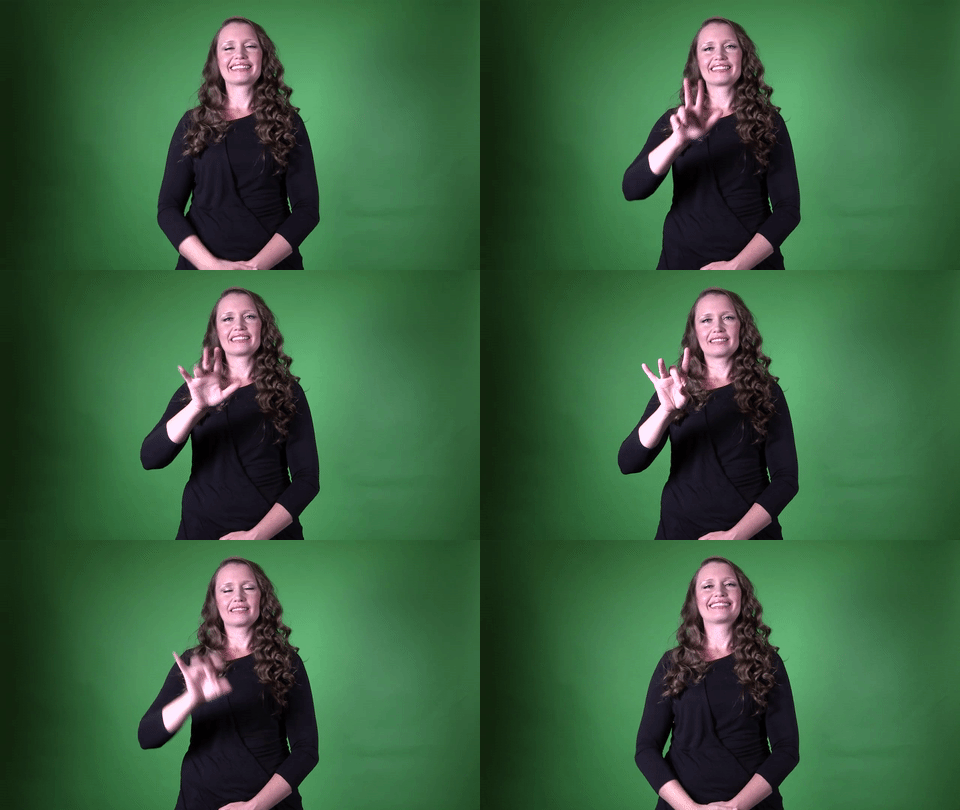
Sign for NUMBER 38 in ASL | 🔢 ASL Dictionary

Definition: Refers to the number thirty-eight

Sign for NUMBER 38 in ASL 

YouTube player

Practice Activities:

Practicing the sign for number 38 in ASL can help build fluency with number recognition and signing accuracy. Start by holding your dominant hand in a “3” handshape, then transition into an “8” handshape smoothly. Repeat this movement multiple times, paying attention to hand positioning and the fluid change between numbers.

To reinforce understanding, practice signing different numbers before and after 38 to see how they relate. Sign numbers 35 through 40 in sequence, making sure each transition is clear and distinct. Use a mirror to check hand formation and movement accuracy.

Try using the sign for number 38 in ASL within sentences. For example, sign “I have 38 books” or “She is 38 years old.” Practice quantity-related phrases like “38 dollars” or “38 minutes” to build flexibility in usage. Challenge yourself by converting written numbers into ASL signs without looking at references.

Engage in a timed signing activity with a partner or a group. One person fingerspells a two-digit number while the other signs it in ASL. Switch roles and focus on speed and accuracy. You can also quiz each other by writing down numbers and signing them back and forth.

Use real-life applications to master the format of the sign for number 38 in ASL. For instance, look at receipts, sports scores, or calendar dates that contain 38, then sign the number out loud. Create a short story that includes the number 38, incorporating details like “The house number was 38” or “38 students attended the event.”

For an advanced challenge, incorporate fingerspelling and numbers together in a sentence. Fingerspell a name followed by the number 38 to simulate real-world communication, such as signing an address or sports jersey number. These exercises will help reinforce recall, accuracy, and speed with the number.

Cultural Context:

The sign for number 38 in ASL is an essential part of communicating numbers in American Sign Language. Numbers play a significant role in daily conversations, including expressing ages, quantities, addresses, and important dates. Learning the sign for number 38 in ASL helps improve fluency and understanding of numerical sequences in signed communication.

Numbers in ASL follow a consistent system, but some numbers require specific handshapes and movements to be signed correctly. The sign for number 38 in ASL involves a unique transition between two digits, making it important to practice finger dexterity. Mastering this sign ensures clear communication, especially when discussing things like prices or measurements.

In the Deaf community, numbers are commonly used in discussions about time, dates, and addresses. The sign for number 38 in ASL can also be essential in sports scores, business transactions, or math-related topics. Understanding ASL numbers enhances interactions and allows for more natural conversations within the Deaf and signing communities.

Using the correct handshape and motion is key when signing numbers. The sign for number 38 in ASL follows a pattern similar to other double-digit numbers, smoothly shifting from three to eight. This movement should be fluid to maintain clarity and avoid confusion with similar-looking numbers.

ASL numbers are used in educational settings, workplaces, and everyday conversations. Whether discussing a jersey number, a highway route, or an age, the sign for number 38 in ASL is essential in making messages clear. Practicing numbers frequently helps build confidence and improves overall signing skills.

Facial expressions and context can influence the way numbers are perceived in ASL. When signing the sign for number 38 in ASL, making eye contact and ensuring a steady hand movement helps maintain accuracy. Using proper technique enhances understanding, reducing the chances of miscommunication.

ASL is a visual language that relies on motion and space to convey meanings effectively. The sign for number 38 in ASL is a fundamental part of numerical communication, reinforcing the importance of clear and precise hand movements. Signing numbers correctly enables smoother conversations and better comprehension in ASL discussions.

The ability to sign numbers fluently contributes to stronger communication skills in ASL. Knowing the sign for number 38 in ASL is useful in various settings, from casual conversations to professional environments. Learning and practicing numbers can greatly enhance your signing vocabulary and overall confidence in ASL.

Numbers connect people across different communities and cultures, making them a crucial part of language

Extended Definition:

The sign for number 38 in ASL is a combination of the digits 3 and 8, smoothly transitioning from one to the other. It follows the standard numbering pattern in American Sign Language, where numbers are signed in a fluid motion. Mastering number signs like 38 is essential for expressing numerical values accurately in ASL.

To sign number 38 in ASL, start by forming the number 3 with your dominant hand, then smoothly transition to the number 8. This requires controlled hand movement and proper finger positioning. Practicing in front of a mirror can help improve the fluidity of the motion.

Number signs in ASL use a structured format that makes it easy to transition between different digits. The sign for number 38 in ASL follows the same principle, making it easier for fluent signers to communicate numbers quickly. This approach maintains clarity and reduces confusion when signing numerical values.

Using ASL numbers correctly is crucial for conversations related to dates, addresses, and basic math. Signing 38 clearly ensures that the viewer understands the intended number without hesitation. Accuracy in signing numbers is especially important in professional or educational settings.

The sign for number 38 in ASL also teaches valuable hand coordination skills. Since ASL relies heavily on handshapes and movement, developing precision in signing numbers can improve overall fluency. Practicing frequently will help build confidence and natural rhythm in signing.

When signing large numbers, it’s important to follow the correct numerical sequence. The sign for number 38 in ASL is part of a larger set of essential number signs that help with everyday communication. Learning these signs enhances a signer’s ability to convey numerical information smoothly.

ASL numbers, including 38, are widely used in different contexts, including sports, measurements, and prices. Knowing how to sign specific numbers correctly reduces miscommunication. It allows signers to participate in a variety of numeric discussions fluidly.

Some regional differences exist in ASL number signs, though the sign for number 38 in ASL is generally consistent across signing communities. Exposure to different signers can help reinforce understanding and ensure accuracy. Watching experienced ASL users sign numbers can be beneficial for learning.

Finger dexterity plays a key role in signing clear and precise numbers. The sign for number 38 in ASL helps build hand flexibility, which is useful for mastering other ASL vocabulary. Strengthening hand coordination improves overall signing ability and ease of communication.

In ASL, number

Synonyms: thirty-eight, number thirty-eight, number 38, the number 38, the number thirty-eight

Educational resources: Find related learning materials in our course bank!

Want more? Check out some of our popular learning activities on the homepage!

Need to look up a sign? Use our highly rated dictionary: https://aslinteractive.com/best-asl-dictionary/

Follow us on tiktok: https://www.tiktok.com/@aslinteractive. More social media links at the bottom of this page!

Long-tail Keywords: what is the sign for number 38 in ASL, how to sign number 38 in American Sign Language, ASL sign for number 38

Categories: Numbers – Basics, Numbers 31-40, cardinal numbers

tags: Numbers 31-40, Numbers, Math, Educational, Language Learning

Parameters

*Handshape*:

The sign for NUMBER 38 in ASL uses a transitioning handshape. It starts with the number 3, where the index and middle fingers extend while the thumb is out to the side, and then shifts to the number 8, where the thumb touches the tip of the middle finger. This smooth transition creates a fluid movement between numbers in ASL. The sign for NUMBER 38 in ASL is part of the standard numbering system used in sign language.

*Palm Orientation*:

The palm orientation for the sign for NUMBER 38 in ASL starts with the palm facing outward as the hand transitions between the shapes for “3” and “8.” The index, middle, and thumb are extended for “3,” then the gesture shifts as the middle finger and thumb touch for “8.” Throughout the motion, the palm maintains a general outward or slightly angled orientation to ensure clarity for the viewer.

*Location*:

The sign for number 38 in ASL is produced in the neutral space in front of the signer’s body, slightly above waist level. The hand moves fluidly as it alternates between the digits 3 and 8. This location allows for clear visibility when signing numbers in a sequence or independently.

*Movement*:

To produce the sign for number 38 in ASL, start with the number 3 handshape, where the index, middle, and thumb are extended while the ring and pinky fingers are curled down. Quickly shift into the number 8 handshape by bringing the thumb and middle finger together while the index finger lowers. The transition between the digits should be fluid, creating a smooth switch from 3️⃣ to 8️⃣. Keep the movement steady and controlled.

*Non-Manual Signals*:

When producing the sign for number 38 in ASL, the facial expression remains neutral, with relaxed eyebrows and a natural gaze. The mouth may stay slightly open or closed without exaggerated movement since the focus is on the handshape. If using the sign for number 38 in ASL within a sentence, slight head movements or a nod can indicate emphasis or clarification. Keeping a calm and steady expression ensures clarity while signing.

*Prosody, Dominant/Non-Dominant Hand*:

The sign for number 38 in ASL uses the dominant hand, forming the number 3 with the index, middle, and thumb extended, while the ring and pinky fingers are curled in. The hand then transitions smoothly into the number 8 by bringing the thumb and middle finger together. This movement is quick and fluid, maintaining a natural flow between the two numbers. The non-dominant hand is not used in this sign.

Tips for Beginners:

When learning the sign for NUMBER 38 in ASL, focus on hand positioning and movement. Start with the number 3 handshape, where the index, middle, and thumb are extended while the ring and pinky fingers are folded down. Transition smoothly to the number 8 handshape by folding the middle finger to touch the thumb while the index finger remains extended. This shift should be fluid and practiced consistently for accuracy.

A common mistake beginners make is tensing their fingers too much, causing a jerky transition between numbers. Keep your hand relaxed to ensure a natural and smooth motion. Another mistake is positioning the hand too high or too low; keep it comfortably in front of the chest within the signing space. Practicing with a relaxed hand prevents strain and improves muscle memory.

Repetition is key when mastering the sign for NUMBER 38 in ASL. Try signing the number slowly at first, then gradually increase speed while maintaining clarity. Using a mirror can help you check your handshape transitions and make adjustments as needed. You can also record yourself signing to compare with reference videos.

Finger dexterity is important for transitioning between numbers smoothly. Strengthen your fingers by stretching them before practice and doing finger exercises like tapping each fingertip to your thumb. Consistent finger exercises will improve flexibility, making it easier to form the correct handshapes.

Context is essential when using the sign for NUMBER 38 in ASL. Practicing with real-life numerical scenarios, such as giving an address or discussing an age, will help reinforce the sign naturally. Signing common numbers frequently will make recall easier in conversations. Engaging with native signers or signing with friends can boost confidence and fluency.

Connections to Other topics:

The sign for NUMBER 38 in ASL is part of the number system in American Sign Language, which follows a structured pattern for numbers with specific handshapes and movements. Learning this sign helps reinforce the patterns used in counting, particularly numbers in the 30s that follow a similar palm orientation and movement. Recognizing this structure makes it easier to learn other numbers and helps with fluent numeric communication in ASL.

Understanding the sign for NUMBER 38 in ASL connects to concepts like age, money, and measurements, which all frequently use numbers. Many numerical signs in ASL are incorporated into more complex expressions, such as dates, addresses, or mathematical concepts. By practicing this number, learners can also build confidence using other numerical expressions, such as sequencing events or indicating quantities.

In ASL, some numbers are used in compound signs, such as time-related signs like “3:08,” which combines the number sign for 38 with the sign for time. Additionally, money signs incorporate numbers, like “$38,” where the dollar sign often follows numerical patterns. Mastering number signs allows for smoother communication of price, statistics, and other data-driven conversations in everyday ASL interactions.

Ordinal numbers, such as “38th,” adapt the sign by modifying movement to indicate ranking or order. This is useful when discussing sports rankings, contest placements, or historical dates. The consistency in handshape progression for numbers in the 30s ensures that once a learner is comfortable with the pattern, picking up related signs becomes easier. By practicing the sign for NUMBER 38 in ASL, learners strengthen their understanding of numerical systems and improve fluency in various practical applications.

Summary:

The sign for NUMBER 38 in ASL follows a numerical handshape pattern that incorporates both the number 3 and the number 8. This numerical sequencing is visually clear and follows the conventional number transition in ASL. The handshape starts with the number 3, with the index, middle finger, and thumb extended, while the ring and pinky fingers are curled down.

To transition to 8, the middle finger moves to touch the thumb while the index finger remains extended. This movement happens smoothly and naturally, reflecting the linguistic efficiency of ASL numbering. The switch follows a fluid wrist motion, making the number 38 distinct yet consistent within ASL’s numerical system.

ASL numbering follows a structured pattern where movements and transitions remain consistent across numbers. The sign for NUMBER 38 in ASL adheres to this logic, making it easy to recognize and integrate into broader conversations. Its position in numerical sequences allows for rapid comprehension within an ASL conversation.

Numbers in ASL are highly visual and function both independently and as part of larger numerical expressions. The sign for NUMBER 38 in ASL can appear in lists, age indicators, monetary values, and sequences when counting. It retains clarity because ASL numbers emphasize distinct handshapes and precise transitions.

Linguistically, ASL numbers showcase morphological structure by blending individual numerals into compound numerical phrases. In this case, 38 transitions smoothly, which is in line with typical ASL numerical morphology. The number sign embodies the economy of movement found in ASL’s numerical system.

Culturally, numbers in ASL play an essential role in structuring concepts such as dates, addresses, rankings, and sports scores. The sign for NUMBER 38 in ASL might appear in a discussion about statistics, player jersey numbers, or academic scores. Because Deaf culture places importance on clear visual information, numbers within ASL are crucial for accessibility.

Number signs in ASL can also carry symbolic meanings when used in cultural references, historical contexts, or community traditions. The sign for NUMBER 38 in ASL could reference a historical event, a classroom number, or an important age. Depending on the context, numbers can take on deeper meanings within the Deaf community.

Comparing ASL numbers to other sign languages shows both similarities and differences in number representation. The sign for NUMBER 38 in ASL would differ from similar signs in British Sign Language (BSL) or French Sign Language (LSF) due to unique number-modifying movements. However, ASL’s base-10 system allows for logical numerical consistency.

Grammar rules dictate that numbers in ASL may be signed with different orientations depending on their context. The sign for NUMBER 38 in ASL may appear in an upright position for enumeration but may shift slightly in digit-based expressions like times and prices. These subtleties in ASL number grammar contribute to the language’s fluidity.

The cognitive load involved in processing numbers in ASL shows how the brain handles numerical handshapes versus spoken or written numbers. The sign for NUMBER 38 in ASL engages spatial processing, visual recognition, and motor execution. This demonstrates how deeply ASL is integrated into the brain’s cognitive processing of signs.

For beginners learning ASL, numbers sometimes pose an initial challenge due to quick handshape transitions. Practicing the sign for NUMBER 38 in ASL in slow repetition helps reinforce motor accuracy and visual memorization. Over time, signers build fluency with numerical sequences through repetitive use.

Numbers are frequently combined with classifiers to express measurements, quantities, or rankings within ASL. The sign for NUMBER 38 in ASL might pair with a classifier to indicate 38 items, 38 dollars, or a ranking position. Such combinations enhance ASL’s succinct and visually expressive nature.

When discussing historical milestones, sports scores, or demographic statistics, numbers in ASL convey precise information efficiently. The sign for NUMBER 38 in ASL could denote an important historical year or be referenced in a numerical trend. ASL users depend on crisp, accurate representations of numbers to provide factual information quickly.

Context often determines the placement and repetition of number signs. The sign for NUMBER 38 in ASL might be signed with emphasis in important numerical data but signed more casually in everyday counting. Emphasis in ASL includes slight hand movements, pausing, or repetition to reinforce meaning.

Numbers can be incorporated into storytelling, poetry, or jokes within ASL. The sign for NUMBER 38 in ASL might appear in a numerical pun or as part of a sequential narrative. Since ASL is a fully visual language, numbers add a layer of expressiveness that aids in storytelling.

Historical linguistics shows how number signs have evolved over time in ASL. Early numeric representations may have differed slightly from the modern sign for NUMBER 38 in ASL due to standardization efforts. As ASL has developed, number signs have become more fluid and widely accepted in their present forms.

The sign for NUMBER 38

Want more? Check out some of our popular learning activities!

ASL Interactive Resources

ASLInteractive YouTube Channel

Follow us on tiktok: @aslinteractive.com

Follow us on Instagram: aslinteractive

Facebook page: aslinteractive

Facebook group: aslinteractive

LInkedIn: ASL Interactive LLC

Twitter: @ASL_interactive

*Some information on this page is AI-generated. AI can make mistakes. Please check the information.

Sign for 38 in ASL, Sign for NUMBER 38 in ASL 

Responses