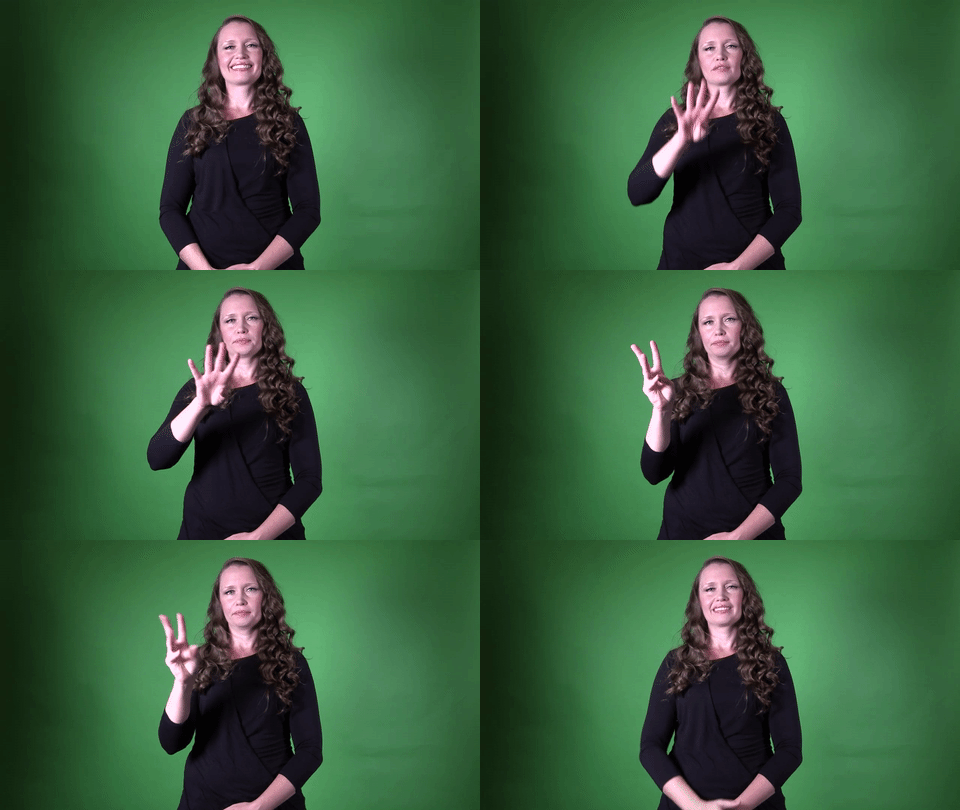
Definition: Refers to the number forty-six
Sign for NUMBER 46 in ASL

Practice Activities:
To practice the sign for number 46 in ASL, start by repeatedly forming the number in isolation. Focus on the transition between “4” and “6,” ensuring clear handshape changes. Repeat this motion 10–15 times while watching yourself in a mirror to check accuracy.
Next, incorporate the sign for number 46 in ASL into simple sentences. Practice saying “I have 46 books” or “There are 46 students in the class” while signing. Emphasize smooth transitions and proper palm orientation. Try signing different number-related phrases, changing the context each time.
For a fun challenge, have a partner say a number between 40 and 50, and quickly sign it. Pay special attention to distinguishing similar numbers like 45 and 46. Then, reverse roles and call out numbers for your partner to sign. This will help build accuracy and fluency.
Create a short story that includes the sign for number 46 in ASL. For example, tell a story about a birthday celebration where someone turns 46 years old. Incorporate other related signs like “birthday,” “candles,” and “celebrate” to add context. Practice telling the story smoothly and naturally.
Use flashcards with different numbers written on them. Shuffle them and sign each number as quickly as possible, focusing on keeping transitions fluid. Time yourself to gradually increase speed while maintaining clarity. This will reinforce number recognition and signing efficiency.
Try real-world applications by looking for the number 46 in your daily life, such as on street signs, receipts, or books. Each time you spot it, pause and sign it correctly. Practicing in real situations makes learning more engaging and memorable.
Record yourself signing the number then watch the video to check for accuracy. Compare it to fluent signers online, adjusting movements as needed. Consistent practice will improve your confidence and precision with the sign for number 46 in ASL.
Cultural Context:
The sign for NUMBER 46 in ASL is part of the number system used in American Sign Language. In ASL, numbers are signed using specific handshapes and movements that make counting and numerical communication clear and efficient. The distinct motion and positioning of the fingers allow deaf and hard-of-hearing individuals to convey exact numerical values with ease.
Understanding the sign for NUMBER 46 in ASL is essential for fluent communication in various contexts. Whether discussing prices, addresses, ages, or statistics, numbers play a crucial role in everyday interactions. Learning the correct handshape and movement ensures accuracy and prevents confusion.
ASL numbers follow a general pattern, but certain numbers, including the sign for NUMBER 46 in ASL, may have unique movements. These signs need to be practiced regularly to develop fluency in signing numbers smoothly and naturally. Mastering number signs helps improve overall ASL proficiency and comprehension.
Numbers are frequently used in ASL storytelling, games, and education. The sign for NUMBER 46 in ASL can appear in classroom settings, business discussions, and personal conversations. Having a strong grasp of numbers strengthens communication skills and enhances understanding in various social situations.
Using ASL numbers correctly ensures clarity in signing important details like addresses, phone numbers, and mathematical equations. The sign for NUMBER 46 in ASL follows ASL conventions, making it easily recognizable to fluent signers. Consistent practice with number signs improves speed and accuracy in ASL conversations.
Many ASL learners focus on improving their number skills alongside fingerspelling and common phrases. The sign for NUMBER 46 in ASL is one of many numbers that must be memorized to communicate effectively in sign language. Since ASL is a visual language, practicing numbers in front of a mirror or with a partner helps reinforce correct signing techniques.
In deaf culture, numbers often come up in discussions about history, sports, and statistics. The sign for NUMBER 46 in ASL might appear when talking about significant events, jersey numbers, or numerical references in daily life. Having a strong foundation in signing numbers allows for more engaging and meaningful conversations.
ASL incorporates numerical signs seamlessly into everyday dialogue. The sign for NUMBER 46 in ASL is commonly used in schedules, addresses, and financial transactions. Learning number signs enhances overall ASL understanding and helps signers express numerical values clearly.
Teachers, students, and interpreters frequently encounter number signs in educational and professional settings. The sign for NUMBER 46
Extended Definition:
The sign for number 46 in ASL is a combination of the signs for 4 and 6. It is produced using one fluid motion to transition between the two numbers. This movement helps maintain the natural flow of signing numbers in American Sign Language.
When signing the number 46 in ASL, the handshape starts with the number 4, then transitions to the number 6. The fingers move smoothly to ensure clarity and accuracy. It’s important to keep the hand steady and use the proper orientation.
Number signs in ASL follow a consistent pattern to make them easy to understand. The sign for number 46 in ASL follows the standard number system used in the language. Learning to sign numbers correctly helps improve fluency and comprehension.
American Sign Language relies on handshapes and movements for clear communication. The sign for number 46 in ASL is used in everyday situations, such as counting, giving addresses, and talking about quantities. Knowing how to sign numbers accurately is essential for effective conversations.
Finger spelling and number signs each have specific handshapes and movements. The sign for number 46 in ASL follows these handshape rules to ensure clarity. Practicing these movements regularly helps build confidence in using numbers in sign language.
Consistent handshapes and smooth transitions are key to signing numbers correctly. The sign for number 46 in ASL should be performed with a steady hand and clear transitions. Watching native signers and practicing with videos can help improve accuracy.
Numbers play a significant role in daily conversations in American Sign Language. The sign for number 46 in ASL is useful in various situations, from discussing numbers in a classroom to providing information in a conversation. Mastering number signs enhances overall signing skills.
Maintaining proper hand position improves communication in ASL. The sign for number 46 in ASL requires careful finger positioning to distinguish it from other numbers. Paying attention to handshape and movement ensures that the sign is clear and correct.
Learning number signs, including the sign for number 46 in ASL, is important for anyone using ASL regularly. Understanding numerical sequences helps with everyday interactions, such as telling time, listing items, or discussing prices. Practicing these signs frequently makes them easier to remember.
Using the correct hand orientation prevents misunderstandings. The sign for number 46 in ASL should be performed with the palm facing outward for clarity. Proper hand orientation ensures that the number is understood accurately by others.
Synonyms: forty-six, number forty-six, number 46, the number 46, the number forty-six
Educational resources: Find related learning materials in our course bank!
Want more? Check out some of our popular learning activities on the homepage!
Need to look up a sign? Use our highly rated dictionary: https://aslinteractive.com/best-asl-dictionary/
Follow us on tiktok: https://www.tiktok.com/@aslinteractive. More social media links at the bottom of this page!
Long-tail Keywords: what is the sign for 46 in ASL, how do you sign 46 in American Sign Language, learn how to sign 46 in ASL
Categories: Numbers – Basics, Numbers 41-50, cardinal numbers
tags: Numbers 41-50, Numbers, Math, Educational, Language Learning
Parameters
*Handshape*:
The sign for NUMBER 46 in ASL uses a shifting handshape. Begin with the number 4 handshape, where the palm faces out and the four fingers extend while the thumb remains tucked. Then smoothly transition into the number 6, bringing the pinky and thumb together while the other three fingers remain extended.
This motion should be fluid and natural, ensuring that the transition from 4 to 6 is clear. The sign for NUMBER 46 in ASL relies on precision in finger positions to distinguish it from similar numbers. Keep your movements controlled and avoid unnecessary gestures for clarity.
*Palm Orientation*:
The palm orientation for the sign for NUMBER 46 in ASL changes as you transition between the digits. Start with the palm facing outward in a slightly relaxed position for “4,” with the index, middle, ring, and pinky fingers extended while the thumb remains tucked. As you switch to “6,” bring the pinky and thumb together while the other fingers fold down, maintaining a natural outward-facing palm. This transition should be smooth, keeping the hand steady and controlled.
*Location*:
The sign for number 46 in ASL is formed in the neutral signing space in front of the chest. The dominant hand begins in the number 4 handshape with the palm facing outward and transitions to the number 6 handshape by tucking the ring finger while extending the pinky. This movement occurs smoothly within the space in front of the torso, ensuring clear visibility of each numeral in the sequence.
*Movement*:
To make the sign for number 46 in ASL, begin by forming the number 4 with your dominant hand—extend the four fingers while keeping the thumb tucked in. Then, smoothly transition to the number 6 by touching the pinky finger to your thumb while the other fingers remain extended. This movement should be fluid yet distinct, ensuring a clear formation of each number. Maintain a steady hand position and refrain from unnecessary motion.
*Non-Manual Signals*:
When signing the sign for number 46 in ASL, maintain a neutral or slightly focused facial expression. Your eyes should follow your hand to ensure clarity, especially if signing in a teaching or instructional setting. Slight eyebrow movement may occur naturally but should remain relaxed unless emphasizing or questioning. The mouth can remain neutral, or a slight whisper of the numbers may be present for added reinforcement.
*Prosody, Dominant/Non-Dominant Hand*:
The sign for number 46 in ASL uses the dominant hand. Start with the number 4 handshape , with the palm facing outward. Then smoothly transition into the number 6 handshape by folding the ring and middle fingers down while the pinky and thumb touch. This movement should be fluid to indicate the numerical sequence without pausing. The non-dominant hand is not used in this sign.
Tips for Beginners:
Mastering the sign for NUMBER 46 in ASL requires smooth transitions between the two numbers. To correctly sign it, start by forming the number 4 with your dominant hand, then smoothly transition into the number 6. The shift between numbers should be fluid, so practice slowly at first and then gradually increase your speed as you become more comfortable.
One common mistake beginners make when signing the sign for NUMBER 46 in ASL is hesitating or pausing between the two numbers. This can make the sign unclear or difficult to recognize. To avoid this, focus on keeping your hand in a steady position while transitioning between the numbers. Practice in front of a mirror to ensure your fingers are correctly positioned.
Pay attention to finger positioning, especially when forming the number 6. Make sure that your thumb and pinky touch clearly without any fingers accidentally curling. If your fingers are stiff, try stretching your hands before practice to improve flexibility. Hand clarity is essential, especially when signing numbers, as small changes can alter the meaning.
Try practicing with number sequences that include 46 to build fluency. For example, practice signing 45, 46, and 47 in a row to strengthen your transitions. Repetition will help solidify the movement, making it more natural. Eventually, your recall speed will improve, helping you sign this number effortlessly in conversations.
When signing the sign for NUMBER 46 in ASL in real-life situations, be mindful of your signing space. Keep your hand at chest level and avoid unnecessary movements. This ensures clear visibility for your conversation partner, making the sign easier to understand. Stay relaxed, and most importantly, enjoy the learning process!
Connections to Other topics:
The sign for NUMBER 46 in ASL connects to numbering patterns in American Sign Language. ASL uses a structured system for forming numbers, often shifting handshapes in a fluid motion. The pattern for signing numbers in the 40s involves a quick transition between two number handshapes, emphasizing ASL’s efficiency and visual clarity. Understanding this numbering system helps with counting sequences, addresses, and other numerical expressions.
Numbers in ASL frequently appear in combination with other signs. The sign for NUMBER 46 in ASL might be used when discussing sports jersey numbers, years, or counting objects. In mathematical contexts, the ability to sign numbers clearly is essential for discussions about addition, subtraction, or measurements. Recognizing number patterns enhances fluency and speeds up comprehension in conversations.
Ordinal numbers connect closely with cardinal numbers in ASL. The sign for NUMBER 46 in ASL can be modified into an ordinal form by adding a slight twisting motion. This distinction helps when discussing ranking, such as “46th place” in a race or a competition. Learning ordinal transformations helps signers navigate sequences and order-specific references more efficiently.
ASL classifiers often incorporate numbers to describe precise details. The sign for NUMBER 46 in ASL could be used in a classifier construction to indicate a numbered item, such as a highway exit or a numbered uniform. Many classifiers include number handshapes to convey distances, measurements, or groupings, adding depth to signed descriptions. Mastering number-related classifiers enhances spatial reasoning within ASL.
Fingerspelling often supplements number signs in specific contexts. The sign for NUMBER 46 in ASL may accompany a fingerspelled abbreviation, such as “Route 46 (FS)” or “Flight 46 (FS).” Combining fingerspelling with number signs creates clarity when discussing proper nouns or specific identifiers. This integration of numbering and spelling improves signing accuracy and precision.
Summary:
The sign for number 46 in ASL follows a standard numerical pattern used in American Sign Language. It is a combination of the numbers 4 and 6, signed sequentially with a smooth transition between them. This transition is crucial in maintaining fluency and clarity in numerical expression.
To begin, form the number 4 by extending the index, middle, ring, and pinky fingers while keeping the thumb tucked against the palm. Make sure to maintain clear separation between the fingers to distinguish it from similar signs. Keep the hand in a neutral position, palm facing outward.
Next, transition smoothly into the number 6 by touching the tip of the pinky and thumb together while the other three fingers remain extended. The transition should be fluid rather than choppy, ensuring natural movement. This type of sequential numbering is common in ASL and is used for various numerical expressions.
The sign for number 46 in ASL is useful in various contexts, including counting, making lists, referencing statistics, and discussing ages or addresses. Because numbers play a major role in daily communication, mastering these sequences is crucial for signing fluidly. Consistency in form and movement prevents misunderstandings.
In ASL, number sequences can take on different meanings depending on context. For example, number 46 could refer to a jersey number, a highway, or an age. When specifying these meanings, additional signs or contextual facial expressions help clarify intent.
ASL numbers follow grammatical structures that differ from English. Unlike spoken language, which relies on vocal inflection, ASL expresses distinctions through facial expressions, transitions, and spatial placement. Consistent and smooth number articulation helps maintain the rhythm of conversation.
Numbers in ASL often incorporate classifiers when describing amounts, rankings, or quantities. While individual numbers like 46 are signed separately, they can combine with classifiers to show size, weight, or position. This versatility makes ASL a visually rich language.
The sign for number 46 in ASL maintains the typical positioning of numerical signs, starting from a neutral space in front of the signer’s chest. Movement is minimal, only enough to transition smoothly between the digits. A steady hand position ensures clarity.
Numerical precision is critical in ASL, as misformed numbers may lead to confusion. In fast-paced signing, slight shifts in handshape can lead to incorrect interpretations. This is why signers are trained to enunciate numbers diligently.
The use of numbers in ASL extends beyond listing and counting. Signers also apply numbers in ranking, ordering events, and providing directions. The sign for number 46 in ASL can serve any of these functions, depending on the sentence structure.
Numbers in ASL are sometimes modified depending on their role in a sentence. For example, when giving a phone number, numbers are signed separately and deliberately. In contrast, when mentioning an age, the number may originate from the chin in an age-specific movement.
Cultural references can also influence how numbers are perceived in ASL. Certain numbers may hold significance in different communities, such as lucky or unlucky numbers. While 46 does not have widely known symbolic meaning, it may be significant in specific contexts like sports or history.
Because number signs are so commonly used, they are some of the first signs taught to ASL learners. Mastery of numbers provides a foundation for expanding into time-related vocabulary, financial conversations, and mathematical discussions. The sign for number 46 in ASL fits into this broader learning framework.
Numbers are often combined with ordinal indicators in ASL, such as first, second, or third. While the number 46 is often used for general counting, it could also indicate a position if accompanied by an ordinal marker. This subtle change in movement alters its function.
Hand positioning plays an essential role in numerical signing. If the fingers are not properly extended or the transition between 4 and 6 is unclear, the meaning can be distorted. Proper dexterity and finger flexibility enhance accuracy in conveying numbers.
Numbers in ASL are rooted in historical linguistic evolution. Early versions of sign language incorporated numerical gestures that evolved into structured numerical systems. The number 46 follows the modern ASL numerical sequence designed for clarity.
ASL incorporates numerical expressions in storytelling, narration, academic settings, and casual conversation. Numbers often accompany classifiers to describe dimensions, quantities, or patterns. The sign for number 46 in ASL can be part of a broader numerical framework in communication.
Numerical literacy in ASL is essential for education settings, workplace communication, and everyday interactions. Many academic fields use numbers extensively, such as mathematics, science, and business. Mastering numerical expressions like 46 ensures effective communication in professional and educational contexts.
Sports discussions frequently include numbers to reference scores, players, or statistics. A jersey with the number 46 would be signed clearly enough to avoid confusion with similar numbers. Precision in signing sports-related numbers enhances discussions about teams and
Want more? Check out some of our popular learning activities!
ASL Interactive Resources
ASLInteractive YouTube Channel
Follow us on tiktok: @aslinteractive.com
Follow us on Instagram: aslinteractive
Facebook page: aslinteractive
Facebook group: aslinteractive
LInkedIn: ASL Interactive LLC
Twitter: @ASL_interactive
*Some information on this page is AI-generated. AI can make mistakes. Please check the information.


Responses