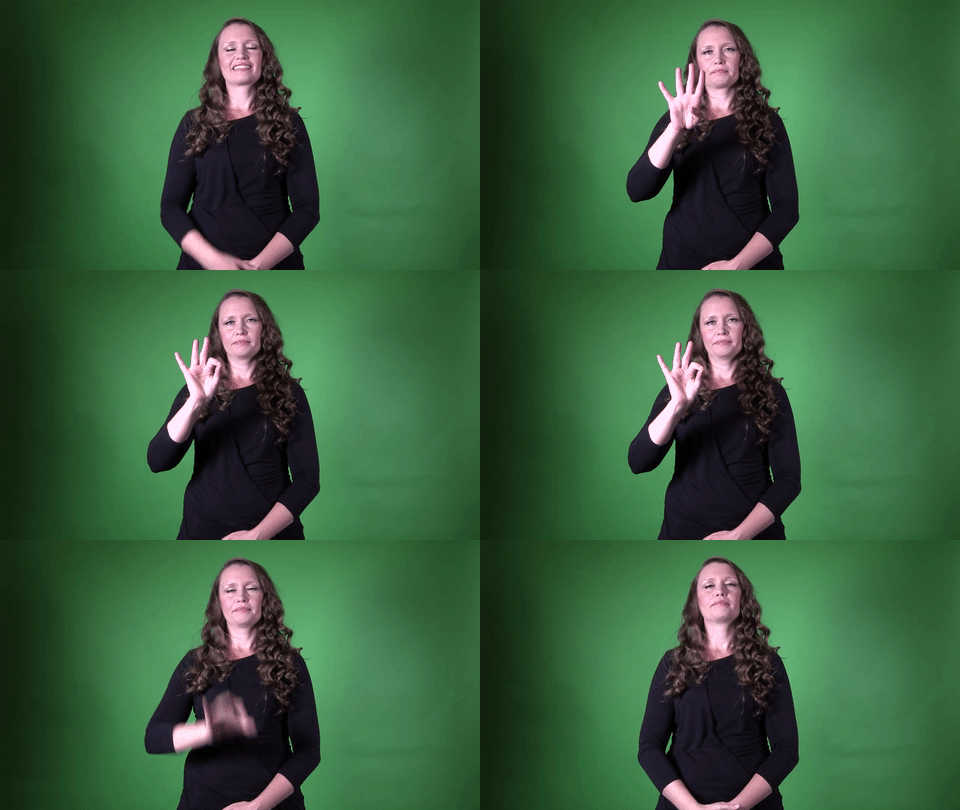
Sign for NUMBER 49 in ASL | 🔢 ASL Dictionary

Definition: Refers to the number forty-nine

Sign for NUMBER 49 in ASL 

YouTube player

Practice Activities:

Practicing the sign for number 49 in ASL can be done through various exercises to reinforce both the handshape and movement. Start by signing it repeatedly while looking in a mirror to ensure accuracy. Focus on fluidity, making sure the transition between digits is smooth. Try signing other numbers before and after 49 to solidify number sequencing skills.

Incorporate the sign for number 49 in ASL into context by practicing with countdowns, age-related statements, or quantities. For instance, sign different ages leading up to 49, or describe a situation involving 49 items, like “I saw 49 birds in the sky.” Practice signing a price that includes 49, such as “$1.49,” to reinforce real-world use in shopping scenarios.

Engage in storytelling prompts that involve the number 49. Create a short narrative where you must include a reference to 49, such as “49 people attended the event” or “I baked 49 cookies.” Use fingerspelling as needed for additional contextual words. Challenge yourself to explain historical events from 1949 and sign the number fluently within the explanation.

Work with a partner and quiz each other on numbers around 49. One person signs a number while the other guesses what it is, helping with number recognition in ASL. Another option is flashcard games where you sign the number and your partner writes it down or says it aloud. Practicing under time constraints can help improve speed and fluency.

For a fun solo activity, watch a countdown video and sign each number as it appears, emphasizing 49 when you reach it. You can also set a timer and sign as many numbers as possible in a minute, ensuring that 49 is among them. Regular daily practice will help reinforce smooth and confident signing of number 49.

Cultural Context:

American Sign Language (ASL) is deeply rooted in Deaf culture, and every sign carries meaning beyond just its visual representation. The sign for number 49 in ASL follows the standard numbering system used by the Deaf community in the United States. Learning how to sign number 49 in ASL correctly ensures clear communication and understanding.

Numbers in ASL are essential for daily interactions, including counting, giving addresses, and sharing phone numbers. The sign for number 49 in ASL is made using a combination of handshapes that align with ASL numbering conventions. Mastering these number signs helps signers engage fluently in conversations.

The Deaf community uses ASL numbers in various social settings, from academic discussions to storytelling and sports scores. Knowing the sign for number 49 in ASL allows signers to express dates, quantities, and rankings effectively. It also connects users to the broader ASL structure, reinforcing fluency in the language.

When signing numbers, accuracy is critical to maintaining clear communication. The sign for number 49 in ASL follows a smooth and natural transition from one numeral to the next. Consistently using the correct handshape and movement ensures that the sign is understood without confusion.

Numbers are commonly integrated into ASL conversations, whether discussing statistics or everyday matters like shopping. Using the correct sign for number 49 in ASL enhances communication and ensures mutual understanding. Fluency in ASL numbers helps signers convey precise information efficiently.

ASL numbers often appear in educational settings, especially in math and science discussions. Teachers and students frequently use the sign for number 49 in ASL during lessons and assignments. Understanding ASL numbers strengthens learning and makes education more accessible to Deaf students.

Sports and competitions also rely on accurate numerical signs. The sign for number 49 in ASL may be used to indicate a player’s jersey number, a score, or the time remaining in a game. Clear signing of numbers ensures that Deaf and hard-of-hearing individuals stay engaged in sports and other activities.

In storytelling and cultural narratives, numbers add detail and depth to the narrative. The sign for number 49 in ASL may be part of historical dates or symbolic references in ASL storytelling. Recognizing these nuances allows signers to appreciate ASL as both a language and an art form.

Technology and digital communication increasingly incorporate ASL, making number signs even more relevant. When video calling or using ASL in online spaces, signing the number

Extended Definition:

The sign for number 49 in ASL is formed using a combination of handshapes that represent the digits four and nine. This sign follows the standard numbering system in American Sign Language, which incorporates hand movements and positioning to communicate numerical values. It is a commonly used number sign in conversations involving dates, ages, addresses, and quantities.

When signing the number 49 in ASL, you begin by forming the number four with your dominant hand. This is done by extending the four fingers while keeping the thumb tucked in. Then, smoothly transition to the number nine, which involves touching the tip of the thumb to the tip of the index finger while the other fingers remain extended.

Hand orientation and movement play a crucial role in signing numbers accurately. The sign for number 49 in ASL should be executed with a comfortable, fluid motion to ensure clarity. Keeping the movement precise helps avoid confusion with similar numbers, especially in fast-paced conversation.

Numbers in ASL are often used in different contexts, and their meaning can vary depending on the situation. The number 49 may refer to an age, a total count, a sports jersey number, or even a price. Understanding the proper way to sign numerical values is essential for clear communication in ASL.

ASL number signs follow a logical structure, making them relatively easy to learn with practice. The sign for number 49 in ASL is frequently used in classrooms, banking transactions, and storytelling. Proper finger positioning and hand shape ensure that the number is understood correctly by the viewer.

In structured ASL communication, numbers are often incorporated with other signs for clarity. For example, when discussing an address, the number 49 may be paired with a sign indicating “street” or “avenue.” This helps provide context to the numerical value, making the message more precise.

ASL users may also encounter slight variations in the way numbers are signed depending on regional influences or individual preferences. While the sign for number 49 in ASL follows a standard approach, minor differences in speed or emphasis may occur. These variations typically do not impact overall understanding.

Practicing numerical signs regularly helps improve fluency and confidence in ASL. The number 49, like all numbers in ASL, should be signed with a clear and deliberate motion. This ensures that communication remains smooth, whether in casual conversation or formal discussions.

Numbers play a significant role in American Sign Language, supporting everyday conversations and detailed explanations. Mastering the sign

Synonyms: forty-nine, forty-nine, number forty-nine, number 49, the number 49, the number forty-nine

Educational resources: Find related learning materials in our course bank!

Want more? Check out some of our popular learning activities on the homepage!

Need to look up a sign? Use our highly rated dictionary: https://aslinteractive.com/best-asl-dictionary/

Follow us on tiktok: https://www.tiktok.com/@aslinteractive. More social media links at the bottom of this page!

Long-tail Keywords: what is the sign for number 49 in ASL, how do you sign number 49 in ASL, learn how to sign number 49 in American Sign Language

Categories: Numbers – Basics, Numbers 41-50, cardinal numbers

tags: Numbers 41-50, Numbers, Math, Educational, Language Learning

Parameters

*Handshape*:

The sign for NUMBER 49 in ASL uses a two-part handshape transition. It starts with the number 4 handshape, with the index, middle, ring, and pinky fingers extended while the thumb remains tucked. Then, the hand transitions to the number 9 handshape, where the index finger and thumb form a circle, while the other three fingers remain extended. This smooth movement visually represents the numerical value and is signed with a slight twist of the wrist for clarity.

*Palm Orientation*:

The palm orientation for the sign for number 49 in ASL starts with the palm facing outward as the number 4 is formed. As the hand transitions to the number 9, the palm may remain outward or slightly turn depending on the signer’s comfort. The movement between the two numbers should be smooth, with fingers clearly articulated to maintain clarity in the sign for number 49 in ASL.

*Location*:

The sign for number 49 in ASL is produced in the neutral signing space in front of the body. The dominant hand forms the number four, with the palm facing outward, and then transitions into a nine by shifting the handshape. This movement happens at chest level, maintaining clear visibility for the signer and viewer. The location remains within the standard signing area for number signs, ensuring ease of recognition.

*Movement*:

To produce the sign for number 49 in ASL, form the number 4 handshape with your dominant hand, palm facing out. Then, smoothly transition into the number 9 handshape by bending the ring finger down while the thumb and index finger form a circle. This movement should be fluid, with minimal hesitation between shapes. Maintain neutral facial expression or use slight emphasis if clarifying or stressing the number.

*Non-Manual Signals*:

When signing the sign for NUMBER 49 in ASL, maintain a neutral or slightly focused facial expression to ensure clarity. Your eyebrows should remain relaxed unless emphasizing or questioning the number. Slightly tilting your head can add emphasis, making the sign for NUMBER 49 in ASL more noticeable in fast-paced conversations. By keeping eye contact with your conversation partner, you confirm engagement and ensure the numerical concept is conveyed accurately.

*Prosody, Dominant/Non-Dominant Hand*:

The sign for NUMBER 49 in ASL involves the dominant hand forming the number “4” with the palm facing outward. The fingers then transition smoothly into the number “9” in a fluid motion. This movement ensures clarity and differentiation from other numbers. The non-dominant hand is not typically used, as the dominant hand carries out the motion independently. Precision in handshape and transition is essential for correctly conveying the sign for NUMBER 49 in ASL.

Tips for Beginners:

When learning the sign for NUMBER 49 in ASL, focus on forming the handshape correctly to ensure accuracy. The number 4 is usually made with the palm facing out, with the index, middle, ring, and pinky fingers extended while the thumb is tucked in. Then, smoothly transition to the number 9, which requires curling the index finger into the thumb while the other fingers stay extended.

A common mistake is allowing the transition between 4 and 9 to become stiff or choppy. To make the sign for NUMBER 49 in ASL look natural, practice moving smoothly and maintaining proper hand positioning. Keep your palm orientation consistent with other number signs to avoid confusion.

Finger dexterity is key to signing numbers clearly. Strengthen your finger control by practicing number sequences and common numerical patterns. If your fingers feel stiff, take breaks to stretch and wiggle them to relax your hand. This will make signing the sign for NUMBER 49 in ASL smoother over time.

It’s important to keep your signing space consistent. Holding your hands too close to your face or too far away may make it hard for others to understand. Position your hands comfortably in front of your chest for optimal visibility.

Watching native signers is a great way to improve. Observe how they sign number sequences and imitate their fluidity. Practicing in front of a mirror or recording yourself can help you adjust any awkward finger movements in your sign for NUMBER 49 in ASL.

Finally, don’t rush the sign—clarity is more important than speed. Once you’ve mastered the correct handshape, you can begin increasing your pace. Stay patient and consistent in your practice, and soon signing the sign for NUMBER 49 in ASL will feel effortless.

Connections to Other topics:

The sign for NUMBER 49 in ASL fits within the broader pattern of numerical signs, specifically those in the 40s range. It follows the standard number formation in ASL, where the hand transitions smoothly between digit movements. Understanding this sign can help learners recognize the numerical sequence and patterns used when counting or referencing numbers in signed conversations. Since numbers play a crucial role in daily communication, knowing how to form and recognize them fluently enhances overall signing ability.

The sign for NUMBER 49 in ASL is particularly useful in contexts related to counting, ages, addresses, sports statistics, and financial figures. Numbers in ASL are frequently combined with time-based signs like minute, hour, or year to create expressions such as “49 years old” or “49 minutes.” This reinforces the importance of numerical fluency when discussing measurements of time, quantity, or ranking.

This number also connects to broader concepts like ordinal numbers, which involve adding movement to indicate placement or ranking, such as “49th.” Numbers are often embedded in compound signs, such as percentages or fractions, where different handshapes modify numerical values. Knowing how to properly shift between number signs prevents misinterpretation, especially in contexts like addresses or math-related discussions.

Learning the sign for NUMBER 49 in ASL also supports understanding related linguistic structures, such as age incorporation and classifiers used for counting. When describing age, number signs are often merged with the “old” sign to express a specific age. Additionally, classifiers that include numerical representation can help visually convey quantities or groupings. Developing fluency with number signs strengthens overall communication in ASL, allowing smoother interaction in both casual and formal settings.

Summary:

The sign for number 49 in ASL follows the number pattern typical in American Sign Language. It is formed by using the dominant hand in a specific sequential motion to depict the numerical value. This sign is based on the number system in ASL, which follows a consistent structure for numbers in the 40s.

To produce the sign for number 49 in ASL, start with the number 4 handshape. The palm faces outward, and the fingers are extended while the thumb is tucked inward. Then transition smoothly to the number 9 handshape, where the index finger and thumb create a circular shape while the other three fingers remain extended.

This number follows the standard number formation from 40 to 49 in ASL. The transition between the two handshapes should be fluid and natural, demonstrating a clear numerical shift. When signing the number, maintain a steady hand position for readability.

ASL numbers rely on clear handshape articulation since visual clarity ensures proper interpretation. The hand movement for number 49 in ASL is executed from one shape to the next without unnecessary motion. Precision in forming each digit is necessary to avoid ambiguity.

Numbers in ASL are highly structured and follow predictable formations. The number 49 is composed just as other two-digit numbers in the forties range are signed, making it easy to learn for those familiar with ASL number conventions. Proper handshape development is essential when forming numerical values in sign language.

The sign for number 49 in ASL can be incorporated in various contexts. It can be used in age indications, counting, addresses, measurements, or listing numerical values in conversations. ASL users often apply this sign seamlessly within larger numerical sequences for clarity.

Number signs in ASL are closely related to linguistic patterning. They follow a systematic structure aligned with numerical grammar and ASL syntax. Because ASL is a visual language, the presentation of numbers must be distinct and clear.

Like spoken languages, ASL possesses a numerical system rooted in cultural expression. The sign for number 49 in ASL is part of the broader numerical range and aligns with bilingual and bicultural influences. The visual-gestural modality of ASL enhances the learning process for numerical representation.

ASL numbers are an essential element of communication in deaf culture. The use of numerical signs supports accessibility in discussions involving counting, dates, and statistics. Accuracy in signing numbers like 49 ensures effective cross-communication among ASL users.

The history of ASL numbers derives from its natural linguistic evolution. Numeric representations in ASL developed through standardized motions to accommodate mathematical and daily use. The sign for number 49 in ASL remains a vital component of signed discourse.

Fingerspelling and numerical signs serve different functions in ASL. While fingerspelling conveys names and words, numbers like 49 follow a distinctive motion pattern. This differentiation enhances clarity when communicating various topics.

The structure of ASL numbers incorporates handshape consistency for ease of learning. The sequence from 40 to 49 follows a predictable transition, improving recall. The sign for number 49 in ASL fits this structured approach effectively.

Linguistically, the numerical system in ASL functions within a structured syntax. The clear transition between numbers ensures that values like 49 remain comprehensible. Consistent handshape articulation is necessary for accurate numerical representation.

In applied linguistics, visual languages like ASL demonstrate unique cognitive advantages. Mastery of ASL numerical systems improves visual-spatial awareness and mental mapping. The sign for number 49 in ASL exemplifies the importance of visual structure in communication.

Numerical fluency in ASL benefits individuals working in education and interpreting. Clear numerical expression allows efficient transaction handling, scheduling, and relaying statistics. Signing 49 correctly is vital for accuracy in professional and everyday settings.

ASL learners must practice numerical transitions to develop fluency. Mastery of numbers, including the sign for number 49 in ASL, supports broader mathematical understanding. Practicing number sequences enhances overall ASL proficiency.

Different sign languages have varied approaches to numerical representation. While ASL follows a structured two-shape transition for 49, other sign languages may adopt alternate methods. Understanding these differences fosters appreciation for linguistic diversity.

The role of numerical signs extends beyond everyday conversations. They are crucial in financial transactions, sports discussions, and scientific data representation. The sign for number 49 in ASL helps bridge communication gaps in these areas.

Certain ASL numbers require additional modifications for specific contexts. If emphasizing 49 in certain scenarios, slight variations in movement or repetition may be applied. These modifications align with natural ASL grammar and expressiveness.

Digital media and technology incorporate ASL numbers in educational resources. Learning tools provide interactive ways to practice numbers like 49. Virtual learning platforms enhance retention of ASL numerical structures through animation and engagement.

ASL educators focus on consistency when teaching numerical sequences. The sign

Want more? Check out some of our popular learning activities!

ASL Interactive Resources

ASLInteractive YouTube Channel

Follow us on tiktok: @aslinteractive.com

Follow us on Instagram: aslinteractive

Facebook page: aslinteractive

Facebook group: aslinteractive

LInkedIn: ASL Interactive LLC

Twitter: @ASL_interactive

*Some information on this page is AI-generated. AI can make mistakes. Please check the information.

Sign for NUMBER FORTY-NINE in ASL, Sign for 49 in ASL, Sign for FORTY-NINE in ASL, Sign for THE NUMBER FORTY-NINE in ASL, Sign for THE NUMBER 49 in ASL, Sign for NUMBER 49 in ASL  

Responses