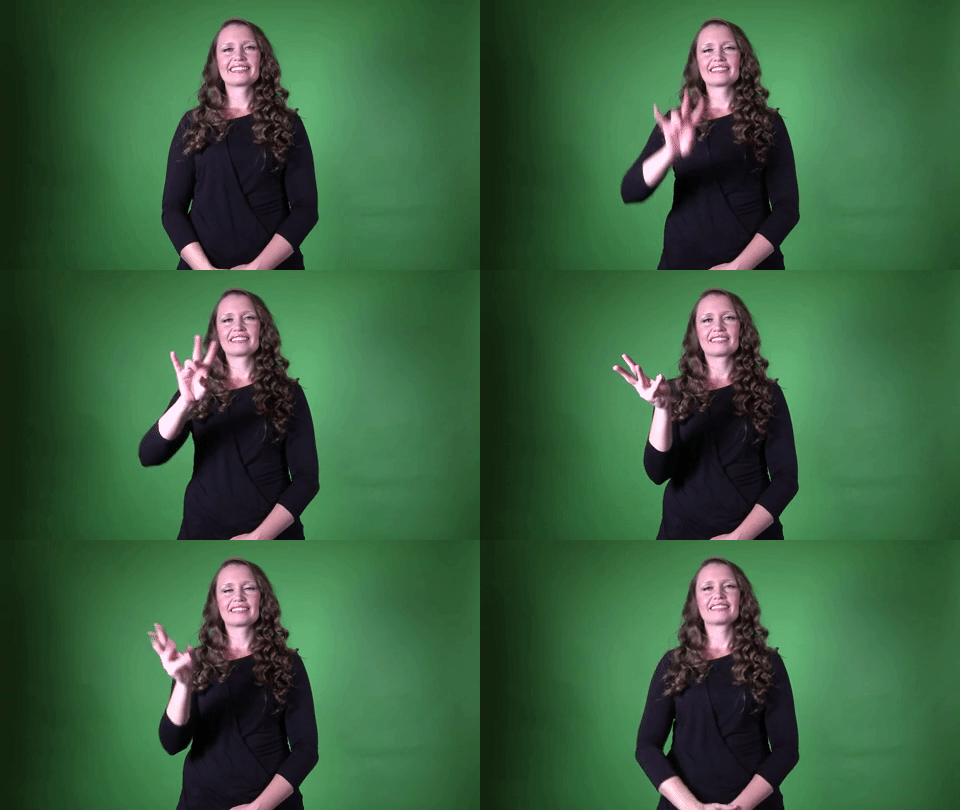
Definition: Refers to the number seventy-six
Sign for NUMBER 76 in ASL

Practice Activities:
To practice the sign for number 76 in ASL, start by isolating the movement. Begin by signing 7 with your palm facing out, then smoothly transition to 6 by touching your pinky to your thumb. Repeat this transition several times with focused hand positioning and fluidity. Use a mirror or video recording to check your accuracy.
Incorporate the sign for number 76 in ASL into counting exercises. Count sequentially from 70 to 80, paying close attention to each number’s shape. Challenge yourself by randomly signing numbers within this range and having a friend or online tool check your accuracy. Try saying a two-digit number aloud and signing it quickly to strengthen recall.
Practice using the sign for number 76 in ASL in everyday contexts. Imagine you are discussing prices, addresses, or sports scores. For example, sign “My grandpa is 76 years old!” or “The store’s address is 76 Main Street.” Create five personal sentences using 76 and sign them smoothly.
Engage in a partner activity where one person signs a number between 70 and 80, and the other identifies it. Swap roles and increase speed and accuracy. Try incorporating visual flashcards that display different two-digit numbers to drill recognition. Use a timer to challenge yourself to sign as many numbers as possible in 30 seconds.
Use storytelling to reinforce learning. Think of a scenario where 76 appears, such as “There were 76 balloons at the party,” and sign it fluidly. If practicing in a group, take turns creating short stories that involve numbers, encouraging fluid and natural sign production. Regular use of the sign for number 76 in ASL in these activities will build confidence and accuracy.
Cultural Context:
The sign for NUMBER 76 in ASL follows the standard structure of signing two-digit numbers in American Sign Language. This involves a combination of numerical handshapes, transitioning smoothly from the sign for 7 to the sign for 6. It’s an essential number to know for everyday conversations, such as discussing dates, addresses, or quantities.
In ASL, numbers play a crucial role in communication, and the sign for NUMBER 76 in ASL is no exception. Whether used in sports scores, financial figures, or historical dates, understanding how to sign numbers accurately enhances fluency. Mastering this sign ensures clear and efficient communication in various contexts.
Deaf culture values numerical precision in signing, making the sign for NUMBER 76 in ASL important in schools, workplaces, and personal interactions. When discussing statistics or measurements, accuracy in signing numbers helps avoid misunderstandings. Practicing this sign with native ASL users can improve fluency and comprehension.
The sign for NUMBER 76 in ASL is especially useful in teaching, where educators use ASL numbers in math, history, and science lessons. Students benefit from learning proper signing techniques to express numerical concepts clearly. This reinforces their ASL proficiency and ensures they can engage confidently in academic discussions.
Historical dates often include the sign for NUMBER 76 in ASL, especially when referring to events like the United States Bicentennial celebration of 1976. In ASL storytelling, numbers add rich detail, helping to paint a vivid picture for the audience. Signing numbers with confidence strengthens storytelling skills in the Deaf community.
When meeting someone new, sharing phone numbers may require using the sign for NUMBER 76 in ASL. Accuracy in signing phone numbers ensures effective communication, making it easier to stay connected. Practicing numbers with friends or in ASL classes builds confidence and reduces signing errors.
The sign for NUMBER 76 in ASL is also important in business and transactions, where numbers frequently appear in addresses, prices, or financial discussions. Clear and precise signing of numbers prevents confusion and ensures successful interactions. Many Deaf professionals rely on accurate numerical signing in their daily work.
Learning the sign for NUMBER 76 in ASL strengthens overall ASL skills, as numbers are an essential part of the language. ASL users incorporate numbers in daily conversations, whether discussing time, measurements, or statistics. Continual practice makes signing numbers second nature in both casual and professional settings.
In sports and competitions, the sign for NUMBER
Extended Definition:
The sign for number 76 in ASL follows the standard pattern for signing two-digit numbers in American Sign Language. It combines the handshapes for 7 and 6 in a fluent movement. Understanding this sign helps improve number fluency in ASL communication.
When signing the number 76 in ASL, you start with the handshape for 7, then smoothly transition to the handshape for 6. This movement should be clear and natural to ensure legibility. Proper hand positioning and movement enhance accuracy and clarity.
Numbers play a crucial role in American Sign Language, including everyday conversations, counting, and describing quantities. The sign for number 76 in ASL is especially useful in contexts like giving addresses, listing prices, or discussing dates. Mastering numerical signs helps improve overall ASL proficiency.
The transition between 7 and 6 involves subtle wrist movement to maintain the natural flow of signing. Native signers often use slight variations depending on their regional style. Watching fluent signers can help learners refine their technique.
Practicing the sign for number 76 in ASL regularly will improve speed and accuracy. Repetitive drills using other two-digit numbers can help solidify understanding. Watching video demonstrations can also enhance learning.
Some ASL learners struggle with fluid transitions between numbers. The key to signing 76 correctly is maintaining a steady handshape shift. Confidence and practice make the movement more natural over time.
ASL numbering conventions follow a logical structure that allows for flexibility and efficiency. The sign for number 76 in ASL fits within this system, emphasizing the importance of smooth transitions between numbers. Learning these patterns helps build foundational signing skills.
When signing 76, it’s important to keep hand positioning consistent. Avoid unnecessary pauses or interruptions between the two numbers. Smooth execution ensures clarity for those receiving the message.
The sign for number 76 in ASL is commonly used in classroom settings, workplace communication, and casual conversations. Understanding it can improve both receptive and expressive signing skills. Frequent use helps reinforce proper technique.
American Sign Language relies on visual clarity for effective communication. Precise movements and correct finger positioning make the sign for number 76 in ASL easier to understand. Paying attention to these details enhances overall fluency.
Synonyms: seventy-six, number seventy-six, number 76, the number 76, the number seventy-six
Educational resources: Find related learning materials in our course bank!
Want more? Check out some of our popular learning activities on the homepage!
Need to look up a sign? Use our highly rated dictionary: https://aslinteractive.com/best-asl-dictionary/
Follow us on tiktok: https://www.tiktok.com/@aslinteractive. More social media links at the bottom of this page!
Long-tail Keywords: what is the sign for number 76 in ASL, how do you sign number 76 in ASL, learn how to sign number 76 in American Sign Language
Categories: Numbers – Basics, Numbers 71-80, cardinal numbers
tags: Numbers, Numbers 76-80, Numbers 76 78 79, Rocking Numbers, Language Learning
Parameters
*Handshape*:
The sign for NUMBER 76 in ASL uses two handshapes that transition smoothly. Start with the dominant hand forming the “7” handshape—thumb and ring finger touching, with other fingers extended. Then, shift into the “6” handshape by bringing the pinky and thumb together while the other fingers remain extended. This fluid movement ensures clarity. Proper finger positioning is essential for an accurate representation of the sign for NUMBER 76 in ASL. ✋
*Palm Orientation*:
The palm orientation for the sign for number 76 in ASL starts with the palm facing outward as the number 7 is formed. The hand then smoothly transitions into the number 6 while maintaining a natural movement. Throughout the sign for number 76 in ASL, the palm orientation remains consistent, ensuring clarity while communicating the number. Proper positioning helps emphasize the numerical value without confusion.
*Location*:
The sign for number 76 in ASL is produced in the neutral signing space in front of the body, typically at chest level. The dominant hand forms the number 7, with the index and middle fingers extended while the thumb sticks out. It then transitions smoothly into the number 6 by bringing the pinky finger to the thumb while the other fingers remain extended. This sign follows the natural movement used in ASL for two-digit numbers.
*Movement*:
To perform the sign for number 76 in ASL, start with the number 7 handshape, where the thumb and ring finger touch while the other fingers are extended. Then smoothly transition into the number 6 handshape, touching the thumb and pinky finger while the other fingers remain extended. The movement is fluid, with a slight bounce between the two numbers to clearly differentiate them.
*Non-Manual Signals*:
When signing the sign for number 76 in ASL, maintain a neutral or slightly focused facial expression. Eyebrows may lower slightly if emphasizing accuracy or asking for clarification. Head movement is minimal, though a slight nod can accompany the transition between digits. Eye gaze should remain on the hand to ensure clear communication. A relaxed mouth position is typical, though slight pursing or parting of the lips may occur when emphasizing precision.
*Prosody, Dominant/Non-Dominant Hand*:
For the sign for number 76 in ASL, use the dominant hand to form the number 7 with the index and middle fingers extended and spread apart, while the thumb, ring, and pinky fingers remain closed. Then, smoothly transition to the number 6 by bringing the pinky and thumb together while keeping the other fingers extended. This motion should be fluid to clearly show the transformation from 7 to 6 without breaking the movement.
Tips for Beginners:
When learning the sign for NUMBER 76 in ASL, focus on the fluidity of your hand movements. The number sign follows the standard ASL rule for signing two-digit numbers, which means smoothly transitioning from the number 7 to the number 6. Make sure your dominant hand forms the correct shape for 7 (palm facing out, thumb touching the ring finger) and then transitions to 6 (thumb touching the pinky). Keep your wrist relaxed to maintain a natural motion.
A common mistake beginners make when signing the sign for NUMBER 76 in ASL is stiff finger movements. Avoid jerky hand transitions between digits, as this can make the number harder to recognize. Instead, practice slowly at first, ensuring each number shape is formed correctly. Over time, increase your speed while keeping clarity in your fingers.
Hand orientation plays a key role in the accuracy of the sign for NUMBER 76 in ASL. Your palm should face outward, and the numbers should shift smoothly without twisting your wrist awkwardly. If you’re unsure about your form, practice in front of a mirror or watch experienced signers demonstrate the motion. Repetition will help develop muscle memory.
Another tip is to maintain consistent finger positioning to avoid confusion. Some numbers in ASL are visually similar, and unclear finger placement can change the meaning. Regular practice will help reinforce each number’s distinct formation. If possible, ask a fluent signer for feedback to ensure your handshapes are correct.
Finally, practice frequently in real-world scenarios to build confidence with the sign for NUMBER 76 in ASL. Incorporate it into routine conversations, such as stating an address, price, or age. Frequent use will make the movement feel more natural and reinforce your ability to sign numbers accurately.
Connections to Other topics:
The sign for NUMBER 76 in ASL follows a distinct pattern seen in other two-digit numbers, using a specific movement from one numeral handshape to another. This structure is consistent with numbers in the 70s series, such as 71, 72, and 73, where the hand moves between numerals in a common transition pattern. Understanding the flow of numbers like NUMBER 76 in ASL helps with recognizing the broader system of numerical transitions in ASL numbering conventions.
Numbers play a significant role in many areas of ASL, such as phone numbers, addresses, and math-related signs. Sequences like NUMBER 76 in ASL become essential in contexts like discussing historical dates, sports statistics, or financial figures. The fluid transition between numerals also connects to larger numbers, where similar shifting of handshapes occurs in expressing prices or numerical data.
Ordinal numbers are another important connection. While NUMBER 76 in ASL represents a cardinal number, a slight modification in movement could indicate “seventy-sixth” in ordinal form. This pattern extends across ASL, where slight changes in the execution of a number sign can shift its meaning to fit different contexts. Awareness of these subtle differences enhances proficiency in numerical expressions.
The movement pattern seen in NUMBER 76 in ASL also connects to non-numerical signs where handshape changes signal a shift in meaning. This is evident in signs like age-related numbers, where a number sign can merge with an age-related gesture. Learning numerical transitions effectively can help in mastering other ASL signs that follow a similar transition-based structure.
Additionally, numerical incorporation is a key feature of ASL, where numbers blend into related concepts, such as weeks, months, or money. Understanding NUMBER 76 in ASL supports broader numerical fluency and helps in applying these principles to real-life communication.
Summary:
The sign for NUMBER 76 in ASL is a combination of numerical handshapes presented in a fluid motion. ASL uses a structured system for numbers, and this two-digit number follows a predictable pattern. Each digit is represented with a concentrated movement that smoothly transitions from one handshape to the next.
To form the sign for NUMBER 76 in ASL, start with the hand displaying the 7-handshape. The palm orientation generally faces outward, depending on regional variations. Then, smoothly transition to the 6-handshape by bringing the pinky and thumb together.
Number signs in ASL require a clear distinction between each digit for accuracy. The transition from 7 to 6 must be fluid yet distinct, ensuring proper recognition. Finger dexterity plays a crucial role in making the sign clearly readable.
The sign for NUMBER 76 in ASL maintains consistency with ASL’s numerical system. ASL numbers from 60 through 90 generally follow a similar motion pattern. This structure makes learning multi-digit numbers easier for users familiar with the system.
Context plays an important role in number signs in ASL. NUMBER 76 might be used when discussing age, addresses, monetary amounts, and sports scores. The surrounding context helps clarify the intended meaning of the numerical reference.
Some ASL users may modify signing styles based on comfort or hand dexterity. While accuracy is important, slight variations can occur without altering meaning. Signing space and speed can also impact the clarity of the number being represented.
Fingerspelling and number signs both require distinct production in ASL. Misarticulating a number sign can lead to confusion with other numerical values. Consistency in thumb and finger placement helps prevent misunderstanding.
Deaf education emphasizes clear numerical articulation, reinforcing proper signing habits early. Learning the sign for NUMBER 76 in ASL helps reinforce broader number comprehension strategies. Developing proficiency in ASL numbers enhances overall communication skills.
NUMBER 76 may hold significance in historical or statistical contexts. It might reference a relevant year, a portion of a larger data set, or a personal milestone. The ability to quickly sign numbers in ASL contributes to efficient information sharing.
Patterns in ASL number signs contribute to structured linguistic processing. The cognitive recognition of sequential handshapes reinforces ASL’s structured grammar. Mastering numbers like NUMBER 76 facilitates smoother and faster language comprehension.
Different countries have their own signed languages, and ASL numbers may differ from other sign languages. While many signed languages borrow numerical structures from ASL, variations exist. International signers may need to adjust their sign production based on regional differences.
ASL numbers are often incorporated into classifiers and numerical incorporation. Some classifiers include numerical information within the sign itself, modifying standard number signs. These advanced techniques allow for more complex linguistic expressions in ASL.
Deaf athletes may use signed numbers like NUMBER 76 to reference jersey numbers. Sports discussions often require quick and accurate number signing for effective communication. This ensures that game-related information is conveyed efficiently.
Technology has influenced how ASL numbers are used in digital spaces. Video calls and ASL-based content require clear sign articulation for numerical accuracy. This development has helped improve accessibility in digital communication.
The sign for NUMBER 76 in ASL follows the sequential nature of numerical handshapes. Recognizing the transition between each number helps in learning larger numerical sets. Establishing good signing habits ensures clear communication with the Deaf community.
Number fluency in ASL enhances a signer’s ability to participate in broader conversations. Proficiency in numbers allows individuals to discuss statistics, time-based references, and legal documents. Numeric comprehension is fundamental to achieving ASL fluency.
Cultural significance might arise from historical events associated with 76. Discussions about historical topics may require precision in number signing. Accuracy when signing historical dates ensures proper storytelling and factual integrity.
Linguistic studies on signed numbers highlight the visual-spatial nature of ASL. Research shows that users process number signs differently from spoken numbers. The brain categorizes and recognizes signed numbers as unique visual symbols.
ASL has evolved over time, with numerical handshapes remaining a core feature. Historical changes in number variations reflect shifts in linguistic development and education. Preserving these standardized number signs keeps ASL structured and accessible.
Signed numbers like NUMBER 76 in ASL are essential for teaching math concepts. ASL-based math instruction ensures Deaf students can grasp numerical relationships effectively. Clear number articulation improves Deaf students’ numerical literacy.
Storytelling in ASL often includes numerical references for added detail. Family histories, financial discussions, and statistical data frequently require numerical accuracy. Proper number signing adds clarity and depth to visual communication.
Practical applications of ASL numbers extend to banking, contracts, and identification numbers. Precision in signing ensures correct numerical exchange in important transactions. Professionals working with the Deaf community must master number signs for effective service.
Errors in number signing can lead to miscommunication
Want more? Check out some of our popular learning activities!
ASL Interactive Resources
ASLInteractive YouTube Channel
Follow us on tiktok: @aslinteractive.com
Follow us on Instagram: aslinteractive
Facebook page: aslinteractive
Facebook group: aslinteractive
LInkedIn: ASL Interactive LLC
Twitter: @ASL_interactive
*Some information on this page is AI-generated. AI can make mistakes. Please check the information.


Responses