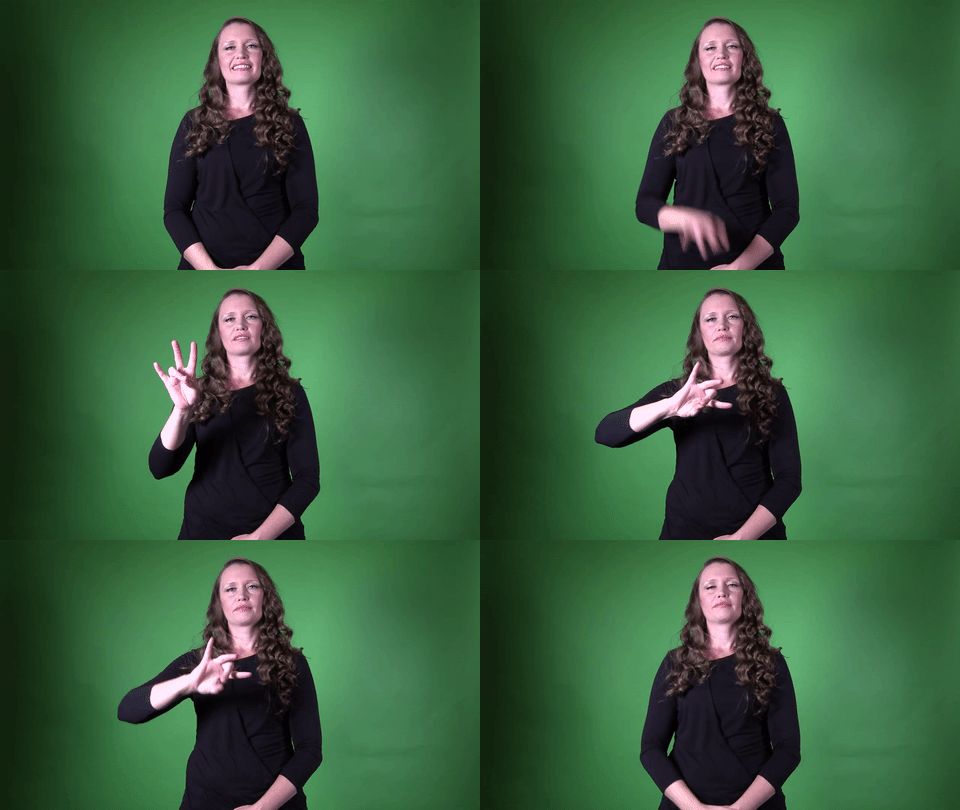
Definition: Refers to the number seventy-eight
Sign for NUMBER 78 in ASL

Practice Activities:
To practice the sign for number 78 in ASL, start by signing the numbers slowly and clearly while looking in a mirror. This helps ensure your handshape and movement are correct. Repeat the sign multiple times in a row to build muscle memory and smooth transitions.
Work on recognizing and signing the number quickly by setting a timer and attempting to sign it as many times as possible before the time runs out. Challenge yourself to increase accuracy and speed. You can also record yourself signing and play it back to check for consistency.
Use the sign for number 78 in ASL in context by signing it in numerical sequences. Count up or down by tens and drop in 78 when appropriate. Try signing random numbers between 70 and 80 to improve recognition and fluidity.
Create simple sentences using the number in everyday situations. For example: “I saw 78 birds at the park” or “The class had 78 students.” Practice signing these sentences while keeping a natural pace and clear transitions.
Engage in partner activities by having a friend or study partner show you different numbers on flashcards while you sign them back. You can also take turns signing numbers while the other person writes them down to test comprehension.
For storytelling practice, create a quick narrative that includes the number. For example, describe a story where someone runs 78 miles in a race or saves $78 for a special purchase. Signing numbers within a longer context will help with fluency and expressive skills.
Play a number-guessing game where one person signs a number, and the other person guesses what it is. If they guess correctly, switch roles. Using the sign for number 78 in ASL naturally in different contexts will make it easier to recall in conversation.
Cultural Context:
The sign for NUMBER 78 in ASL follows the standard pattern for signing two-digit numbers. In ASL, numbers are signed using a combination of handshapes and movements that make them clear and recognizable. When signing NUMBER 78 in ASL, accuracy in hand positioning is important for clarity.
Numbers in ASL are an essential part of communication, used in everyday conversations, dates, addresses, and more. The sign for NUMBER 78 in ASL is useful when discussing ages, statistics, or prices. ASL numbers rely on fluid motion and correct finger placement for accurate communication.
ASL numbers are deeply tied to Deaf culture, as numerical expressions help shape conversations in education, business, and daily life. The sign for NUMBER 78 in ASL follows the numbering system that Deaf communities use to share vital information. Being able to sign numbers fluently improves communication and connection within the Deaf and signing communities.
Many ASL learners practice signing numbers in sequences to build fluency. The sign for NUMBER 78 in ASL is often used when counting, talking about measurements, or giving specific details. Mastering number signs helps speakers engage in clear and efficient conversations.
The importance of numbers in ASL goes beyond basic counting. The sign for NUMBER 78 in ASL plays a role in telling time, making schedules, and exchanging information accurately. Understanding number signs enhances both comprehension and conversation skills.
Finger dexterity is crucial when signing larger numbers, including NUMBER 78 in ASL. Some signs require subtle shifts between handshapes, and smooth transitions improve clarity. Practicing regularly can make number signing feel more natural.
Numbers in ASL have a unique flow that differs from spoken language counting. The sign for NUMBER 78 in ASL follows a logical sequence that simplifies visual comprehension. Learning how ASL expresses numbers helps bridge communication gaps between signers and non-signers.
Many people use ASL numbers for sports scores, academic subjects, and financial discussions. The sign for NUMBER 78 in ASL can come in handy for discussing years, statistics, and more. Consistently practicing number signs strengthens overall signing ability.
Mastering numerical signs, including the sign for NUMBER 78 in ASL, is a foundational skill for ASL learners. Understanding number variations ensures clear messaging in conversations. ASL numbers create a structured and effective way to communicate precise information.
Extended Definition:
The sign for number 78 in ASL is a combination of the numbers 7 and 8, following the standard number-signing rules in American Sign Language. When signing 78, it is essential to maintain proper handshape and movement to ensure clarity. ASL numbers are visually distinct, making them effective for communication in the Deaf and hard-of-hearing community.
To form the sign for number 78 in ASL, begin with the handshape for 7, then smoothly transition to the handshape for 8. This movement should be fluid and natural to maintain proper signing rhythm. Practicing the transition between these numbers helps improve signing speed and accuracy.
ASL numbers are an essential part of communication and are used in various contexts such as counting, addresses, phone numbers, and age. The sign for number 78 in ASL follows the same number transition pattern as other two-digit numbers. A clear and properly executed sign is important for effective communication.
When signing number 78 in ASL, palm orientation may depend on the context and personal preference. Generally, the palm faces outward for clarity, but it can change depending on the signer’s position. Consistency in finger placement ensures the sign is easily understood.
Like all ASL number signs, 78 is based on handshape, movement, and positioning. Practicing the sign for number 78 in ASL helps increase fluency and confidence in using ASL numbers. It is useful for discussing large quantities, prices, measurements, and other numerical data.
For beginners learning ASL numbers, repetition and finger dexterity exercises are helpful. Watching native signers demonstrate the sign for number 78 in ASL can improve accuracy. Understanding number sequences in ASL builds a foundation for more advanced signing skills.
The ASL numbering system follows specific patterns to maintain consistency in communication. Learning the sign for number 78 in ASL along with other numbers enhances overall number fluency. Mastering number signs allows for smoother conversations using ASL.
Within ASL, numbers play a crucial role in daily interactions, educational settings, and professional environments. The sign for number 78 in ASL is easy to learn, especially when practicing with other numerical values. With regular practice, signing 78 and other numbers becomes second nature.
ASL students and interpreters benefit from mastering number transitions like 78 to ensure accurate communication. Watching videos and practicing in front of a mirror can enhance signing skills. Becoming proficient in
Synonyms: seventy-eight, number seventy-eight, number 78, the number 78, the number seventy-eight
Educational resources: Find related learning materials in our course bank!
Want more? Check out some of our popular learning activities on the homepage!
Need to look up a sign? Use our highly rated dictionary: https://aslinteractive.com/best-asl-dictionary/
Follow us on tiktok: https://www.tiktok.com/@aslinteractive. More social media links at the bottom of this page!
Long-tail Keywords: what is the sign for number 78 in ASL, how do you sign number 78 in ASL, ASL sign for number 78
Categories: Numbers – Basics, Numbers 71-80, cardinal numbers
tags: Numbers, Numbers 76-80, Numbers 76 78 79, Rocking Numbers, Language Learning
Parameters
*Handshape*:
The sign for NUMBER 78 in ASL uses a fluid motion between two distinct handshapes. It starts with the number 7, where the thumb and ring finger touch while the other fingers remain extended. Then, the hand transitions smoothly to form the number 8, with the thumb and middle finger touching while the remaining fingers stay extended. This movement maintains clarity in numerical representation while ensuring a natural flow.
When signing the sign for NUMBER 78 in ASL, the dominant hand remains in a neutral space slightly in front of the body. It smoothly shifts between the two number handshapes without unnecessary movement. Precision in finger positioning is key, ensuring the sign remains clear and visually distinct. This number sequence follows the typical counting flow in American Sign Language, maintaining consistency in numerical articulation.
*Palm Orientation*:
The palm orientation for the sign for NUMBER 78 in ASL starts with the palm facing outward while forming the number 7 with the dominant hand. The fingers smoothly transition to the number 8 while maintaining a steady palm orientation. The movement should be fluid, ensuring clarity when signing the sign for NUMBER 78 in ASL. Keep the hand relaxed with controlled finger transitions to avoid confusion with similar number signs.
*Location*:
The sign for number 78 in ASL is produced in the neutral space in front of the signer’s chest. The dominant hand forms the number 7, then smoothly transitions into the number 8. This movement occurs at chest height without touching the body. The motion should be fluid and natural, ensuring clarity in expressing the sign for number 78 in ASL. Make sure to maintain a steady handshape for both numbers.
*Movement*:
To make the sign for number 78 in ASL, begin with the number 7 handshape, extending the thumb and ring finger while keeping the other fingers curled. Rotate your wrist slightly as you smoothly transition into the number 8 handshape by touching the tip of your thumb to your middle finger. This movement should be fluid and controlled, ensuring clarity when signing the number 78 in ASL.
*Non-Manual Signals*:
When signing the sign for number 78 in ASL, maintain a neutral or slightly focused facial expression. Your gaze should be directed toward your dominant hand to ensure accuracy. If emphasizing the number, slightly raise your eyebrows or nod subtly. Avoid excessive head movement, as it may distract from the number being communicated. Keep your mouth relaxed, and if necessary, slightly articulate “seventy-eight” while signing to reinforce the meaning visually.
*Prosody, Dominant/Non-Dominant Hand*:
The sign for number 78 in ASL is a combination of the digits 7 and 8, signed sequentially. Using the dominant hand, form the number 7 by extending the index and middle fingers with the thumb touching the pad of the ring finger. Then smoothly transition to the number 8 by bringing the thumb and middle finger together while the index, ring, and pinky fingers remain extended. This motion should be fluid, with a slight wrist movement for a natural numerical transition.
Tips for Beginners:
When learning the sign for NUMBER 78 in ASL, it’s crucial to focus on the correct handshape and fluid movement. The sign involves transitioning smoothly between the digit signs for 7 and 8. Keep your fingers loose but controlled to maintain readability and avoid stiffness.
One common mistake is holding your hand too rigidly, which can make the number transitions look awkward. Relax your hand and make sure your thumb and fingers move naturally into place. Another issue beginners face is reversing the numbers, so double-check that you are signing them in the correct order.
Consistency in number signing is key to making interactions smooth. Practice signing numbers in sequence, such as counting from 70 to 80, to gain comfort with similar transitions. This will help reinforce muscle memory and improve fluency when signing the sign for NUMBER 78 in ASL.
Watching native ASL signers or instructors can help you understand how the movement should flow. If possible, practice in front of a mirror or record yourself to check your accuracy. Compare your signing with video references to refine your technique, especially in number transitions.
It’s helpful to practice signing numbers within real conversations to build confidence. Use the sign for NUMBER 78 in ASL in different contexts, such as discussing prices, addresses, or ages. This will make the sign feel more natural and useful in everyday situations.
If you struggle with finger positioning, try slowing down the movement and exaggerating each step at first. Over time, speed and smoothness will develop naturally. Keep practicing with both your dominant and non-dominant hand to build dexterity and ease of use.
As you progress, test yourself by signing random number combinations to ensure consistency. The more you incorporate numbers into signing practice, the more automatic they will become in conversation.
Connections to Other topics:
The sign for NUMBER 78 in ASL connects to broader concepts of numerical sequencing and number signs in general. ASL numbers follow a logical hand movement pattern, helping signers quickly and efficiently communicate various numerical values. The sign for NUMBER 78 in ASL also fits within the category of cardinal numbers, which are used to express exact quantities rather than order or rank.
Numbers in ASL can be incorporated into dates, addresses, and currency amounts. For example, understanding the sign for NUMBER 78 in ASL is useful when signing a price or a specific year, such as 1978. Some number signs also integrate smoothly into time expressions, making them essential for discussing schedules and historical events.
ASL has a structured way of signing numbers within larger numerical sequences. When signing multi-digit numbers like NUMBER 78, the movement must be clear and precise to avoid confusion. The transition between 7 and 8 in NUMBER 78 follows the natural shape changes in ASL number formation, which mirrors how other two-digit numbers are signed.
Numbers in ASL also blend into descriptive signs, such as age-related signs or scorekeeping in sports. If someone is 78 years old, the number is incorporated directly into the sign for “age” by placing it near the chin. Similarly, scoring in competitive events may involve signing numbers like NUMBER 78 to report results in a game.
Learning the sign for NUMBER 78 in ASL strengthens a signer’s ability to count fluently in ASL and recognize number-related patterns. Practicing different number combinations reinforces motor memory for commonly used sequences. This connection to other numerical signs helps build a strong mathematical vocabulary in ASL, supporting everyday communication involving numbers.
Summary:
The sign for NUMBER 78 in ASL follows a sequential numerical structure. It combines the handshapes for 7 and 8 in a fluid motion. This hand movement aligns with how ASL treats multi-digit numbers by incorporating a clear transition between each digit.
In executing the sign for NUMBER 78 in ASL, first form the handshape for 7 by touching the tip of the thumb to the tip of the ring finger. Then, smoothly transition to the number 8 by moving the thumb so it touches the tip of the middle finger. This sequential shifting of fingers allows for clarity when presenting numbers in ASL.
Numbers in ASL, including the sign for NUMBER 78 in ASL, follow specific patterns depending on regional dialects or signing speed. Some signers may slightly modify transitions for efficiency, particularly in fast-paced conversation. However, clarity remains an essential component to ensure the number is properly understood.
The formation of two-digit numbers in ASL requires smooth transitions between numerals. The sign for NUMBER 78 in ASL follows this principle by maintaining a consistent hand orientation. Unlike some larger numbers that require wrist movement, this sign relies only on finger shifts.
The sign for NUMBER 78 in ASL showcases ASL’s efficiency in number representation. ASL does not require external aids, such as writing or pointing, to convey numeric information clearly. This internal structure reflects how ASL expresses complex quantitative concepts in a natural, flowing manner.
The handshape transition in the sign for NUMBER 78 in ASL is similar to other two-digit numbers ending in 8. Understanding this pattern can assist beginner signers in mastering numbers quickly. Many number sequences follow predictable mechanisms, reinforcing ASL’s logical system.
When signing multi-digit numbers like the sign for NUMBER 78 in ASL, hand positioning should remain steady. Any unnecessary motion may confuse viewers or distort the meaning. Keeping the fingers controlled while transitioning helps maintain clarity.
Number signs in ASL, including the sign for NUMBER 78 in ASL, are often used in various contexts, such as addresses, prices, and measurements. Since ASL relies on visual communication, numerical signs must always be executed with precision. This is especially true in formal settings where misunderstanding numbers can lead to errors.
The sign for NUMBER 78 in ASL is primarily used when referencing specific numerical values. It can be seen in contexts involving age, dates, or statistical references. Numbers are frequently incorporated into larger signed expressions to provide accurate details.
When fingerspelling adjacent to the sign for NUMBER 78 in ASL, signers must ensure smooth flow. This allows for efficient communication without breaking visual comprehension. Proper spacing and hand stability assist in keeping signing clear.
ASL’s numerical system allows for expressive variations depending on formality and emphasis. The sign for NUMBER 78 in ASL can be slightly exaggerated in movement if the signer wishes to emphasize its importance. Emphasis plays a role in how numerical values are perceived in context.
Accuracy remains a top priority when signing numbers in ASL. The sign for NUMBER 78 in ASL requires precise handshapes to avoid misinterpretation. Mistakes can result in conveying a different number, leading to confusion.
Children learning ASL often practice number signs in sequential order for memorization. The sign for NUMBER 78 in ASL may be introduced after learning individual number signs. Mastering multi-digit numbers helps build confidence in numerical fluency.
The importance of number signs extends to financial and academic discussions. The sign for NUMBER 78 in ASL may be used when discussing monetary amounts or mathematical problems. Many academic subjects require number signing proficiency.
Regional dialects and signing speed can influence how the sign for NUMBER 78 in ASL is executed. While the general structure remains the same, sign language users may develop slight variations based on community preferences. These variations remain mutually intelligible with enough exposure.
The sign for NUMBER 78 in ASL, like many numbers, can be used in storytelling. Numerical signs are often used to express chronological events or historical dates. Numbers enhance the depth of narrative signing.
Numbers in ASL have direct translations rather than conceptual representations. The sign for NUMBER 78 in ASL is a concrete value rather than an abstract or metaphorical sign. This makes numerical signs distinct from many other ASL signs.
ASL’s numerical system follows a structured yet adaptable framework. The sign for NUMBER 78 in ASL follows this logical numerical order, making pattern recognition easier as signers advance. Recognizing transitions between two-digit numbers efficiently enhances fluency.
Finger flexibility plays a significant role in forming numbers correctly. The sign for NUMBER 78 in ASL requires proficient finger coordination. Hand dexterity aids in making transitions appear natural and effortless.
Despite some regional signing differences, the fundamentals of the sign for NUMBER 78 in ASL remain consistent across ASL dialects. Standardization
Want more? Check out some of our popular learning activities!
ASL Interactive Resources
ASLInteractive YouTube Channel
Follow us on tiktok: @aslinteractive.com
Follow us on Instagram: aslinteractive
Facebook page: aslinteractive
Facebook group: aslinteractive
LInkedIn: ASL Interactive LLC
Twitter: @ASL_interactive
*Some information on this page is AI-generated. AI can make mistakes. Please check the information.


Responses