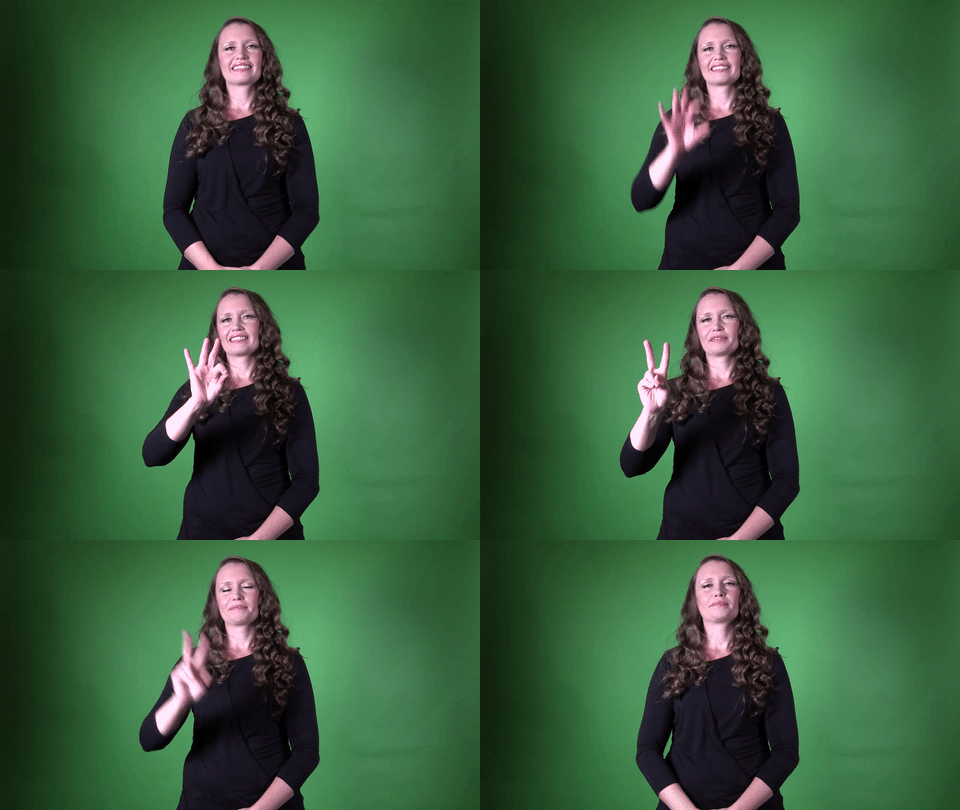
Sign for NUMBER 92 in ASL | 🔢 ASL Dictionary

Definition: Refers to the number ninety-two

Sign for NUMBER 92 in ASL 

YouTube player

Practice Activities:

Practicing the sign for number 92 in ASL can be done through a mix of drills, real-life application, and interactive activities. Start by repeatedly forming the sign for number 92 in ASL while looking in a mirror to check your accuracy. Focus on smooth transitions between the digits 9 and 2, ensuring that each is clearly shown. Use both hands if necessary to solidify muscle memory, but aim for fluidity with one hand as you improve.

Once you feel comfortable signing the number, integrate it into sentences. Try signing: “I have 92 pencils,” “There are 92 people at the event,” or “My address has 92 in it.” Practice signing these sentences at different speeds, starting slow and gradually increasing as you become more confident. Challenge yourself by counting up to 100 and deliberately emphasizing 92 when you reach it.

Use interactive activities, such as writing 92 on different flashcards and signing it whenever you see it. Work with a partner and take turns signing different numbers, making sure to include the sign for number 92 in ASL for recognition. Engage in a storytelling activity where numbers play an important role, such as discussing an imaginary competition with 92 participants or a long trip spanning 92 miles.

If you’re learning in a group, try a number relay where each person signs a number in sequence. When it reaches 92, the person must emphasize the transition. Alternatively, ask a friend to fingerspell numbers at random, and each time they sign 92, respond with an appropriate sentence in ASL. Repetition and context-based usage will help reinforce the sign and improve fluency.

Cultural Context:

The sign for number 92 in ASL is an essential part of communicating numbers in American Sign Language. Numbers play a crucial role in daily conversations, from sharing addresses to discussing prices. Knowing how to properly sign for number 92 in ASL ensures clear and accurate communication.

ASL uses a combination of handshapes and movements to represent numbers. The sign for number 92 in ASL follows the pattern of numbers in the 90s, maintaining consistency in structure. Learning these patterns helps signers quickly recognize and produce numbers fluently.

Numbers are commonly used in different aspects of life, such as dates, measurements, and sports scores. The sign for number 92 in ASL might come up when discussing a birth year, a countdown, or a historical event. Understanding ASL numbers enhances meaningful interactions in conversations.

American Sign Language is a rich visual language with unique grammar and syntax. The sign for number 92 in ASL reflects the systematic approach ASL takes to number formation. Practicing these number signs improves both receptive and expressive signing skills.

Many ASL learners focus on fingerspelling but may overlook number fluency. Mastering the sign for number 92 in ASL is part of developing overall numerical proficiency. Signing numbers correctly is crucial for effective communication in both casual and professional settings.

Numbers can sometimes be modified with facial expressions or context to express emphasis. When using the sign for number 92 in ASL, it’s helpful to consider the conversation’s intent. Whether signing a sports jersey number or a price, proper signing ensures clarity.

ASL numbers are widely used in education, business, and everyday interactions. The sign for number 92 in ASL might appear in classroom settings while teaching math concepts or discussing historical years. Fluency in numerical signs is beneficial for both deaf and hearing ASL users.

Different sign language communities may have variations in number signs. However, the sign for number 92 in ASL is recognized across standard American Sign Language conventions. Consistency in number signs helps ensure mutual understanding among signers.

Practicing numbers regularly strengthens overall ASL communication skills. The sign for number 92 in ASL, along with other numbers, becomes easier with daily use. Conversational fluency includes both letters and numbers, making them equally important in language development.

Mastering number signs contributes to confidence in signing conversations. The sign for number 92 in ASL is just one of many numbers that build a strong foundation in ASL. As signers become comfortable

Extended Definition:

The sign for number 92 in ASL is a two-digit number that follows ASL number rules. It combines the numeral 9 and the numeral 2 in a fluid motion. This sign is commonly used in counting, addresses, and various numerical contexts.

When signing the number 92 in ASL, begin by forming the number 9 with your dominant hand. The thumb and index finger should form a circular shape while the other fingers remain extended. Then transition smoothly to the number 2 by extending the index and middle fingers.

ASL numbers follow unique handshape patterns to ensure clarity. The sign for number 92 in ASL requires precision in movement to avoid confusion with similar numbers. Proper palm orientation and finger transitions are key to making the number easily recognizable.

In ASL, numbers are often used in everyday interactions. Whether telling an age, giving a phone number, or stating a quantity, numbers play a crucial role in communication. The number 92 in ASL is signed in a way that aligns with natural counting conventions.

Numbers in ASL are often signed with a rhythmic pattern to maintain fluency. The sign for number 92 in ASL should be practiced to develop smooth execution. Consistent practice helps reinforce muscle memory and enhances signing speed.

ASL numbering follows a structured format that makes learning easier. When signing the number 92 in ASL, understanding number transitions is essential. Becoming comfortable with two-digit numbers builds confidence in using ASL numerically.

In conversational ASL, numbers often appear in time, money, and dates. The sign for number 92 in ASL can be used in prices, sports scores, and ages. Recognizing and understanding these numbers improves overall signing proficiency.

Practicing ASL numbers regularly helps with accuracy and fluency. The more familiar a signer becomes with the number 92 in ASL, the easier it will be to integrate into conversations. This strengthens overall communication skills in sign language.

By mastering the sign for number 92 in ASL, learners gain confidence in using numbers naturally. Accuracy in signing numbers ensures clear communication in various situations. Regular exposure to ASL numbers builds a strong foundation for numerical fluency.

Synonyms: ninety-two, number ninety-two, number 92, the number 92, the number ninety-two

Educational resources: Find related learning materials in our course bank!

Want more? Check out some of our popular learning activities on the homepage!

Need to look up a sign? Use our highly rated dictionary: https://aslinteractive.com/best-asl-dictionary/

Follow us on tiktok: https://www.tiktok.com/@aslinteractive. More social media links at the bottom of this page!

Long-tail Keywords: what is the sign for Number 92 in ASL, how do you sign Number 92 in ASL, what does Number 92 look like in American Sign Language

Categories: Numbers – Basics, Numbers 91-100, cardinal numbers

tags: Numbers, Numbers 91-100, Math, Language Learning, Educational Content

Parameters

*Handshape*:

The sign for NUMBER 92 in ASL uses two distinct handshapes in sequence. It begins with the number 9 handshape, where the thumb and index finger form an open circle while the other fingers remain extended. Then, the hand transitions to the number 2 handshape by extending the index and middle fingers while the rest of the fingers are curled. The movement typically follows a bouncing or shifting motion between handshapes to clearly convey the numbers.

*Palm Orientation*:

The sign for NUMBER 92 in ASL starts with the dominant hand forming the number 9, with the palm facing outward. The thumb and index finger create a circular shape while the other fingers remain extended. The hand then transitions smoothly to form the number 2, maintaining the same outward palm orientation. This movement keeps the palm facing forward throughout, ensuring clarity when conveying the sign for NUMBER 92 in ASL. ✋

*Location*:

The sign for number 92 in ASL is produced in the neutral space in front of the body, at chest level. The dominant hand forms the number 9 with the index finger and thumb curved, then transitions smoothly into the number 2 by extending the index and middle fingers. This movement maintains a consistent position without shifting significantly up or down. The sign for number 92 in ASL remains within the central signing space for clarity.

*Movement*:

To perform the sign for number 92 in ASL, start with your dominant hand in the “9” handshape, with the index finger and thumb touching while the other fingers remain extended. Then, transition smoothly into the “2” handshape, extending the index and middle fingers while the remaining fingers close. The motion should be a slight bounce or shift to the side as you change from “9” to “2,” maintaining a fluid transition between the numbers.

*Non-Manual Signals*:

When forming the sign for number 92 in ASL, keep a neutral or slightly focused facial expression. Your eyebrows should remain relaxed, as this is a straightforward numerical concept. If emphasizing or clarifying, a slight nod can help indicate certainty. Keep eye contact with the viewer or recipient to maintain engagement. If correcting or repeating, a small head tilt may indicate reassurance. Maintain relaxed lips unless emphasizing, in which case a slight purse may add clarity.

*Prosody, Dominant/Non-Dominant Hand*:

The sign for number 92 in ASL uses the dominant hand in a fluid motion. Start with the number 9 handshape, where the thumb and index finger touch to form an “O” shape, and extend the other fingers. Then transition smoothly into the number 2 handshape by extending the index and middle fingers while closing the remaining fingers. The movement should be a slight bounce or shift from one number to the next, maintaining a natural rhythm.

Tips for Beginners:

Mastering the sign for NUMBER 92 in ASL requires understanding how to smoothly transition between the two numbers. Begin with the number 9, using the thumb and index finger to form an “O” shape while extending the remaining fingers. Then transition into the number 2 by lowering the thumb and extending only the index and middle fingers. The shift between the two numbers should be fluid and natural.

A common challenge when signing the sign for NUMBER 92 in ASL is maintaining clarity between the digits. Be sure to distinctly form the 9 before transitioning to 2 to avoid confusion with similar numbers like 82 or 93. Keep your palm orientation consistent, typically facing outward, as this enhances readability.

Practice the sign for NUMBER 92 in ASL at a moderate speed to gain confidence before increasing your fluency. If your fingers feel stiff when switching shapes, try stretching them beforehand. Muscle memory plays a big role, so repetitive practice will help make the movement smoother over time.

Pay attention to hand placement and movement fluidity when using the sign for NUMBER 92 in ASL in conversation. Keep your hand relaxed and steady to prevent signs from looking rushed or sloppy. Also, avoid unnecessary finger movements that could alter the meaning of the number.

Real-life application of the sign for NUMBER 92 in ASL can help reinforce learning. Try incorporating it into daily activities, such as counting out loud while signing. Watching fluent ASL users sign numbers can also provide visual reinforcement and improve accuracy. If you’re unsure about your form, practicing in front of a mirror or recording yourself can be a useful self-correction tool.

Connections to Other topics:

The sign for NUMBER 92 in ASL connects to the broader numeral system used in American Sign Language. ASL numbers follow a distinct pattern, with numbers above 20 often incorporating movement and handshape changes. Understanding the sign for NUMBER 92 in ASL helps reinforce how ASL organizes numbers in a visually intuitive way. Recognizing patterns in number signs, such as the transition between digits, allows for easier comprehension of related numbers like 91 and 93.

In ASL, numbers commonly appear in dates, addresses, and monetary values, making the sign for NUMBER 92 in ASL relevant in everyday conversation. When discussing years, such as 1992, there is a distinct way to sign it compared to simply stating the number alone. This connection highlights how numerical signs adapt depending on context, reinforcing the need for flexibility in sign language fluency.

The sign for NUMBER 92 in ASL also relates to ordinal numbers, which are used to indicate rank or sequence. If referring to the 92nd item, a slight modification with an ordinal marking may be needed. This ties into broader ASL numbering conventions, such as the difference between saying 92 dollars versus ranking 92nd in a competition. Learning these distinctions helps build a stronger understanding of numerical usage in signing.

Additionally, numbers often combine with classifiers to express quantities, distances, or measurements. For example, incorporating the sign for NUMBER 92 in ASL with a classifier could describe 92 objects, people, or locations. Such applications demonstrate how numbers in ASL interact seamlessly with other signs to form clear and efficient communication. Mastering numerical structures allows signers to expand their ability to describe precise details across various contexts.

Summary:

The sign for NUMBER 92 in ASL follows the standard pattern for signing two-digit numbers. It begins with the sign for 9, made by extending the index finger and thumb while bending the other fingers down. The fingers make contact and form an “open O” shape before transitioning to the number 2, where the index and middle fingers extend outward while the other fingers remain closed.

Number signs in ASL can vary slightly in fluency depending on regional differences and signer’s speed. Some signers move between digits fluidly without extra pauses. Others may articulate the transition more clearly, depending on their preference or the audience’s familiarity with number signs.

The sign for NUMBER 92 in ASL follows an alternating hand orientation. The 9 typically has the palm facing outward or slightly to the side before transitioning to the 2, which generally mirrors the palm orientation. Consistent movement between number signs helps with clarity and ensures smooth numerical expression.

Numbers like 92 often appear in ASL storytelling, data references, and formal settings. When signing in casual conversation, the movement may be more relaxed. In formal settings such as presentations or legal discussions, the signer may articulate each number carefully to avoid misunderstanding.

The importance of number signs in ASL goes beyond simple counting. They represent dates, ages, prices, and even cultural references. The sign for NUMBER 92 in ASL may appear in historical discussions, sports statistics, or academic conversations.

ASL has a rich numerical system, and the transition between single digits follows specific patterns. Higher numbers, especially those with multiple digits, rely on a sequence that maintains clarity. This ensures that the viewer does not confuse one number for another in rapid signing.

While fingerspelling allows for spelling specific words and proper nouns, number signs follow their own unique system. The sign for NUMBER 92 in ASL is part of a broader numeric structure where signs for the numbers 90-99 follow consistent movement patterns. Some signers may adjust speed or orientation based on comfort level or regional differences.

Numeric expressions have deep roots in ASL linguistics. They function both as standalone numbers and as part of larger mathematical or coded expressions. For example, the sign for NUMBER 92 in ASL may appear in addresses, page references, or calculations within a signed conversation.

Applied linguistics within ASL focuses on the way numbers integrate with daily communication needs. Learning number signs, including 92, ensures effective exchanges in practical contexts, such as finance, travel, or academic discussions. Correct number articulation plays a role in maintaining accuracy in conversations.

Deaf culture embraces numerical expressions in unique ways. Number signs integrate into storytelling, poetry, and even visual vernacular performances. The sign for NUMBER 92 in ASL may appear in recounting historical events or personal narratives where specific numbers hold significance.

ASL students often practice number sequences to improve fluency. Learning numbers like 92 reinforces the ability to quickly sign multi-digit figures without hesitation. Mastery of number sequences allows Deaf and hearing individuals to communicate effectively in various contexts.

Finger dexterity plays a role in smooth signing. The transition from 9 to 2 in NUMBER 92 requires subtle hand movement control. Practicing numeric flow between digits improves overall sign fluency and ease of communication in ASL.

Some number signs carry associative cultural meanings. While NUMBER 92 does not have an inherent cultural attachment, numbers can hold significance in personal or community contexts. Sports teams, significant years, or birthdays can influence the meaning of numerical expressions within ASL conversations.

Numbers also integrate with classifiers in ASL. While NUMBER 92 remains a direct sign, other numerical expressions can attach to classifiers to provide deeper spatial or descriptive details. Proficiency in numbers allows signers to navigate more complex visual-gestural communication strategies.

ASL users benefit from consistency in signing number sequences. The transition from 9 to 2 maintains fluidity when used in rapid exchanges. Clarity in signing numeric values prevents miscommunications in contexts such as medical, legal, or financial discussions.

Regional variation sometimes affects number signs but rarely impacts two-digit numbers like 92. Larger numbers or signed numeric expressions may see greater variation. The basic form of NUMBER 92 in ASL remains consistent across most ASL users.

Numbers are essential in structuring signed discourse. Whether listing items, giving examples, or referencing numerical data, ASL signs for numbers enhance message clarity. Learning consistent number patterns helps develop strong communication skills in ASL.

Some ASL learners struggle with numerical transitions due to hand positioning or hesitation. Regular practice of sequences like NUMBER 92 improves signing confidence. Repeated engagement with number signs builds muscle memory and strengthens signing speed.

Visualization techniques help with number memorization in ASL. Mental imagery of numerical shapes and transitions assists in retaining number signs. The sign for NUMBER 92 in ASL becomes more natural with consistent practice and contextual usage.

Non

Want more? Check out some of our popular learning activities!

ASL Interactive Resources

ASLInteractive YouTube Channel

Follow us on tiktok: @aslinteractive.com

Follow us on Instagram: aslinteractive

Facebook page: aslinteractive

Facebook group: aslinteractive

LInkedIn: ASL Interactive LLC

Twitter: @ASL_interactive

*Some information on this page is AI-generated. AI can make mistakes. Please check the information.

Sign for 92 in ASL, Sign for NINETY-TWO in ASL, Sign for NUMBER NINETY-TWO in ASL, Sign for THE NUMBER 92 in ASL, Sign for THE NUMBER NINETY-TWO in ASL, Sign for NUMBER 92 in ASL 

Responses