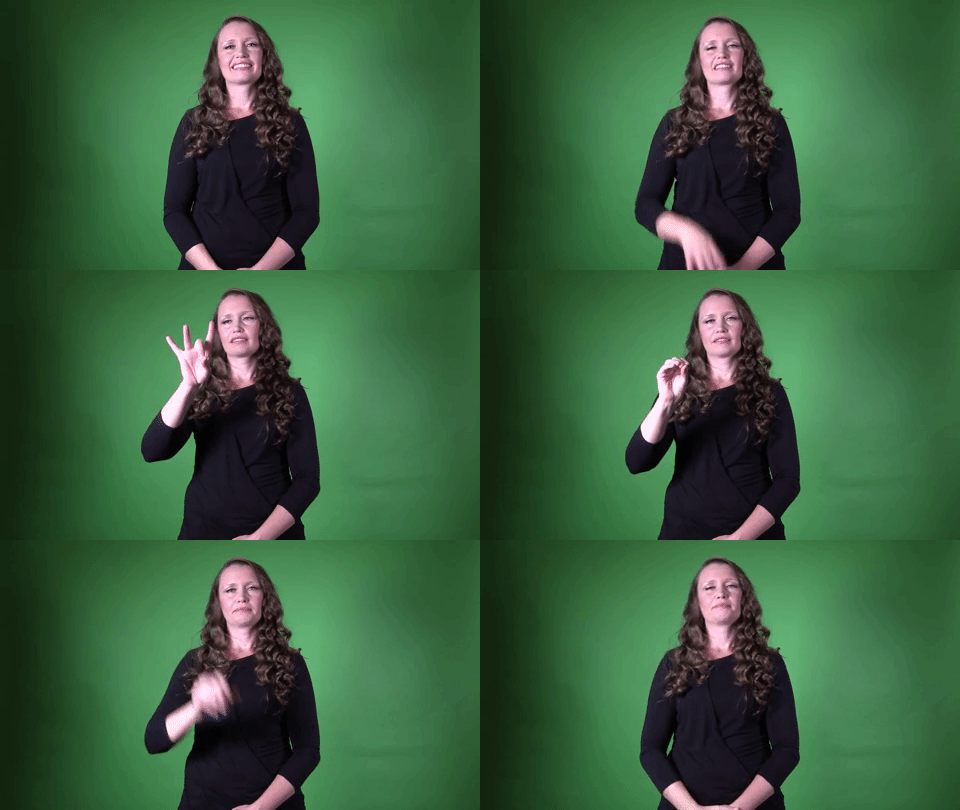
Sign for NUMBER EIGHTY in ASL | 🔢 ASL Dictionary

Definition: Refers to the number eighty

Sign for NUMBER EIGHTY in ASL 

YouTube player

Practice Activities:

Practicing the sign for number eighty in ASL can begin with simple repetition. Hold your dominant hand in an open “8” shape, then smoothly transition to a closed “0” shape. Repeat this motion multiple times, slowly at first, then gradually increasing speed to develop fluency. Try signing number sequences that include eighty, such as seventy-nine, eighty, eighty-one.

To reinforce memory, incorporate the sign for number eighty in ASL into everyday settings. Practice signing prices, addresses, or years that involve eighty. For example, sign “I was born in 1980” or “The price is eighty dollars.” Creating sentences with real-life applications helps solidify retention and natural usage.

Use flashcards with random numbers and challenge yourself or a partner to sign the numbers quickly. Another fun game is to have a partner sign a number, and you sign the number that comes after it. If your partner signs seventy-nine, immediately respond with eighty. This improves response time and ensures correct formation of the sign.

In storytelling practice, invent a scenario where eighty is relevant. For example, describe a person celebrating their eightieth birthday, a race with eighty participants, or someone saving eighty dollars for a special item. This makes learning personal and engaging.

Engage in peer activities where one person fingerspells numbers while the other signs them. For variation, have a partner write down a two-digit number that includes eighty, then sign it correctly. This reinforces both receptive and expressive ASL skills. Remember to maintain smooth transitions and proper handshapes while signing.

By consistently practicing the sign for number eighty in ASL through different formats, learners can build confidence in recognizing and producing the number efficiently.

Cultural Context:

The sign for NUMBER EIGHTY in ASL follows the common pattern used for numbers in American Sign Language. It incorporates handshapes that are natural and easy to remember. Learning this sign can help improve number recognition and fluency in ASL communication.

Numbers in ASL play an essential role in conversations, whether discussing ages, prices, or quantities. The sign for NUMBER EIGHTY in ASL is commonly used in daily interactions, businesses, and even sports. Understanding how to sign numbers correctly ensures clear and effective communication.

American Sign Language has a structured system for numbers, with each number following a consistent signing pattern. The sign for NUMBER EIGHTY in ASL follows this system, making it intuitive for those familiar with ASL numbering. Recognizing patterns in number signs can make learning ASL easier.

In ASL culture, numbers are frequently used in storytelling, sports statistics, and timekeeping. The sign for NUMBER EIGHTY in ASL might be seen in discussions about historical dates, jersey numbers, or pricing. Mastering number signs is an important step in becoming fluent in ASL.

Many ASL users rely on clear and accurate number signs for everyday activities. The sign for NUMBER EIGHTY in ASL is useful in school settings, workplaces, and casual conversations. Knowing this sign ensures smooth communication between Deaf and hearing individuals.

ASL numbers are often used when talking about money, measurements, and schedules. The sign for NUMBER EIGHTY in ASL fits into this system, making it important for negotiations and transactions. Learning number signs helps bridge communication gaps in different settings.

Practicing the sign for NUMBER EIGHTY in ASL helps build confidence in signing larger numbers. Since ASL uses a mix of unique handshapes and consistent patterns, mastering this sign can reinforce overall ASL skills. Fluency in ASL numbers makes signing more efficient and natural.

Numbers in ASL are often combined to form complex values, including addresses, phone numbers, and statistics. The sign for NUMBER EIGHTY in ASL may appear in these contexts, making it a valuable part of any ASL learner’s vocabulary. Mastering this sign ensures clarity in signed communication.

ASL students and interpreters must develop strong number signing skills. The sign for NUMBER EIGHTY in ASL is one of many necessary to communicate effectively in different settings. Practicing number signs frequently improves speed and fluency.

Numbers like eighty are commonly used

Extended Definition:

The sign for number eighty in ASL is an essential part of learning American Sign Language numbers. It follows the same pattern as other multiples of ten, making it easier to remember. Knowing how to sign numbers correctly helps with counting, math, and everyday conversations in ASL.

To form the sign for number eighty in ASL, start by making the handshape for the number eight. Then, transition smoothly into a zero handshape. This movement keeps the signing clear and ensures accuracy in communication.

Numbers play a crucial role in ASL, especially for telling time, giving addresses, and discussing prices. The sign for number eighty in ASL is commonly used in many daily situations. Practicing number signs regularly will help improve fluency and confidence in signing.

The ASL numbering system has a logical structure that makes it easy to learn. The sign for number eighty in ASL follows a predictable pattern like seventy and ninety. Once you understand the system, recognizing and recalling numbers becomes second nature.

Fingerspelling is not necessary when signing the number eighty since it has a specific sign. Using the correct handshapes ensures clarity when communicating with others. Consistent practice will make signing numbers effortless and natural.

Different regions may have slight variations in signing numbers, but the sign for number eighty in ASL remains widely recognized. In formal settings, accuracy is essential for avoiding misunderstandings. Signing with confidence improves both comprehension and expression in ASL.

Learning to recognize and use number signs fluently enhances overall ASL skills. The sign for number eighty in ASL is useful in academic, business, and social settings. Regular exposure to number signs strengthens overall signing ability and understanding.

Numbers are fundamental to describing ages, measurements, and sequences in ASL. Knowing the sign for number eighty in ASL helps connect concepts and makes ASL communication more complete. Practicing number sequences will reinforce memory and improve speed in signing.

Mastering ASL numbers, including the sign for number eighty in ASL, helps in a variety of conversations. Whether discussing money, quantities, or years, having a strong grasp of numbers improves overall language skills. The more often numbers are used in conversation, the more natural they become.

Watching ASL videos and practicing with fluent signers will reinforce the sign for number eighty in ASL. Observing native signers provides insight into hand positioning and movement. Repetition ensures smooth and accurate production of the sign.

Teaching others how to sign

Synonyms: eighty, number eighty, number 80, the number 80, the number eighty

Educational resources: Find related learning materials in our course bank!

Want more? Check out some of our popular learning activities on the homepage!

Need to look up a sign? Use our highly rated dictionary: https://aslinteractive.com/best-asl-dictionary/

Follow us on tiktok: https://www.tiktok.com/@aslinteractive. More social media links at the bottom of this page!

Long-tail Keywords: what is the sign for number eighty in ASL, how do you sign number eighty in ASL, learn how to sign number eighty in American Sign Language

Categories: Numbers – Basics, Numbers 71-80, cardinal numbers

tags: Numbers, Numbers 76-80, Numbers 76 78 79, Rocking Numbers, Language Learning

Parameters

*Handshape*:

The sign for NUMBER EIGHTY in ASL uses a handshape that begins with the number 8, where the thumb and middle finger touch while the other fingers extend. The movement transitions into the number 0 handshape, with the thumb and index finger forming a circle and the remaining fingers relaxed. This sign is fluid, emphasizing the numerical connection. When signing the sign for NUMBER EIGHTY in ASL, ensure smooth motion and proper finger positioning for clarity.

*Palm Orientation*:

The palm orientation for the sign for NUMBER EIGHTY in ASL typically faces outward or slightly angled to the side, depending on the signer’s comfort. The dominant hand forms the number eight by touching the tip of the thumb to the tip of the middle finger, then transitions into a zero by bringing the fingers together in an “O” shape. Throughout the motion, the palm remains forward to maintain clarity and visibility.

*Location*:

The sign for number eighty in ASL is produced in the neutral signing space in front of the torso. The dominant hand starts with the number eight handshape, where the thumb and middle finger touch while the other fingers remain extended. The fingers then transition into a zero handshape, forming a smooth movement. This sign is typically performed at chest level for clarity. Ensure your palm orientation remains forward or slightly angled for clear visibility.

*Movement*:

To produce the sign for number eighty in ASL, start with the dominant hand in the “8” handshape, where the thumb touches the tip of the middle finger. Then transition smoothly into the “0” handshape by bringing the thumb and index finger together in a circular form. The movement should be fluid to clearly show the transformation between the numbers. This sign is primarily performed at chest level with a relaxed posture.

*Non-Manual Signals*:

When signing the sign for NUMBER EIGHTY in ASL, maintain a neutral or slightly focused facial expression . Slightly raise your eyebrows if emphasizing or clarifying the number in conversation. Keep your head still, or nod subtly to confirm accuracy. If you’re asking about the sign for NUMBER EIGHTY in ASL, lean forward slightly and raise your eyebrows to indicate a question . Proper non-manual signals ensure clear communication, especially in numerical contexts.

*Prosody, Dominant/Non-Dominant Hand*:

The sign for NUMBER EIGHTY in ASL uses the dominant hand. Begin with the “8” handshape, where the tip of the thumb and middle finger touch while the remaining fingers extend. Then smoothly transition into the “0” handshape by bringing all fingertips together. This motion should be fluid and natural. The non-dominant hand is not used. Maintain a relaxed wrist and controlled movement for clarity.

Tips for Beginners:

Mastering the sign for NUMBER EIGHTY in ASL takes practice, but with the right technique, you can make it smooth and natural. Start by forming the number eight with your dominant hand, bringing the thumb and middle finger together while keeping the other fingers extended. Then, quickly transition to a fist with the thumb across the fingers to represent zero.

One common mistake beginners make is not making a clear transition between the eight and the zero. Be intentional with each movement, ensuring the numbers are distinct but fluid in motion. Keep your palm facing outward and avoid twisting your hand, as this can make the sign unclear.

Hand positioning is crucial when signing numbers. The sign for NUMBER EIGHTY in ASL should be done at a comfortable chest level with a relaxed but controlled movement. If the transition feels awkward, practice the motion slowly and gradually build up speed while maintaining clarity.

Finger dexterity is key to signing numbers accurately. If forming the number eight feels challenging, strengthen your fingers by practicing other number signs like six or seven. Repeating these movements daily will help train your hand muscles for better control.

A common pitfall is rushing or making the motion too loosely, which can make the sign look sloppy. Keep a steady pace and ensure each movement is deliberate, especially when signing in conversational ASL where numbers appear frequently. Practicing in front of a mirror or recording yourself can help identify areas for improvement.

When using the sign for NUMBER EIGHTY in ASL in real-world conversations, stay mindful of facial expressions and context. Numbers are often used to indicate age, quantities, or addresses, so adding non-manual markers can help ensure clarity. Consistency and confidence in your movements will make your signing more effective and natural.

Connections to Other topics:

The sign for NUMBER EIGHTY in ASL follows a pattern seen with other numbers in the eighties series, such as seventy, ninety, and similar decade-based numbers. These numbers in ASL are generally signed with a single hand using a movement that distinguishes them from single-digit numbers. The pattern of signing numbers like NUMBER EIGHTY in ASL helps make numerical communication quicker and more efficient, particularly when discussing large figures in financial, statistical, or academic contexts.

The way the sign for NUMBER EIGHTY in ASL is formed connects to other numerical signs that involve similar finger positioning. For example, the transition between eighty and other numbers in the eighties is smooth due to the repetitive use of the “8” handshape. This consistency benefits learners who are mastering sequential counting in ASL and helps with rapid number recognition in conversation.

Numbers in ASL play a crucial role in expressing age, money, measurements, and mathematical concepts. When paired with classifiers or other numerical signs, the sign for NUMBER EIGHTY in ASL can help convey precise information, such as weights, scores, or statistics. In financial discussions, this number may appear in talking about money, such as “$80,” or in time-related contexts like “80 years old.”

The numerical system in ASL is also closely tied to classifiers, which describe movement, size, and shape. For instance, incorporating the sign for NUMBER EIGHTY in ASL into a classifier construction can indicate the quantity of objects being discussed. Understanding numerical signs like this also helps in forming phrases related to ordering items, discussing historical dates, or even sports scores. Being able to sign numbers efficiently supports more fluid and accurate communication in both casual and formal ASL conversations.

Summary:

The sign for number eighty in ASL follows a common pattern used for multiples of ten. It is formed using the dominant hand, shaping it into the number eight handshape, where the thumb and middle finger touch while the other fingers extend slightly. The hand then moves into a zero handshape, with the fingers curling inward to form an “O” shape.

This transition between the number eight handshape and the zero handshape creates a fluid, natural motion. The movement is typically done with a slight bounce or shift to indicate the numerical change. Facial expressions remain neutral unless emphasis is needed in conversation.

The sign for number eighty in ASL is part of the broader numerical system in the language. Numbers in ASL follow specific patterns, where tens often incorporate a movement or modification of the base number. This consistency helps learners recognize and recall number signs more efficiently.

Numbers are a crucial part of ASL and frequently appear in conversations. Counting, referencing years, and discussing prices all rely on number signs. The sign for number eighty in ASL fits seamlessly into these interactions, making numerical fluency important for effective communication.

ASL numbers follow a logical system that builds on smaller digits. The tens series often transitions from one number to zero with a clear movement pattern. The sign for number eighty in ASL mirrors this predictable structure, which helps signers quickly recognize numbers without confusion.

Understanding the sign for number eighty in ASL requires familiarity with the number eight handshape. This handshape also appears in other contexts, such as counting or describing quantitative values. Because eight uses a distinct finger-thumb connection, it is important to maintain proper hand positioning for clarity.

The zero component in the sign for number eighty in ASL is equally important. The zero handshape frequently appears in numerical contexts, such as decimals and large amounts. Developing clear and accurate hand transitions ensures that the sign remains understandable in rapid conversations.

Fluency in ASL numbers, including the sign for number eighty in ASL, is essential for everyday interactions. Numbers appear in discussions about dates, statistics, and finances. Mastery of these signs enhances a signer’s ability to communicate effectively in both casual and professional settings.

The cultural significance of numbers in ASL extends beyond simple counting. Many aspects of Deaf culture involve numerical references, such as event dates and time management. The sign for number eighty in ASL fits within this wider cultural framework, reinforcing its importance.

ASL numbers, including the sign for number eighty in ASL, are used in education settings. Deaf students learn numerical signs early to develop mathematical and linguistic competence. Teachers emphasize the importance of clear handshapes and smooth transitions to improve comprehension.

The cognitive processing of sign language numbers differs from spoken numerical comprehension. Studies suggest that visual-spatial memory plays a key role in storing and recalling number signs. The sign for number eighty in ASL exemplifies this visual organization, making numerical recall intuitive for signers.

The design of number signs in ASL highlights linguistic efficiency. The movement from eight to zero in the sign for number eighty in ASL exemplifies how ASL incorporates motion to distinguish between values. This economy of movement enhances communication speed and reduces redundancy.

The tactile quality of ASL numbers makes them accessible for DeafBlind individuals. In this context, the sign for number eighty in ASL is produced as a tactile sign, with one hand tracing the movement on another’s palm. This adaptation ensures that numerical signs remain comprehensible across the diverse ASL user community.

The development of numerical systems in sign language reflects linguistic evolution. Early sign language users likely developed number signs based on manual counting strategies. The sign for number eighty in ASL shows that these systems have since standardized for clarity and ease of use.

Sign language interpreters must master numerical fluency to convey various types of information. The sign for number eighty in ASL may appear in presentations, statistics, or financial transactions. Correct execution ensures accuracy when interpreting between spoken and signed languages.

The positioning of the hand in numerical signs can affect meaning. A slight alteration in movement or shape can change a number’s interpretation. The sign for number eighty in ASL must be executed with precision to prevent misunderstandings in numerical discussions.

Numbers in ASL have patterns that make learning them easier. The transition of tens follows a rhythmic motion that helps reinforce memory. Understanding this system can make the sign for number eighty in ASL and similar numerical signs easier to recall.

Signers often practice number sequences to increase fluency. Counting by tens, including the sign for number eighty in ASL, strengthens muscle memory. Repetition ensures that signs become effortless and automatic over time.

The linguistic structure of ASL numbers connects to broader language features. Handshape transitions, movement, and facial expressions all contribute to meaning. The sign for number eighty in ASL exemplifies how slight modifications in motion create distinct numerical values.

Numbers in ASL are sometimes accompanied by additional classifiers for specificity. When discussing amounts or sizes, signers may modify their signs to

Want more? Check out some of our popular learning activities!

ASL Interactive Resources

ASLInteractive YouTube Channel

Follow us on tiktok: @aslinteractive.com

Follow us on Instagram: aslinteractive

Facebook page: aslinteractive

Facebook group: aslinteractive

LInkedIn: ASL Interactive LLC

Twitter: @ASL_interactive

*Some information on this page is AI-generated. AI can make mistakes. Please check the information.

Sign for 80 in ASL, Sign for EIGHTY in ASL, Sign for NUMBER EIGHTY in ASL 

Responses