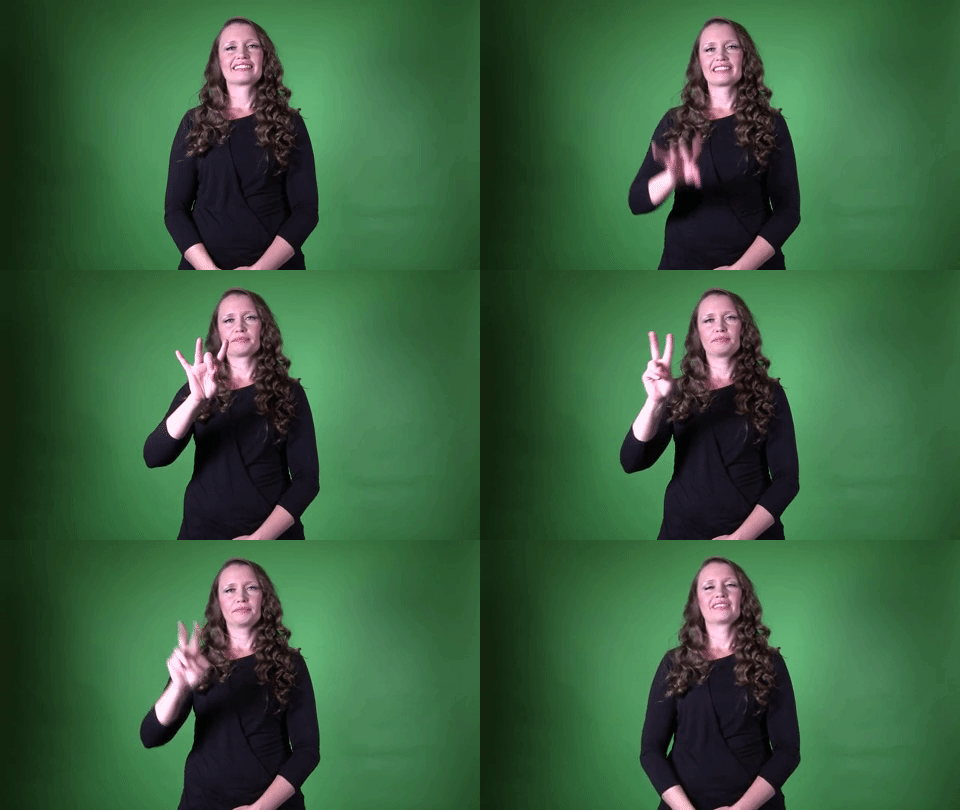
Definition: Refers to the number eighty-two
Sign for NUMBER EIGHTY-TWO in ASL

Practice Activities:
Practicing the sign for number eighty-two in ASL can be made fun with different exercises. Start by signing the number slowly and clearly in front of a mirror to check your handshape and movement. Repeat signing it multiple times while keeping a steady rhythm to build muscle memory.
Use flashcards with numbers written on them, including the sign for number eighty-two in ASL. Shuffle the deck and sign each number as you pick a card. Try saying the numbers aloud while signing to reinforce recognition.
Practice recognizing the number by watching a partner or an online video sign various numbers. When you see the sign for number eighty-two in ASL, respond by signing it back correctly. This activity helps improve receptive skills.
Incorporate the number into everyday conversations. When discussing ages, dates, or money amounts involving eighty-two, practice signing it naturally. For example, “My grandmother is eighty-two years old,” or “The house number is eighty-two.”
Try storytelling exercises by making up a short story that includes the sign for number eighty-two in ASL. For example, tell a story about a person who found eighty-two coins, walked eighty-two steps to a store, or saw eighty-two birds in the sky. This helps reinforce the number in a fun way.
Play number guessing games with a partner. One person signs a number, and the other guesses it. Be sure to include the sign for number eighty-two in ASL in the mix to ensure frequent practice. The more you incorporate the number into practical activities, the more comfortable you’ll become with signing it naturally and accurately.
Cultural Context:
The sign for number eighty-two in ASL follows a common pattern found in American Sign Language number signs. ASL numbers often flow naturally from one to the next, making them easy to recognize and differentiate. The sign for number eighty-two in ASL is formed using specific handshapes that allow for clear and efficient communication.
Numbers in ASL are an essential part of signing, used in everyday conversations, dates, addresses, and more. Knowing the sign for number eighty-two in ASL helps with counting, sharing information, and understanding numerical concepts. The structure of ASL numbers allows for quick and smooth transitions, making them practical in signed conversations.
Understanding ASL numbers, including the sign for number eighty-two in ASL, is crucial for effective communication in the Deaf community. This number, like many others, follows a consistent pattern that makes learning easier. ASL number signs are designed to be visually distinct and easy to remember.
The use of numbers in ASL extends beyond counting, often appearing in classifiers, storytelling, and unique expressions within the language. The sign for number eighty-two in ASL helps express age, prices, and quantities with precision. Mastering number signs enhances fluency and makes communication more natural.
When teaching ASL, educators emphasize number signs as a fundamental skill. The sign for number eighty-two in ASL is introduced alongside other numbers to build strong numerical vocabulary. Practicing ASL numbers regularly helps signers gain confidence and improve accuracy.
Cultural understanding of numbers in ASL also plays a role in fluency. Since ASL is a visual language, numbers, including the sign for number eighty-two in ASL, rely on handshape clarity and movement. Proper finger positioning ensures that numbers are understood without confusion.
Learning the sign for number eighty-two in ASL contributes to better communication with Deaf individuals. Accurate number signs allow for clear exchanges of information, making conversations smooth and meaningful. Signers who master numbers can engage in detailed discussions involving dates, addresses, and measurements with ease.
ASL numbers, including the sign for number eighty-two in ASL, reflect the language’s efficiency and visual appeal. Whether in casual conversations, formal settings, or interpreting situations, numerical accuracy is essential. Gaining proficiency in number signs helps create stronger connections within the signing community.
Understanding ASL numbering patterns makes learning numbers more intuitive. The sign for number eighty-two in ASL is a great addition to a signer’s vocabulary, supporting everyday
Extended Definition:
The sign for number eighty-two in ASL follows the standard pattern for two-digit numbers in American Sign Language. It combines the signs for eight and two in a fluid motion that is easy to recognize. Learning to sign numbers correctly is essential for clear communication in ASL.
To form the sign for number eighty-two in ASL, start with the number eight handshape, where the thumb touches the middle finger while the other fingers remain extended. Then, smoothly transition to the number two handshape, with the index and middle fingers extended while the thumb, ring, and pinky fingers stay folded. This transition should be quick and natural to maintain fluent signing.
Numbers are an important part of everyday conversations in ASL, used for counting, dates, addresses, and more. The sign for number eighty-two in ASL might appear in discussions involving age, quantity, or statistics. Mastering number signs ensures that information is conveyed accurately, whether in casual conversation or formal settings.
When signing numbers, proper hand positioning and motion are crucial for clarity. The sign for number eighty-two in ASL requires clear transitions between handshapes to avoid confusion with similar numbers. Practicing in front of a mirror or using video recordings can help refine accuracy and fluidity.
Some numbers in ASL have distinct movements or palm orientations to prevent misunderstanding. The sign for number eighty-two in ASL follows the conventional pattern where the palm typically faces outward. However, depending on context or preference, slight variations in palm orientation might be acceptable.
Numbers in ASL are signed differently depending on region, speed, and individual signing styles. While the sign for number eighty-two in ASL remains consistent across most signers, exposure to different signing styles can help build comprehension skills. Watching native signers and practicing regularly will improve fluency and confidence.
Learning ASL numbers opens up many opportunities for communication within the Deaf community. Whether discussing prices, addresses, or quantities, knowing the sign for number eighty-two in ASL and other numbers enhances signing ability. Regular practice with different number combinations will make signing smoother and more natural.
Using ASL numbers in everyday situations helps reinforce memorization and signing technique. The sign for number eighty-two in ASL can appear in phone numbers, math problems, or schedules. Engaging in conversations with fluent signers helps develop confidence and accuracy in signing numbers.
American Sign Language is a dynamic, expressive language that relies on hand movements, facial expressions, and body language.
Synonyms: eighty-two, number eighty-two, number 82, the number 82, the number eighty-two
Educational resources: Find related learning materials in our course bank!
Want more? Check out some of our popular learning activities on the homepage!
Need to look up a sign? Use our highly rated dictionary: https://aslinteractive.com/best-asl-dictionary/
Follow us on tiktok: https://www.tiktok.com/@aslinteractive. More social media links at the bottom of this page!
Long-tail Keywords: what is the sign for Number eighty-two in ASL, how do you sign Number eighty-two in ASL, learn how to sign Number eighty-two in American Sign Language
Categories: Numbers – Basics, Numbers 81-90, cardinal numbers
tags: Numbers, Numbers 81-90, Math, Language Learning, Educational Content
Parameters
*Handshape*:
The sign for NUMBER EIGHTY-TWO in ASL uses a changing handshape to reflect the numerical transition. Begin with the number 8 handshape, where the thumb and middle finger touch while the other fingers extend. Then shift smoothly to the number 2 handshape, where the index and middle fingers remain extended while the other fingers curl in. This fluid transformation is essential for signing numbers correctly in ASL. Keep the movement sharp yet natural for clarity. ✋
*Palm Orientation*:
The palm orientation for the sign for NUMBER EIGHTY-TWO in ASL starts with the palm facing outward while forming the number eight with the dominant hand. As the transition to eighty-two occurs, the fingers move smoothly into the number two shape, maintaining a steady palm direction. Throughout the motion, the palm remains forward to ensure clarity and visibility of the numerical values being signed.
*Location*:
The sign for NUMBER EIGHTY-TWO in ASL is produced in the neutral space in front of the body, typically at chest level. The dominant hand forms the number eight and then transitions smoothly into the number two. This movement happens with the palm facing outward or slightly angled, ensuring clarity in communication. Depending on regional preferences, slight variations in orientation may occur, but the overall movement remains consistent.
*Movement*:
To produce the sign for number eighty-two in ASL, form the number eight by bringing the thumb and middle fingertip together while extending the other fingers. Then, transition smoothly into the number two by extending the index and middle fingers while retracting the thumb and remaining fingers. The movement should be fluid, shifting directly from the first handshape to the second without hesitation. Keep the palm facing outward while maintaining clear, deliberate motions.
*Non-Manual Signals*:
Facial expressions remain neutral or slightly focused when performing the sign for NUMBER EIGHTY-TWO in ASL, ensuring clarity. The eyebrows should remain relaxed unless emphasizing or questioning the number, in which case they may raise slightly. Eye gaze stays directed toward the listener or slightly toward the hands to confirm accuracy. Mouth movements may be minimal unless naturally accompanying speech. A small head nod can reinforce understanding, especially in conversational settings.
*Prosody, Dominant/Non-Dominant Hand*:
The sign for NUMBER EIGHTY-TWO in ASL uses the dominant hand to form the numbers in sequence. Begin with the hand in the “8” shape, which is made by touching the tip of the middle finger to the tip of the thumb while the other fingers remain extended. Transition smoothly to the “2” shape by extending the index and middle fingers while the thumb, ring, and pinky fingers close.
When signing the number, keep the palm facing outward for clarity. The movement should be fluid, ensuring each number transitions seamlessly. Facial expressions remain neutral since this is a numerical concept. The non-dominant hand is not used in this sign, and the overall motion is small and controlled to maintain the clarity of NUMBER EIGHTY-TWO in ASL.
Tips for Beginners:
When practicing the sign for NUMBER EIGHTY-TWO in ASL, ensure that your hand transitions smoothly between the two digits. Start with the number eight, forming an “8” shape by touching the tips of your middle finger and thumb together while keeping the other fingers extended. Then shift to the number two by extending just your index and middle fingers. Keep the motion fluid without pausing between numbers.
A common mistake when signing the sign for NUMBER EIGHTY-TWO in ASL is failing to maintain clarity in the number transition. Each number must be distinct without blending together, so take your time to form each one deliberately. Avoid curling or mispositioning your fingers, as this can confuse the meaning. Practicing in front of a mirror or recording yourself can help catch small errors.
Hand orientation and movement are essential when mastering the sign for NUMBER EIGHTY-TWO in ASL. Ensure your palm faces forward, and the shift between numbers happens smoothly in one motion. Avoid tilting your hand too much, as different angles can change the interpretation of the sign. Keeping a steady posture and relaxed fingers will help with clarity and accuracy.
Consistency in finger placement helps when signing the sign for NUMBER EIGHTY-TWO in ASL. The “8” should always have the correct contact between the middle finger and thumb, while the “2” should show a clear separation of other fingers. Practicing slowly at first and gradually increasing speed will make the transition feel more natural.
Using the correct facial expressions isn’t necessary for numbers, but staying aware of body language is useful. Confidence in executing the sign for NUMBER EIGHTY-TWO in ASL will make communication smoother. Don’t rush—precision matters more than speed when learning numerical signs. Keep practicing regularly to build muscle memory and fluency.
Connections to Other topics:
The sign for NUMBER EIGHTY-TWO in ASL connects to broader numerical patterns in the language. ASL uses a structured system for signing double-digit numbers, with many numbers following a consistent movement pattern. The handshape and movement for numbers in the eighties follow a familiar pattern seen in other two-digit numbers, making it easier for learners to grasp once they understand the numerical pattern.
Recognizing the structure of the sign for NUMBER EIGHTY-TWO in ASL helps with learning related numbers, such as eighty-one or eighty-three. These numbers often follow a rhythmic alternation between digits, reinforcing muscle memory. This pattern also extends to other numerical ranges, such as the seventies or nineties, where numbers follow a similar predictable format.
Numbers in ASL often combine with other signs to form concepts such as prices, dates, or measurements. The sign for NUMBER EIGHTY-TWO in ASL could be used in contexts like discussing birth years, addresses, or counting objects. When combining numbers with time-related concepts, they interact with broader grammatical structures, such as incorporating facial expressions for emphasis.
ASL users often incorporate numbers into classifiers to describe arrangements of objects, ages, or quantities. A signer might use the sign for NUMBER EIGHTY-TWO in ASL within a classifier-based structure to indicate 82 items arranged in a specific way. This integration reinforces the connection between numerical signs and visual-spatial representation in ASL grammar.
Learning numerical signs strengthens overall fluency in ASL, as numbers frequently appear in daily communication. Practicing the sign for NUMBER EIGHTY-TWO in ASL alongside other numbers enhances accuracy and recall. Mastering numbers contributes to better understanding of complex ASL sentences, helping signers engage in discussions involving data, lists, and quantitative descriptions.
Summary:
The sign for number eighty-two in ASL follows the standard structure for forming two-digit numbers in American Sign Language. It is a combination of the individual number signs for eight and two, smoothly transitioning from one to the other. This movement maintains clarity and fluidity to ensure easy recognition by other signers.
Number signs in ASL often exhibit a particular pattern, especially for numbers beyond ten. The sign for number eighty-two in ASL includes a palm orientation that typically faces outward or slightly forward, depending on the regional variation. The transition between digits is direct and efficient, minimizing finger movement for greater speed.
ASL numbers rely on handshape consistency to maintain legibility. The sign for number eighty-two in ASL uses the standard “8” handshape, where the thumb and middle finger touch, followed by the “2” handshape with the index and middle fingers extended. This method ensures that signers can convey numerical concepts clearly and without confusion.
Numbers in ASL play a crucial role in communication, appearing frequently in conversations about age, money, quantity, and more. The sign for number eighty-two in ASL is no exception, serving as a fundamental component in numerical exchanges. It may be used in financial discussions, historical dates, or measurements, making it an essential part of a signer’s vocabulary.
ASL numbers incorporate linguistic efficiency by utilizing distinct handshapes with minimal extraneous motion. While speaking English, one would verbally say “eighty-two,” but in ASL, the visual representation condenses the concept into a single smooth movement. This efficiency makes numerical signing both practical and effective.
Because ASL relies on visual clarity, the sign for number eighty-two in ASL emphasizes distinct hand postures. The fingers must be positioned accurately when forming the first digit before shifting to the second, ensuring there is no ambiguity between numbers like eighty-two and eighty-three. This precision enables signers to communicate numerical values without confusion.
Hand orientation plays a vital role in distinguishing similar numbers in ASL. In the sign for number eighty-two in ASL, the hand remains stable while transitioning from “8” to “2,” adding to its visual prominence. Proper positioning allows for easy recognition and natural flow within signed sentences.
Numerical signs are often influenced by regional dialects and signing styles. The sign for number eighty-two in ASL may have minor variations depending on the community, but the general structure remains the same. Consistency in number formation ensures widespread comprehension across different signing groups.
Certain signs in ASL evolve over time, and numerical expressions are no exception. The sign for number eighty-two in ASL has maintained its fundamental format, aligning with general numerical patterns in ASL. This continuity ensures that signers across generations can understand and use the sign effectively.
ASL numbers correlate with linguistic theory regarding numerical representation in visual languages. The sign for number eighty-two in ASL showcases how hand configuration and movement patterns facilitate rapid numerical communication. The simplicity of its formation enables fluent incorporation into broader conversations.
When incorporating the sign for number eighty-two in ASL into larger contexts, signers ensure fluid transitions between numerical sequences. This helps maintain clarity when discussing topics such as sports scores, addresses, or years. Proper execution allows numbers to stand out while remaining integrated into broader statements.
The placement of numbers within ASL sentences follows specific syntactic patterns. The sign for number eighty-two in ASL may occur before or after certain classifiers to indicate quantity. Understanding these structures enhances fluency and ensures seamless communication.
Mathematical expressions in ASL rely heavily on numerical signs like the sign for number eighty-two in ASL. Within educational settings, this number might be used to explain arithmetic operations or problem-solving strategies. Its use supports mathematical literacy within the ASL community.
ASL often modifies numerical signs to indicate emphasis or repetition. The sign for number eighty-two in ASL remains relatively stable but may be reiterated for emphasis in specific contexts. Adjustments in speed or intensity can alter how the number is perceived in conversation.
Numbers in ASL reflect cultural practices, including the influence of Deaf education and sports-related terminology. The sign for number eighty-two in ASL could appear in discussions about team scores or jersey numbers. Understanding numerical variations can enhance engagement with Deaf culture.
Fingerspelling is sometimes used as an alternative when specific numerical signs are unfamiliar. However, the sign for number eighty-two in ASL is conventionally understood, eliminating the need for fingerspelling in most cases. Mastery of numerical signs fosters smoother and more natural interactions in ASL.
Within storytelling, numerical signs contribute to narrative detail and clarity. The sign for number eighty-two in ASL might appear in recounting an event that took place in 1982 or describing a significant statistic. Recognizing when and how to incorporate numbers enhances ASL storytelling techniques.
ASL numbers are critical in professional settings, where numerical accuracy is essential. The
Want more? Check out some of our popular learning activities!
ASL Interactive Resources
ASLInteractive YouTube Channel
Follow us on tiktok: @aslinteractive.com
Follow us on Instagram: aslinteractive
Facebook page: aslinteractive
Facebook group: aslinteractive
LInkedIn: ASL Interactive LLC
Twitter: @ASL_interactive
*Some information on this page is AI-generated. AI can make mistakes. Please check the information.


Responses