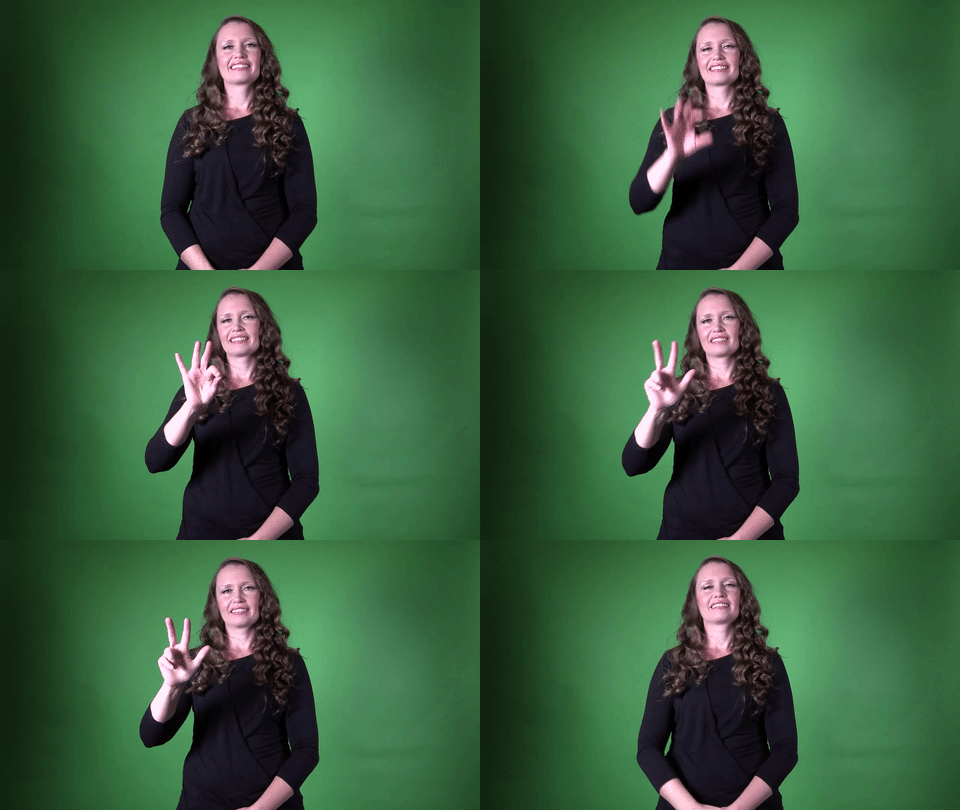
Sign for NUMBER NINETY-THREE in ASL | 🔢 ASL Dictionary

Definition: Refers to the number ninety-three

Sign for NUMBER NINETY-THREE in ASL 

YouTube player

Practice Activities:

To practice the sign for number ninety-three in ASL, start by signing it slowly and repeatedly in isolation. Focus on handshape transitions, ensuring each number flows smoothly from ninety to three. Try signing it in front of a mirror to check for accuracy.

Once comfortable with the movement, incorporate the sign for number ninety-three in ASL into numerical sequences. Count by tens from ten to ninety, then transition into ninety-one, ninety-two, and ninety-three. Practice switching between other numbers at random to improve speed and flexibility.

Use the sign in real-world scenarios by signing numbers such as addresses, ages, or scores in a game. For example, pretend you are announcing a total cost of ninety-three dollars or counting down from one hundred. Try signing a birth year, such as 1993, for extra practice.

Create simple math problems with a partner and answer them using signs. For example, ask a friend to sign fifty plus forty-three and respond with the sign for number ninety-three in ASL. Challenge yourself by signing random calculations and verifying answers.

Practice through storytelling by incorporating the number. Tell a story about a grandparent who is ninety-three years old or describe a competition where someone scored ninety-three points. Saying numbers in context helps reinforce fluency and confidence.

Play a game where you or a friend signs a number quickly, and the other person has to identify it. Mix in similar numbers like ninety-two and ninety-four to test accuracy. Repetition and comparison will help reinforce muscle memory and recognition.

Try signing numbers while watching TV or reading, replacing numbers in subtitles or text with ASL signs. Regular exposure and practice will make signing the sign for number ninety-three in ASL feel more natural and automatic.

Cultural Context:

The sign for number ninety-three in ASL is an essential part of understanding numerical concepts in American Sign Language. Numbers play a significant role in daily conversations, storytelling, and cultural expressions within the Deaf community. Learning how to sign number ninety-three in ASL can help improve fluency and comprehension when discussing dates, quantities, and statistics.

ASL numbers are used in various settings, including education, finance, and social interactions. The sign for number ninety-three in ASL follows a structured pattern that aligns with how other numbers in the ninety series are signed. Mastering this numbering system allows learners to communicate clearly and efficiently in ASL.

In Deaf culture, numbers hold symbolic importance in historical events and community milestones. Understanding the sign for number ninety-three in ASL can be useful when discussing years, addresses, or sports scores. Numbers also play a role in ASL storytelling, where expressive signing enhances communication.

Using the correct handshape and movement is crucial when signing number ninety-three in ASL. Precision in signing ensures clarity and prevents confusion with similar-looking numbers. ASL relies heavily on visual distinction, making accuracy an important part of effective communication.

In schools, Deaf students learn to use numbers for math lessons, science discussions, and time management. The sign for number ninety-three in ASL becomes especially relevant in subjects like arithmetic, where students frequently engage with large numbers. Fluency in numeric signs empowers Deaf and hard-of-hearing individuals in academic and professional settings.

Sports teams and competitions frequently utilize ASL numbers for scoring and player identification. Whether discussing a jersey number or tracking game points, knowing the sign for number ninety-three in ASL is beneficial. Sports fans within the Deaf community use ASL numbers to engage in conversations about their favorite teams and athletes.

Addresses and phone numbers also incorporate ASL numbers in daily communication. When stating an address, using the sign for number ninety-three in ASL ensures the information is conveyed accurately. This is particularly important in formal situations where clear communication is essential.

Learning ASL numbers enriches social interactions among Deaf and hearing individuals alike. The sign for number ninety-three in ASL is just one of many numeric signs that foster stronger communication in diverse environments. Expanding knowledge of ASL numbers enhances overall fluency and comprehension.

Signing numbers in ASL differs from spoken language in many ways. The sign for number ninety-three in ASL follows a logical pattern that aligns with other double-digit numbers. Understanding these patterns makes it

Extended Definition:

The sign for number ninety-three in ASL is a combination of two distinct number signs: nine and three. American Sign Language uses a one-handed number system, and each digit is represented sequentially. When signing the number ninety-three, the signer transitions smoothly between the two numbers.

To begin the sign for number ninety-three in ASL, form the number nine by touching the tip of the thumb and index finger together while keeping the other fingers extended. Then, move into the sign for three by extending the thumb, index, and middle fingers while the ring and pinky fingers remain folded. The transition between the two numbers should be fluid, ensuring clarity in communication.

Handshape and palm orientation are important when signing the number ninety-three. The palm should face outward, and the movement should be minimal to maintain accuracy. Practicing the transition between ninety and three helps improve fluency in signing numbers effectively.

Using the sign for number ninety-three in ASL is common in various settings such as counting, addresses, prices, and age descriptions. In conversations, numbers play an essential role in providing accurate information. Understanding how to sign numbers correctly ensures clear and precise communication in ASL.

ASL number signs follow a consistent structure that allows users to quickly grasp numerical sequences. By mastering the sign for number ninety-three in ASL, learners build confidence in expressing complex numbers. Repetition and practice contribute to better memory retention and signing skills.

Number signs in ASL follow a logical pattern, making it easier to learn multiple numbers simultaneously. Recognizing patterns in numerical signing helps learners apply them across different numerical ranges. The sign for number ninety-three in ASL follows this principle, aiding in learning other numbers efficiently.

Finger dexterity plays a crucial role in making number signs clear and understandable. Smooth transitions between numbers, such as in the sign for number ninety-three in ASL, require finger strength and flexibility. Practicing hand movements regularly improves signing accuracy and speed over time.

Numbers are frequently used in everyday ASL conversations, making fluency in signing numerical values important. Knowing how to sign the number ninety-three helps in expressing quantities, dates, and statistics. Familiarity with ASL numbers enhances overall communication skills.

ASL number signs are standardized but may vary slightly in some regional dialects. However, the sign for number ninety-three in ASL remains widely recognized in most ASL communities. Learning the standardized form ensures effective understanding across different ASL users.

Mastering the

Synonyms: ninety-three, number ninety-three, number 93, the number 93, the number ninety-three

Educational resources: Find related learning materials in our course bank!

Want more? Check out some of our popular learning activities on the homepage!

Need to look up a sign? Use our highly rated dictionary: https://aslinteractive.com/best-asl-dictionary/

Follow us on tiktok: https://www.tiktok.com/@aslinteractive. More social media links at the bottom of this page!

Long-tail Keywords: what is the sign for number ninety-three in ASL, how do you sign number ninety-three in ASL, learn how to sign number ninety-three in American Sign Language

Categories: Numbers – Basics, Numbers 91-100, cardinal numbers

tags: Numbers, Numbers 91-100, Math, Language Learning, Educational Content

Parameters

*Handshape*:

The sign for NUMBER NINETY-THREE in ASL uses a shifting handshape. It begins with the number 90, which is formed by shaping the dominant hand into a “9” handshape, with the thumb and index finger extended while the other fingers are slightly curled. The movement transitions into a “3” handshape by extending the thumb, index, and middle fingers while folding the ring and pinky fingers.

The motion is fluid, shifting smoothly from “9” to “3” to represent the full value. The sign for NUMBER NINETY-THREE in ASL is produced with a slight wrist movement to ensure clarity. This number sign, like others, follows a consistent pattern in ASL numbering conventions.

*Palm Orientation*:

The palm orientation for the sign for NUMBER NINETY-THREE in ASL begins with the dominant hand in an open position, facing outward. As the hand transitions between “9” and “3,” the palm remains forward to ensure clarity. This motion keeps the orientation consistent, making the number sequence easily recognizable. Proper palm orientation is crucial for maintaining visual accuracy when signing the sign for NUMBER NINETY-THREE in ASL.

*Location*:

The sign for number ninety-three in ASL is performed in the neutral signing space in front of the body, around chest height. The dominant hand forms the number nine shape, then smoothly transitions into the number three shape. This movement should be fluid and natural, maintaining proper hand positioning throughout. When signing the number ninety-three, ensure that your palm orientation matches the standard ASL number formation for clarity and accuracy.

*Movement*:

To sign for number ninety-three in ASL, begin by forming the number nine with your dominant hand, using an open “O” shape with the thumb and index touching. Then smoothly transition to the number three by extending the thumb, index, and middle fingers while closing the rest. The movement should be fluid, with minimal pause between transitions, maintaining a natural hand position and facing outward.

*Non-Manual Signals*:

When signing the sign for number ninety-three in ASL, maintain a neutral or slightly focused facial expression. The eyebrows may be slightly raised if emphasizing or clarifying the number. If asking a question about the sign for number ninety-three in ASL, slightly furrow the eyebrows and tilt the head forward. Keep eye contact with your conversation partner to ensure clarity and engagement while using appropriate pacing for the number transition.

*Prosody, Dominant/Non-Dominant Hand*:

The sign for number ninety-three in ASL is produced using the dominant hand in a number formation. Start by forming the number nine with the dominant hand, palm facing outward. Then transition seamlessly into the number three by curving the index and middle fingers while extending the thumb. The motion should be fluid, emphasizing clarity in each numeral. The non-dominant hand remains inactive. Keep the hand in a comfortable position, ensuring the sign for number ninety-three in ASL is clear and precise.

Tips for Beginners:

When learning the sign for NUMBER NINETY-THREE in ASL, start by practicing the individual numbers first. The sign for ninety-three is a combination of the signs for “nine” and “three.” Make sure your handshape transitions smoothly between the two numbers to maintain fluency in your signing.

A common mistake beginners make when signing the sign for NUMBER NINETY-THREE in ASL is not forming the numbers clearly. The number nine should have the thumb and index finger touching while the other fingers stay extended. The transition to three should be done without hesitation, keeping the index, middle, and thumb extended while the ring and pinky tuck down.

Hand positioning matters when signing numbers. Keep your dominant hand in a neutral space in front of your chest or slightly higher. Avoid turning your hand inward or outward excessively, as this can cause confusion. Looking at a mirror or recording yourself can help ensure your movements are accurate.

Finger dexterity is important when signing the sign for NUMBER NINETY-THREE in ASL. If your fingers feel stiff, practice number progressions slowly to build comfort and flexibility. Repeating sequences like ninety-one, ninety-two, and ninety-three will help reinforce natural movement.

If signing quickly makes your transitions messy, slow down and focus on precision. Speed can be developed over time. Clear, distinct numbers are more important than going fast, ensuring the person watching understands your sign without issue.

Watching fluent signers and imitating their movements helps build confidence. If possible, ask a Deaf signer for feedback on your execution of the sign for NUMBER NINETY-THREE in ASL. This will ensure you are using the correct form and rhythm when signing large two-digit numbers.

Connections to Other topics:

The sign for number ninety-three in ASL follows the general pattern of ASL number formation, making it easy to learn for those familiar with other two-digit numbers. Like other numbers in the ninety range, it combines the digit for nine and then transitions into the digit for three with a flowing movement. This movement is consistent with the signing system for cardinal numbers, emphasizing efficiency and clarity in numerical representation.

Number signs, including the sign for number ninety-three in ASL, are crucial for discussing dates, money, addresses, and measurements. Understanding number patterns in ASL helps with rapid comprehension in real-world contexts, such as stating a price or giving a phone number. In addition to everyday conversations, ASL numbering is essential in areas such as sports statistics, mathematical discussions, and historical references.

Ordinal numbers, like ninety-third, require an additional movement modification to show the ranking or sequence. Instead of simply transitioning between the digits, an ordinal sign typically includes a twist or a small bounce to indicate placement in a series. This concept extends to other ordinal numbers, reinforcing how small modifications change numerical meaning in ASL.

The sign for number ninety-three in ASL also connects with larger numbers and mathematical discussions, such as summing or multiplying figures. When combined with classifiers or time-related signs, it can indicate ages, quantities, or years in history. This connection supports broader numerical literacy and strengthens communication in academic and professional settings.

Comprehending ASL numbers enhances fluency and prepares signers for more advanced topics, such as percentages or measurements. Since ASL numbers are used across many subjects, mastering them can improve comfort in both casual and formal interactions. The ability to swiftly recognize and produce number signs strengthens overall ASL comprehension and communication skills.

Summary:

The sign for number ninety-three in ASL is a combination of the signs for nine and three. In ASL, most two-digit numbers in the nineties follow a specific pattern that shifts from the first digit to the second. The handshape begins with the nine handshape and transitions smoothly into the three handshape.

When producing the sign for number ninety-three in ASL, start with the dominant hand in a “9” shape. The index finger and thumb touch while the other fingers remain extended. Then, quickly transition into the “3” shape, with the thumb, index, and middle fingers extended while the ring and pinky fingers close.

This movement should be fluid, making it clear that the signer is counting in sequence. Maintaining proper hand positioning is crucial, as the clarity of the sign affects comprehension. Unlike spoken numerals, ASL uses this shifting pattern to establish numerical order without needing spoken inflection.

Numbers in ASL follow particular patterns that make them easy to recognize at a glance. The transition for the sign for number ninety-three in ASL follows the same motion as other numbers in the nineties group. A signer familiar with this numerical pattern can quickly recognize numbers such as ninety-one or ninety-two, even with slight variations in signing speed.

Number signs in ASL reflect the language’s emphasis on spatial and visual organization. The placement and movement of each number ensure clarity and prevent confusion with similar numerical signs. In the broader context of ASL linguistics, number transitions serve as a prime example of structured morphology within sign language.

The sign for number ninety-three in ASL can be used in various contexts, from counting to specifying addresses or years. Because ASL has its own nuanced grammatical structure, numbers can function differently depending on whether they describe quantities, rankings, or time concepts. Signers often adjust speed and positioning when signing numbers within sentences.

Culturally, numbers play an essential role within Deaf communities. When signing numerical sequences, signers often modify or emphasize certain numbers for clarity and emphasis. The precision of the sign for number ninety-three in ASL ensures the signer communicates effectively in both personal and professional environments.

In educational settings, understanding numbers in ASL is crucial for Deaf students following math lessons. Learning to recognize and produce number signs fluently can improve one’s ability to participate in classroom discussions. ASL instructors emphasize repetition and smooth transitions in numerical signing to build fluency.

Linguistically, numbers in ASL highlight the language’s natural ability to evolve based on practicality and efficiency. The transition between the two digits reflects the way ASL favors logical movement shifts when conveying information. This efficiency allows signers to communicate numerical data quickly without sacrificing clarity.

There are regional and stylistic variations in number signing. While the sign for number ninety-three in ASL generally follows the standard transition from nine to three, some signers may subtly alter finger positioning. These variations are typically minor and do not impede comprehension among fluent signers.

The concept of numerical representation in ASL connects to broader themes of accessibility in mathematics and science. Many institutions now incorporate ASL numerical instruction into STEM education to ensure an inclusive learning environment. Fluent numerical signing can bridge communication gaps in professional and academic fields.

Mastering the sign for number ninety-three in ASL is especially significant for those fluent in ASL-dependent professions. Interpreters, educators, and business professionals often need to convey numerical data with exact precision. A firm understanding of the sign increases overall ASL fluency and communication ease.

Teaching number signs in ASL often involves repetition and structured exercises. New learners practice transitioning between numbers until they become second nature. This training ensures that the flow between digits remains smooth, reducing any ambiguity in comprehension.

When fingerspelling numbers in specific contexts, such as phone numbers or addresses, signers adjust the pacing of number signs. Unlike cardinal numbers, which have a natural transition, fingerspelling individual numerals requires a distinct pause between digits. The distinction ensures that numerical sequences remain clear in various contexts.

Related to the sign for number ninety-three in ASL are other counting and quantifying signs in ASL. Learning the patterns within the nineties range aids in understanding how number sequencing works in general. Signers can build on this knowledge to recognize patterns in different numerical categories, such as ordinal numbers and measurements.

Understanding the sign for number ninety-three in ASL also highlights the importance of non-manual markers in ASL grammar. While numbers themselves do not necessarily involve facial expressions, context and emphasis can alter their meaning. In sentence structures, a signer may raise their brows or lean forward to clarify whether a number signifies an amount, a time, or a ranking.

Digital and print resources for ASL learners emphasize the importance of mastering numerical signs. Many ASL dictionaries include video demonstrations to show proper signing angles and transitions. These resources help learners practice and refine their numerical signing skills for better

Want more? Check out some of our popular learning activities!

ASL Interactive Resources

ASLInteractive YouTube Channel

Follow us on tiktok: @aslinteractive.com

Follow us on Instagram: aslinteractive

Facebook page: aslinteractive

Facebook group: aslinteractive

LInkedIn: ASL Interactive LLC

Twitter: @ASL_interactive

*Some information on this page is AI-generated. AI can make mistakes. Please check the information.

Sign for 93 in ASL, Sign for NINETY-THREE in ASL, Sign for NUMBER NINETY-THREE in ASL 

Responses