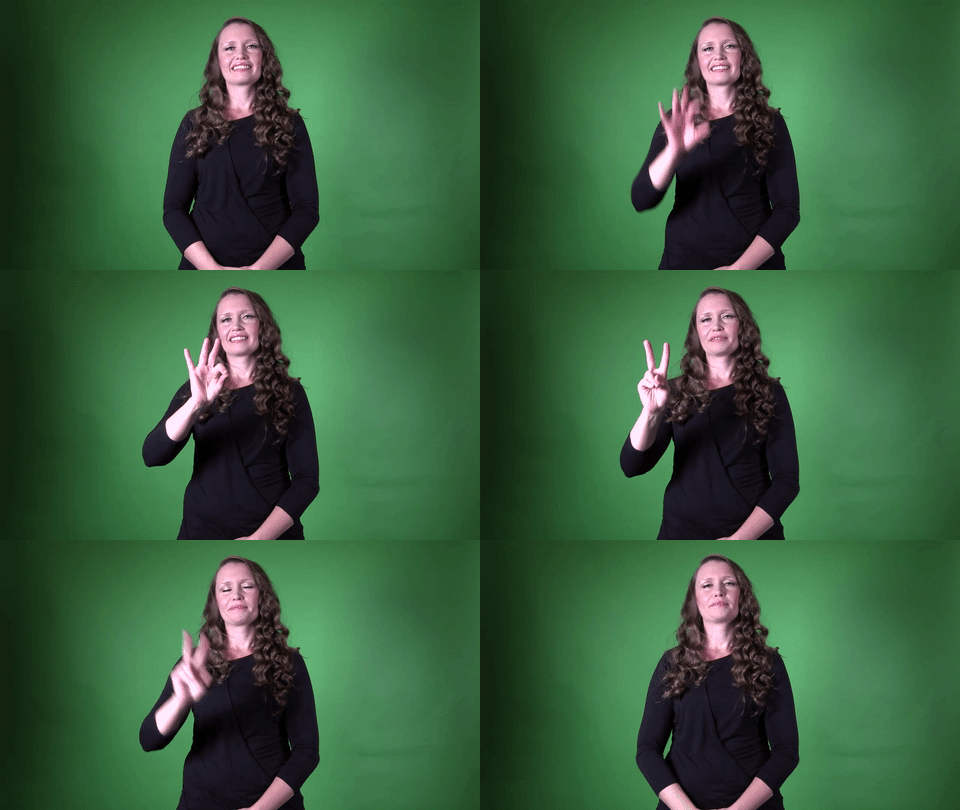
Sign for NUMBER NINETY-TWO in ASL | 🔢 ASL Dictionary

Definition: Refers to the number ninety-two

Sign for NUMBER NINETY-TWO in ASL 

YouTube player

Practice Activities:

To practice the sign for number ninety-two in ASL, start by signing it multiple times in front of a mirror. Focus on maintaining clear handshapes and smooth transitions between the digits. Try signing it at different speeds while ensuring accuracy.

Use a number drill to reinforce the sign for number ninety-two in ASL. Count from ninety to ninety-nine, making sure to sign each number clearly. Then, mix the order and challenge yourself to sign numbers randomly, ensuring you can recognize and produce them quickly.

Practice incorporating the sign into everyday contexts. For example, sign numbers while discussing years, addresses, or statistics. Try saying “My grandmother was born in [sign for number ninety-two in ASL]” or “That team won the championship in [sign for number ninety-two in ASL].”

Ask a friend or study partner to quiz you on random two-digit numbers. When your partner shows a written number, respond by signing it. Take turns switching roles to enhance your receptive and expressive skills.

Create a story that includes the sign for number ninety-two in ASL. For example, tell a short anecdote about something that happened in the year 1992. Or describe a group of ninety-two objects, such as “There were [sign for number ninety-two in ASL] balloons at the party.”

Set a timer and challenge yourself to sign as many two-digit numbers as possible within one minute, making sure to include the sign for number ninety-two in ASL at least twice. This will help reinforce speed and accuracy when signing numbers.

Cultural Context:

The sign for number ninety-two in asl is a combination of two numbers, ninety and two, using the dominant hand. American Sign Language follows a structured system for signing numbers, and the sign for number ninety-two in asl is a great example of how numbers can flow smoothly in sequence. Learning numbers in ASL is essential for communication, whether sharing a date, time, or quantity.

In ASL, numbers are used frequently in daily conversations, making it important to understand how to sign them accurately. The sign for number ninety-two in asl follows the standard number-signing pattern, ensuring clarity for both the signer and the viewer. It is part of a larger numerical system that includes cardinal and ordinal numbers, used in different contexts.

Deaf culture places a strong emphasis on clear and expressive signing, and numbers are no exception. The sign for number ninety-two in asl, like all number signs, follows a consistent and recognizable pattern. When signing large numbers, fluidity and hand positioning help maintain clear communication without confusion.

Number signs in ASL are deeply embedded in Deaf culture, used in everything from sports scores to addresses. The sign for number ninety-two in asl can be part of conversations about age, money, or quantities. Understanding how to sign numbers correctly enhances communication and helps connect with the Deaf community more effectively.

Because ASL is a visual language, number signs rely on handshape, palm orientation, and movement. The sign for number ninety-two in asl utilizes these essential elements to be easily understood. Practicing number signs frequently will improve fluency and confidence in using ASL.

Number incorporation in ASL is efficient and logical, making learning numbers easy once basic patterns are memorized. The sign for number ninety-two in asl reflects this structured approach, allowing signers to communicate numerical values clearly. Mastering number signs is a fundamental skill for anyone learning ASL, whether for everyday conversations or professional settings.

ASL learners frequently practice numbers to build fluency, and the sign for number ninety-two in asl is an important part of that practice. Number signs are used in phone numbers, addresses, and scheduling, reinforcing their value in real-world situations. Regular practice and exposure to ASL conversations help in mastering number signs effectively.

Since ASL relies heavily on visual context, maintaining accuracy in number signs ensures proper communication. The sign for number ninety-two in asl, like other number signs, should be practiced with attention to detail. Watching fluent ASL users sign numbers

Extended Definition:

The sign for NUMBER NINETY-TWO in ASL follows a common pattern used for expressing double-digit numbers. It combines the numeral 9 with the numeral 2 in a fluid motion. This movement maintains the clarity and structure needed for proper number representation in American Sign Language.

When signing NUMBER NINETY-TWO in ASL, begin by forming the number 9 with your dominant hand. The thumb and index finger touch to create a circular shape while the remaining fingers extend upward. Next, transition smoothly into the number 2, raising the index and middle fingers while keeping the thumb, ring, and pinky fingers folded down.

The movement between the numbers should be fluid but distinct to avoid confusion. Some signers may add a slight wrist twist, depending on their signing style or regional variations. The sign for NUMBER NINETY-TWO in ASL is easy to recognize when practiced consistently.

Numbers in ASL are integral for communication, appearing in everyday discussions, addresses, and financial transactions. Learning the sign for NUMBER NINETY-TWO in ASL helps build confidence in number fluency. It also ensures clear communication when giving or receiving numerical information in conversations.

ASL numbers follow a logical structure, making them easier to learn with practice. The ability to quickly recognize and produce numbers like NUMBER NINETY-TWO in ASL improves overall signing speed. Mastering numbers strengthens both expressive and receptive ASL skills.

Context plays an essential role in using numbers correctly. The sign for NUMBER NINETY-TWO in ASL might appear in discussions about age, prices, statistics, or sports scores. Understanding its use in different scenarios will enhance comprehension and fluency.

Facial expressions and body language contribute to the clarity of signed numbers. Maintaining proper hand positioning and fluid transitions ensures that the sign for NUMBER NINETY-TWO in ASL is easily understood. Consistency in signing prevents misunderstandings and promotes effective communication.

Practicing ASL numbers regularly helps reinforce muscle memory. Signing NUMBER NINETY-TWO in ASL along with other numbers strengthens hand coordination. Using ASL numbers in real-life situations solidifies comprehension and recall speed.

Fingerspelling is not commonly used for numbers since ASL has a numerical system. Knowing the proper sign for NUMBER NINETY-TWO in ASL reduces the need for fingerspelling, making conversations smoother. Proficiency in ASL numbers is an essential part of developing strong signing skills.

Synonyms: ninety-two, number ninety-two, number 92, the number 92, the number ninety-two

Educational resources: Find related learning materials in our course bank!

Want more? Check out some of our popular learning activities on the homepage!

Need to look up a sign? Use our highly rated dictionary: https://aslinteractive.com/best-asl-dictionary/

Follow us on tiktok: https://www.tiktok.com/@aslinteractive. More social media links at the bottom of this page!

Long-tail Keywords: what is the sign for number ninety-two in ASL, how do you sign number ninety-two in American Sign Language, learn to sign number ninety-two in ASL

Categories: Numbers – Basics, Numbers 91-100, cardinal numbers

tags: Numbers, Numbers 91-100, Math, Language Learning, Educational Content

Parameters

*Handshape*:

The sign for NUMBER NINETY-TWO in ASL uses a combination of two distinct handshapes. It starts with the number nine handshape, where the thumb and index finger form a small circle while the remaining fingers stay extended. Then, it transitions smoothly into the number two handshape, with the index and middle fingers extended while the thumb, ring, and pinky fingers remain folded. This movement keeps the sign fluid and natural.

*Palm Orientation*:

The palm orientation for the sign for NUMBER NINETY-TWO in ASL begins with the palm facing outward. The movement incorporates a transition from the nine handshape to the two handshape while maintaining a consistent outward palm direction. This ensures clarity and proper display of the sign for NUMBER NINETY-TWO in ASL. The open palm orientation helps differentiate it from other numbers and maintains the integrity of numerical signing conventions.

*Location*:

The sign for NUMBER NINETY-TWO in ASL takes place in the neutral space in front of the body. The dominant hand forms the number nine with the palm facing outward, then transitions into the number two with a fluid movement. This sign is typically produced at chest level and stays within a comfortable signing area to maintain clarity and readability.

*Movement*:

To produce the sign for number ninety-two in ASL, begin by forming the number nine with your dominant hand, extending the thumb and index finger to create an open circle while the other fingers remain extended. Then, smoothly transition to the number two by extending the index and middle fingers while closing the rest. The hand should remain in a neutral space in front of the body, with a fluid motion between the two numbers.

*Non-Manual Signals*:

Facial expression remains neutral or slightly focused while signing the sign for NUMBER NINETY-TWO in ASL. Eyebrows may be slightly raised if emphasizing or clarifying, but they generally stay relaxed. Mouth remains closed or slightly pursed, without exaggerated movements. Head movement can stay steady, though a slight nod may accompany the sign for clarity. Vision stays directed toward the listener or signer’s own hand, ensuring precision in communication.

*Prosody, Dominant/Non-Dominant Hand*:

The sign for number ninety-two in ASL uses the dominant hand, forming the number 9️⃣ with the index finger and thumb touching while the other fingers remain extended. The hand moves slightly to the side, then transitions smoothly into the number 2️⃣ by extending the index and middle fingers. This movement maintains a fluid and controlled motion, reflecting the numerical sequence clearly. The non-dominant hand is not used in this sign.

Tips for Beginners:

Mastering the sign for number ninety-two in ASL requires familiarity with ASL numbering conventions. This number is signed using a combination of the digits 9 and 2 in a fluid motion. Make sure your hand remains steady and your transitions between the digits are smooth to ensure clarity.

One common mistake beginners make when signing the number ninety-two is not maintaining consistent hand orientation. The palm should be facing outward for both digits to match standard ASL number rules. Keeping a steady pace while signing will help avoid confusion with similar-looking numbers like ninety-three or ninety-eight.

Practicing the sign for number ninety-two in ASL regularly will help you build muscle memory. Try signing other numbers in the nineties to recognize the pattern and reinforce your understanding. Pay close attention to the shape of your fingers, ensuring that the 9 and 2 are distinct and correctly positioned.

A useful tip is to practice in front of a mirror to self-correct hand positioning and transitions. You can also record yourself signing to check for accuracy. Watching fluent signers and mimicking their motions will help with fluidity and confidence.

Using proper finger positioning is essential to ensuring the sign for number ninety-two in ASL is easily recognized. The number 9 is created by forming an open circle between the thumb and index finger, while the number 2 uses the index and middle fingers extended. Ensure fingers are not curled awkwardly, which can confuse the numbers.

Engaging in real-life conversations with experienced signers will improve your speed and accuracy. If you’re feeling unsure, ask a fluent ASL user for feedback. Over time, the sign for number ninety-two in ASL will become second nature and feel more natural in everyday use.

Connections to Other topics:

The sign for number ninety-two in ASL follows the standard pattern for signing two-digit numbers, where the first digit, nine, is formed on the dominant hand, followed by a quick transition to the two. This movement reflects ASL’s efficiency in number representation, making it similar in structure to other two-digit numbers. The fluid shift between the digits is essential for clarity and understanding in numerical communication.

The sign for number ninety-two in ASL is part of the larger system of numbers, which are frequently used in everyday interactions. Numbers are crucial in time expressions, age, currency, addresses, and sports scores. When signing numbers in sequences, such as in phone numbers or years, handshape clarity and transitions play a key role in comprehension.

Ordinal numbers also connect to the sign for number ninety-two in ASL when indicating placement in a sequence, such as “ninety-second place” in a competition. By adding a small twisting motion at the wrist, the meaning can shift from a cardinal number to an ordinal number. This adaptation reflects the flexibility of ASL grammar in modifying root signs to fit different grammatical purposes.

Related numerical signs include decade numbers like ninety, which can be used in contexts such as discussing historical events or years. For example, signing “1992” follows a different structure, with “19” signed first followed by “92.” Understanding the sign for number ninety-two in ASL helps in mastering larger number sequences and facilitates smooth numerical conversations.

Numbers play a significant role in financial transactions, appointments, and measurements. The sign for number ninety-two in ASL connects to concepts like money when stating an amount, such as $92. Learning number-related signs in ASL ensures more effective communication in various scenarios, including shopping, budgeting, and statistics.

Summary:

The sign for number ninety-two in ASL is a numerical sign that incorporates both the number nine and the number two in a fluid motion. It belongs to a category of number signs that use a single hand to transition between digits, making them efficient and visually clear. ASL incorporates a specialized system for signing multi-digit numbers, ensuring clarity and fluency in communication.

To produce the sign for number ninety-two in ASL, begin by forming the number nine with your dominant hand. This is done by extending the index finger while curling the thumb to touch the tip of the index finger, leaving the remaining fingers extended but relaxed. After forming nine, smoothly transition into the number two, which involves extending just the index and middle fingers while keeping the thumb, ring, and pinky fingers tucked.

This sign follows a pattern that is common among multi-digit numbers in ASL. Instead of separate, rigid movements for each digit, the hand dynamically shifts from one number to the next in a natural flow. The key to signing number ninety-two correctly is to maintain a continuous, controlled motion between the two handshapes without making it appear choppy or disjointed.

ASL numbers from ninety to ninety-nine follow a similar structure, making those in this range easy to learn once the pattern is understood. Each number in the sequence modifies the last digit while maintaining an underlying consistency in movement. Because ASL is a visual language, these number signs are carefully designed to maintain clarity and avoid confusion with similar-looking numbers.

The sign for number ninety-two in ASL is frequently used in various real-life contexts, such as dates, prices, addresses, and age references. In conversations, number signs must be clear to avoid misunderstandings, especially when discussing money or precise numerical details. Fluent signers often employ subtle shifts in facial expressions or movement emphasis to ensure numerical accuracy.

Number signs in ASL reflect linguistic efficiency. Unlike spoken languages that rely on linear vocal sounds, ASL expresses numerical values through compact, visual gestures. The transition between ninety and two in this sign mirrors the structural economy of the ASL numbering system, allowing for quick and effective communication.

When teaching the sign for number ninety-two in ASL, instructors emphasize fluidity in hand movement. Learners often practice transitioning between digits to develop muscle memory and ensure natural signing. Repetitive practice with different numerical combinations helps improve speed and accuracy.

The structure of ASL numbers also applies to ordinal numbering, though the sign for ninety-second would differ slightly to incorporate ordinal inflection. Ordinal numbers often include a wrist turn or slight movement alteration, distinguishing them from cardinal numbers like ninety-two. In structured ASL discourse, knowing the difference between these variations prevents miscommunication.

Culturally, ASL numbers play a central role in daily interactions. Whether discussing historical dates, sports scores, or counting in sequence, number signs are vital in conveying precise information. The efficiency of number signs like ninety-two contributes to the broader communicative power of ASL.

ASL has evolved to accommodate variations in number signing. While standardized forms exist, minor stylistic differences may be observed depending on regional or generational preferences. Some variations in signing numbers stem from historical shifts in ASL instruction and exposure to different signing communities.

The sign for number ninety-two in ASL exemplifies the blend of efficiency and clarity inherent in ASL numeral structures. By incorporating a seamless transition between handshapes, it adheres to the principles of visual accessibility that define the language. This efficiency distinguishes ASL numbers from spoken counting systems, which require distinct syllables for each number.

Numbers in ASL are integral to mathematical education within the Deaf community. Teachers use signed numbers to instruct students in arithmetic, reinforcing numeracy through hands-on visual communication. By using signed numbers consistently, Deaf students engage with mathematical concepts in an accessible and intuitive manner.

The importance of number fluency in ASL extends beyond mathematics. In professional settings, knowing how to sign numbers accurately is necessary for business transactions, phone numbers, and event planning. A clear understanding of number signs, including ninety-two, facilitates smooth professional interactions.

The sign for number ninety-two in ASL follows numerical conventions that enhance understanding across varied contexts. These conventions ensure signers can quickly recognize numerical sequences, preventing misinterpretations. The use of consistent, structured handshapes contributes to ASL’s status as a highly efficient language.

Linguistically, ASL number signs exhibit distinct phonological patterns. Each number consists of specific handshapes combined with movement, fitting within ASL’s grammatical framework. The transition between digits in number ninety-two exemplifies ASL’s capacity for compact, visual sign formation.

Applied linguistics highlights the cognitive benefits of ASL’s numerical system. Research indicates that visual-spatial processing in sign languages can enhance numerical comprehension. This advantage is particularly significant for Deaf individuals who rely on ASL as their primary mode of communication.

The visual

Want more? Check out some of our popular learning activities!

ASL Interactive Resources

ASLInteractive YouTube Channel

Follow us on tiktok: @aslinteractive.com

Follow us on Instagram: aslinteractive

Facebook page: aslinteractive

Facebook group: aslinteractive

LInkedIn: ASL Interactive LLC

Twitter: @ASL_interactive

*Some information on this page is AI-generated. AI can make mistakes. Please check the information.

Sign for 92 in ASL, Sign for NINETY-TWO in ASL, Sign for NUMBER NINETY-TWO in ASL  

Responses