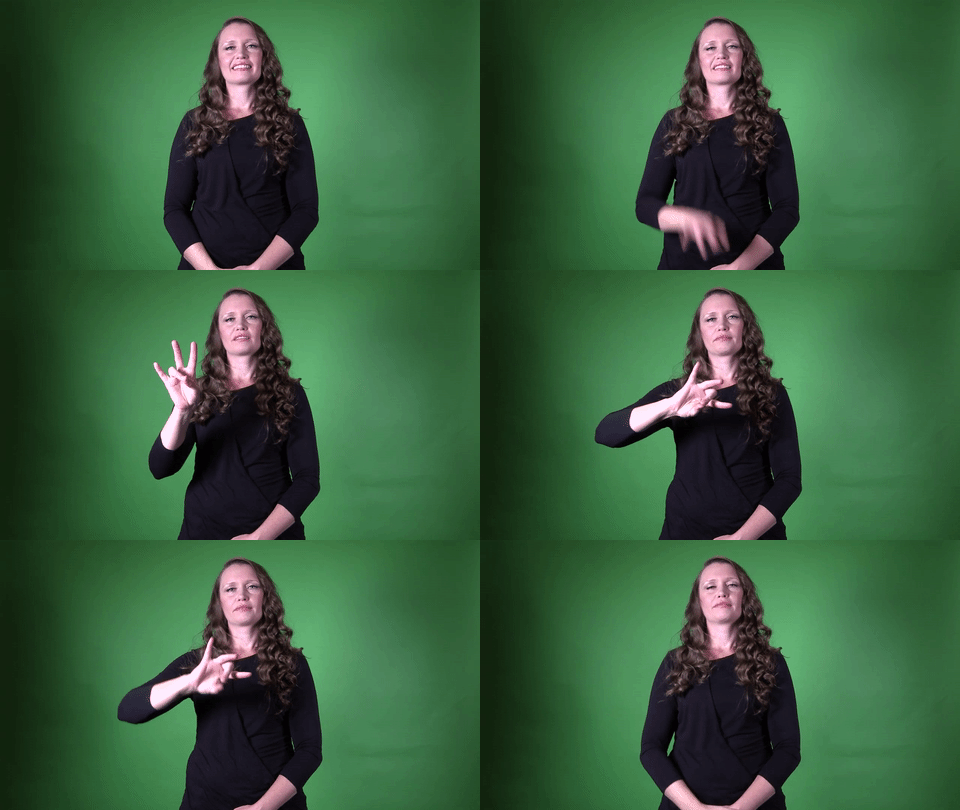
Definition: Refers to the number seventy-eight
Sign for NUMBER SEVENTY-EIGHT in ASL
Practice Activities:
Practicing the sign for number seventy-eight in ASL can help reinforce fluency with numbers and improve confidence in signing large numbers accurately. Begin by signing it slowly in front of a mirror, ensuring the transitions between the digits are smooth. Repeat this multiple times, first focusing on accuracy, then increasing speed while maintaining clarity.
Try incorporating the sign for number seventy-eight in ASL into common number drills. Count up from seventy to eighty, emphasizing seventy-eight when you reach it. Practice counting down from eighty to seventy, stopping at seventy-eight and holding the sign for emphasis. This helps reinforce where seventy-eight fits within a numerical sequence.
Use seventy-eight in daily conversations or within a real-life context. For example, talk about seventy-eight dollars, seventy-eight degrees, or seventy-eight minutes. Challenge yourself to sign a sentence such as “My grandmother is seventy-eight years old” or “The store has seventy-eight chairs available.” This will help you apply the number within meaningful exchanges.
For partner activities, quiz each other by randomly showing a number-related flashcard and signing the correct number. Have a partner fingerspell a two-digit number and then sign it in ASL. Alternatively, sign a short math problem involving seventy-eight, such as “Seventy-eight plus five is eighty-three,” and have your partner sign the answer.
To build storytelling skills, create a short narrative where seventy-eight plays an important role. For example, describe a lottery number that includes seventy-eight or tell a story about counting seventy-eight birds in the sky. Sharing stories helps reinforce muscle memory and makes learning more engaging.
Practicing the sign for number seventy-eight in ASL frequently and in context will improve speed, accuracy, and confidence. Using it in various numerical drills and conversational scenarios ensures deeper understanding and long-term retention.
Cultural Context:
The sign for number seventy-eight in ASL is part of the structured numerical system used in American Sign Language. Numbers play a crucial role in daily conversations, from telling time to giving addresses. Understanding the pattern helps signers communicate efficiently.
Using the sign for number seventy-eight in ASL follows the general numbering rules, blending the digits smoothly. This consistency allows fluent conversations without confusion. Mastering large numbers enhances clarity in both casual and formal discussions.
In Deaf culture, numbers like the sign for number seventy-eight in ASL are often used when discussing dates, prices, or measurements. Fluent signers can quickly express complex numerical information using established number patterns. The ability to sign numbers seamlessly is essential for both social and professional interactions.
Numbers are widely used in storytelling and recounting historical events within the Deaf community. Knowing the sign for number seventy-eight in ASL ensures accuracy in conveying facts and figures. Precise signing helps maintain the integrity of information shared in conversations.
Learning number signs is vital for effective communication in educational and workplace settings. Teachers and employers often use the sign for number seventy-eight in ASL when discussing grades, statistics, or financial data. Numerical fluency supports accessibility and understanding across various fields.
The use of numbers in ASL highlights the importance of facial expressions and hand movements for clarity. When signing the sign for number seventy-eight in ASL, maintaining consistent number transitions ensures comprehension. Expressing confidence in numerical signs helps create smooth and natural communication.
Numbers also appear in sports, game scores, and rankings within the Deaf community. Understanding the sign for number seventy-eight in ASL can come in handy when discussing achievements or events. Being familiar with number signs improves participation in group discussions and team activities.
New signers may initially struggle with transitioning between digits, but practice leads to fluency. The sign for number seventy-eight in ASL is part of a broader numerical system that follows predictable movement patterns. Frequent use helps reinforce muscle memory and signing speed.
Accuracy in signing numbers ensures clear communication in various scenarios, from shopping to setting appointments. Knowing how to properly use the sign for number seventy-eight in ASL prevents miscommunication. Clear signing fosters smoother interactions with both Deaf and hearing individuals.
The sign for number seventy-eight in ASL is essential for discussions involving budgets, calculations, and reports. Business professionals who use ASL rely on numerical fluency for transactions and presentations. Numbers are a fundamental part of expressive and functional communication.
Mastering numerical
Extended Definition:
The sign for number seventy-eight in ASL is a combination of two distinct number signs. It begins with the sign for seventy, followed smoothly by the sign for eight. This sign should be produced fluidly to maintain clarity and accuracy in communication.
When signing number seventy-eight in ASL, start with the number seven by extending the index and middle fingers while touching the thumb to the ring finger. Then transition into the number eight by keeping the thumb and middle finger in contact, slightly bending them. The movement should be natural to maintain the flow of the number sign.
ASL numbers follow a logical pattern, and number seventy-eight in ASL follows the standard rules for expressing compound numbers. The handshape, palm orientation, and transition play an important role in ensuring visibility and comprehension. Proper hand positioning helps to differentiate similar-looking numbers in ASL.
Number signs are commonly used in various situations, such as discussing addresses, prices, quantities, or statistics. The sign for number seventy-eight in ASL might appear in conversations about ages, rankings, or measurements. Consistently using correct numerical signs ensures clear and effective communication in the Deaf community.
Facial expressions and body language do not typically alter the meaning of number seventy-eight in ASL, but they can add emphasis in specific contexts. For example, raising eyebrows may indicate a question about a number. Maintaining a smooth transition between seventy and eight helps in conveying the number correctly.
Some variations in signing seventy-eight may exist, depending on regional differences or individual signing styles. Learning multiple number variations enhances fluency and comprehension when communicating with different signers. Practicing these numbers regularly improves speed and accuracy in ASL.
Understanding numerical signs like number seventy-eight in ASL is essential for signing fluently in everyday conversations. Mastery of number sequences allows for more detailed and efficient communication in personal and professional settings. Practicing with native signers or video resources can help improve skills and confidence.
Synonyms: seventy-eight, number seventy-eight, number 78, the number 78, the number seventy-eight
Educational resources: Find related learning materials in our course bank!
Want more? Check out some of our popular learning activities on the homepage!
Need to look up a sign? Use our highly rated dictionary: https://aslinteractive.com/best-asl-dictionary/
Follow us on tiktok: https://www.tiktok.com/@aslinteractive. More social media links at the bottom of this page!
Long-tail Keywords: what is the sign for number seventy-eight in ASL, how do you sign number seventy-eight in ASL, ASL sign for number seventy-eight
Categories: Numbers – Basics, Numbers 71-80, cardinal numbers
tags: Numbers, Numbers 76-80, Numbers 76 78 79, Rocking Numbers, Language Learning
Parameters
*Handshape*:
The sign for NUMBER SEVENTY-EIGHT in ASL uses a shifting handshape. It starts with the number 7️⃣, where the index and middle fingers extend while the thumb touches the ring finger. Then, the hand transitions into the number 8️⃣ by curling the middle finger to touch the thumb while the index finger remains extended. The movement is smooth, emphasizing the number change. This sign for NUMBER SEVENTY-EIGHT in ASL requires precise finger transitions to maintain clarity.
*Palm Orientation*:
The palm orientation for the sign for number seventy-eight in ASL starts with the dominant hand facing outward in a neutral position. As the numbers transition from seventy to eight, the palm may slightly shift but remains mostly forward. The movement between the digits is smooth, ensuring clarity in the number formation. Consistent palm orientation helps maintain the accuracy of the sign for number seventy-eight in ASL, making it easily understandable.
*Location*:
The sign for number seventy-eight in ASL is produced in the neutral space in front of the body, at chest level. The hand remains comfortably in front of the signer, ensuring visibility and ease of movement. This position allows the numbers to be transitioned fluidly as the signer moves from seventy to eight. The placement of the hand ensures clarity for the viewer, maintaining the sign’s legibility.
*Movement*:
To make the sign for number seventy-eight in ASL, start by forming the number seven with your dominant hand, extending the index and middle fingers while touching the thumb to the ring finger. Quickly transition to the number eight by curling the middle finger down to touch the thumb while the other fingers remain extended. This movement should be fluid, ensuring a smooth shift between the two numbers. Keep your hand in a neutral signing space while maintaining clarity in each digit’s formation.
*Non-Manual Signals*:
Facial expressions are neutral when signing the sign for number seventy-eight in ASL unless adding emphasis or emotion. If emphasizing the number, slightly raise the eyebrows and maintain direct eye contact. A small head nod can help reinforce clarity. When asking about the number, eyebrows may be raised slightly to indicate a yes/no question. Keep a calm and natural posture, ensuring the hand movements are fluid for better readability.
*Prosody, Dominant/Non-Dominant Hand*:
The sign for NUMBER SEVENTY-EIGHT in ASL uses the dominant hand to form the number 7 and then smoothly transition into the number 8. The motion should be fluid, ensuring a natural change between the two numerals. The fingertips face outward, and the wrist remains steady while shifting from 7️⃣ to 8️⃣.
Facial expressions remain neutral unless additional emphasis is needed. The non-dominant hand is not used in this number sign, as it is typically performed with one hand. Ensure that finger positioning is clear to differentiate between similar numbers.
Tips for Beginners:
When learning the sign for number seventy-eight in ASL, focus on forming the numbers smoothly. The sign involves a transition from the number seven to the number eight in one continuous motion. Make sure your dominant hand is in the correct position for each number before transitioning to the next to maintain fluidity and clarity.
A common mistake is stiff or jerky movements when going from seven to eight. To avoid this, practice relaxing your hand and using a natural wrist movement. Keep your fingers slightly curved and flexible to ensure a comfortable shift between the numbers.
Finger positioning is critical for accuracy when signing the number seventy-eight. Ensure your thumb correctly touches the ring finger for seven and then smoothly moves to touch the middle finger for eight. If the finger placement is unclear, it can resemble a different number or cause confusion.
Pay attention to hand orientation so that the palm is facing outward while signing. If your palm faces inward or your hand moves awkwardly, it may be misinterpreted. Keep your movements deliberate and confident to improve clarity.
Practicing in front of a mirror or recording yourself can help refine your transition between seven and eight. Watching yourself will allow you to correct any awkward movements and adjust your speed accordingly. Repetition builds muscle memory and makes the sign for number seventy-eight in ASL feel more natural.
If you struggle with fluidity, slow down and practice each number separately. Once you are comfortable with seven and eight individually, try transitioning between them at a gradual pace. Over time, you will gain confidence and be able to sign number seventy-eight in ASL with ease.
Connections to Other topics:
The sign for number seventy-eight in ASL follows the general structure of ASL number signs, which combine numerical values fluidly. Understanding number signs like this one helps with counting, listing, and expressing years, times, and financial amounts. Since seventy-eight includes a transition between two digits, it reinforces handshape dexterity and number sequencing in ASL.
This number sign connects to broader numerical topics such as mathematical expressions, currency, and measurements. When discussing money, someone might use the sign for number seventy-eight in ASL to indicate a price, such as “$78.” In contexts like sports, scores, or statistics, this number appears frequently and helps convey competitive results or rankings.
Number incorporation in ASL extends to many signing conventions, including addresses, dates, and phone numbers. The sign for number seventy-eight in ASL may appear in addresses, like “78th Street,” or historical references, such as “the class of ’78.” Numbers are essential for organizing information, making them a critical component of ASL fluency.
Ordinal numbers, like 78th, are also connected to this sign and require additional movement to reflect rank or order. Seventy-eight can also be used in math discussions, such as “78 divided by 2,” where it functions as part of an equation. Learning number sequences thoroughly strengthens numerical literacy and allows signers to discuss a wide range of topics more confidently.
Understanding how number patterns flow in ASL improves signing efficiency and comprehension. The sign for number seventy-eight in ASL is part of a structured number system that follows predictable patterns, especially useful when learning higher numbers. Mastering multi-digit numbers expands a signer’s capability to communicate about quantities, lists, and statistical data with greater ease.
Summary:
The sign for number seventy-eight in ASL follows the standard pattern for number signs. It combines the numeral seventy with the numeral eight in a smooth, controlled motion. ASL numbers from seventy through seventy-nine typically use a shifting or transitional movement between the two digits.
To sign seventy, the dominant hand takes the “7” handshape, with the index and middle fingers extended and separated, while the thumb also extends. The fingers make a slight wrist pivot or a subtle bounce as the transition is made to the eight. The number eight is then formed by bringing the thumb and middle finger together while the other fingers remain extended.
This sequence keeps the movement fluid to maintain clear numeric communication. Hand orientation and positioning remain crucial for clarity, especially when distinguishing between similar-looking numbers. The sign for number seventy-eight in ASL should be practiced smoothly to ensure accuracy.
ASL has unique numerical patterns that differ from spoken English conventions. The use of a slight bounce or shift in movement makes multi-digit numbers concise within the visual-spatial modality. This is an essential feature of ASL numeral incorporation, emphasizing the importance of natural flow.
Numbers are critical in both everyday conversation and academic or professional settings. The sign for number seventy-eight in ASL is valuable when discussing addresses, prices, ages, or dates. Maintaining consistency in sign production avoids misunderstandings, reinforcing numerical precision.
Culturally, ASL numbers can vary slightly in regional dialects or individual preferences. Some signers prefer more exaggerated movements, while others use minimal transitions for efficiency. This variation demonstrates ASL’s natural linguistic flexibility within the Deaf community.
The structure of ASL numerals follows a straightforward but logical system. When signing double-digit numbers, maintaining a steady rhythm is key. The sign for number seventy-eight in ASL embodies this structured approach while allowing room for individual style.
Grammatically, ASL numbers follow specific sequences based on context. In storytelling or recounting facts, number signs must align with proper ASL syntax. The sign for number seventy-eight in ASL must be placed correctly in a sentence to ensure clarity in communication.
Number signs are not standalone elements; they integrate into broader ASL expressions. When discussing a seventy-eight-dollar price, facial expressions or contextual modifiers help convey additional meaning. ASL relies heavily on contextual clues to supplement numerical precision.
The visual nature of ASL provides a tactile means of numeric representation. Learning to sign seventy-eight enhances both receptive and expressive signing skills. By practicing numbers in varied settings, signers develop greater fluency and confidence.
Related signs include seventy-seven and seventy-nine, which follow the same general format. The primary difference lies in the final digit adjustment. This structured number system allows for easy recognition across a wide range of settings.
Applied linguistics indicate that number comprehension in ASL requires spatial and motor memory. Number recall in sign language aligns with distinct neurological processes compared to spoken language. The sign for number seventy-eight in ASL reflects this unique brain processing characteristic.
Bilingual users may find it helpful to associate number signs with spoken forms. However, ASL signs for numbers do not always align one-to-one with spoken pronunciation patterns. Mastering number-signing conventions ensures stronger bilingual fluency.
The importance of numeric signs extends to educational environments. Deaf students use numerals in mathematics and science subjects, reinforcing the necessity of accurate number signing. The sign for number seventy-eight in ASL contributes to effective numerical literacy.
Broader themes in ASL numerology include patterns in age, measurement, and statistics. In business or commerce settings, numeric accuracy is indispensable. The clarity of signing impacts customer interactions and financial exchanges.
Beyond everyday practical usage, numbers appear in ASL poetry and storytelling. Signers use rhythm and movement to add artistic nuances to number signs. The sign for number seventy-eight in ASL can be incorporated into visually compelling narratives.
Technology has expanded access to ASL number education. Online resources provide visual reinforcement for learners mastering complex number sequences. Video demonstrations enhance the ability to accurately reproduce numerical signs.
ASL number signs evolve with digital communication. Text-based conversations among signers sometimes incorporate number abbreviations. The increasing integration of ASL in media strengthens exposure to standardized numerical conventions.
The historical development of ASL numerals aligns with the language’s broader evolution. Early sign language documentation shows consistency in number representation despite minor regional differences. The sign for number seventy-eight in ASL follows a long-standing numeric tradition.
Numbers hold symbolic meaning beyond quantitative representation. In Deaf history, important milestones and statistical data play crucial roles in advocacy. The ability to sign numbers correctly ensures accurate reflection of historical and social information.
The sign for number seventy-eight in ASL showcases linguistic efficiency. ASL’s numerical system provides both function and flexibility within a visual-spatial framework. Understanding these elements enhances overall language comprehension.
Practicing number transition movements improves signing dexterity. The fluid wrist motion when shifting numbers
Want more? Check out some of our popular learning activities!
ASL Interactive Resources
ASLInteractive YouTube Channel
Follow us on tiktok: @aslinteractive.com
Follow us on Instagram: aslinteractive
Facebook page: aslinteractive
Facebook group: aslinteractive
LInkedIn: ASL Interactive LLC
Twitter: @ASL_interactive
*Some information on this page is AI-generated. AI can make mistakes. Please check the information.


Responses