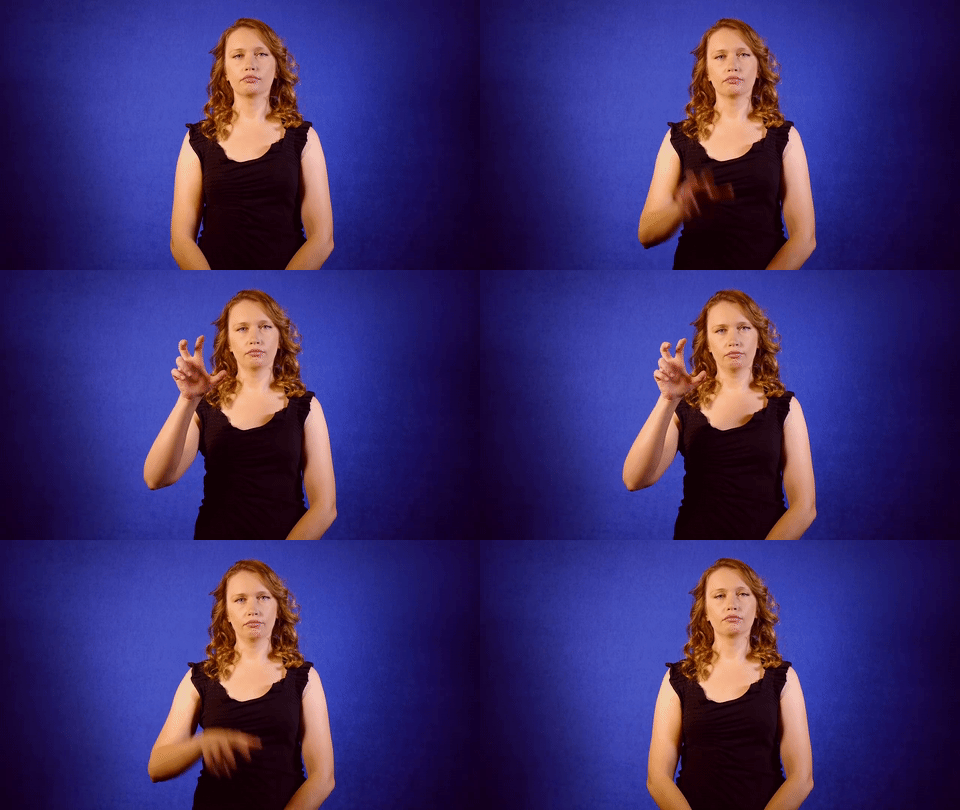
Definition: Refers to the number three hundred (v2)
Sign for Number THREE HUNDRED v2 in ASL

Practice Activities:
Practice signing the sign for number THREE HUNDRED v2 in ASL by focusing on handshape, movement, and clarity. Start by forming the number three with your dominant hand, holding three fingers up (the thumb, index, and middle fingers). Then transition by closing your fingers into a fist while simultaneously moving your arm slightly inward or downward to indicate “hundred.” Maintain proper hand orientation and smooth transitions between the two movements.
Begin isolated practice by repeatedly forming the sign for number THREE HUNDRED v2 in ASL in one continuous motion until the movement feels natural. Use a mirror to check your handshape and positioning. Practice this at different speeds to ensure accuracy and fluency.
Engage in context-based exercises by integrating the sign for number THREE HUNDRED v2 in ASL into simple sentences. Examples include: “I have three hundred dollars,” “The book cost three hundred pages,” or “We traveled three hundred miles.” These examples enable learners to practice both the sign and its placement in an ASL sentence.
In storytelling activities, create short narratives involving the sign for number THREE HUNDRED v2 in ASL. For instance, you might craft a story about someone finding three hundred coins or baking three hundred cookies. This helps reinforce both the sign and its use in larger linguistic contexts. Add descriptions and gestures to enhance clarity and meaning within these stories.
Partner activities can include a dialogue where participants describe scenarios involving the sign for number THREE HUNDRED v2 in ASL. For example, one partner might ask: “How far is the trip?” and the other could respond, “It’s three hundred miles.” This facilitates interactive learning and provides opportunities to both sign and comprehend the phrase in context.
Lastly, practice number drills. Alternate between signing numbers like three, thirty, three hundred, or three thousand alongside other numbers. This ensures accurate differentiation and reinforces numerical fluency in ASL.
Cultural Context:
The sign for number THREE HUNDRED v2 in ASL is a visually intuitive and straightforward sign in American Sign Language. Understanding how to express numerical concepts in ASL, like “three hundred,” is not only vital for effective communication but also provides insight into Deaf culture and how numbers are visually represented via signing.
To sign the sign for number THREE HUNDRED v2 in ASL, you combine the number “three” with the concept of “hundred,” which typically mimics a bending or arching movement that visually represents the idea of multiplying by one hundred. Many ASL users use this sign when referring to exact amounts in math, counting, or referencing numeric data in casual or formal conversations. For instance, understanding “number three hundred in ASL” is crucial for contexts involving monetary values, time durations, or even distances.
In Deaf culture, numbers like the sign for number THREE HUNDRED v2 in ASL are particularly useful for education, storytelling, or everyday interactions. Counting and numerical accuracy play a significant role in bridging gaps during cross-cultural and multilingual exchanges. Mastery of signing numbers such as the sign for number THREE HUNDRED v2 in ASL not only enhances communication skills but also enables effective participation in workplace interactions, classrooms, or social settings.
For beginners learning the sign for number THREE HUNDRED v2 in ASL, this is a great opportunity to familiarize themselves with the numerical structure of the language. Unlike spoken languages, ASL relies heavily on visual-spatial gestures, and understanding the nuance behind numbers like this demonstrates the linguistic richness of ASL. Memorizing signs like the sign for number THREE HUNDRED v2 in ASL also strengthens one’s foundational skills in digits, sequencing, and larger number comprehension.
When watching native ASL signers, you may notice slight variations in how the sign for number THREE HUNDRED v2 in ASL is signed. This can depend on region, personal style, or context. However, the core visual representation remains the same, ensuring consistency for clear communication.
Incorporating the ability to sign the sign for number THREE HUNDRED v2 in ASL also deepens cultural connections. Whether you’re asking someone to repeat the cost of an item (“Is that three hundred dollars?”) or signing to a Deaf student about a math problem involving three hundred, this sign underlines the importance of fluency in both numerical and cultural literacy for effective ASL communication.
Extended Definition:
The American Sign Language (ASL) sign for “number three hundred” is an essential component to learning how to count and convey numerical quantities in ASL. Understanding its proper formation and articulation helps create clear communication among ASL users.
For the sign for number THREE HUNDRED v2 in ASL, the sign includes two distinct movements. The first part involves forming the number “three” by extending your thumb, index finger, and middle finger while keeping your ring and pinky fingers tucked down. Then, transition into the sign for “hundred.” To sign “hundred,” shape your dominant hand into the number “one” by extending your index finger upward, and then smoothly create a small arching motion down and away from your body, symbolizing the unit of hundred.
It’s important to note that ASL has a visual and conceptual structure that differs from spoken English. In ASL, numbers like three hundred are usually signed sequentially rather than as one fluid motion. For example, a signer may first indicate “three” and follow it with “hundred” as separate but connected signs. This allows for clarity and accuracy when communicating numbers with larger values.
When signing numbers like the sign for number THREE HUNDRED v2 in ASL, facial expressions, clarity of hand movement, and palm orientation are key for effective communication. Additionally, make sure your hand is positioned in a way that ensures visibility to your conversation partner. Eye contact is an essential non-verbal element that complements numeric signing in ASL.
The sign for number THREE HUNDRED v2 in ASL can also appear in various contexts, such as stating an address, describing a total, or referencing a numerical figure in a story. Mastering number signs like this will build fluency and improve your ability to sign with confidence in diverse scenarios.
If you are new to American Sign Language, practicing in front of a mirror or with a fluent signer will help you refine the transition between “three” and “hundred.” Watching online video demonstrations or tutorials for signing three hundred can also reinforce the proper techniques. Many ASL users, including beginners and intermediate learners, tend to emphasize practicing numbers in sequence (e.g., one hundred, two hundred, three hundred) to build muscle memory and accuracy in hand movements.
Knowing how to sign the sign for number THREE HUNDRED v2 in ASL is part of understanding the larger numbering system in the language, which is structured and systematic. Familiarity with these principles makes it easier to count, calculate, or express numerical ideas in ASL more fluidly. The number three hundred, like
Synonyms: three hundred, 300, 3 hundred
Educational resources: Find related learning materials in our course bank!
Want more? Check out some of our popular learning activities on the homepage!
Need to look up a sign? Use our highly rated dictionary: https://aslinteractive.com/best-asl-dictionary/
Follow us on tiktok: https://www.tiktok.com/@aslinteractive. More social media links at the bottom of this page!
Long-tail Keywords: what is the sign for number three hundred in ASL, how do you sign number three hundred in American Sign Language, learn the ASL sign for number three hundred
Categories: Numbers – Basics, hundreds, cardinal numbers
tags: Numbers, Counting, Mathematics, Educational, Language Learning
Parameters
*Handshape*:
The sign for number THREE HUNDRED v2 in ASL uses a combination of two handshapes in sequential formation. Begin with the dominant hand forming the “3” handshape (thumb, index, and middle fingers extended, other fingers closed). Transition smoothly to the “Claw-3” handshape (curved hand with fingers forming a semi-circle). Maintain clear, deliberate hand positioning as you articulate each numeral. Ensure fluid motion while emphasizing precise handshapes to convey the sign for number THREE HUNDRED v2 in ASL accurately.
*Palm Orientation*:
The palm orientation for the sign for number THREE HUNDRED v2 in ASL begins with the palm facing outward while forming the number 3 with the dominant hand. As the sign transitions to represent 300, the hand shape changes to a “Claw-3,” with the palm shifting slightly inward or to the side. Consistent movement and repositioning ensure clarity of the number. Always maintain proper hand positioning for the sign for number THREE HUNDRED v2 in ASL.
*Location*:
The sign for number THREE HUNDRED v2 in ASL begins with the hand in a neutral space around chest level. The dominant hand shows the number “3” (index, middle, and thumb extended). Then, transition into a smooth motion, curling the dominant hand into a “Claw-3” shape to represent “hundred.” Throughout the sign, the palm orientation starts outward and shifts toward a slightly inward position, maintaining clarity in the movement.
*Movement*:
The movement for the sign for number THREE HUNDRED v2 in ASL involves forming the number “3” with the dominant hand by extending the thumb, index finger, and middle finger outward. Transition smoothly by curling the hand into the letter “Claw-3” shape to represent the concept of “hundred.” The motion should flow directly from the “3” to the “Claw-3” without pause, maintaining clarity for the sign for number THREE HUNDRED v2 in ASL. Avoid overly sharp gestures for fluidity.
*Non-Manual Signals*:
The sign for number THREE HUNDRED v2 in ASL requires neutral facial expression with slight focus to follow the hand movements. Eyebrows remain relaxed, and head chin stays slightly stable, directing attention to the dominant hand. Keep the gaze soft and watchful, ensuring clarity of communication. For emphasis, the eyes naturally track the transition from “three” to the motion representing “hundred.” Maintain natural posture to overall convey the sign for number THREE HUNDRED v2 in ASL effectively.
*Prosody, Dominant/Non-Dominant Hand*:
The dominant hand in the sign for number THREE HUNDRED v2 in ASL forms the sign for “3” with the palm facing outward, using the index, middle, and thumb extended. The hand then transitions to a “Claw-3” handshape (as in “hundred”), moving slightly inward and curving toward the chest to represent the rounded concept of “hundred.” The non-dominant hand typically plays no role, focusing attention on the fluid motion of the sign for number THREE HUNDRED v2 in ASL.
Tips for Beginners:
To sign the sign for number THREE HUNDRED v2 in ASL, start by forming the number “3” with your dominant hand, which involves extending the index finger, middle finger, and thumb while keeping the ring and pinky fingers down. Once you’ve established this position, smoothly transition to the sign for “hundred” without breaking your flow. For “hundred,” shape your hand into a “Claw-3” shape, which represents the curved numeral. Begin with the “Claw-3” at chest level, slightly outward, and bring it closer to your body to complete the gesture.
**Tips for Beginners:**
When learning the sign for number THREE HUNDRED v2 in ASL, focus on creating a clean and distinct transition between the “3” position and the “hundred” handshape. Practice holding the “3” confidently, ensuring that your fingers are visible without excessive tension. Many beginners accidentally let their thumb collapse or their fingers clump together—aim for a crisp, easily recognizable formation. Transition smoothly into the “Claw-3” handshape for “hundred”; avoid any jerky movements that can make the sign look unclear.
A common beginner pitfall is using a flat palm for “hundred” instead of the “Claw-3” shape. Referring to the numeral curve can help you keep the appropriate handshape. Another challenge involves sign placement. The movement from the initial “3” should flow naturally without exaggerated motion. Keep the entire sign within your “signing box” (a space roughly from your chest to your waist) to ensure clarity.
To master the sign for number THREE HUNDRED v2 in ASL maintain consistent practice while watching yourself in a mirror. Pay attention to whether your handshapes remain distinct and your movements are fluid. Try video-recording yourself to compare your signing with fluent users. Getting feedback from a native signer or an experienced tutor can also help refine your technique. Repeatedly practicing counting sequences, such as numbers in hundreds, can build fluency and reduce hesitation. Keep in mind that numbers like “three hundred” often appear in daily contexts, so becoming comfortable with this sign will make your signing more practical and expressive.
Connections to Other topics:
The ASL sign for the sign for number THREE HUNDRED v2 in ASL connects to broader numerical representation in ASL, particularly the principles behind forming larger numbers using smaller components. In this version, the number “three hundred” incorporates the numeral “3” followed by a representation of the concept of “hundred,” typically involving a slight bend or downward motion of the dominant hand, palm facing out. This aligns with ASL’s system of combining base numbers with markers for larger sums, such as hundreds and thousands. These compound structures highlight the balance between visual clarity and efficient communication in numerical systems.
ASL learners can better understand the sign for number THREE HUNDRED v2 in ASL by exploring related concepts like counting, age indicators, and time-telling. For instance, the concept of “hundred” appears in larger numbers like “four hundred” or “seven hundred.” Once the structure for forming “three hundred” is internalized, these additional numbers are easier to grasp as they follow a similar template. In addition, the sign connects to topics like years—for example, signing “1900”—and money, as in “$300,” where numerical signs are adapted for contextual understanding.
A useful application of the sign for number THREE HUNDRED v2 in ASL, is in sequential counting or stating quantities, such as “three hundred people attended the event.” Understanding this sign fosters broader topic comprehension in academic or formal settings where large numbers are frequently mentioned. Conversely, it connects to finger-spelling when precision or clarity is needed, such as distinguishing “three hundred” from a similar-sounding figure like “thirteen hundred.”
This concept underscores ASL’s reliance on patterns and context to build meaning. Compound signs derived from larger numbers, like “three hundred fifty,” further demonstrate the modular nature of ASL numbers. By mastering the foundational component present in the sign for number THREE HUNDRED v2 in ASL, learners build a stepping stone toward fluency in expressing higher mathematical concepts or quantity-based phrases in everyday conversation.
Summary:
The sign for number THREE HUNDRED v2 in ASL is a variation that offers an important alternative representation of the numerical value “300” in American Sign Language. By its very nature, this sign serves a dual purpose: it communicates a specific quantity while reflecting the broader linguistic and cultural framework inherent in ASL. Understanding this version of the sign not only requires a detailed description of its physical form and movement but also invites an exploration of its cultural, grammatical, linguistic, and social dimensions.
In its physical articulation, the sign for number THREE HUNDRED v2 in ASL sign involves two distinct parts. First, the sign begins with the hand formed in the number “3” handshape, where the thumb, index finger, and middle finger are extended while the ring finger and pinky are folded down to the palm. The hand is typically oriented outward or slightly forward, held at about chest or shoulder level. For the number “300,” this initial part of the sign establishes the numeral “3.”
The movement or transition to the second part of the sign is a critical feature of this particular variation. Moving into the representation of “hundred,” the signer modifies the handshape. The “3” handshape smoothly transitions into a “C” handshape (thumb and fingers curved to form a semi-circle), suggesting the concept of “hundred.” This motion may involve the hand slightly pulling back or down to indicate completeness, often recognized as a cultural and contextual marker for numbers in the hundreds range.
The variation, the sign for number THREE HUNDRED v2 in ASL, offers an alternative to what might otherwise be expressed more explicitly with separate signs for “3” followed by “hundred,” or the common “3C” fusion. By incorporating a fluid, continuous motion that merges these steps, this variation emphasizes efficiency and fluidity, traits that are celebrated within ASL’s grammar and syntax. Importantly, while this version preserves numerical clarity, it allows for contextual adjustments depending on the signer’s speed, audience, and the practical necessity of the conversation at hand.
In the broader context of ASL, numbering systems hold immense cultural and linguistic significance. Numbers are uniquely designed within ASL to ensure that information is conveyed accurately yet efficiently. When dealing with larger quantities, such as those in the hundreds or thousands, a sign variation like the sign for number THREE HUNDRED v2 in ASL reflects the flexibility of ASL as a natural language. It also highlights the
Want more? Check out some of our popular learning activities!
ASL Interactive Resources
ASLInteractive YouTube Channel
Follow us on tiktok: @aslinteractive.com
Follow us on Instagram: aslinteractive
Facebook page: aslinteractive
Facebook group: aslinteractive
LInkedIn: ASL Interactive LLC
Twitter: @ASL_interactive
*Some information on this page is AI-generated. AI can make mistakes. Please check the information.


Responses