Sign for PASS in ASL | ✅ ASL Dictionary

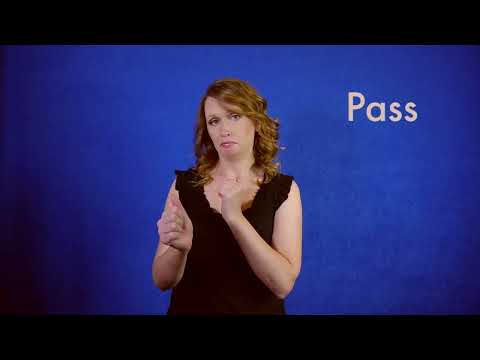
Definition: To move past something or someone.

Sign for PASS in ASL

YouTube player

Practice Activities

To build fluency with the sign for PASS in ASL, start with mirror work. Stand in front of a mirror and watch your handshape and movement closely. Make sure your facial expression matches the context—whether you’re indicating a literal pass, like passing an object, or a figurative one like passing a test.

Record yourself signing the sign for PASS in ASL in full sentences. Try different contexts such as “I passed the test” or “Please pass the salt.” Watching your recordings will help you improve hand positioning, clarity, and fluidity.

Use the sign for PASS in ASL in conversation practice with a partner. You can role-play classroom settings, sports events, or social scenarios where the idea of passing comes up. Contextual signing helps reinforce meaning and usage.

Advance your skills by incorporating drills. Sign the word in rapid succession with other classroom or sports-related vocabulary like FAIL, TRY, SCORE, or WIN. This builds your ability to transition smoothly between signs and helps with receptive skills, too.

Finally, try receptive practice. Watch videos of native signers using the sign for PASS in ASL and identify when and how they use it. This helps you understand regional variations and real-life applications of the sign.

SEO Cultural Context

The sign for PASS in ASL carries contextual and cultural depth within the Deaf community. It’s commonly used in educational settings, especially within Deaf schools and classrooms where students discuss academic performance. Signing about passing a test or a class is an everyday topic in these environments.

In Deaf culture, clear and direct communication is valued. When using the sign for PASS in ASL, it’s important to be precise and respectful. For instance, if you’re congratulating someone for passing an exam, your facial expression should reflect genuine support and excitement.

There are some regional variations of the sign for PASS in ASL. In some areas, people use a motion that mimics handing something over, while others use a sliding motion between fists. These variations can depend on local Deaf community norms or even generational differences.

The sign is also used in sports contexts, such as passing a ball or passing a baton in a race. In these cases, the sign may slightly modify in movement or intensity based on the speed or urgency of the action. Understanding when and how to use the sign for PASS in ASL appropriately shows cultural fluency and respect.

Extended Definition

The sign for PASS in ASL typically involves a movement from one closed hand to another. The dominant hand, shaped like a fist or slightly open, slides past the non-dominant fist and moves forward. This motion metaphorically represents something moving past a point or being handed off.

This sign is used for various meanings of “pass”—passing a test, passing by someone, passing an object, or even passing a law. The context of the conversation will determine which meaning is understood. Facial expressions and surrounding signs provide clues that guide interpretation.

It’s important not to confuse the sign for PASS in ASL with similar signs like GIVE or THROW. These have different handshapes and directions. One common error is using too stiff a motion, which can make the sign look unnatural or misleading. Smooth, confident movement is key.

Also, be aware of the direction of your signing. If you are referring to passing something to someone specific, your movement should be directed toward that person’s location within the signing space. This adds clarity and grammatical accuracy.

Tips for Beginners

If you’re just starting to learn the sign for PASS in ASL, focus on mastering the handshape first. It might feel awkward at first, especially if you’re not used to using your non-dominant hand as a reference point. Practice slowly and build muscle memory.

Use videos and interactive tools to see the sign from multiple angles. This helps you understand the 3D space used in ASL. Don’t rush—accuracy is more important than speed in the beginning.

A common mistake is exaggerating the motion or using incorrect facial expressions. Keep your hand movements controlled and your expressions appropriate to the context. For example, if you’re saying you passed a difficult test, your face should show relief or pride.

Repetition is your friend. Sign the phrase “I pass” or “I passed” in various sentences until it becomes second nature. Using the sign for PASS in ASL in your everyday practice will help reinforce memory and comfort with the sign.

Connections to Other Topics

The sign for FAIL is directly related and often used in contrast with the sign for PASS in ASL. Learning both together helps you understand how ASL expresses success and failure, especially in academic or performance-related settings.

The sign for TEST is commonly seen alongside the sign for PASS in ASL. These two signs are often used together in school conversations, such as “Did you pass the test?” Learning them as a pair enhances your vocabulary and situational fluency.

TRY is another useful sign that complements the sign for PASS in ASL. You can use it to construct sentences like “I tried and passed,” which adds depth to your storytelling or explanations.

You’ll also find connections with the sign for GIVE, especially when PASS is used in the context of handing something to someone. Understanding these subtle differences will improve your expressive accuracy.

Finally, the sign for SUCCESS often follows the sign for PASS in ASL in discourse. It’s a great way to expand your vocabulary around achievement and positive outcomes. These signs together create a powerful narrative in both academic and life situations.

Lengthy Summary

The sign for PASS in ASL is a versatile and essential part of American Sign Language vocabulary. Whether you’re discussing school, sports, or everyday interactions, this sign communicates the idea of moving forward, achieving, or transferring something. Mastering this sign requires attention to handshape, movement, and facial expression, all of which contribute to clear and effective communication.

Culturally, the sign for PASS in ASL holds importance in educational and social contexts within the Deaf community. It is more than just a gesture—it reflects shared experiences and values such as perseverance, integrity, and support. Understanding when and how to use the sign appropriately shows respect for Deaf culture and enhances your ability to connect with native signers.

Beginners should take their time learning the sign, focusing on accurate movement and consistent practice. Avoid common mistakes like incorrect directionality or mismatched expressions. Use tools like mirrors, recorded practice, and interaction with fluent signers to deepen your understanding.

This sign also connects you to a broader network of related signs, including FAIL, TEST, TRY, GIVE, and SUCCESS. These connections enrich your signing ability and help you build more complex and meaningful conversations. Learning the sign for PASS in ASL opens the door to discussing goals, achievements, and transitions in a culturally meaningful way.

Now that you’ve explored its usage, cultural context, and related signs, continue practicing the sign for PASS in ASL daily. Keep observing, engaging, and signing with others to strengthen your skills. Every time you sign accurately and confidently, you’re passing another milestone on your ASL journey .

Synonyms: go by, move through, go past, bypass, surpass

Educational resources: Find related learning materials in our course bank!

Want more? Check out some of our popular learning activities on the homepage!

Need to look up a sign? Use our highly rated dictionary: https://aslinteractive.com/best-asl-dictionary/

Follow us on tiktok: https://www.tiktok.com/@aslinteractive. More social media links at the bottom of this page!

Long-tail Keywords: what is the sign for pass in ASL, how do you sign pass in ASL, ASL sign for pass

Categories:

tags: pass in ASL, ASL travel vocabulary, ASL verbs, American Sign Language phrases, how to sign pass in ASL

Want more? Check out some of our popular learning activities!

ASL Interactive Resources

ASLInteractive YouTube Channel

Follow us on tiktok: @aslinteractive.com

Follow us on Instagram: aslinteractive

Facebook page: aslinteractive

Facebook group: aslinteractive

LInkedIn: ASL Interactive LLC

Twitter: @ASL_interactive

*Some information on this page is AI-generated. AI can make mistakes. Please check the information.


Responses