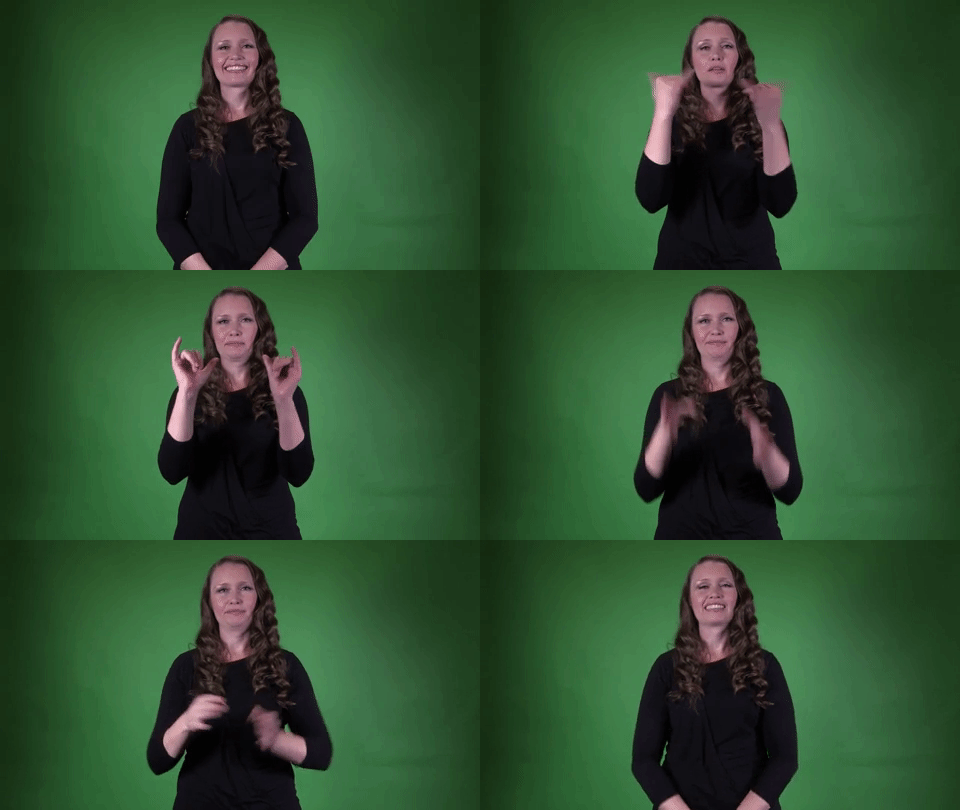
Sign for PLAYER in ASL | ASL Dictionary

Definition: A person who engages in a game or sport.

Sign for PLAYER in ASL

YouTube player

Practice Activities

Mastering the sign for PLAYER in ASL takes consistent and thoughtful practice. One of the most effective ways to begin is by practicing in front of a mirror. This allows learners to monitor handshape, movement, and facial expression, which are all crucial to producing the sign accurately. By watching yourself, you can compare your signing to video models or instructors and make corrections in real-time.

Recording yourself signing is another helpful technique. Try signing the word PLAYER in a full sentence, and then watch the playback to evaluate your fluency and expressiveness. Doing this regularly helps track your progress and builds confidence.

Signing in context is essential for deepening your understanding. Use the sign for PLAYER in ASL while talking about sports, games, music, or any activity where the term applies. For example, you might sign “He is a soccer player” or “She is a guitar player” to reinforce the vocabulary in real-life scenarios.

Advanced learners can challenge themselves with drills that involve switching between related signs quickly. For instance, go from PLAYER to COACH, TEAM, or GAME in rapid succession. This not only strengthens recall but sharpens your ability to transition smoothly between common ASL terms.

Group practice can be highly beneficial too. Join a Deaf community event or an ASL study group where you can use the sign for PLAYER in ASL in conversation. Immersive environments help reinforce learning naturally and encourage proper use of grammar and facial expressions.

SEO Cultural Context

In Deaf culture, the sign for PLAYER in ASL is more than just a vocabulary term—it reflects how Deaf individuals interact with the world of sports, arts, and group activities. Whether referring to an athlete, musician, actor, or participant in a game, this sign is used to describe someone who actively engages in a role or performance.

The sign for PLAYER in ASL is formed by combining the sign for PLAY with the agent marker, which is a common structure in ASL. This pattern is seen in other occupation or role-related signs, such as TEACHER, DOCTOR, or DANCER. It’s important to understand this grammatical rule because it shows how ASL builds meaning through morphological components rather than relying on spoken suffixes like “-er.”

Cultural respect is critical when using this sign. Within the Deaf community, sports and performance art are highly valued, and many Deaf individuals have made significant contributions in these fields. Signing PLAYER correctly and in appropriate context shows cultural awareness and respect.

Regional variations of the sign for PLAYER in ASL are minimal, but slight differences in hand placement or movement may occur depending on local signing styles or generational influence. When in doubt, observe how native signers in your community use the sign and adapt accordingly.

Extended Definition

The sign for PLAYER in ASL is a compound sign made up of two parts: the sign for PLAY and the agentive suffix, which is represented by repeated downward hand motions at the sides of the body—often called the “person” classifier. To sign PLAY, use both hands in a “Y” handshape and shake them slightly at shoulder height. Then, to add the agent marker, move open flat hands downward in parallel motion in front of your torso.

This structure literally conveys “someone who plays,” reflecting how ASL often builds nouns from verbs. The sign is used for athletes (like a baseball player), artists (like a piano player), or participants in games (like a chess player). The context in which the sign is used will clarify the specific meaning.

Some learners mistakenly sign only PLAY without adding the agent marker. This results in an incomplete or incorrect expression. Another common error is using the wrong handshape for PLAY, such as using “P” or “L” handshapes instead of “Y.” These mistakes can change the meaning or make your signing unclear.

It’s also important to note that the sign for PLAYER in ASL may not always be the best choice in every situation. For formal or professional titles, like “musician” or “performer,” other signs may be more appropriate depending on the context. Understanding this nuance will help you become a more fluent and respectful signer.

Tips for Beginners

For beginners, learning the sign for PLAYER in ASL can feel a bit tricky at first because it involves a compound structure. Don’t let this discourage you. Start by mastering the sign for PLAY, then practice adding the agent marker separately before combining them in one fluid motion.

It’s helpful to break the sign down into its parts. Say PLAY, pause, then do the agent marker. As you gain confidence, blend the two parts together smoothly. This methodical approach builds muscle memory and helps avoid common mistakes.

Be aware of your handshape and orientation. The “Y” handshape used in PLAY must be clear and properly positioned. Sloppy handshapes can make your signing look unpolished or confusing.

It’s easy to forget the agent marker or rush through it. Remember, the downward motion of the flat hands is what tells your audience that you’re referring to a person who plays—not just the act of playing. Practice this motion deliberately and with intention.

Finally, don’t be afraid to ask for feedback. Show your sign to a more experienced signer or teacher and ask if it looks clear. The more you practice, the more natural your signing will become. Learning the sign for PLAYER in ASL is a great milestone and opens the door to many related vocabulary words.

Connections to Other Topics

The sign for PLAYER in ASL is part of a larger grammatical pattern involving agentive suffixes. Understanding this pattern helps you learn related signs such as TEACHER, STUDENT, and ACTOR. All follow a similar structure: verb + agent marker. This consistent rule makes it easier to expand your vocabulary.

Another related sign is TEAM. Since many players are part of a team, the sign for TEAM often appears in the same conversations. TEAM is typically signed using the “T” handshape in a circular motion to indicate a group. Practicing PLAYER and TEAM together reinforces their connection.

The sign for GAME is also closely related. GAME is signed using closed fists that bump together twice. Discussions about players often include references to games or sports, so pairing the sign for PLAYER in ASL with GAME in signing drills can strengthen thematic vocabulary.

You may also encounter the sign for COACH. This sign represents someone who trains or leads players. In sports settings, using PLAYER and COACH together helps convey clear meaning and shows understanding of roles within a team.

Finally, the sign for MUSICIAN is another important connection. While PLAYER is a more general term, MUSICIAN refers specifically to someone who plays music. Comparing and contrasting these two signs will help you decide when each is appropriate based on context.

Lengthy Summary

Learning the sign for PLAYER in ASL involves more than memorizing a hand movement—it’s about understanding the language structure, cultural context, and practical usage. As a compound sign formed by PLAY and the agent marker, it follows a common ASL pattern used for people engaged in specific actions or roles.

Practical application is key to mastering this sign. Whether you’re describing a football player or a violin player, using the sign in real-life conversations and practice drills will help reinforce your understanding. Mirror work, recording, and contextual signing provide strong foundations, while group practice and immersive experiences enhance fluency.

Culturally, the sign for PLAYER in ASL reflects the Deaf community’s involvement in sports, arts, and performance. Respecting these cultural values and understanding the grammar behind the sign demonstrates linguistic competence and cultural sensitivity. Being aware of regional variations and common mistakes ensures that your signing is both accurate and appropriate.

For beginners, it’s important to take a step-by-step approach. Learn each part of the sign slowly, focus on handshape and movement, and seek feedback from others. Avoid common pitfalls like omitting the agent marker or using incorrect handshapes. Over time, the sign will become second nature.

Exploring related signs like TEAM, GAME, COACH, and MUSICIAN will broaden your vocabulary and deepen your understanding of how ASL conveys role-based concepts. Recognizing the grammatical structure shared among these terms will also support your overall proficiency in American Sign Language.

The sign for PLAYER in ASL is an essential word to add to your vocabulary. With its rich connections to sports, games, and performance, it opens the door to a wide variety of conversations in ASL. Keep practicing, stay curious, and continue building your skills—one sign at a time!

Synonyms: player, competitor, participant, gamer, contender

Educational resources: Find related learning materials in our course bank!

Want more? Check out some of our popular learning activities on the homepage!

Need to look up a sign? Use our highly rated dictionary: https://aslinteractive.com/best-asl-dictionary/

Follow us on tiktok: https://www.tiktok.com/@aslinteractive. More social media links at the bottom of this page!

Long-tail Keywords: what is the sign for player in ASL, how do you sign player in ASL, learn how to sign player in American Sign Language

Categories:

tags: sports and games, entertainment, occupations, hobbies and activities, people and roles

Want more? Check out some of our popular learning activities!

ASL Interactive Resources

ASLInteractive YouTube Channel

Follow us on tiktok: @aslinteractive.com

Follow us on Instagram: aslinteractive

Facebook page: aslinteractive

Facebook group: aslinteractive

LInkedIn: ASL Interactive LLC

Twitter: @ASL_interactive

*Some information on this page is AI-generated. AI can make mistakes. Please check the information.


Responses