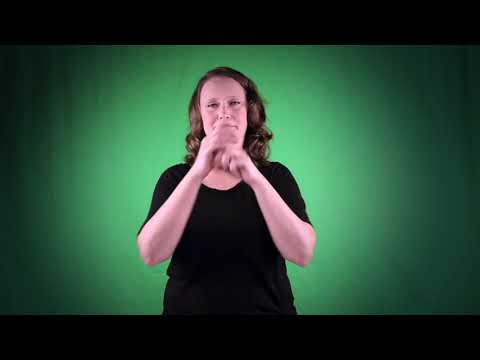
Definition: A hairstyle where the hair is pulled back and tied at the back of the head (variant 2).
Sign for PONYTAIL2 in ASL
Practice Activities
Learning the sign for PONYTAIL2 in ASL requires more than just watching someone else sign—it takes consistent, active practice. One of the best ways to start is by using a mirror. Stand in front of the mirror and sign repeatedly while observing your handshape and movement. This helps ensure your placement and facial expressions are accurate, which are both essential for clear communication in American Sign Language.
Another useful technique is recording yourself. Use your phone or webcam to film short clips of yourself performing the sign for PONYTAIL2 in ASL. Then compare your video to native signers or trusted resources. This allows you to self-evaluate and correct any discrepancies in your execution.
To build fluency, incorporate the sign into everyday context. Practice describing hairstyles, people, or situations that would naturally involve the sign for PONYTAIL2 in ASL. For example, you might say: “My sister wore a ponytail today,” integrating the sign into a full sentence.
Advanced learners can push their skills further by engaging in expressive drills. Create mini-dialogues or descriptive narratives involving people with ponytails. Practice switching between related signs quickly, such as switching from “hair” to the sign for PONYTAIL2 in ASL, to improve transition speed and clarity.
SEO Cultural Context
The sign for PONYTAIL2 in ASL reflects the visual and descriptive nature of the language, which is deeply rooted in Deaf culture. In ASL, descriptions of people often include hair type, style, and features as part of identity and storytelling. This sign is commonly used when describing someone’s appearance, making it an essential part of daily visual communication.
Deaf culture values clarity and visual accuracy, so descriptive signs like the sign for PONYTAIL2 in ASL are often more detailed than their spoken English counterparts. This sign allows users to specify not just that someone has a ponytail, but also where and how it’s styled on the head.
There are regional variations in how this sign is formed. Some communities may place the sign higher or lower on the head, or use different handshapes depending on local norms. For example, in some regions, the sign may involve a looping motion to show the hair is tied back, while others may use a flat hand to indicate hair being pulled together.
The sign for PONYTAIL2 in ASL is used in a range of real-life situations—from introductions and narratives to classroom discussions and interpreting settings. Whether you’re describing a character in a story or a person you met, this sign helps convey a more vivid and accurate mental image.
Extended Definition
The sign for PONYTAIL2 in ASL typically involves using a “C” or open hand to simulate the act of gathering hair at the back of the head. The hand is positioned at the location on the head where the ponytail would sit—either low near the neck or higher up. The movement suggests the tying or grouping of hair, making the gesture instantly visual and recognizable.
This sign is a variation of the more general sign for “ponytail” and may be distinguished by its specific placement or handshape. The variation known as PONYTAIL2 might be used to refer to a different ponytail position, such as a high ponytail, or to reflect a particular style that includes a twist or loop.
It’s important not to confuse the sign for PONYTAIL2 in ASL with similar signs like “bun” or “braid.” Each of these has its own distinct formation and meaning. A common error among learners is placing the sign too far forward or using an incorrect handshape, which could lead to misinterpretation.
Another related issue is the lack of facial expression. Because ASL is a visual language, facial cues add meaning. When demonstrating the sign for PONYTAIL2 in ASL, your facial expression can indicate if the hairstyle is messy, tight, or stylish. Missing these subtleties can reduce the effectiveness of your signing.
Tips for Beginners
If you’re just starting to learn the sign for PONYTAIL2 in ASL, don’t worry about getting it perfect right away. Focus first on understanding the movement, handshape, and location. Remember, ASL is a 3D language, so practicing in front of a mirror or with a partner can help you get a better sense of how your sign is perceived by others.
A frequent beginner mistake is using the wrong part of the head for the sign. Make sure to observe where native signers place their hands when demonstrating the sign for PONYTAIL2 in ASL. Placement is not random in ASL; it carries meaning and adds clarity.
Another tip is to slow down. Many students rush through signs in an effort to appear fluent. However, clarity is more important than speed. Take your time to form each part of the sign correctly. Over time, your speed will increase naturally.
Lastly, watch real-life examples. Find videos of Deaf individuals describing people or talking about hairstyles. Seeing the sign for PONYTAIL2 in ASL used in context will help reinforce your learning and show how it fits into broader conversations and narratives.
Connections to Other Topics
The sign for PONYTAIL2 in ASL is closely connected to the sign for “hair.” These signs often appear together in descriptive sentences, such as “She has long hair in a ponytail.” Understanding how to use them in combination enhances your ability to describe people in detail.
Another related sign is “bun,” which also involves describing a hairstyle. While the sign for PONYTAIL2 in ASL pulls hair back into a tail, “bun” typically involves a circular motion to represent hair wrapped into a ball. Knowing both signs allows for richer visual storytelling.
“Girl” and “woman” are also frequently linked with ponytail descriptions. When introducing someone or telling a story, you might say “The girl with the ponytail…” which involves combining gender signs with descriptive classifiers like PONYTAIL2.
The sign for “tie” or “fasten” may also be conceptually linked, though not identical. These signs provide insight into how hair is manipulated, which can be useful in expanding your vocabulary around grooming and appearance.
Finally, classifiers play a big role in describing hairstyles. Classifiers allow signers to show size, shape, and position. When using the sign for PONYTAIL2 in ASL, you might also use a classifier to indicate the length or motion of the ponytail, making your description more dynamic.
Lengthy Summary
Mastering the sign for PONYTAIL2 in ASL involves a combination of visual accuracy, cultural awareness, and consistent practice. This sign is more than just a gesture—it’s a visual description that fits seamlessly into the descriptive nature of American Sign Language. Whether you’re talking about a friend, a character in a story, or yourself, the sign allows you to paint a vivid picture using your hands and face.
Through various practice activities like mirror work, video recording, and context-based drills, learners can build confidence and accuracy. The sign for PONYTAIL2 in ASL holds strong cultural relevance in the Deaf community, where visual clarity and self-expression are highly valued. Understanding regional variations and the importance of facial expressions further deepens your grasp of the sign.
A detailed definition helps avoid confusion with similar signs, and beginners are encouraged to focus on placement, handshape, and pacing. With time and attention, the sign becomes a natural part of your expressive toolbox. Linking this sign to related vocabulary and grammar structures expands your ability to communicate richly and effectively in ASL.
The journey of learning ASL is made up of small, meaningful steps. The sign for PONYTAIL2 in ASL is one such step that opens doors to storytelling, descriptions, and deeper cultural understanding. Keep practicing, stay curious, and engage with the Deaf community as much as you can. Every time you use a new sign correctly, you’re building a stronger foundation in the language. Happy signing!
Synonyms: ponytail, hair tie, tied hair, pulled-back hair, updo
Educational resources: Find related learning materials in our course bank!
Want more? Check out some of our popular learning activities on the homepage!
Need to look up a sign? Use our highly rated dictionary: https://aslinteractive.com/best-asl-dictionary/
Follow us on tiktok: https://www.tiktok.com/@aslinteractive. More social media links at the bottom of this page!
Long-tail Keywords: what is the sign for ponytail in ASL, how do you sign ponytail in ASL, ASL sign for ponytail
Categories:
tags: hairstyles in ASL, describing hair in ASL, American Sign Language for hairstyles, hair vocabulary in ASL, ASL beauty and grooming signs
Want more? Check out some of our popular learning activities!
ASL Interactive Resources
ASLInteractive YouTube Channel
Follow us on tiktok: @aslinteractive.com
Follow us on Instagram: aslinteractive
Facebook page: aslinteractive
Facebook group: aslinteractive
LInkedIn: ASL Interactive LLC
Twitter: @ASL_interactive
*Some information on this page is AI-generated. AI can make mistakes. Please check the information.


Responses