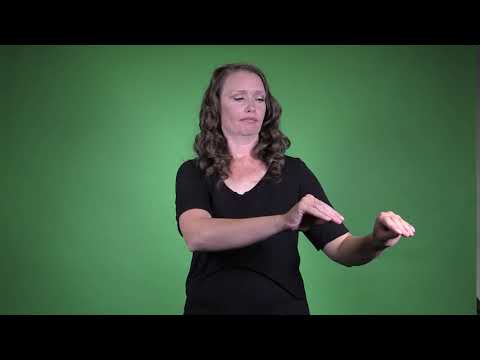
Definition: To place something on the left side.
Sign for PUT ON THE LEFT SIDE in ASL
Practice Activities
To master the sign for PUT ON THE LEFT SIDE in ASL, start with mirror work. Stand in front of a mirror and practice signing while watching both your dominant hand and your non-dominant side to ensure accurate placement. This is especially helpful because spatial orientation is critical in ASL, and the sign for PUT ON THE LEFT SIDE in ASL relies on correct directional movement.
Record yourself signing short phrases that include this concept. For example, sign “Put the book on the left side” and review the footage to check for clarity and natural flow. Try different objects and locations to build familiarity with the spatial structure.
Practice signing in context with a partner or in a virtual ASL meetup. Role-playing everyday scenarios, like setting a table or giving directions, can help reinforce when and how to use the sign for PUT ON THE LEFT SIDE in ASL correctly and naturally.
For advanced learners, drill with visual prompts. Look at images or diagrams showing objects placed on various sides and quickly sign their locations. This builds fluency and helps you respond quickly without pausing to think through spatial grammar.
SEO Cultural Context
The sign for PUT ON THE LEFT SIDE in ASL is not just a literal indication of direction—it reflects a deeper connection to Deaf culture’s reliance on visual-spatial awareness. In Deaf culture, communication is holistic, and understanding space is essential. ASL users often visualize and map conversations in front of them, using the body and signing space to represent people, places, and directions.
Regional variations may influence how the sign for PUT ON THE LEFT SIDE in ASL appears. Some signers may use more exaggerated spatial movements depending on their local dialect or educational background. However, the core concept remains consistent: it involves placing an object or concept to the left in relation to the signer’s perspective or a previously established referent.
This sign is commonly used in real-life scenarios such as giving directions, organizing space, or describing the location of physical items. For example, a Deaf person might sign this when telling someone to place a dish on the left side of the table. Understanding when to use spatial references like this is key to becoming fluent and culturally competent in ASL.
Extended Definition
The sign for PUT ON THE LEFT SIDE in ASL is a compound concept that combines the sign for PUT with a spatial structure indicating LEFT SIDE. You begin with the directional verb PUT, which involves moving the dominant hand as if placing an object. Then you move your hand toward the left side of your signing space, typically aligned with your non-dominant side.
It’s important to establish spatial referencing beforehand. If you’re talking about a table or shelf, you must first place that referent in your signing space. Then when you sign PUT ON THE LEFT SIDE in ASL, it becomes a clear, visual instruction.
A common error is reversing the direction, especially when watching someone else sign. Remember, ASL is signed from the signer’s perspective, so your left is the audience’s right. Always use your own left when signing the left side unless you are mirroring someone else’s location for clarity.
Related signs include PLACE, MOVE, and LEFT. While these signs are similar in concept, they differ in grammatical function. The sign for PUT ON THE LEFT SIDE in ASL is more directional and specific than the general sign for PLACE or LEFT alone, because it integrates movement and location in a single expression.
Tips for Beginners
If you’re just beginning to learn the sign for PUT ON THE LEFT SIDE in ASL, give yourself time to become comfortable with spatial orientation. Use your environment to help. Practice by physically placing objects to your left while signing to build mental associations.
One common mistake beginners make is using their right side when they mean left. To avoid this, mark your left hand temporarily with a sticker or bracelet as a reminder. Over time, your muscle memory will improve, and the sign will become more natural.
Another tip is to always visualize what you’re signing. In ASL, visualization is key. When you sign for PUT ON THE LEFT SIDE in ASL, imagine the table, shelf, or context where the action happens. This will make your signing more intuitive and expressive.
Lastly, be patient. It’s okay to pause and correct yourself. Even fluent signers occasionally adjust their signing space to make their meaning clearer. Practice slowly and deliberately, and accuracy will follow.
Connections to Other Topics
The sign for PUT ON THE LEFT SIDE in ASL connects closely with the sign for RIGHT SIDE. Both rely on the same spatial grammar but are mirrored in direction. Practicing both together helps reinforce left/right orientation in ASL.
Another related concept is LOCATIVE STRUCTURE. This grammatical tool in ASL helps you describe where things are in space. Understanding how to use locative referencing supports accurate use of signs like PUT ON THE LEFT SIDE in ASL.
The sign for MOVE is also connected, as it involves shifting objects or positions within a space. MOVE often overlaps with PUT in meaning, but PUT usually implies a more intentional and final placement.
Descriptive classifiers, particularly Classifier B (flat surface), can be used in combination with the sign for PUT ON THE LEFT SIDE in ASL. For example, you might use a Classifier B to represent a table, then sign PUT to the left of it to complete the sentence.
Finally, directional verbs as a whole are vital to mastering signs like PUT ON THE LEFT SIDE in ASL. These verbs change movement based on the spatial relationship between objects and people. Becoming fluent in directional verbs enhances your ability to express locations clearly and efficiently.
Lengthy Summary
The sign for PUT ON THE LEFT SIDE in ASL is a powerful example of how American Sign Language uses space, direction, and visual cues to convey meaning. It combines the action of placing something with a clear spatial reference, making the sign both functional and expressive. Whether you’re directing someone to place a book on a table or describing where an object is located, this sign is essential for clear communication in ASL.
From a cultural standpoint, using spatial references like PUT ON THE LEFT SIDE reflects the Deaf community’s visual mode of communication. Deaf signers rely heavily on visual grammar to organize space and convey relationships between objects or people. Understanding these spatial norms is important for respectful and accurate interaction.
Beginners often struggle with left/right orientation, but consistent practice using mirrors, recorded videos, and physical objects can help build confidence. It’s also helpful to connect this sign to related concepts like directional verbs, locative structures, and descriptive classifiers. These tools work together to form a deeper understanding of ASL’s unique structure.
As you continue to learn, remember that fluency grows from mindful practice. Make space in your daily routine to revisit signs like PUT ON THE LEFT SIDE in ASL. Use them in context, explore their relationships with other signs, and seek feedback from native signers whenever possible.
Your journey to mastering the sign for PUT ON THE LEFT SIDE in ASL is part of a larger path toward language fluency and cultural competence. Keep practicing, stay curious, and enjoy every step of your ASL learning adventure!
Synonyms: Ok understood,
Educational resources: Find related learning materials in our course bank!
Want more? Check out some of our popular learning activities on the homepage!
Need to look up a sign? Use our highly rated dictionary: https://aslinteractive.com/best-asl-dictionary/
Follow us on tiktok: https://www.tiktok.com/@aslinteractive. More social media links at the bottom of this page!
Long-tail Keywords: what is the sign for put on the left side in ASL, how do you sign put on the left side in ASL, ASL sign for put on the left side
Categories:
tags: ASL directional signs, ASL spatial grammar, clothing signs in ASL, food placement in ASL, travel signs in ASL
Want more? Check out some of our popular learning activities!
ASL Interactive Resources
ASLInteractive YouTube Channel
Follow us on tiktok: @aslinteractive.com
Follow us on Instagram: aslinteractive
Facebook page: aslinteractive
Facebook group: aslinteractive
LInkedIn: ASL Interactive LLC
Twitter: @ASL_interactive
*Some information on this page is AI-generated. AI can make mistakes. Please check the information.


Responses